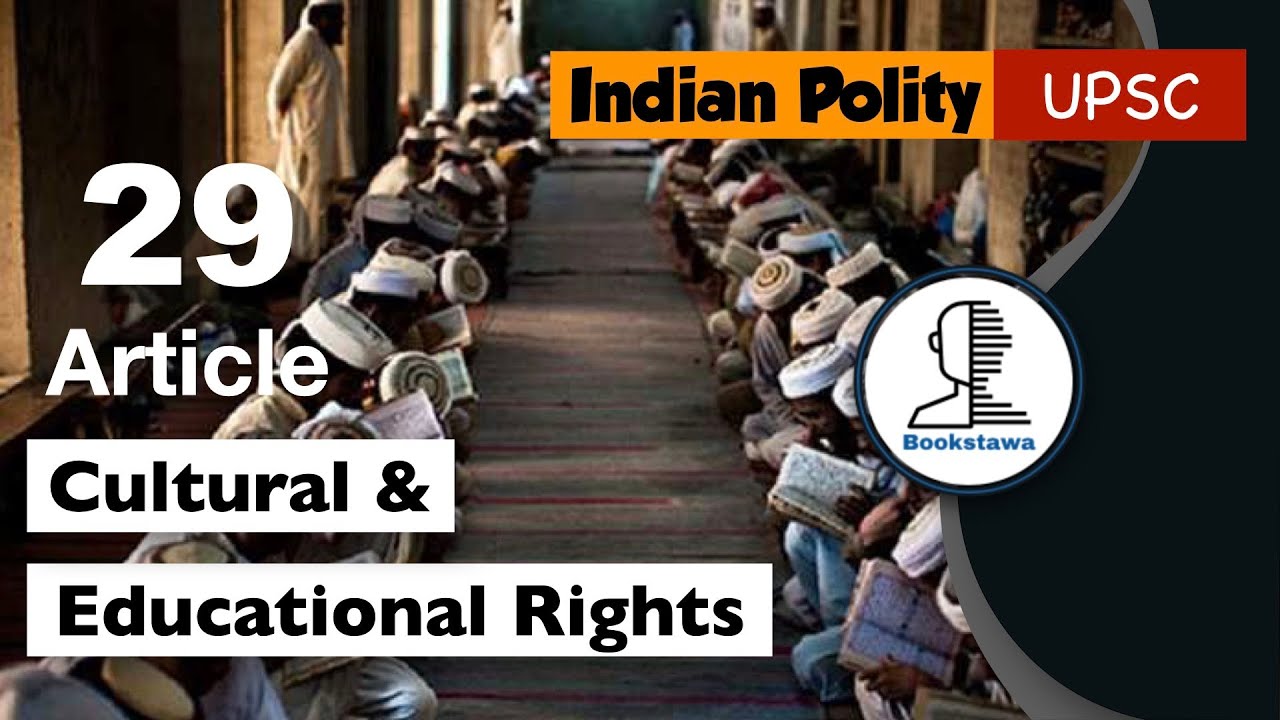
The Cultural and Educational Rights in India, enshrined under Articles 29 and 30 of the Constitution, are pivotal for protecting the interests of minorities and ensuring equitable access to education. These rights, upheld by the Supreme Court and reinforced through key amendments like the 44th Amendment Act, 1978, empower students and communities to preserve their distinct language, script, and culture while establishing educational institutions freely. Imagine a colorful garden where every unique flower gets special care so it can bloom safely alongside all the others. In India, our Constitution gives special promises called Fundamental Rights so that smaller groups of people, known as minorities, can protect their unique ways of living, speaking, and learning without any fear of losing them.
🎯 In this chapter, you will understand:
- How Article 29 safeguards the unique language, script, and culture of groups in India.
- How Article 30 allows minority communities to start and run their own schools and colleges.
- The balance between minority management freedom and helpful government rules for safety and quality.
- Key judicial rulings, such as the Supreme Court guidelines, that safeguard minority rights.
💡 Why this topic matters: India is home to many different languages, religions, and traditions. Protecting every group's heritage helps keep our country united, peaceful, and rich in diversity.
🧠 Core Idea:Articles 29 and 30 give communities the power to keep their culture alive and build their own educational institutions, while making sure no individual is unfairly left out of school.
Cultural and Educational Rights in India: Articles 29 & 30 – Protection of Minorities and Educational Freedom
These constitutional guarantees safeguard both entire communities and individual citizens, creating a strong national framework for minority protection and educational autonomy. By offering explicit protection for unique cultural practices, the Constitution helps every community feel secure and valued in society.
- (i) Articles 29 and 30 recognize the rights of minorities to conserve their culture, language, and script through active community efforts.
- (ii) Individual citizens cannot be denied admission to State-aided educational institutions based on religion, race, caste, or language.
- (iii) The Supreme Court has clarified that promoting the preservation of language and culture through public advocacy or political expression does not constitute a corrupt practice under the Representation of the People Act, 1951.
Protection of Interests of Minorities (Article 29)
Article 29 ensures the rights of communities to preserve their distinct cultural identity while also safeguarding individual citizens from discrimination in educational access. This creates a helpful double layer of safety for everyone in society.

Community Rights to Preserve Language and Culture
Any section of citizens possessing a unique language, script, or culture can maintain and promote it, providing a firm foundation for minority identity and cultural continuity across generations.
- (i) Guarantees protection for both religious and linguistic minorities.
- (ii) The phrase "section of citizens" expands protection beyond traditional minorities to include any distinct cultural group living in India.
- (iii) Supports peaceful advocacy and cultural preservation efforts through legal and political channels.
Individual Rights to Education
No citizen can be refused admission in State-run or State-aided educational institutions solely based on religion, race, caste, or language, ensuring inclusive access for all students regardless of background.
- (i) Balances communal protection rights with individual educational opportunities.
- (ii) Promotes fair and equitable participation across the entire public educational system.
- (iii) Reinforces social unity while showing deep respect for India's rich cultural diversity.
Right of Minorities to Establish and Administer Educational Institutions (Article 30)
This Article empowers minorities to establish and manage their own educational institutions, securing management freedom while remaining under reasonable State regulations to maintain safety and learning standards.
Minority Rights and State Protection
Minorities, whether religious or linguistic, can establish schools and colleges of their choice. When the fundamental right to property was removed by the 44th Amendment Act, 1978 in , special protections were added so the government cannot take over minority school property without paying fair compensation.
- (i) The State must not discriminate against any minority-managed school when giving financial grants or aid.
- (ii) Freedom includes teaching students in the minority group's native mother tongue or chosen language.
- (iii) This specific right exclusively applies to recognized minority groups, not to all citizens generally.
Types of Minority Educational Institutions
Minority institutions are categorized into three main types based on whether they ask for government recognition and financial aid. This status decides how closely the government checks their daily activities.
- (i) Institutions that seek both official government recognition and financial aid.
- (ii) Institutions that seek official recognition but ask for no government aid.
- (iii) Institutions that seek neither recognition nor financial aid, staying fully independent while following basic national laws such as contract law, labor law, industrial law, and tax law.
Regulatory Framework for Minority Institutions
While minority schools enjoy independence in their daily work, the State ensures that basic health, academic, and safety standards are followed for the good of all students.
- (a) The first two categories must follow rules regarding subject syllabi, academic standards, student discipline, health conditions, and proper teacher qualifications.
- (b) The third category maintains maximum freedom, but must obey standard countrywide laws like paying taxes and treating staff fairly under labor regulations.
Supreme Court Guidelines on Minority Educational Institutions (2007)
In the landmark case Secretary of Malankara Syrian Catholic College v. State (), the Supreme Court clearly outlined key rules to preserve minority freedoms under Article 30 while allowing sensible government oversight.
Rights of Minorities under Article 30
The court decision made it clear that minority educational institutions have the full freedom to guide their internal administration while obeying the laws of the land.
- (i) Choose a trusted governing committee or managing board to lead the school.
- (ii) Appoint qualified teachers and staff members and maintain workplace discipline.
- (iii) Admit eligible students and set fair and reasonable fee structures.
- (iv) Use institutional property and financial assets directly for the benefit of the school.
Limitations and Regulatory Measures
While minority rights are strong, they are not limitless. The government can step in with rules to stop misbehavior or poor school management.
- (i) Bad management or maladministration is never protected under the law.
- (ii) State regulations may specify essential teacher qualifications, standard curricula, and fair employment conditions.
- (iii) Unaided minority institutions can hire qualified staff through fair selection steps that meet official standard norms.
State Aid and Minority Character
Receiving financial money or grants from the government does not take away a school's minority identity, as long as official funds are used properly for education.
- (a) Government grants come with helpful conditions that do not destroy minority management powers.
- (b) The State ensures clear financial checks so money is spent safely and properly.
- (c) All original minority protections under Article 30(1) remain fully intact.
⚡ Quick Revision Capsule: Cultural & Educational Rights (Articles 29 & 30)
Here is a quick summary table comparing the key constitutional provisions, target beneficiaries, and core legal protections offered under these constitutional articles.
| Constitutional Provision | Beneficiaries & Scope | Key Guarantees & Protections |
|---|---|---|
| Article 29(1) | Any distinct section of citizens (broader than minorities) | Guarantees the right to conserve unique language, script, or culture. |
| Article 29(2) | Individual citizens of India | Prohibits denial of admission to State-aided schools based on religion, race, caste, or language. |
| Article 30(1) | Religious and linguistic minorities only | Right to establish and administer educational institutions of their choice. |
| Article 30(2) | Minority-managed educational institutions | Prohibits State discrimination when granting financial aid to schools based on minority status. |
| 44th Amendment Act, 1978 | Minority institutions under Article 30 | Ensures compulsory property acquisition by the State requires fair compensation so rights are not harmed. |
📝 Summary
Cultural and Educational Rights under Articles 29 and 30 are vital for protecting minority interests and providing autonomy in education. They ensure communities and individual students can preserve their language, script, and culture, establish and administer institutions freely, and maintain equality with the majority. These rights, strengthened by key judicial guidelines since and , are essential for students and educators preparing for exams on constitutional law, governance, and minority rights in India.
🚀 Quick Revision Points
Essential facts to review before examinations:
- (i) Article 29 protects both group heritage rights and individual freedom from discrimination in government-funded schools.
- (ii) Article 30 is exclusively for religious and linguistic minorities to build and manage their own schools.
- (iii) The government can enforce helpful safety, health, and teacher qualification rules, but cannot cause bad management or destroy minority status.
- (iv) In , the Supreme Court reaffirmed that minority schools can hire staff and admit students independently while respecting national laws.
- 💡 Exam Tip: Remember that Article 29 applies to "any section of citizens" (including majority groups with distinct local language/script), while Article 30 benefits only religious and linguistic minorities!
❓ Frequently Asked Questions (FAQ)
Q1: Who can claim protection under Article 29 of the Indian Constitution?
A1: Any section of citizens residing in India having a distinct language, script, or culture has the right to conserve it. This covers both minority and majority cultural groups.Q2: Does government financial aid change the minority character of a school?
A2: No. Receiving financial aid from the government does not take away a school's minority character under Article 30, provided the institution uses funds properly and follows standard non-discriminatory rules.Q3: Can the government make rules for minority educational institutions?
A3: Yes. The government can set regulatory guidelines regarding teacher qualifications, academic curricula, health, and safety standards to prevent maladministration without violating Article 30.