The Fundamental Rights of Indian citizens are written right into Part III of the Constitution of India, covering Articles 12 to 35. These basic rules were inspired by the famous Bill of Rights from the USA. Indian lawmakers wanted every single person to live with honor, peace, and freedom. Because this section gives such a detailed and legally protected set of rights—even more detailed than the American Constitution—it is proudly called the Magna Carta of India. The main goal here is to make sure our country stays a true political democracy. It prevents rulers from turning into dictators, making sure we have a government run by fair rules and laws, rather than the wild choices of powerful individuals. These rights are called fundamental because the highest law of the land guarantees them, and they help every human being grow in mind, body, character, and spirit.
🎯 In this chapter, you will understand:
- The core meaning, origins, and key features of Fundamental Rights under Part III of the Constitution.
- How the legal term State is defined under Article 12 and how courts review bad laws under Article 13.
- The major freedoms under the Right to Equality (Articles 14–18), including rules against untouchability and noble titles.
- How job reservations, the Mandal Commission, and the creamy layer rule work in public employment.
💡 Why this topic matters: Fundamental Rights protect every person living in India from unfair government actions. They guarantee that all citizens get equal treatment, personal freedom, and justice in everyday life.
🧠 Core Idea: The Constitution of India grants essential human protections that courts enforce directly, ensuring our nation is guided by fair rules rather than political whims.
📌 Overview & Features of Fundamental Rights
When the Constitution of India was first made, it gave people seven main basic rights. But over time, our laws changed to adapt to modern life. Through the 44th Amendment Act passed in , the government removed the Right to Property (Article 31) from the list of basic rights. Instead, it moved it to Article 300-A in Part XII as a plain legal right. Because of that historical update, we now have six main groups of fundamental rights left today.

These six major groups cover every part of daily protection, as listed below:
- (i) Right to Equality (Articles 14–18)
- (ii) Right to Freedom (Articles 19–22)
- (iii) Right against Exploitation (Articles 23–24)
- (iv) Right to Freedom of Religion (Articles 25–28)
- (v) Cultural and Educational Rights (Articles 29–30)
- (vi) Right to Constitutional Remedies (Article 32)
Fundamental Rights have special features that make them different from regular laws:
Universal vs Citizen-only Rights: Some freedoms belong only to Indian citizens, while other rights belong to everyone, including foreign travelers and registered companies.
Reasonable Restrictions: These rights are not unlimited promises. The government can put fair limits on them to protect general peace, and independent judges decide if those limits are reasonable.
Protection against State Power: Most of these rules stop government agencies from acting unfairly. If a private person breaks your rights, you usually use ordinary civil or criminal courts instead.
Direct Enforcement (Justiciable): You can walk directly into the Supreme Court of India under Article 32 without having to wait through lower court appeals if your basic rights are threatened.
Emergency Suspensions: During a official National Emergency, the President can pause most freedoms, except safety guarantees in Article 20 and Article 21. The freedoms in Article 19 can only be paused during wartime or foreign invasion, never during internal riots.
🏢 Definition of State (Article 12)
To know who must follow these strict rules, Article 12 explains what the word State means across all of Part III. It includes almost every authority that holds public power in India:
- (i) The central government and national parliament (the executive and law-making branches of India).
- (ii) State governments and their state legislative assemblies.
- (iii) Local leaders and councils, such as village panchayats, city municipalities, district boards, and improvement trusts.
- (iv) Statutory and non-statutory organizations run by government authority, such as LIC, ONGC, and SAIL. Even private companies acting as official tools of the government fall under this rule according to Supreme Court decisions.
⚖️ Laws Inconsistent & Judicial Review (Article 13)
Article 13 works like a shield protecting our basic freedoms. It states that if any new or old law breaks a fundamental right, that law becomes completely invalid and void. This power is called judicial review. The Supreme Court of India (under Article 32) and state High Courts (under Article 226) use this rule to cancel bad laws.
Under Article 13, the term law includes standard acts passed by Parliament, temporary laws like official ordinances issued by the President or state Governors, executive orders, official rules, notices, and old community customs that carry legal power. While standard constitutional updates are not regular laws, the famous Kesavananda Bharati case in decided that even constitutional amendments can be struck down if they ruin the fundamental basic structure of the Constitution.
⚖️ Right to Equality (Articles 14–18)
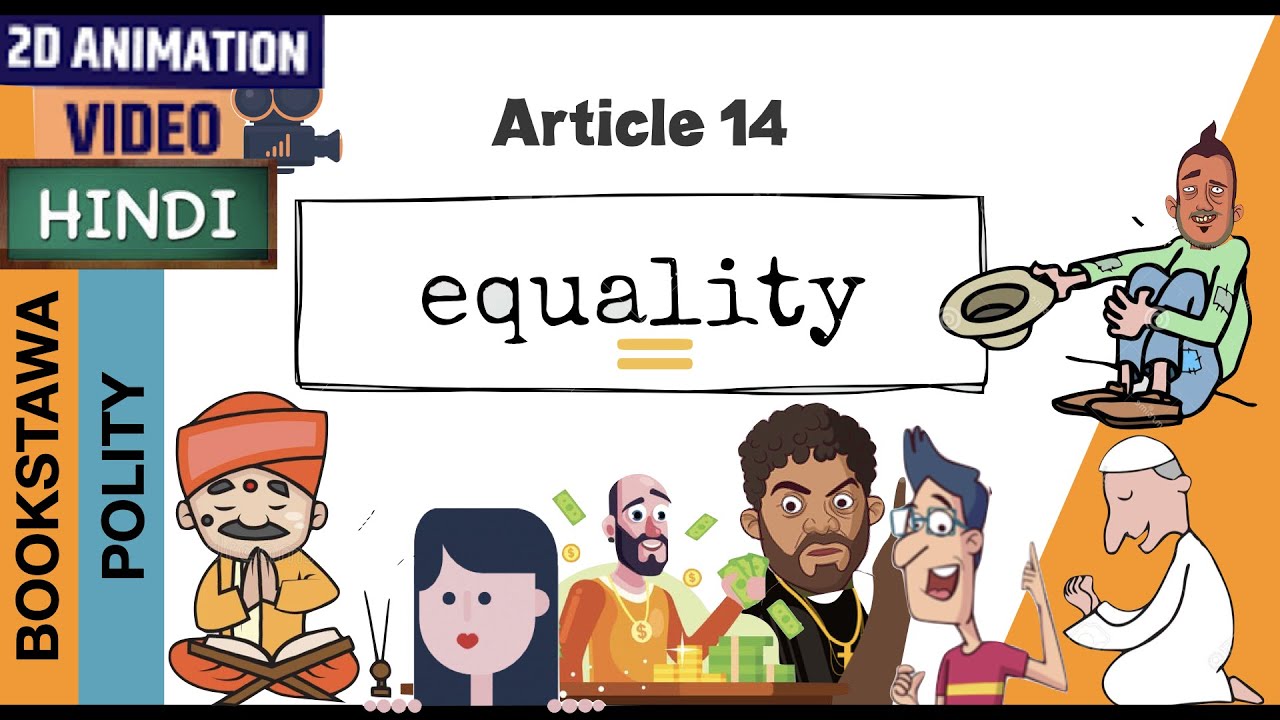
The Right to Equality forms the cornerstone of Indian democracy, ensuring everyone receives fair treatment under law regardless of background.
🚫 Prohibition of Discrimination (Article 15) & Creamy Layer
Article 15 states that the State cannot treat any Indian citizen unfavorably based only on their religion, race, caste, gender, or birth place. The word only is important because it means the government can make special distinctions if there are other valid reasons. The rule guarantees everyone equal access to shops, public dining places, hotels, parks, public water wells, bathing areas, and roads maintained by public money.
Article 15 guarantees equal entry to public places for every citizen. However, the Constitution allows three important exceptions so the State can help disadvantaged groups:
- (a) Making special arrangements for women and young children, like reserving seats on local city councils or offering free school seats.
- (b) Creating special support policies for socially and educationally backward groups, Scheduled Castes (SCs), and Scheduled Tribes (STs).
- (c) Reserving seats in colleges and universities, including private colleges. Under the 93rd Amendment Act of and the Central Educational Institutions (Reservation in Admission) Act of , a 27% quota was set aside for Other Backward Classes (OBCs) in premier schools like IITs and IIMs. In , the Supreme Court approved this quota, but ordered that wealthy individuals—known as the creamy layer—must be left out.
The creamy layer among OBCs includes well-off families who do not need reservation benefits, such as:
- (a) Children of top leaders like the President, Vice-President, Supreme Court judges, and election commissioners.
- (b) Families of senior Group A and Group B government officers, military officers ranked Colonel or higher, and executives in public banks or PSUs.
- (c) Successful private professionals like doctors, lawyers, engineers, authors, and big businessmen.
- (d) Owners of large farms or urban buildings, and families earning more than the official yearly income cap (which was set at ₹6 lakh gross annual income in recent revisions).
💼 Equality in Public Employment (Article 16) & Mandal Case
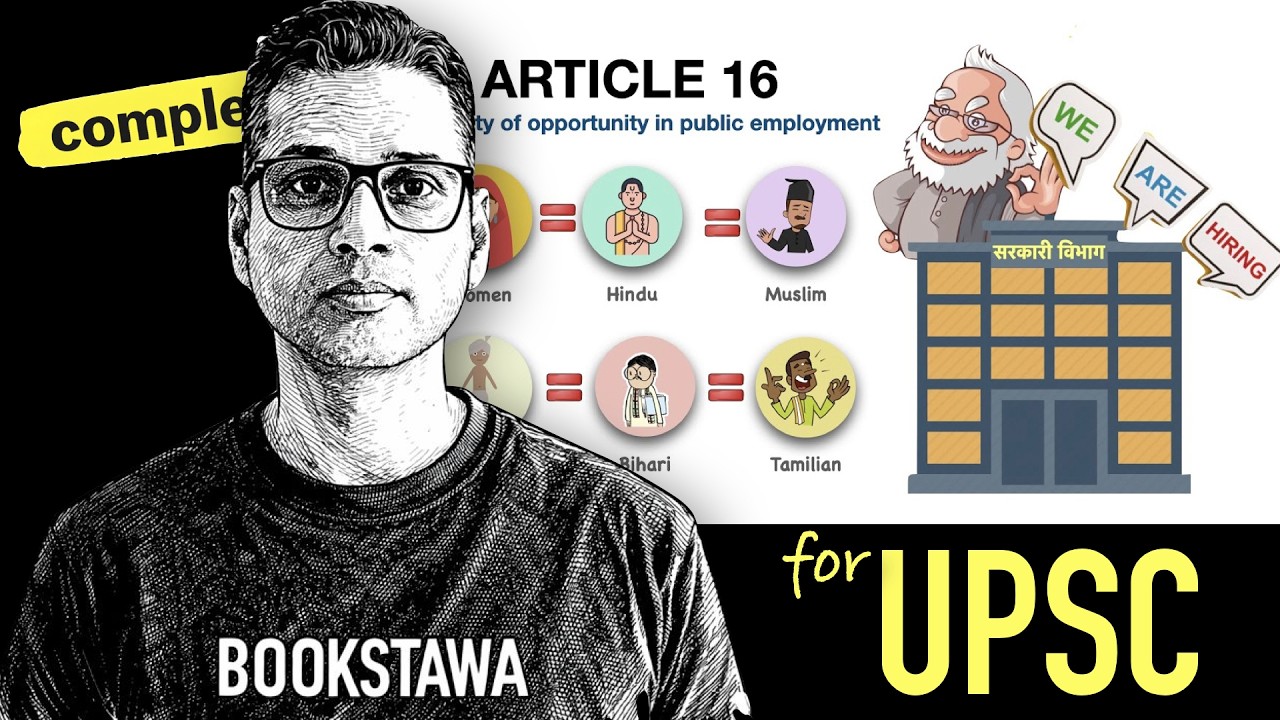
Article 16 guarantees that every citizen gets an equal chance to apply for government jobs without facing discrimination based on religion, race, caste, sex, family lineage, birth place, or home state. Parliament can make state residence a job requirement in special cases (like in Andhra Pradesh and Telangana), and reserve posts for underrepresented backward classes.
In , the Morarji Desai government created the Second Backward Classes Commission headed by B.P. Mandal under Article 340. In , the Mandal Commission reported that 3,743 castes made up nearly 52% of India's population and recommended a 27% job quota for OBCs. Prime Minister V.P. Singh implemented this 27% quota in .
In the famous Mandal Case (Indra Sawhney case), the Supreme Court ruled that:
- (i) The 27% OBC job quota is valid, but the wealthy creamy layer must be excluded.
- (ii) Reservations should generally apply to new job appointments, not workplace promotions.
- (iii) Total reserved seats must not cross the 50% limit for any year, unless under extreme situations.
- (iv) A permanent government panel—the National Commission for Backward Classes (established in )—must handle inclusion and exclusion requests.
To adjust to court rulings, Parliament passed new amendments: the 77th Amendment Act () allowed promotion quotas for SCs/STs, the 81st Amendment Act () allowed unfilled backlog quota positions to exceed the 50% limit in future years, and the 85th Amendment Act () granted consequential seniority to promoted SC/ST employees.
🛑 Abolition of Untouchability (Article 17)
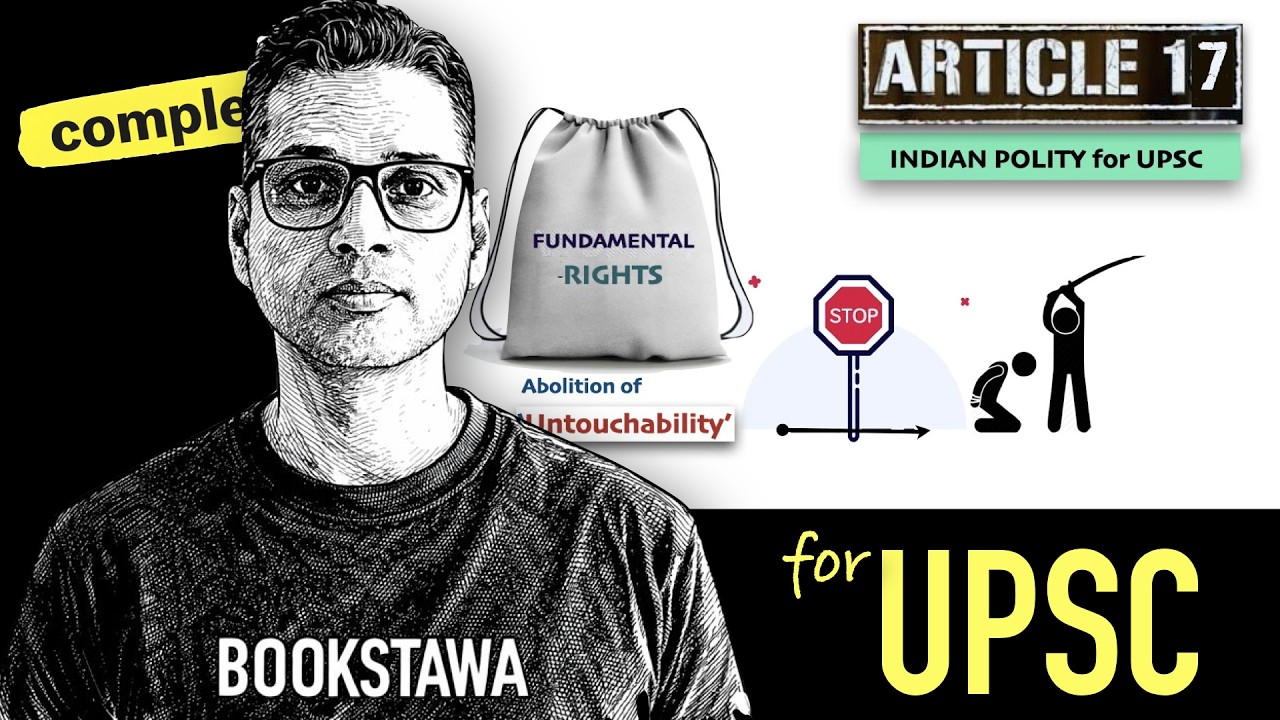
Article 17 strictly bans the cruel historical practice of untouchability in any form across India. Treating anyone as an outcast because of their birth caste is a serious crime punishable by law under the Protection of Civil Rights Act of (updated in ).
Breaking this rule can result in up to six months in jail, a fine of up to ₹500, or both. Anyone convicted under this law is disqualified from running for Parliament or state legislatures. Forbidden actions include stopping people from entering temples, refusing service at public hotels or shops, insulting someone based on caste, or refusing to admit students to public hospitals or schools.
👑 Abolition of Titles (Article 18)
Article 18 stops the government from creating artificial social ranks by banning old aristocratic titles such as Maharaja, Raj Bahadur, or Rai Bahadur. The State cannot give titles to anyone, except for earned military or academic honors (like General or Doctorate degrees). Indian citizens are forbidden from accepting noble titles from foreign countries.
In , the Supreme Court confirmed that high civilian honors—like the Bharat Ratna, Padma Vibhushan, Padma Bhushan, and Padma Shri (first created in )—are valid merit awards, not noble titles. However, recipients are strictly forbidden from using these awards as titles before or after their names.
⚡ Quick Revision Capsule: Fundamental Rights at a Glance
Here is a quick summary table matching all six Fundamental Right categories with their corresponding constitutional Articles and legal guarantees:
| Category | Constitutional Articles | Core Guarantees & Purpose |
|---|---|---|
| Right to Equality | Articles 14–18 | Promises equal protection before law, bans discrimination, ensures equal public employment chances, abolishes untouchability, and removes noble titles. |
| Right to Freedom | Articles 19–22 | Guarantees six basic freedoms (speech, assembly, association, movement, residence, profession), protection during criminal trials, protection of personal life and liberty, free primary education under Article 21A, and protection against unlawful arrest. |
| Right Against Exploitation | Articles 23–24 | Bans human trafficking, forced unpaid labor (begar), and child labor in dangerous factories or mines. |
| Right to Freedom of Religion | Articles 25–28 | Gives everyone freedom of conscience to practice and spread their faith, manage religious affairs, stay free from religious taxes, and skip mandatory religious classes in public schools. |
| Cultural & Educational Rights | Articles 29–30 | Protects minority languages, scripts, and cultural traditions, allowing minority groups to open and manage their own schools and colleges. |
| Right to Constitutional Remedies | Article 32 | Allows citizens to petition the Supreme Court directly to enforce rights using legal orders called writs (habeas corpus, mandamus, prohibition, certiorari, and quo warranto). |
🌐 Rights Available to Citizens vs. Foreigners
Not all fundamental rights are reserved solely for Indian citizens. The Constitution divides these freedoms into two distinct operational groups:
1. Fundamental Rights Available ONLY to Indian Citizens:
- (i) Protection against discrimination based on religion, race, caste, sex, or birth place (Article 15).
- (ii) Equal opportunity in public government jobs (Article 16).
- (iii) Protection of the six basic freedoms: speech, assembly, association, movement, residence, and trade (Article 19).
- (iv) Protection of minority language, script, and culture (Article 29).
- (v) Right of minorities to establish and manage educational institutions (Article 30).
2. Fundamental Rights Available to BOTH Citizens and Foreigners (except enemy aliens):
- (i) Equality before law and equal protection under Indian laws (Article 14).
- (ii) Protection against unfair conviction for criminal offenses (Article 20).
- (iii) Protection of life and personal liberty (Article 21).
- (iv) Right to free primary education for young children (Article 21A).
- (v) Protection against wrongful arrest and police detention (Article 22).
- (vi) Protection against human trafficking and forced labor (Article 23).
- (vii) Ban on child labor in hazardous workplaces (Article 24).
- (viii) Freedom of conscience, faith practice, and religious management (Articles 25, 26, 27, and 28).
📝 Summary
Part III of the Constitution of India acts as a legal shield protecting individual liberty, equality, and human dignity. From to the present day, these principles have helped transform India into a modern, rule-based democracy. By understanding how Articles 12 to 35 operate, every student can appreciate how our highest courts defend individual rights against state overreach.
🚀 Quick Revision Points
Essential facts to review before examinations:
- (i) Inspired by the US Bill of Rights, Part III is known as the Magna Carta of India.
- (ii) The Right to Property was removed from Fundamental Rights in by the 44th Amendment Act and is now a legal right under Article 300-A.
- (iii) Article 12 defines the State, while Article 13 establishes judicial review over unconstitutional laws.
- (iv) The Mandal Case () upheld a 27% OBC quota in public jobs while excluding the wealthy creamy layer and enforcing a general 50% reservation cap.
- 💡 Exam Tip: Remember that Articles 15, 16, 19, 29, and 30 are exclusive to Indian citizens. All other Fundamental Rights apply to foreigners as well (except enemy aliens).
❓ Frequently Asked Questions (FAQ)
Q1: Why was the Right to Property removed from the list of Fundamental Rights?
A1: The Right to Property was removed by the 44th Amendment Act in to prevent land reform laws and social welfare projects from being continuously blocked in courts. It is now a statutory legal right under Article 300-A.Q2: What is the "creamy layer" concept in reservation policies?
A2: Introduced following the landmark Mandal Case (), the creamy layer refers to wealthy or socially advanced members of Other Backward Classes (OBCs) who are excluded from quota benefits so that advantages reach poorer families.Q3: Can Fundamental Rights be suspended during a National Emergency?
A3: Yes, but with strict limits. Rights under Article 19 can only be paused during emergencies declared due to war or foreign invasion. Freedoms guaranteed under Article 20 and Article 21 can never be suspended under any circumstance.