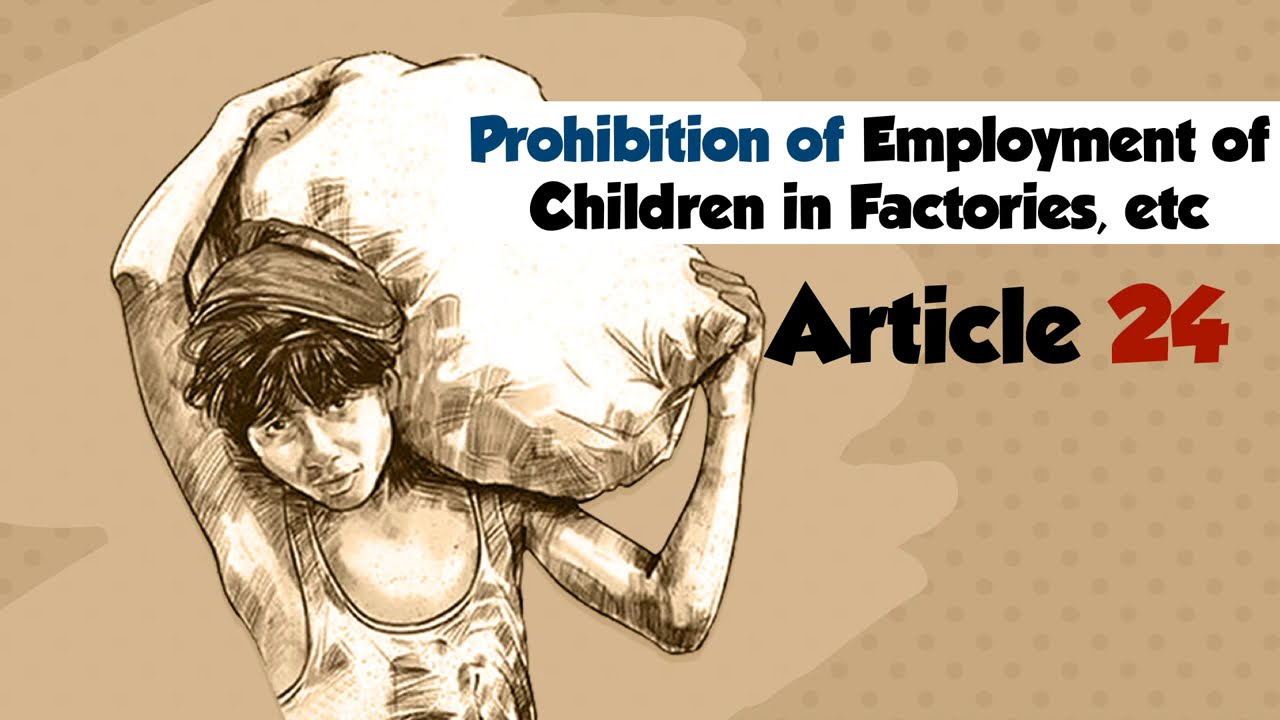
The Prohibition of Employment of Children in factories, mines, and hazardous occupations is a crucial pillar of Indian child labour law. Article 24 of the Constitution of India, which came into force in 1950, prohibits such employment. Over time, lawmakers strengthened this shield through important national rules like the Child Labour (Prohibition and Regulation) Act, 1986 and its major 2016 Amendment. These legal protections safeguard every child from work exploitation while opening pathways toward essential schooling, medical care, and complete personal growth. For students and exam aspirants, mastering these constitutional mandates and court rulings is key to understanding the human rights rules in our country.
🎯 In this chapter, you will understand:
- The constitutional protection given under Article 24 to shield kids from hazardous jobs.
- How the legal standards changed between and across various industries.
- Landmark Supreme Court orders creating special money funds to help and educate rescued young workers.
- The modern penalties, total job bans, and safety institutions setup for children and adolescents across India.
💡 Why this topic matters: Every child deserves a safe childhood filled with learning instead of hard physical work in dangerous places. Knowing these legal guarantees shows how our country protects young minds, fights exploitation, and builds a better future for everyone.
🧠 Core Idea: The government of India completely forbids hiring young kids in harmful work places, ensuring every child goes to school instead of earning money in dangerous conditions.
Comprehensive Analysis of the Prohibition of Child Employment in Factories and Hazardous Occupations in India (1986–2016)
The system of laws in India carefully controls and stops hiring children so that young people stay safe from dangerous jobs. Looking at how these legal ideas grew over the years shows a full setup where the national Constitution, main parliamentary acts, court orders, and government offices join hands to fight against child labor across the country.
- (i) Constitutional protection under Article 24 forbids hiring children under the age of in factories, deep mines, or other risky occupations.
- (ii) Many different sectoral laws support this constitutional rule to cover jobs across various businesses and trades.
- (iii) Direct court orders and updating amendments have boosted actual police checks, legal fines, and care programs for rescued children.
The Bedrock of Rights: Constitutional Prohibition of Child Labour
The Constitution of India guarantees that young children are fully protected from being used for cheap or dangerous labor. This basic promise created a very strong foundation for all the child welfare laws that were written in later years.
Article 24 – The Core Constitutional Provision and its Mandate
In the primary text of Indian law, Article 24 serves as a clear and total stop against employing any child under of age inside manufacturing factories, underground mines, or other dangerous jobs such as railway operations and building construction sites. This rule is essential for protecting basic rights and giving boys and girls the chance to go to school regularly.
- (i) The constitutional ban targets harmful and risky jobs, whereas harmless and safe tasks were not originally restricted by this specific article.
- (ii) It ensures young people can stay in classrooms while getting good food and healthy medical care.
- (iii) It serves as the main legal pillar supporting all modern amendments and court rules passed by Parliament later.

Evolution of Law: Key Legislation Addressing Child Labour
To make the constitutional promise work in everyday life, our government passed several specific acts. Together, these rules form a solid legal safety shield preventing adults from misusing young kids for hard labor.
The Child Labour (Prohibition and Regulation) Act, 1986
For many years, the Child Labour (Prohibition and Regulation) Act, 1986 was the main law for handling child work across India. It set down exact lists of banned jobs alongside daily work rules to balance child safety with workplace realities.
- (i) It banned hiring children in specific dangerous jobs and chemical processes listed in official government tables.
- (ii) It set healthy work conditions, maximum working hours, and safety steps for adolescent workers aged between .
- (iii) It created the basic structure used for future legal updates, including the major national law changes made in .
The Broad Spectrum of Supporting Acts Against Child Labour
Along with the main act from 1986, many other targeted laws give specific protections across different work sectors, making sure no dangerous job site is left without legal checks.
- (a) Employment of Children Act, 1938
- (b) Factories Act, 1948
- (c) Mines Act, 1952
- (d) Merchant Shipping Act, 1958
- (e) Plantation Labour Act, 1951
- (f) Motor Transport Workers Act, 1951
- (g) Apprentices Act, 1961
- (h) Bidi and Cigar Workers Act, 1966
Justice in Action: Judicial Directions for Child Labour
The top judges of India have repeatedly stepped in to give strict instructions to police and state officers. Their decisions ensure child labor rules are actually followed in every city, town, and village.
Supreme Court Intervention – The Child Labour Rehabilitation Welfare Fund (1996)
A huge step forward happened in when the Supreme Court of India issued historic orders in a famous case to set up the Child Labour Rehabilitation Welfare Fund. The judges commanded that any business owner caught breaking the law must pay a heavy penalty fee of ₹20,000 for each illegally hired child. This money was put into a dedicated bank fund meant purely for paying for the child's schooling, health, and living needs.
- (i) Strict cash penalties serve as a powerful warning to prevent bosses from hiring young kids for cheap labor.
- (ii) The money collected goes straight into funding school learning and rescue care programs for affected young children.
- (iii) It makes employers personally responsible in front of national courts if they break labor rules.
Guardians of Youth: Institutional Framework for Child Rights Protection
Special government commissions and legal offices were created to watch over child rights every day, creating a nationwide protective network that checks workplaces and helps victims quickly.
The Commissions for Protection of Child Rights Act, 2005
The passage of the Commissions for Protection of Child Rights Act, 2005 brought a great upgrade by opening dedicated human rights agencies at both national and state levels to speed up justice for young victims.
- (i) The National Commission for Protection of Child Rights watches over countrywide laws and checks how well child protection ideas are working.
- (ii) State-level commissions inspect local districts, handle regional problems, and solve complaints close to home.
- (iii) Dedicated Children’s Courts run quick legal trials for rights cases so victims do not have to wait years for court justice.
Expanding the Shield: Ban on Child Labour in Domestic and Service Sectors
As society realized that children were also being harmed in places other than big factories, government leaders expanded protection laws to cover home help and small local shops.
The 2006 Prohibition of Child Employment in Domestic Work
In , the government announced a major extension of the ban. It made hiring children as domestic helpers inside private homes, or as workers in roadside hotels, restaurants, tea stalls, wellness spas, and holiday resorts completely illegal across India. This stopped child exploitation in small neighborhood businesses.
- (i) Any person or shop owner who hires children for domestic or hotel service faces police arrest and criminal trial.
- (ii) It prevents kids from suffering hidden long hours of hard labor behind closed house doors or inside informal shops.
- (iii) It spreads government protection across all everyday job places outside of big manufacturing plants.
Modern Standards: Child Labour (Prohibition and Regulation) Amendment Act, 2016
The legal changes made in completely updated the old law, introducing stricter punishments and much wider bans suited for modern times.
Transformative Key Changes in the 2016 Amendment
The Child Labour (Prohibition and Regulation) Amendment Act, 2016 officially renamed the main law to the Child and Adolescent Labour (Prohibition and Regulation) Act, 1986. This update introduced major protective upgrades so that every single young person gets the chance to learn safely in school.
- (i) It put a total ban on employing children under in all jobs and businesses without exception, expanding beyond the old list of 18 occupations and 65 processes.
- (ii) It created a total ban on hiring an adolescent () in any hazardous job or risky industrial process.
- (iii) It increased criminal punishments significantly: jail time from , fines from ₹20,000 up to ₹50,000, or both punishment types together.
- (iv) For people who break this law a second time, jail time increases from , making sure repeat offenders are severely punished.
⚡ Quick Revision Capsule: Child Labour Laws Comparison
Here is a quick look at how child protection laws developed and strengthened across different legal eras in India:
| Legal Framework / Era | Age Group Covered | Key Rules & Punishments |
|---|---|---|
| Article 24 (Constitution, 1950) | Children under | Prohibits employment specifically in factories, mines, and hazardous work. |
| Child Labour Act (1986) | Children under | Banned employment in 18 dangerous occupations and 65 processes; regulated work hours for others. |
| Supreme Court Order (1996) | Rescued child workers | Ordered guilty employers to pay ₹20,000 per child into the Child Labour Rehabilitation Welfare Fund. |
| Service Sector Ban (2006) | Children under | Extended total ban to domestic house work, hotels, tea shops, and spas. |
| Amended Act (2016) | Child (<14) & Adolescent (14–18) | Complete ban for kids under 14 in all jobs; hazardous work ban for adolescents; jail up to and fine up to ₹50,000. |
📝 Summary
The total ban on child labor built through Article 24 of the Constitution, the original Child Labour Act, 1986, its updated 2016 Amendment, and checking agencies like the Commissions for Protection of Child Rights Act, 2005 ensures complete safety for young people in India. Over the period from , these protections grew from stopping factory work to protecting homes, small shops, and adolescent teenagers. These legal rules defend child health, support universal schooling, and remain an essential topic for students and competitive exam aspirants learning about national law frameworks in India.
🚀 Quick Revision Points
Essential facts to review before examinations:
- (i) Article 24 is a fundamental constitutional right prohibiting employment of children under in hazardous places.
- (ii) The landmark Supreme Court decision of established a ₹20,000 recovery penalty per child for the Child Labour Rehabilitation Welfare Fund.
- (iii) The extension made hiring kids as domestic helpers, or as workers in tea stalls, hotels, and eateries illegal.
- (iv) The updated Child and Adolescent Labour (Prohibition and Regulation) Act, 1986 (as amended in ) completely stops work for children under 14 in all sectors and protects adolescents aged from hazardous industries.
- 💡 Exam Tip: Pay special attention to the difference between a "child" (under 14 years, banned from all work) and an "adolescent" (14 to 18 years, banned only from hazardous work) under the 2016 Amendment Act!
❓ Frequently Asked Questions (FAQ)
Q1: What does Article 24 of the Indian Constitution state about child labor?
A1: Article 24 strictly bans hiring any child below of age to work in any factory, underground mine, or other dangerous occupations like railway work or building construction sites.Q2: What fine was created by the Supreme Court in 1996 for illegal child labor?
A2: The Supreme Court ordered that employers caught hiring children illegally must pay a fine of ₹20,000 for every child, which goes directly into the Child Labour Rehabilitation Welfare Fund to pay for education and healthcare.Q3: How did the 2016 Amendment change child labor rules in India?
A3: The 2016 Amendment put a complete ban on employing children under 14 in all jobs, introduced protection for an adolescent aged in hazardous jobs, and raised jail punishments up to with fines up to ₹50,000.