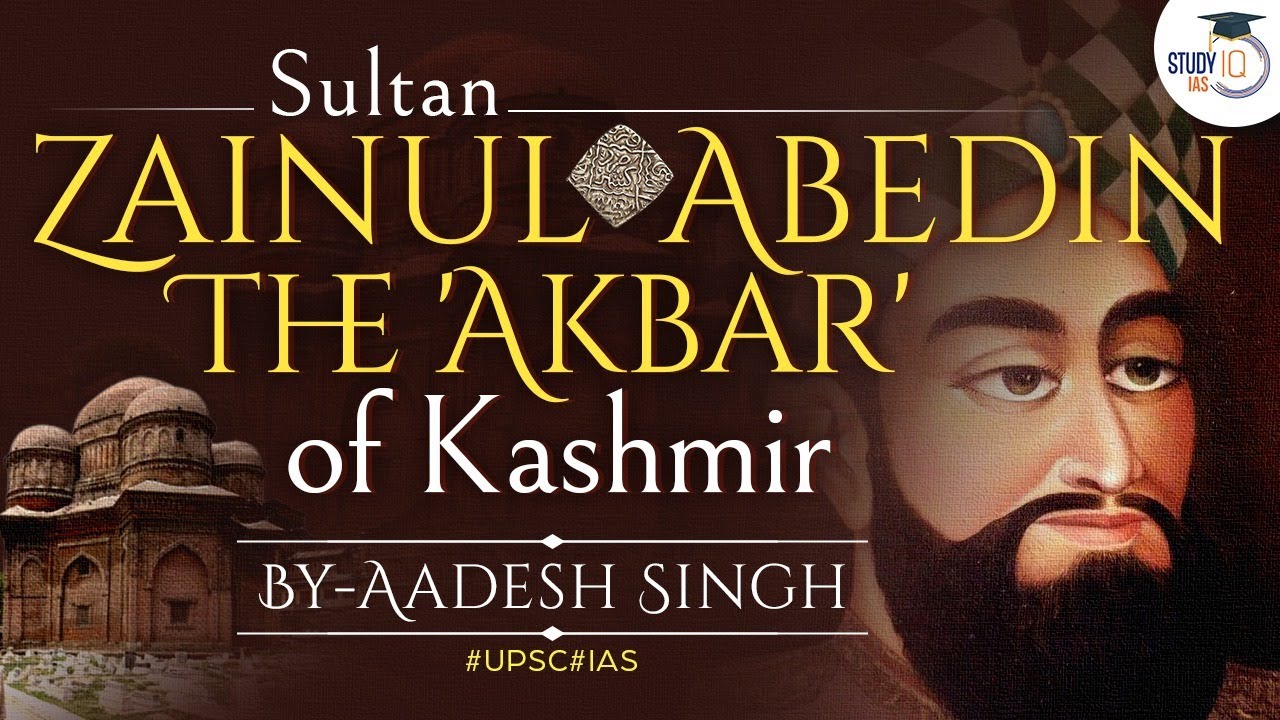
The medieval history of Kashmir is a fascinating saga of structural transitions, marked by incredible administrative genius, deep cultural patronages, and intense domestic power struggles. Following the gradual decline of the legendary Karkota Dynasty, the region entered a new era of governance under the Utpala Dynasty. Founded during a time of immense internal fragmentation, this ruling house initially restored complete economic and social stability to the valley before buckling under the pressure of fiscal exhaustion and military overreach. This chaotic breakdown ultimately set the stage for one of the most remarkable political transitions in regional history: the rise of Queen Didda and the formal birth of the Lohara Dynasty. Understanding these periods reveals how early state systems balanced military ambitions with economic realities and how domestic factions like the Tantrins shaped the medieval crown.
In this chapter, you will understand:
- How Avantivarman rebuilt the state structures and suppressed rural aristocratic insurrections.
- The military expansion under Shankaravarman and the resulting severe economic collapse.
- The dangerous political rise of the military guard known as the Tantrins.
- The absolute, ruthless consolidation of sovereign power achieved by Queen Didda.
Why this topic matters: This era highlights the classic historical cycle where administrative reform leads to state prosperity, which is then drained by aggressive foreign conquests. It also serves as a key case study in medieval Indian history regarding the political agency of female rulers and the destabilizing nature of military praetorian guards.
Core Idea: The transition from the Utpala to the Lohara Dynasty illustrates a volatile shift from domestic stabilization to severe internal chaos. Strong institutional foundations built by early kings were quickly undone by fiscal crises and military guards. This power vacuum was eventually conquered by the absolute political control of Queen Didda, establishing a brand new ruling lineage.
The Utpala Dynasty: Avantivarman, Shankaravarman, and the Rise of Tantrins
The founding of the Utpala Dynasty by Avantivarman marked a watershed moment in the history of Kashmir. It brought an essential era of structural peace, economic repair, and literary revival after decades of political drift. However, this peaceful golden age was short-lived, replaced by aggressive cross-border military campaigns that quickly drained the empire's wealth and created a dangerous power vacuum filled by ruthless internal factions.
Avantivarman: Restoration and Reforms (855–883 A.D.)
Sovereign rule from 855 A.D. to 883 A.D. belonged to Avantivarman. Backed heavily by the strategic ingenuity of his legendary minister Suyya, the king focused his attention on rebuilding state authority, stabilizing internal security, and modernizing vital infrastructure across the valley.
- (i) Administrative Success: He executed sweeping administrative reforms that successfully re-established domestic law and order. Crucially, he systematically broke the disruptive influence of the Damaras, the powerful, wealthy rural landowners who regularly challenged the crown's central command.
- (ii) Patronage and Legacy:Avantivarman was an enlightened guardian of education, philosophy, and creative arts. His royal court famously hosted world-renowned master thinkers like Anandavardhana, the intellectual giant who authored the revolutionary Sanskrit literary treatise, the Dhvanyaloka.
- (iii) Urban Development: His physical legacy includes the planned foundation of the majestic capital city Avantipur (known today as Bantipur). He also built magnificent temples and expansive monasteries, permanently elevating the architectural and spiritual landscape of medieval Kashmir.
Shankaravarman: Military Campaigns and Fiscal Exhaustion (885–902 A.D.)
The sudden passing of Avantivarman instantly ignited a brief, bloody civil war over succession. Emerging victorious, his ambitious son Shankaravarman took absolute control of the throne from 885 A.D. to 902 A.D., immediately pivoting the kingdom away from domestic peace toward an aggressive, multi-front expansionist foreign policy.

- (a) Successful Campaigns: He led massive military operations that effectively brought the strategic territory of Darvabhisara (the region nestled between the Jhelum and Chenab rivers) under royal command and forced Prithivichandra, the ruling king of Trigarta (modern Kangra), to surrender and accept his absolute overlordship.
Political Turmoil, The Tantrins' Ascendancy, and Utpala's Fall
Through clever, high-stakes political maneuvers, he forced the powerful Pratihara monarch Mahendrapala to officially give up vast, valuable territories in the Punjab, stretching Kashmiri geopolitical influence to new horizons. However, these massive wars carried a devastating price tag.
- (i) Fiscal Crisis and End: Constant foreign military campaigns completely emptied the royal treasury. To survive, the king imposed crushing, predatory taxes on citizens and resorted to corporate temple looting and forced labor, sparking vast societal rage. He was eventually killed during a chaotic expedition through Hazara (historically known as Urasa).
- (ii) The Puppet Kings: The post-campaign era plunged Kashmir into a dark age of rapid-fire assassinations and helpless child rulers. This allowed the Tantrins, a highly organized and ruthless royal military guard, to usurp control and dictate who sat on the throne purely for financial bribes. They repeatedly crowned and dethroned weak monarchs like Partha, Chakravarman, and Suravarman.
- (iii) The Final Collapse: Following the tyrannical and short rule of Unmattavanti, the final prince Suravarman II held power for just seven days before being thrown out by the army commander Kamalavardhana. Rejecting the military takeover, an elite assembly of Brahmanas intervened and chose the scholar Yashaskara as king, officially ending the turbulent Utpala Dynasty in 939 A.D..
Yashaskara's Interlude and the Rise of Queen Didda and the Lohara Dynasty
The structural choice of Yashaskara brought a desperately needed window of legal peace to the region. Yet, the deep-seated decay within the administrative ranks quickly resurfaced, causing a series of brutal political betrayals and internal murders that ultimately cleared a path for a historic transition of power.
- (i) Yashaskara and Parvagupta:Yashaskara rules well from 939 A.D. to 948 A.D., bringing structural order back to the valley. However, his tragic death left his infant son Samgramadeva vulnerable. Within six months, the corrupt minister Parvagupta murdered the child and seized the crown in 949 A.D., ruling with an iron, heavily taxed fist until his death.
Queen Didda's Absolute Rule (980–1003 A.D.)
In 950 A.D., Parvagupta’s son Kshemagupta took the throne. His historical importance rests almost entirely on his elite political marriage to Didda, the highly intelligent daughter of the powerful Lohara King Simharaja.
Numismatic evidence showing historical coins struck during the medieval period, marking the influential rise of Queen Didda. - (a) The Strategic Regency: When Kshemagupta died in 958 A.D., Didda stepped forward as the official regent for her young son, Abhimanyu. She completely dominated the state machinery, outmaneuvering rivals and putting down palace coups with absolute precision.
- (b) Consolidation of Power: Driven by an uncompromising drive to rule, Didda systematically ordered the execution of her own young grandsons—including Nandigupta and two subsequent child successors—who tried to claim power after Abhimanyu, placing the entire valley under her single control.
- (c) Lohara Succession: In 980 A.D., Didda shed her title as regent and officially crowned herself monarch, wielding absolute authority as an independent female sovereign. Before her death in 1003 A.D., she secured her family legacy by naming her capable nephew, Samgramaraja, as the next inline ruler, formally establishing the legendary Lohara Dynasty.
Quick Revision Capsule
Review the key political timelines, core strategies, and historical outcomes of the medieval rulers of Kashmir:
| Ruler / Faction | Reign / Timeline | Core Political Strategy | Historical Impact & Legacy |
|---|---|---|---|
| Avantivarman | 855–883 A.D. | Internal restoration, infrastructure, and crushing the rural Damaras. | Founded the Utpala Dynasty; ushered in a golden age of peace and culture. |
| Shankaravarman | 885–902 A.D. | Aggressive foreign conquest and intense cross-border military expansion. | Bankrupted the state treasury, leading to heavy taxes and social unrest. |
| The Tantrins | Early 10th Century | Military coercion, political corruption, and bribery. | Turned the Kashmiri crown into a weak, destabilized puppet regime. |
| Yashaskara | 939–948 A.D. | Judicial assembly choice and democratic stabilization. | Briefly checked the military anarchy before falling to ministerial murder. |
| Queen Didda | 980–1003 A.D. | Ruthless consolidation, elimination of rivals, and independent female sovereignty. | Stabilized the realm and directly established the historic Lohara Dynasty. |
Summary
The political transition of medieval Kashmir from the mid-ninth to the early eleventh century highlights a dramatic cycle of order, decay, and transformation. The Utpala Dynasty began as a brilliant model of domestic rebirth under Avantivarman, who prioritized economic infrastructure and architectural innovation. However, the subsequent military adventures of Shankaravarman broke the empire's financial backbone, opening the gates to catastrophic civil wars and the political tyranny of the Tantrin military guards. This dark age of puppet kings was eventually brought to an end by the political brilliance and iron will of Queen Didda. Managing the state first as a protective regent and later as an absolute, independent monarch, she crushed internal rebellions and successfully shifted the crown to the Lohara Dynasty in 1003 A.D., ensuring long-term continuity for the Kashmiri state.
Key Revision Checkpoints
Keep these essential historical facts in mind for your upcoming exams:
- (i) The Utpala Dynasty was founded by Avantivarman in 855 A.D., effectively replacing the declining Karkota lineage.
- (ii) Minister Suyya was the architectural brains behind the massive agricultural and flood-control drainage projects of the era.
- (iii) The Tantrins acted as a praetorian guard, holding absolute veto power over royal succession through bribes and physical terror.
- (iv) Queen Didda successfully united the royal lines of Lohara and Kashmir, marking one of the few instances of absolute female rule in medieval India.
- Exam Tip: High-scoring answers must explicitly distinguish between the internal consolidation strategy of Avantivarman and the ruinous external expansion policy of Shankaravarman. Make sure to emphasize the literary role of Anandavardhana's Dhvanyaloka as a key marker of cultural success.
Frequently Asked Questions (FAQ)
Q1: Who were the Damaras and why were they suppressed?
A1: The Damaras were powerful, rich rural landowners and feudal lords in medieval Kashmir. They constantly challenged central royal authority and destabilized the state, forcing strong kings like Avantivarman to systematically curb their power to protect internal peace.Q2: How did Shankaravarman’s foreign policies damage the domestic population?
A2: While his conquests won territories in Punjab and Kangra, the cost of maintaining these massive armies completely emptied the royal treasury. To pay for his campaigns, he levied harsh, predatory taxes and looted local temples, creating massive public unrest.Q3: What makes Queen Didda's rule uniquely significant in Indian history?
A3: Queen Didda overcame the deep patriarchal barriers of the tenth century by ruling first as an incredibly capable regent and later as an independent sovereign with absolute authority. Her reign crushed internal factions and directly birthed the stable Lohara Dynasty in 1003 A.D..