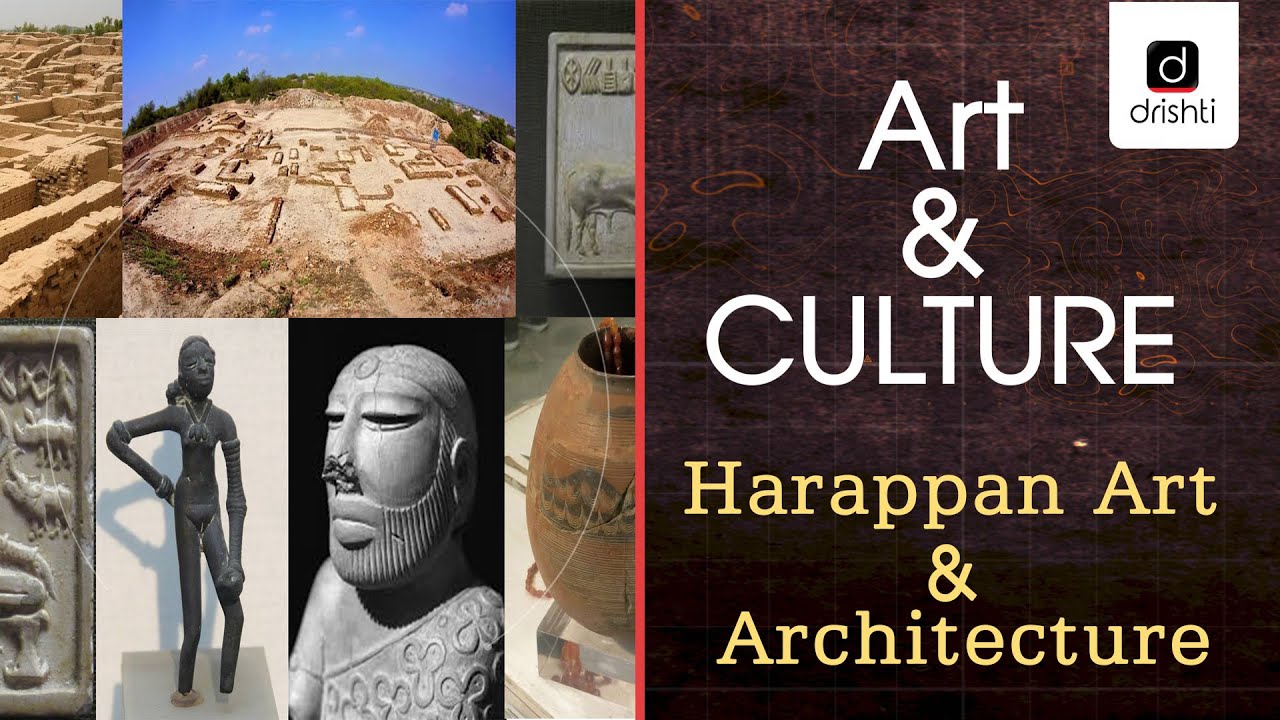
Learning about Harappan seals gives clear insights for students getting ready for ancient history exams. These objects were mostly made from soft steatite. They show us the spiritual life, trade networks, and skilled craft of the Indus Valley Civilization (IVC) between . Thousands of seals feature detailed animal carvings and the unread Harappan script, making them key pieces of evidence for studying this era.
🎯 In this chapter, you will understand:
- The materials, design, and commercial uses of Harappan seals.
- The animal motifs and the unread pictographic script carved on steatite.
- The religious meaning of the famous Pashupati Seal and copper tablets.
- Key archaeological sites like Mohenjodaro and Harappa where these seals were found.
💡 Why this topic matters: Seals are primary artifacts that explain how the Indus Valley Civilization managed trade, recorded property, and practiced religious rituals.
🧠 Core Idea: Carved mainly from soft steatite, Harappan seals combine artistic animal figures with short script inscriptions to serve both economic and personal protective purposes.
Harappan Seals: Significance in Trade, Religion, and Artistry During the Mature Harappan Period (2500–1900 BCE)
These small, carved objects were central to daily life across the ancient Indus Valley Civilization. They highlight fine carving skills alongside strong symbolic images of animals.
The discovery of thousands of intact seals gives us a direct view into the work and beliefs of the Harappan people. It shows their high standard of material production and artistic balance.
- (i) Most seals were carved from steatite, a soft stone that was easy to work with. Craftsmen also used agate, chert, copper, and faience.
- (ii) A standard seal included a main animal figure, a short phrase in the Harappan Pictographic Script, and a raised boss on the back with a hole for a cord.
- (iii) These items prove that the Harappan society maintained organized records and traded regularly across local and distant regions.
Artistic Mastery in Harappan Seals: Decoding Animal Motifs and Pictographic Script
The true value of these seals comes from their detailed carving style. The animal drawings often held religious or symbolic meaning within the community.
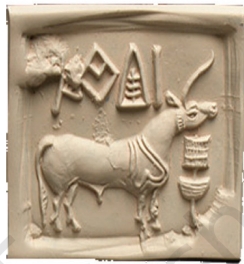
Detailed Animal Motifs: Harappan Spiritual and Commercial Symbols
Carvers created realistic animal figures on tiny stone surfaces, showing both natural features and active movement.
- (i) Iconography of Power: Popular motifs include the mythical single-horned creature, alongside strong animals like the rhinoceros, tiger, elephant, bison, buffalo, and goat. These choices suggest respect for natural forces.
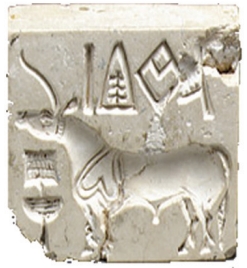
Reverse side of a Harappan seal showing the perforated boss used for holding or wearing the seal. - (ii) Realism and Lifelike Shapes: The animals display correct body proportions and energetic poses, showing that the carvers carefully observed wildlife.
- (iii) Trade and Personal Protection: Merchants used seals to mark clay tags on packages. Many individuals also wore them as protective amulets.
- (iv) The Unread Writing: Almost every seal carries a short line of the Harappan Pictographic Script. Because this language is still not translated, its exact message remains unknown.
- (i) Iconography of Power: Popular motifs include the mythical single-horned creature, alongside strong animals like the rhinoceros, tiger, elephant, bison, buffalo, and goat. These choices suggest respect for natural forces.
The Pashupati Seal: Unveiling Early Harappan Religious Beliefs
One specific seal, known as the Pashupati Seal, offers useful evidence regarding early religious thought. Many scholars view it as an early form of the god Shiva in his role as ruler of animals.
- (i) The Main Seated Figure: The seal depicts a human figure sitting cross-legged in a yogic position on a low platform, indicating a ritual or sacred setting.
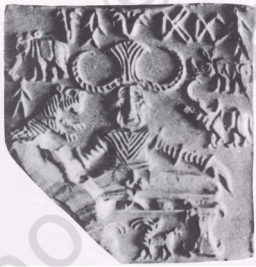
The Pashupati Seal depicting a seated deity surrounded by animals, studied as an early origin of Shiva. - (ii) Surrounding Wild Animals: An elephant and a tiger stand on the right side of the seated figure, while a rhinoceros and a buffalo are on the left, with two antelopes placed below the seat.
- (iii) Historical Interpretation: Archaeologist Sir John Marshall identified this figure as Pashupati Mahadev (Lord of Animals), highlighting a key stage in the growth of ancient Indian religious traditions.
- (i) The Main Seated Figure: The seal depicts a human figure sitting cross-legged in a yogic position on a low platform, indicating a ritual or sacred setting.
Copper Tablets: Engraved Inscriptions and Figures for Personal Use
Beside stone seals, Harappans made small metal items known as copper tablets, which carried carved drawings and short texts.
- (a) Physical Features: These objects were small square or rectangular copper pieces, cut flat and carved with simple drawings of animals or people.
- (b) Inscribed Back Surface: The back of each plate contained short, clear signs cut into the metal using sharp tools.
- (c) Function as Portable Tokens: Because copper is durable and these plates were small, experts believe people carried them as personal tokens or protective items rather than using them for sealing trade goods.
⚡ Quick Revision Capsule: Harappan Artifact Comparison
Use this table to review the primary differences between steatite seals, the Pashupati seal, and copper tablets.
| Artifact Type | Primary Material | Key Motifs / Features | Main Function |
|---|---|---|---|
| Standard Seals | Soft steatite (also agate, chert) | Unicorn, elephant, tiger, short script | Trade authentication and property marking |
| Pashupati Seal | Carved steatite | Seated yogic figure, 5 animal species, antelopes | Religious ritual or spiritual symbolism |
| Copper Tablets | Flat sheet copper | Human/animal figures, etched back inscription | Personal tokens and protective amulets |
Dating and Discovery Sites: Chronological Markers for the Mature Harappan Phase
Where these seals were found and when they were made helps confirm the timeline of the Indus Valley Civilization.
- Timeline Confirmation: Most recovered seals belong to the Mature Harappan era, placing their main production period between .
- Major Archaeological Sites: Large quantities of seals came from the major urban centers of Mohenjodaro and Harappa, as well as smaller trading outposts across the region.
Conclusion: The Enduring Importance of Harappan Seals for Archaeological Study
Harappan seals remain primary sources for learning about the Indus Valley Civilization. They offer direct evidence regarding business methods, religious practices like the Pashupati figure, and carving skill. For students preparing for history tests, knowing the traits of steatite seals, animal symbols, and the unread script forms a necessary base for ancient history revision.
📝 Summary
Harappan seals crafted between show the artistic skill and economic organization of ancient India. Made mainly from soft steatite stone, these artifacts carry animal carvings, unread script lines, and functional handles. Discoveries at Mohenjodaro and Harappa confirm their use in marking trade packages and recording personal identity.
🚀 Quick Revision Points
Essential facts to review before examinations:
- (i) Most seals were carved from soft steatite stone and featured a raised back boss for cords.
- (ii) The single-horned mythical creature (unicorn) is the most common animal motif.
- (iii) The Pashupati Seal shows a central seated figure surrounded by an elephant, tiger, rhinoceros, buffalo, and two antelopes.
- (iv) Small copper tablets with etched signs served as durable personal tokens and protective amulets.
- 💡 Exam Tip: Remember that Harappan script was written from right to left, remains undeciphered, and appears mostly as short lines on steatite seals.
❓ Frequently Asked Questions (FAQ)
Q1: What was the primary material used to make Harappan seals?
A1: Most seals were carved from soft steatite stone, though copper, faience, agate, and chert were also used.Q2: What is the significance of the Pashupati Seal?
A2: Identified by Sir John Marshall, it depicts a central seated yogic figure surrounded by animals, considered an early form of Shiva.Q3: How were Harappan seals used in trade?
A3: Merchants pressed the carved seals into soft clay tags tied over goods to verify ownership and prevent tampering during transport.