The Pala School of Painting represents a crucial chapter in Indian miniature art history, flourishing in Eastern India from to the . This tradition, primarily focused on manuscript illustration on palm leaves, utilized distinct Buddhist themes and influenced art across Asia. Understanding this style is vital for students preparing for exams on ancient and medieval Indian art and culture.
🎯 In this chapter, you will understand:
- The origins and religious roots of the Pala miniature art tradition in Eastern India.
- The medium, flowing linework, and soft color palette used on palm-leaf manuscripts.
- The critical role of monastic university hubs like Nalanda and Vikramsila in spreading iconography across Asia.
- Comparative links to Jain manuscript painting traditions and the historical reasons behind the school's decline.
💡 Why this topic matters: The Pala School marks the historical beginning of miniature painting in India, establishing a precedent for illustrated manuscripts and religious iconography across South and Southeast Asia.
🧠 Core Idea: Pala art combines devotional Buddhist imagery with meticulous technical execution on palm leaves, supported by royal patronage and monastic scholarship.
🎨 Pala School of Painting: The Flourishing of Eastern Indian Miniature Art and Buddhist Manuscript Illustration ( – )
The Pala School marks the inception of miniature painting in Eastern India, deeply rooted in the devotional fervor of Buddhism and the academic atmosphere of the great monastic universities.
This distinct art form developed under the patronage of the Pala Dynasty, whose rulers were dedicated patrons of Buddhist learning and Vajrayana teachings. The artwork served a functional and religious purpose, providing visual context to the sacred texts.
- (i) The movement emerged during the Pala period, which spanned roughly from to the , primarily in regions encompassing modern Bihar and Bengal.
- (ii) The art form is overwhelmingly characterized by manuscript paintings, primarily created to illustrate religious texts used in celebrated monastic institutions, acting as illuminated scriptures for monks and scholars.
- (iii) The subjects were predominantly drawn from Vajrayana Buddhism, featuring deities, Bodhisattvas, and scenes from Buddhist cosmology, reflecting the dominant spiritual leanings of the ruling dynasty and intellectual centers.
🖌️ Unique Characteristics of Pala Style: Form, Medium, and Regional Influence
The Pala style is immediately recognizable for its sophisticated technique, utilizing specific materials and a pictorial language that sets it apart from contemporary painting schools in other parts of the subcontinent.
Medium and Technique: The Art of Painting on Palm Leaves
The primary canvas for the Pala artists was the prepared palm leaf, a medium that naturally constrained the size of the artwork, thus cementing the tradition of miniature painting. These leaves were meticulously prepared and bound to form the illustrated manuscripts.
- (i) The paintings were typically executed on palm leaves (tada-patra), with the size of the illustration dictated by the width of the leaf, rarely exceeding a few square inches.
- (ii) A critical characteristic is the use of flowing, sinuous lines and a palette dominated by subdued color tones, creating a soft, elegant aesthetic that emphasizes grace over dramatic contrast.
- (iii) This distinctive linear style and color choice stand in contrast to other contemporary Indian painting traditions, particularly the more vigorous and angular forms seen in Jain paintings from the Western Indian School.
Patronage and Dissemination: The Monastic Centers of Learning
The great Buddhist monasteries, such as Nalanda and Vikramsila, acted not only as repositories of knowledge but also as the chief patrons and centers for the production of Pala art. This central role facilitated the broad geographical reach of the style.
- (a) Manuscripts were richly adorned with images of Vajrayana Buddhist deities, serving as both religious objects and educational aids for the numerous monks residing in the centers.
- (b) Key centers where this tradition flourished and the most important works were produced included Nalanda and Vikramsila, which were major international hubs for Buddhist studies.
- (c) The artistic style was highly influential, contributing significantly to the dissemination of Pala art and Buddhist iconography across Asia, including Nepal, Tibet, Burma, Sri Lanka, and Java.
Iconic Pala Manuscripts and the Connection to Jain Illustrations
While the Pala School is primarily Buddhist, the provided images, such as those from the Kalpasutra, demonstrate how the form and technique of manuscript illustration were also employed in parallel religious traditions, offering a comparative understanding of Indian miniature styles.
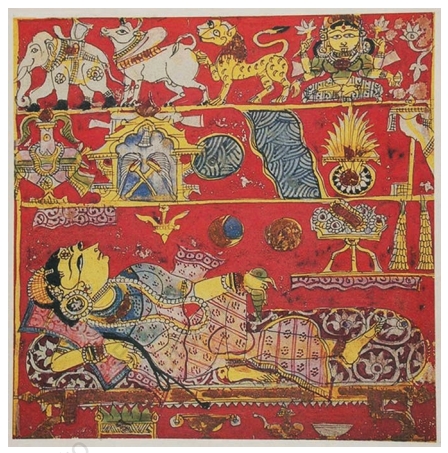
Trishala's Fourteen Dreams - A powerful depiction from the Kalpasutra, showing the fourteen auspicious dreams of Queen Trishala, which foreshadow the birth of her son, Mahavir, the great Tirthankara of Jainism. [The Dissemination of Wisdom]: Manuscripts like the Astasahasrika Prajnaparamita (The Perfection of Wisdom in Eight Thousand Lines) are prime examples of the Pala Buddhist style, illustrating the profound philosophical teachings of the Mahayana Sutras.
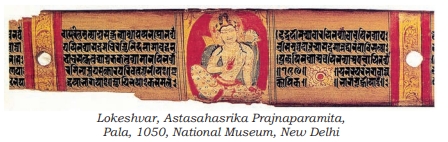
Astasahasrika Prajnaparamita - A key manuscript of Mahayana Buddhism, depicting the teachings of the Prajnaparamita Sutra, an important text on wisdom and the perfection of insight. [The Birth of a Tirthankara]: Illustrations depicting scenes like the Birth of Mahavir from the Kalpasutra, while belonging to the Jain tradition, use the technique of miniature manuscript painting, showcasing the shared artistic medium across Eastern and Western Indian Schools.
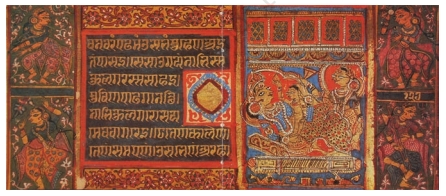
Birth of Mahavir - A depiction from the Kalpasutra, illustrating the birth of Mahavir, the 24th Tirthankara of Jainism, symbolizing the beginning of his spiritual journey and teachings. [Decline of the School]: The flourishing Pala tradition saw its eventual decline with the collapse of the Pala Dynasty and the devastating impact of Muslim invaders in the , which led to the destruction of the great monastic universities, and subsequently, the patronage base for this unique art form.
📚 Understanding Core Concepts and Study Relevance: Key Questions on Pala Art
To grasp the significance of this art, it is crucial to define its central medium—the manuscript painting—and identify the locations that defined its existence, concepts vital for students.
Defining Manuscript Painting and Centers of Excellence
The term Manuscript paintings specifically refers to illustrations that accompany the written text within a manuscript, often executed on durable materials like palm leaves, and typically detailing religious or cultural narratives. The Pala School is the pinnacle example of this tradition in Eastern India.
- (i) What are manuscript paintings?: They are miniature artworks embedded into manuscripts to visually interpret or elaborate upon the textual content, often utilizing materials such as palm leaf or paper (in later traditions).
- (ii) Name two places where the tradition of manuscript painting was prevalent: The tradition thrived in the intellectual and monastic centers of Eastern India, most notably:
- (a) Nalanda: The ancient, prominent Buddhist learning center, where countless manuscripts were illustrated and preserved.
- (b) Vikramsila: Another pivotal Buddhist monastery and a major center for the production and study of the Pala artistic style.
Applying the Concept: Creating an Illustrated Folio for Students
The act of creating an illustrated folio is a practical exercise in understanding how art and literature were historically integrated. It requires selecting a chapter from a language textbook and designing illustrations to visually enhance and clarify the narrative or information within the text over minimum five pages.
- (i) This task involves choosing a literary, historical, or educational chapter and then developing a visual story, where illustrations are perfectly relevant to the corresponding text.
- (ii) For instance, if a chapter narrates a pivotal historical event, the illustrations must depict the scenes, settings, and characters involved, much like the Pala artists illustrated Buddhist Jatakas or the Kalpasutra illustrated Jain stories.
⚡ Quick Revision Capsule: Pala School of Painting
A quick comparison of key attributes defining the Pala School of miniature painting:
| Feature | Pala School (Eastern) | Western Indian School (Jain) |
|---|---|---|
| Primary Period | to | to |
| Dominant Medium | Palm leaf (tada-patra) | Palm leaf, later paper |
| Religious Focus | Vajrayana Buddhism | Jainism (e.g., Kalpasutra) |
| Artistic Style | Sinuous lines, subtle color tones | Angular lines, bold contrasting colors |
| Key Centers | Nalanda, Vikramsila | Gujarat, Rajasthan |
📝 Summary
Flourishing between and the , the Pala School of Painting pioneered illuminated palm-leaf manuscripts in Eastern India. Heavily patronized by the Pala rulers and centered around monastic universities like Nalanda and Vikramsila, this style captured Vajrayana Buddhism iconography through graceful linework and soft hues. Key works like the Astasahasrika Prajnaparamita reflect its philosophical depth, while similar methods in the Jain Kalpasutra show cross-regional technique sharing across medieval India.
🚀 Quick Revision Points
Essential facts to review before examinations:
- (i) Timeframe: Spanned from to the in Bihar and Bengal.
- (ii) Canvas: Painted on small palm leaves (tada-patra) using delicate, flowing lines.
- (iii) Key Texts: Famous for illuminating the Astasahasrika Prajnaparamita.
- (iv) International Reach: Iconography spread directly to Nepal, Tibet, Burma, Sri Lanka, and Java.
- 💡 Exam Tip: Pay attention to the contrast between Pala miniatures (flowing lines, Buddhist themes, palm leaves) and Western Indian miniatures (angular lines, Jain themes, early paper adoption). Highlighting these differences yields top marks in comparative questions.
❓ Frequently Asked Questions (FAQ)
Q1: What is the primary medium used in Pala School miniature paintings?
A1: The primary medium is prepared palm leaf (tada-patra), which restricted the artwork size to small miniature panels.Q2: Which major learning centers produced Pala manuscript art?
A2: Production was concentrated in monastic universities, mainly Nalanda and Vikramsila in modern-day Bihar.Q3: What caused the end of the Pala painting tradition?
A3: The collapse of the Pala Dynasty and 12th-century invasions led to the destruction of major monastic centers, removing the core patronage and infrastructure for the art form.