
A comprehensive study of Harappan artistic and material heritage helps us understand their major contributions to ancient history and trade. During the Mature Harappan period (), artisans worked with clay, stone, metals, and semi-precious stones to craft items for spiritual use, trade, and personal decoration, showing their religious beliefs, daily life, and skilled techniques.
🎯 In this chapter, you will understand:
- The role of terracotta art in depicting deities and daily living.
- How steatite seals and scripts functioned in ancient commerce and faith.
- The technical craft behind Harappan pottery, beads, and personal ornaments.
- Iconic bronze and stone sculptures like the Dancing Girl and Pashupati Seal.
💡 Why this topic matters: Harappan artifacts reveal the roots of urban planning, metal craftsmanship, and religious symbolism in South Asian history.
🧠 Core Idea: Harappan material culture balanced practical everyday use with high artistic skill and trade authentication.
Terracotta Art in the Indus Valley: Figurines of Deities and Depictions of Daily Life
Abundant terracotta objects provide a primary look into religious life and daily routines, displaying a folk-like style that contrasts with the refined stone and bronze pieces.
Terracotta Figurines: Religious Symbolism of the Mother Goddess and Human Forms
Baked clay (terracotta) was used to make everything from simple human figures to detailed animal toys.
- (i) The Indus Valley people were active craftsmen, making many human and animal figures from available baked clay.
- (ii) Crude Human Forms: Figures from regional sites like Gujarat and Kalibangan show unique local styles, with some achieving impressive realism.
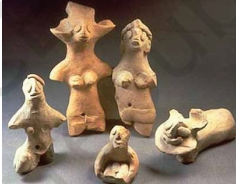
Terracotta Clays - The primary raw material used for pottery, toys, and figurines across the Indus Valley Civilization. - (iii) Mother Goddess Figurines: Central to Harappan faith, these standing female figures wear heavy jewelry and detailed head-dresses, symbolizing fertility and prosperity.
Terracotta Figures - Small statues showcasing the variety of styles created by Harappan craftsmen. 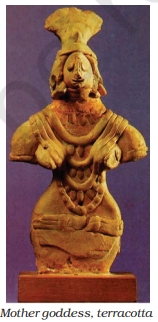
Mother Goddess - A common terracotta figure representing fertility in ancient Harappan worship. - (iv) Bearded Male Figurines: Standing male figures with styled hair may represent priests or specific deities.
- (v) Horned Deity Mask: Terracotta masks with prominent horns suggest ritual worship of horned figures.
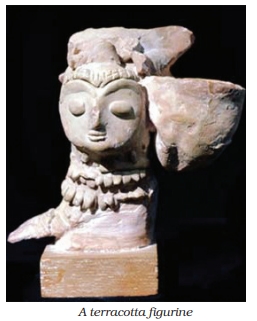
Terracotta Figurine - An example highlighting Harappan modeling techniques. Other Terracotta Artifacts: Insights from Toys and Daily Utilities
Beyond spiritual idols, clay was used for everyday household tools and playthings, showing details of their social structure and daily life.
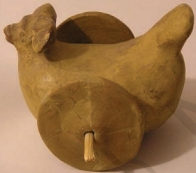
- (a) Toy Carts with Wheels: Excavated toy carts show their skill in design and confirm the use of wheeled transport in daily life.
- (b) Whistles, Rattles, and Discs: Common items used for home entertainment, noise-making, and children's games.
- (c) Detailed Animal Figurines: Figures of birds and animals show how closely artisans observed nature.
Seals of the Indus Valley Civilization: Windows into Trade, Symbolism, and the Script
Thousands of seals made from soft stone (steatite) feature carved animals and the unread Harappan script, serving as trade stamps and cultural items.
Characteristics of Seals: Masterful Animal Motifs and Trade Utility
Harappan seals stand out for their realistic depictions of animals, often carrying mythical or religious meaning.
- (i) Animal Motifs: Popular carvings include the mythical Unicorn, along with the Rhinoceros, Tiger, Elephant, Bison, Buffalo, and Goat.
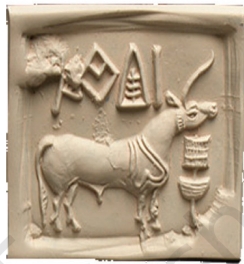
Unicorn Seal - The popular unicorn motif found on Harappan seals, likely an important symbol in trade or belief. 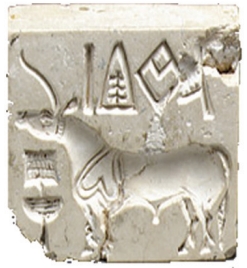
Unicorn Seal Reverse - Rear view showing the structural design of a standard steatite seal. - (ii) Realism and Detail: Animals are carved with accurate body shapes and dynamic poses.
- (iii) Primary Use: Seals were used to mark property and seal goods in trade, while also serving as personal protective amulets.
- (iv) Pictographic Script: Most seals carry short lines written in the Harappan Pictographic Script, which remains undeciphered today.
- (i) Animal Motifs: Popular carvings include the mythical Unicorn, along with the Rhinoceros, Tiger, Elephant, Bison, Buffalo, and Goat.
The Pashupati Seal: Unveiling Harappan Religious Beliefs (Early Shiva Prototype)
This key seal is believed by archaeologists to show an early prototype of the deity Shiva in his form as the Lord of Animals.
- (i) The central figure sits cross-legged in a yogic pose on a low platform.
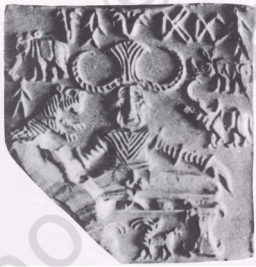
Pashupati Seal - An important seal showing a deity surrounded by animals, linked to early worship of Shiva. - (ii) The figure is surrounded by an Elephant, Tiger, Rhinoceros, and Buffalo, with two Antelopes placed beneath the seat.
- (iii) Because of these surroundings and posture, the figure is identified as Pashupati Mahadev.
- (i) The central figure sits cross-legged in a yogic pose on a low platform.
Copper Tablets: Engraved Inscriptions and Figures for Personal Use
Small copper pieces provided a lasting surface for fine engravings and personal use.
- (i) Rectangular copper pieces were carved with figures of animals or humans on one side.
- (ii) The back featured short inscriptions etched with a sharp chisel tool.
- (iii) Their small size suggests they were carried as personal amulets rather than used for bulk stamping.
Sites of Discovery and Chronological Dating of Seals
The vast number of seals helps date the main active phase of the civilization.
- (i) Most seals belong to the Mature Harappan period ().
- (ii) Key discovery sites include major centers like Mohenjodaro and Harappa.
Pottery, Beads, Ornaments, and Crafts: Daily Life and Advanced Adornment Culture
Recovered pottery, beads, and metal items reveal household routines and skilled jewelry craftsmanship among the Harappan people.
Pottery of the Indus Valley: Technical Excellence and Decorative Tradition
Harappan ceramic work balanced basic domestic utility with clear painted designs.
- (i) Wheel-made Pottery: Most pots were shaped on a potter's wheel using fine red clay, though simple hand-molded pots were also made.
- (ii) Plain Pottery: The most common type, finished with a smooth red coating for storing food and cooking.
- (iii) Black Painted Ware: Features glossy black drawings of geometric lines, leaves, and trees over a bright red clay base.
- (iv) Polychrome Pottery: Rare small jars decorated with several colors like red, black, green, and white.
- (v) Incised Ware: Pots with carved lines or grooves, mostly seen on bases or pan stands.
- (vi) Perforated Pottery: Vessels built with many small holes, used as strainers for liquids.
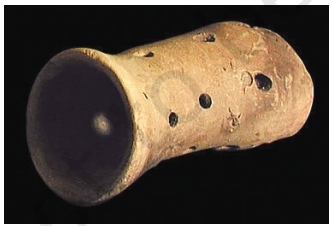
Perforated Pot - A specialized pot with holes, likely used to strain liquids or drinks. - (vii) Miniature Pottery: Very small vessels under an inch tall, made for special ritual tasks or storage.
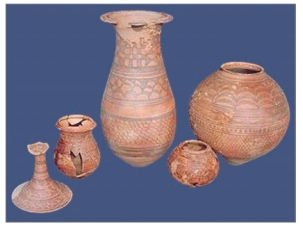
Indus Valley Pottery - Showing the variety of shapes and uses in Harappan ceramics. Beads and Ornaments: The Advanced and Luxurious Adornment Culture
Artisans made detailed jewelry using metals and polished stones, showing advanced skill in bead production.
- (i) Ornaments: Necklaces, armlets, earrings, and bangles were made from gold, silver, carnelian, and terracotta.
- (ii) Excavations: Major hoards of jewelry have been found at Mohenjodaro and the port city of Lothal.
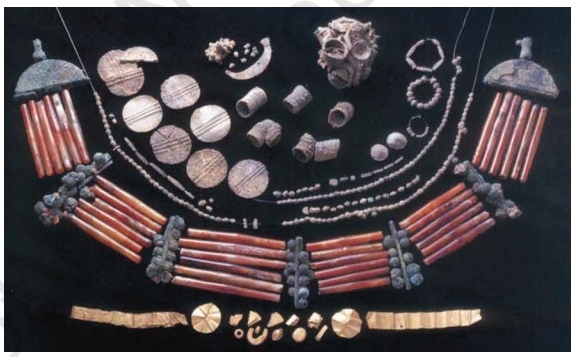
Beads & Jewelry - Examples of the adornment style and stone bead industry in the Indus Valley Civilization. - (iii) Bead Industry: Specialized workshops operated at Chanhudaro and Lothal, shaping stones like carnelian, jasper, quartz, and imported lapis lazuli.
- (iv) Bead Shapes: Stones were shaped into discs, cylinders, spheres, and barrels.
- (v) Decoration: Finished beads were decorated by etching, carving, or applying gold leaf.
- (vi) Animal Models: Tiny clay models of monkeys and squirrels served as decorative pinheads or specialized beads.
Textiles, Fashion, and Stone Craftsmanship in Harappan Society
Spinning tools and stone construction at sites like Dholavira highlight complete material mastery.
- (i) Textiles: Workers spun cotton & wool thread, as proven by many found spindle whorls.
- (ii) Clothing: People wore lower wraps similar to dhotis along with upper shawls worn over the left shoulder (as seen on the Priest-King statue).
- (iii) Fashion: Statues show arranged hairstyles and trimmed beards.
- (iv) Cosmetics: Evidence points to the use of cinnabar for cosmetics and eye cosmetics like kohl.
- (v) Stone Craftsmanship: Polished stone structures at Dholavira show advanced masonry alongside bronze casting.
⚡ Quick Revision Capsule: Harappan Material Artifacts
A quick summary of key artifacts, materials, and their main uses in Indus Valley society.
| Artifact Category | Primary Material | Key Function / Significance |
|---|---|---|
| Terracotta Statues | Baked Clay | Mother Goddess worship, children's toys, and household models. |
| Seals | Steatite (Soft Stone) | Trade authentication, property stamps, and protective amulets. |
| Pottery | Red Clay & Black Pigment | Food storage, liquid straining (perforated pots), and decoration. |
| Beads & Jewelry | Carnelian, Gold, Lapis Lazuli | Personal adornment, trade items, and wealth markers. |
| Bronze Sculptures | Copper-Tin Alloy | Metal casting mastery (e.g., Dancing Girl using lost-wax method). |
📝 Summary
The Indus Valley Civilization is remembered for its developed urban crafts between . From terracotta figurines and trade seals to fine pottery and gemstone beads, these items show organized trade and daily routines. Studying these artifacts helps students build foundational knowledge for history and cultural studies of ancient India.
🚀 Quick Revision Points
Essential facts to review before examinations:
- (i) Steatite seals were used for trade security and carried the Harappan script.
- (ii) The lost-wax bronze casting method produced famous statues like the Dancing Girl.
- (iii) Major bead production workshops were located at Chanhudaro and Lothal.
- (iv) Perforated pots served as ancient liquid strainers.
- 💡 Exam Tip: Remember the difference in materials: seals were primarily made from steatite, while everyday figurines were made from baked terracotta clay.
❓ Frequently Asked Questions (FAQ)
Q1: What was the primary purpose of Indus Valley seals?
A1: They were mainly used to stamp goods in trade, verify property, and serve as personal protective amulets.Q2: Which technique was used to make the famous bronze Dancing Girl?
A2: It was made using the lost-wax technique (cire perdue), showing advanced metallurgy.Q3: What materials were used in the Harappan bead-making industry?
A3: Artisans used semi-precious stones like carnelian, jasper, agate, and lapis lazuli, along with gold and silver.