
The Indus Valley Civilization (IVC), spanning , showcased profound artistic skill, particularly in Stone Sculpture and the advanced technique of Bronze Casting. These artefacts, including the iconic Dancing Girl and various animal figures, are fundamental pieces for understanding the aesthetic, social, and technological prowess of the Harappan era, making them essential knowledge for students preparing for history and art-focused examinations.
🎯 In this chapter, you will understand:
- The transition of Harappan artists from clay modeling to complex stone carving and metal casting.
- The step-by-step technological process behind the lost wax method (cire perdue).
- Key features of famous bronze sculptures like the Dancing Girl and the Bronze Bull.
- The geographical distribution and continuity of bronze craftsmanship into the Late Harappan period.
💡 Why this topic matters: It highlights the world's earliest advanced metallurgy and sophisticated three-dimensional art techniques developed in ancient South Asia.
🧠 Core Idea: Harappan artisans combined precise metallurgical engineering with expressive naturalism, creating durable symbols of cultural and technological achievement.
Artistic Mastery in the Indus Valley Civilization: Stone Statues and Sophisticated Bronze Casting (c. 2600–1900 BCE)
The Harappans elevated the creation of three-dimensional art by skillfully working with both durable stone and innovative metal casting, leaving behind enduring symbols of their civilisation’s artistic ingenuity.
The transition from simple clay models to complex stone carvings and hollow bronze figures marks a significant leap in the artistic evolution of the Indus Civilisation, blending ritualistic purpose with high aesthetic standards.
- (i) The artistic output was diverse, encompassing stone figures, terracotta models, and masterfully executed bronze objects, reflecting a well-established tradition of craftsmanship.
- (ii) These sculptural works provide valuable insights into the contemporary attire, ornaments, physical features, and possible religious or social practices of the Harappan people.
- (iii) The consistency in the quality and style of the findings across vast geographical areas, such as Mohenjodaro and Harappa, suggests a widely shared and centralized artistic tradition.
Stone Statues & Bronze Casting: Artistic Mastery in Three Dimensions
The use of stone and the revolutionary technique of bronze casting reflect the highest artistic brilliance of the Indus Civilisation, merging technical skill with symbolic and aesthetic depth, placing them among the world’s earliest metallurgists.
Bronze Casting: The 'Lost Wax' Technique (Cire Perdue) and the Iconic Dancing Girl
The Harappans were technological pioneers in the field of bronze casting, utilizing the complex and sophisticated ‘lost wax’ technique (also known as cire perdue) to create intricate, hollow metal sculptures. This process was a testament to their remarkable metallurgical skill and precision engineering for the era.
- (i) The essence of the lost wax technique involved first sculpting the desired figure in wax, which was then covered with a protective layer of clay. Upon heating, the wax melted and drained out, leaving a hollow cavity perfectly mirroring the original sculpture. Molten metal (bronze) was subsequently poured into this mould to create a detailed, non-ferrous final product.
- (ii) The most famous and instantly recognizable example of this mastery is the iconic Dancing Girl Statue discovered at Mohenjodaro. This small, four-inch figure is celebrated globally for symbolizing grace, confidence, and lively movement, showcasing a departure from rigid formalism.
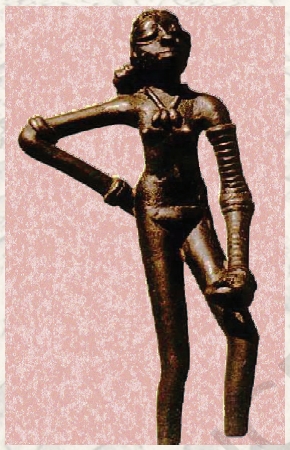
Bronze Dancing Girl - The iconic bronze sculpture from Mohenjodaro, famous for its confident posture and the advanced lost wax casting technique used by Harappan artists. - (iii) Beyond human figures, the Harappan artists excelled in capturing the dynamism of animal figures. Notable examples include the powerful Buffalo (often characterized by its arched back and sweeping horns) and a highly detailed Goat, both rendered with a fine, naturalistic attention to anatomical detail and posture.
- (iv) Further significant bronze artefacts that highlight the geographic spread of this craft include the finely crafted Copper Dog and Bird figures found at the key port city of Lothal, and the distinctive, powerful Bronze Bull sculpture discovered at the site of Kalibangan.
- (v) The advanced tradition of metal sculpture did not cease abruptly with the decline of the main phase of the IVC; it continued into the Late Harappan Sites. Compelling examples from places like Daimabad, featuring massive bronze models, clearly prove the enduring legacy and sophistication of this early bronze craft in the subcontinent.
The Enduring Symbols of Harappan Artistic Flair: Iconic Finds
The Harappans left behind a selective yet powerful body of instantly recognizable art pieces—such as the Dancing Girl, the Male Torso, and the Bronze Bull—that collectively serve as the enduring symbols of their civilisation’s refined artistic flair and metallurgical expertise, giving us a window into their world.
The Bronze Dancing Girl: A Study in Movement
- (i) This celebrated four-inch-high bronze figure was a key archaeological find from the major excavation site of Mohenjodaro, revealing the non-rigid, fluid nature of Harappan art.
- (ii) The figure is notably heavily ornamented, specifically with a stack of bangles worn on her left arm almost up to the shoulder, complemented by a bracelet and a necklace, suggesting a degree of social status or ritual dressing.
- (iii) Her posture is highly expressive and naturalistic, captured in a momentary pose: one arm rests purposefully on her hip, while the other is held down in a traditional gesture, suggesting either a spontaneous movement or a moment of deep contemplation or pause.
- (iv) The overall features of the sculpture, from the slightly tilted head to the confident stance, successfully convey a profound sense of vitality, self-assurance, and life-like energy, powerfully distinguishing it from the often rigid and formal artistic creations of contemporary civilisations.
The Bronze Bull Figurine: Symbol of Majesty
- (i) This detailed bronze figure, which brilliantly captures the majesty and sheer power of the animal, was also discovered at Mohenjodaro, further reflecting the unparalleled excellence of Harappan animal sculpture using the lost wax method.
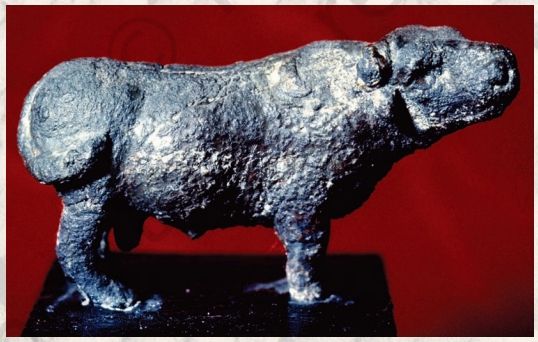
Bronze Bull - A dynamic sculpture reflecting the importance and powerful depiction of cattle in the Indus Valley Civilization (IVC) and a testament to their metallurgical skills. - (ii) The bull is typically depicted as a massive, muscular, and powerful animal with its head slightly turned to the right, often shown with a cord or simple rope around its neck, emphasizing the importance of cattle in the pastoral and agricultural life of Harappan society.
- (i) This detailed bronze figure, which brilliantly captures the majesty and sheer power of the animal, was also discovered at Mohenjodaro, further reflecting the unparalleled excellence of Harappan animal sculpture using the lost wax method.
⚡ Quick Revision Capsule: Indus Valley Bronze & Stone Artefacts
A quick breakdown of key metallurgical finds, their origin sites, and distinct features for rapid examination review:
| Artefact Name | Primary Site | Key Features & Technique |
|---|---|---|
| Dancing Girl | Mohenjodaro | Cast in bronze via cire perdue; 4 inches high; left arm stacked with bangles; expressive and confident posture. |
| Bronze Bull | Mohenjodaro / Kalibangan | Muscular depiction with head turned to right; neck cord detail; highlights cattle importance in IVC culture. |
| Copper Dog & Bird | Lothal | Fine metallic craft demonstrating localized production at major port sites. |
| Buffalo & Goat Figures | Mohenjodaro | Naturalistic animal sculptures featuring arched backs and sweeping horns. |
| Late Harappan Chariots/Statues | Daimabad | Heavy, solid-cast bronze models showing continuity of casting traditions into later periods. |
📝 Summary
The sculptural works of the Indus Valley Civilization, especially the sophisticated Bronze Casting utilizing the lost wax technique and the compelling stone statues, represent a foundational chapter in South Asian art history. These artefacts, such as the famous Dancing Girl from Mohenjodaro crafted during , not only confirm the high level of technological advancement attained by the Harappans but also offer invaluable cultural data on their aesthetic values and lifestyle. For students, understanding the complexity of Harappan Art and the innovations like cire perdue casting is crucial for a comprehensive study of ancient Indian history and culture.
🚀 Quick Revision Points
Essential facts to review before examinations:
- (i) The Harappans mastered cire perdue (lost wax technique) to create detailed hollow bronze figures.
- (ii) The Dancing Girl figurine stands 4 inches tall and features extensive bangles on the left arm.
- (iii) Key bronze casting sites include Mohenjodaro, Lothal, Kalibangan, and Daimabad.
- (iv) Animal figures like the Bronze Bull showcase exceptional understanding of muscular anatomy and natural posture.
- 💡 Exam Tip: Focus on linking specific bronze finds to their excavation sites (e.g., Dancing Girl to Mohenjodaro, Copper Dog to Lothal, Daimabad Bronzes to Late Harappan) as matching options often appear in exams.
❓ Frequently Asked Questions (FAQ)
Q1: What is the lost wax technique used by Harappan artisans?
A1: It is a process where a figure is modeled in wax, coated with clay, heated to drain the wax, and filled with molten bronze to produce a detailed metal sculpture.Q2: Where was the famous Bronze Dancing Girl discovered?
A2: It was discovered at the major IVC urban site of Mohenjodaro.Q3: Did bronze casting continue after the mature Harappan phase?
A3: Yes, massive bronze castings found at Late Harappan sites like Daimabad prove the continuity of this metallurgical tradition.
