The Jodhpur School of Painting represents a captivating fusion of powerful Mughal visual aesthetics and vibrant indigenous Rajasthani folk traditions. This rich historical art form, thriving under the patronage of rulers like Maharaja Jaswant Singh and Man Singh across the , offers invaluable insights into the cultural and political life of the Marwar region. Understanding the evolution of Jodhpur's miniature art is crucial for students preparing for exams focused on Indian Art and Culture.
🎯 In this chapter, you will understand:
- How Mughal style blended with local Marwar folk art.
- Key patrons like Maharaja Jaswant Singh, Ajit Singh, and Man Singh.
- Famous artworks like the Pali Ragamala, Ramayana, and Nath Charita.
- Distinctive visual features and documentation methods of Jodhpur paintings.
💡 Why this topic matters: It highlights how regional artists preserved local storytelling while adopting technical refinements from imperial court art.
🧠 Core Idea: Jodhpur miniature art combines courtly realism, rich regional folklore, and spiritual themes into a uniquely vibrant visual style.
Jodhpur School of Painting: Evolution and Distinctive Style of Marwar Miniature Art (17th to 19th Century)
The Jodhpur School of Painting emerged as a dynamic visual dialect, characterized by a sophisticated interplay between imperial and regional artistic sensibilities.
The core identity of Jodhpur's art lies in its ability to assimilate external influences, specifically from the powerful Mughal court, while steadfastly preserving its deep-rooted local folk traditions. This synthesis created a style that was simultaneously grand and deeply personal.
- (i) Mughal Influence: The impact of Mughal visual aesthetics was most evident in the documentation of life, primarily seen in portraiture and elaborate court scenes, mirroring the technical refinement and realism favoured by the Emperors.
- (ii) Indigenous Resilience: Despite the technical influence, the powerful deep-rooted folk traditions of Marwar firmly resisted dominance, ensuring that the spirit and narrative style remained prominent, particularly in illustrated manuscripts and Rag-Ragini series.
- (iii) Narrative Power: The school excelled in illustrating local narratives and romantic epics.
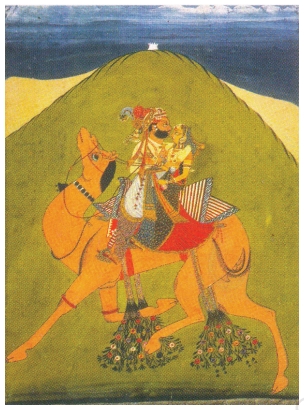
Painting of Dhola and Maru - A Rajasthani painting that narrates the romantic and tragic tale of Dhola and Maru, two legendary lovers in Indian folklore, captured in vivid colors and intricate patterns of Rajput miniature art, showcasing Jodhpur's folk narrative strength.
Initial Flourishing and Key Patronage Periods in Jodhpur Painting History
The trajectory of Jodhpur painting can be traced through definitive early works and pivotal phases of patronage by successive Maharajas, each contributing a unique flavour to the Marwar style.
Early Masterpiece: The Pali Ragamala Series
Before the mid-17th century's courtly documentation, a significant set established the early artistic potential of the region, showcasing a distinct, pre-Mughal-dominated style.
- (i) The earliest known and highly significant set is the Ragamala series, which was diligently painted in Pali by the artist Virji in the year .
Patronage of Maharaja Jaswant Singh (1638–1678): The Productive Court Phase
The reign of Maharaja Jaswant Singh marked the beginning of a highly productive and stylistically evolving phase, where art began to strongly document the life and figure of the ruler himself, reflecting the changing cultural demands of the court.
- (a) Documentary Focus: A significant shift occurred around with the initiation of documentary paintings, primarily concentrating on detailed portraiture and recording vital court life activities.
- (b) Royal Documentation: Numerous surviving portraits of Jaswant Singh from this era bear testament to his personal investment and robust patronage of the arts, solidifying the school's shift towards sophisticated Mughal technical standards.
- (c) Religious Themes: Deeply influenced by the Vallabha cult of Shrinathji, this era witnessed the creation of numerous vibrant Krishna-themed paintings, with subjects frequently drawn from the sacred narrative of the Bhagvata Purana.
Ajit Singh (1679–1724) and the Marwar Revival: Heroism and Art
The ascension of Ajit Singh followed a grueling, nearly 25-year conflict against the formidable Aurangzeb, a struggle famously spearheaded by the peerless warrior, Veer Durgadas Rathore. This period injected themes of valour and resilience into the artistic output.
- (i) Durgadas’s Legacy: The immense heroism and sacrifices of Veer Durgadas became a powerful source of inspiration, leading to the creation of both rousing court paintings and evocative poems celebrating his military genius.
- (ii) Equestrian Portraits: Reflecting the period's focus on martial pride and nobility, dynamic equestrian portraits of Durgadas became a popular and recurring motif in the courtly artworks of this revival phase.
Maharaja Man Singh’s Reign (1803–1843): The Last Innovative Phase
The early under Maharaja Man Singh is celebrated as the final major period of stylistic innovation and extensive production, with a distinct shift towards spiritual documentation driven by the ruler's religious affiliations.
Extensive Illustrated Manuscripts of the Man Singh Era
This period saw the creation of monumental sets illustrating major religious and literary works, meticulously detailed and infused with local flavour.
- (i) The Ramayana (1804): A remarkable set where the sacred tale was rendered with local aesthetics, depicting Rama's Ayodhya with recognizable local Jodhpur architecture, vibrant bazaars, and contemporary cultural settings.
- (ii) Literary and Puranic Works: Other major literary and religious texts illustrated include the romantic Dhola-Maru, the ethical tales of Panchatantra (also dated ), and the devotional Shiva Purana.
The Nath Sampradaya Influence on Art
Man Singh’s profound personal association and devotion to the Nath Sampradaya (a major ascetic tradition) fundamentally influenced the subject matter and narrative focus of the court's artistic output.
- (a) Spiritual Documentation: A new genre emerged, specifically featuring portraits and scenes depicting Maharaja Man Singh in the company of the revered Nath gurus, signifying the importance of the spiritual order.
- (b) The Nath Charita (1824): A crucial and extensive set, the Nath Charita, was commissioned and completed in , serving as a comprehensive visual biography and documentation of the Nath ascetic tradition and its impact on the Marwar court.
Artistic Traditions and Documentation Characteristics of Jodhpur School
The Jodhpur School maintained certain unique characteristics in both its iconography and its practice of documentation, distinguishing it from other contemporary Rajasthani schools.
Local Integration in Iconography
Unlike merely copying established canonical images, Jodhpur artists masterfully localized mythological and devotional subjects.
- (i) The paintings often skillfully integrated elements of local architecture, distinct regional costumes, and specific cultural aspects into their depictions of deities and epic figures such as Krishna and Rama, making the divine narratives relatable to the local populace.
Inscriptions and Dating Conventions
The convention for documenting artistic creation evolved slowly in Marwar, creating challenges for art historians studying the earlier periods.
- (ii) A notable distinction is that, unlike some other contemporary schools, inscriptions on Marwar paintingsrarely included specific dates, artist names, or the location of creation until the beginning of the , when documentation practices became more systematic.
⚡ Quick Revision Capsule: Key Phases of Jodhpur Painting
A quick chronological summary of artists, patrons, and key artworks in Jodhpur's art history:
| Period / Ruler | Key Artworks & Themes | Distinctive Style & Features |
|---|---|---|
| 1623 (Virji) | Pali Ragamala Series | Early folk style with minimal Mughal influence |
| Jaswant Singh (1638–1678) | Royal Portraits, Bhagvata Purana | Strong Mughal technique, court documentation, Vallabha Krishna cult themes |
| Ajit Singh (1679–1724) | Equestrian Portraits of Veer Durgadas Rathore | Themes of valour, hero worship, and Marwar resistance |
| Man Singh (1803–1843) | Ramayana (1804), Panchatantra, Nath Charita (1824) | Localized epic scenes, Nath ascetic spiritual portraits |
📝 Summary
The Jodhpur School of Painting stands as a paramount example of how Rajput miniature art successfully navigated political and cultural tides to create a lasting artistic legacy. Spanning the critical period from the under rulers like Jaswant Singh and Man Singh, its style transitioned from early folk traditions (like the Pali Ragamala) to sophisticated courtly portraiture and extensive spiritual documentation (Nath Charita). For students of Indian Art History and Culture, studying Jodhpur painting provides essential insight into the resilient synthesis of Mughal technique and robust Marwar folk narratives, making it a high-yield topic for exam preparation.
🚀 Quick Revision Points
Essential facts to review before examinations:
- (i) Early artwork: Pali Ragamala (1623) painted by Virji.
- (ii) Jaswant Singh introduced portraiture and Vallabha cult Krishna themes.
- (iii) Durgadas Rathore's heroism inspired famous equestrian court portraits.
- (iv) Man Singh's reign brought localized epics (Ramayana) and Nath Sampradaya paintings (Nath Charita).
- 💡 Exam Tip: Highlight how Jodhpur artists adapted Mughal realism while preserving local folk elements and local background settings like Marwar markets and forts.
❓ Frequently Asked Questions (FAQ)
Q1: What is the earliest known set from the Jodhpur School?
A1: The earliest known set is the Pali Ragamala series painted by artist Virji in .Q2: How did Nath Sampradaya influence Jodhpur art?
A2: Under Maharaja Man Singh, artists focused on portraits of Nath gurus and created the monumental Nath Charita in .Q3: Why were dates rarely found on early Marwar paintings?
A3: Documentation practices in Marwar evolved slowly, so artists rarely recorded dates, names, or locations on paintings until the .