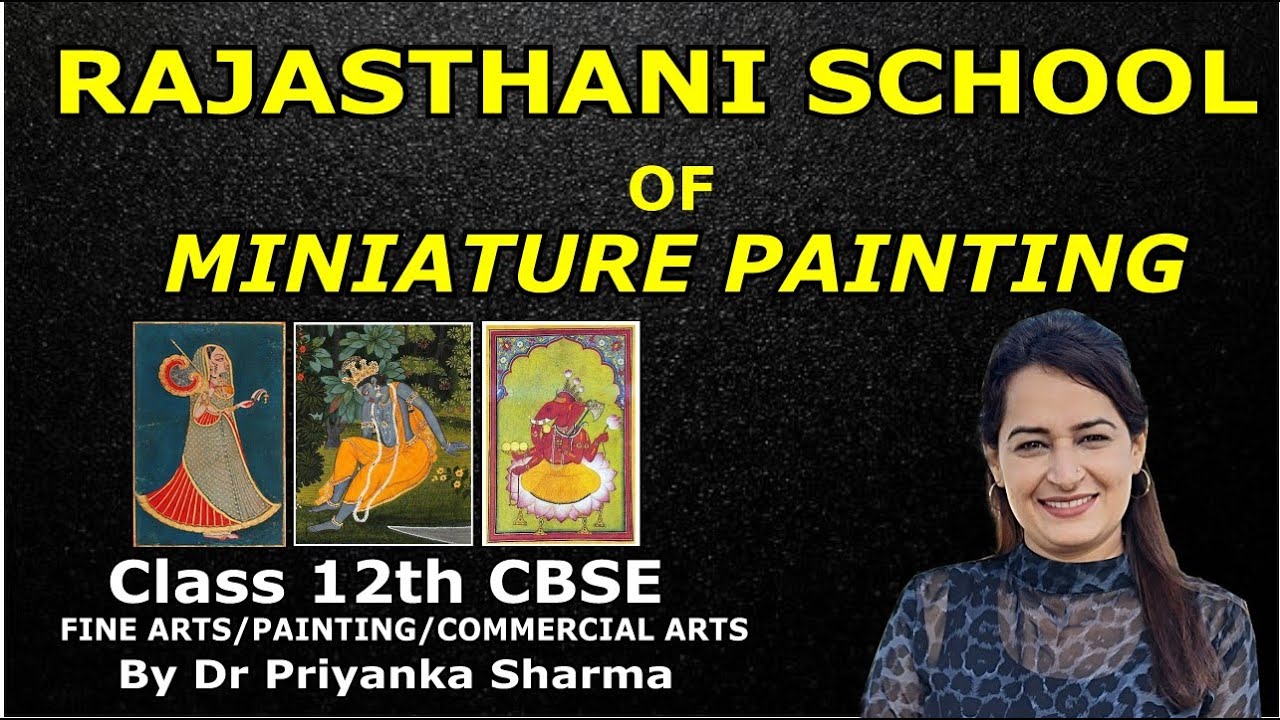
Explore the captivating world of Malwa School of Painting, a prominent style that flourished during under Hindu Rajput patronage in Central India. This distinct school, known for its two-dimensional simplistic style and deep connection to literary manuscripts, is crucial for students preparing for exams on Indian miniature paintings and regional art history. Its unique features, like the lack of Mughal influence in murals and the prevalence of popular epic themes, set it apart from other Rajasthani schools of art.
🎯 In this chapter, you will understand:
- The origin and geographic spread of the Malwa School across Central India during .
- Key illustrated manuscripts such as Amaru Shataka and the Ragamala series by artist Madho Das.
- Unique stylistic features including two-dimensional simplicity, wall murals at Datia Palace, and the role of traveling artists.
- How the Malwa School fits alongside contemporary Mughal, Deccani, Rajasthani, and Pahari traditions.
💡 Why this topic matters: Understanding the Malwa School helps students grasp how regional Indian art preserved its unique traditional character without purely copying imperial Mughal court styles.
🧠 Core Idea: The Malwa School relies on simplified two-dimensional forms and vivid storytelling focused on religious epics and poetic themes rather than royal portraits.
The Malwa School of Painting: Exploring a Distinct Style in Central Indian Art (1600–1700 CE)
The Malwa School stands as a pivotal chapter in Indian miniature painting, representing the vibrant artistic endeavors within the Hindu Rajput courts of the central region during the 17th century.
This school, flourishing between the definitive period of , embraced a unique aesthetic that beautifully bridged older traditions with the dynamism of the new era. It is recognized for its deliberate move towards a two-dimensional simplistic style, a characteristic that provides a clear visual demarcation from contemporary art movements.
- (i) The artistic lineage of Malwa School paintings shows a clear progression, moving away from the highly formalized structures of Jain manuscripts and drawing inspiration from the illustrative style found in the famous Chaurpanchashika manuscript paintings.
- (ii) Unlike the other more geographically centered Rajasthani schools, the Malwa School's influence cannot be tied to a single, precise territorial center, but rather to a broad, influential region of Central India.
- (iii) The key centers associated with the flourishing and production of these characteristic Malwa artworks included significant locations such as Mandu, Nusratgarh, and Narsyang Sahar, demonstrating a wide regional spread of this particular artistic sensibility.
Key Masterpieces and Notable Works of the Malwa Painting School
The legacy of the Malwa School is preserved through several celebrated and highly illustrative works that perfectly encapsulate its signature style and thematic preferences, often centered around poetic and religious texts.

Celebrated Illustrative Manuscripts: Amaru Shataka and the Ragamala Tradition
The Malwa artists dedicated their talent to illustrating important literary and poetic works, creating visual narratives that complemented the richness of the text. These manuscripts are considered foundational to understanding the school's aesthetic and narrative approach.
- (i) The Amaru Shataka, illustrated around , is a prime example of an illuminated poetic text, showcasing the school's flair for translating complex literary sentiments into visually appealing, simplified forms.
- (ii) Another profoundly important work is the Ragamala Painting series created by the artist Madho Das in , which visually interprets the various musical moods (Ragas and Raginis) with the distinct two-dimensional Malwa style.
- (iii) An extensive and highly significant collection of paintings identified as belonging to the Malwa School was historically discovered within the architectural grandeur of the Datia Palace, situated in the Bundelkhand region, solidifying the school's geographic and artistic reach.
Distinct Stylistic Features and the Role of Traveling Artists
The Malwa School possesses several unique characteristics in both its miniature paintings and murals, leading scholars to believe a significant portion of the work was executed by itinerant painters catering to popular devotional and literary themes, rather than strictly court-commissioned portraits.
Two-Dimensional Austerity and the Lack of Patronage Portraits
The artistic choices made by Malwa painters result in a distinct, starkly rendered look, particularly in the works executed on paper. This focus on simplified forms also extended to the subject matter and the exclusion of typical courtly documentation.
- (i) Paintings executed on paper prominently feature a distinct two-dimensional austerity, emphasizing flat color planes and simplified lines, which is a hallmark of the Malwa style.
- (ii) A notable divergence exists between the paper miniatures and the grand mural paintings found within the Datia Palace, as these murals conspicuously lack any discernible Mughal influence, setting them stylistically apart from the paper-based artworks which might show minor regional adaptations.
- (iii) The artwork consistently features the absence of two critical elements typically found in contemporary court art: the lack of explicit mention of patron kings in the inscriptions, and the conspicuous absence of portraits within the artworks themselves.
Thematic Focus on Popular Epics and Devotional Literature
This absence of specific courtly identifiers strongly suggests that these paintings were created by traveling artists who were adept at selling readily marketable works based on universally loved, popular cultural and spiritual themes across the region.
Representation of epic stories rendered with bold, flat color planes. - (a) The popular themes that dominated their artistic output, ensuring broad appeal and marketability, included the epic saga of the Ramayana and the devotional stories of the Bhagvata Purana.
- (b) Poetic and musical themes were equally important, including the lyrical content of the Amaru Shataka, the emotional narratives of the Rasikapriya, and the visual interpretation of musical modes in the Ragamala series.
- (c) Other popular cycles of illustration frequently rendered by these traveling artists included the seasonal moods encapsulated in the Baramasa (Twelve Months) theme, demonstrating a strong connection to local life and literature.
The Malwa School within the Broader Context of Indian Painting Schools
To fully appreciate the Malwa School, it is essential to view it against the backdrop of the diverse and dynamic landscape of Indian painting traditions that were thriving simultaneously across the subcontinent from the sixteenth century onwards.
Contemporary Schools: Mughal, Deccani, Rajasthani, and Pahari
Indian painting during this period was characterized by regional styles interacting with and reacting to the dominant courtly traditions established by the centralized empires and wealthy provincial rulers.
- (i) The Mughal School was the pre-eminent power, dominating the artistic scene from the and centered in influential imperial courts like Delhi, Agra, Fatehpur Sikri, and Lahore.
- (ii) The emergence of Provincial Mughal Schools showcased a blending of the established Mughal artistic idiom with distinct local styles, nurtured under the patronage of powerful and wealthy regional governors.
- (iii) The Deccani School established a distinct and vibrant style, flourishing in the southern kingdoms—specifically Ahmednagar, Bijapur, Golconda, and Hyderabad—starting from the .
- (iv) The Rajasthani Schools, of which Malwa is a prominent though distinct part, rose to significant prominence and established their unique visual identities in the latter half of the and the early .
- (v) Finally, the graceful and highly expressive Pahari School emerged somewhat later, gaining its full artistic maturity in the late and early in the northern hill states.
Significance of Malwa School Painting for Art History Students
The Malwa School is an invaluable area of study, offering critical insights into the regional divergence of art in India. Its simplistic, two-dimensional style and focus on popular literature like Ramayana and Ragamala illustrate how art thrived outside strict courtly portraiture. For students preparing for exams on Indian Art and Culture, understanding the Malwa School's defining period () and its unique stylistic features, especially its distinction from direct Mughal influence in murals, is crucial for comprehensive historical analysis.
⚡ Quick Revision Capsule: Malwa School of Painting
A structured quick summary comparing the key parameters of the Malwa School of Painting for examination revision.
| Parameter | Details & Features | Historical & Cultural Context |
|---|---|---|
| Active Period | () | Flourished under Hindu Rajput patronage in Central India. |
| Key Centers | Mandu, Nusratgarh, Narsyang Sahar | Spread across a broad region rather than confined to one capital. |
| Key Artworks | Amaru Shataka (), Ragamala () | Illustrated by artists like Madho Das; includes murals at Datia Palace. |
| Stylistic Identity | Two-dimensional austerity with flat color planes | Influenced by Chaurpanchashika; murals lack direct Mughal influence. |
| Core Themes | Ramayana, Bhagvata Purana, Rasikapriya, Baramasa | Painted by traveling artists focusing on devotional and popular epics. |
📝 Summary
During the period of , the Malwa School developed as a distinct branch of Central Indian miniature painting under Hindu Rajput patrons. Defined by a flat, two-dimensional style and bright color compositions inspired by the Chaurpanchashika manuscript, it differed from main court styles by avoiding portraits of kings and signatures of royal patrons. Masterpieces like the Amaru Shataka and Madho Das's Ragamala, alongside murals at Datia Palace, highlight a rich artistic tradition powered largely by itinerant painters creating works on epic, romantic, and devotional subjects.
🚀 Quick Revision Points
Essential facts to review before examinations:
- (i) The school reached its height between in Central Indian centers like Mandu and Nusratgarh.
- (ii) Features a simple two-dimensional style with bold, flat color planes rather than complex perspective.
- (iii) Lacks royal portraits and names of patron kings, indicating creation by traveling artists.
- (iv) Major texts illustrated include Amaru Shataka, Ragamala, Ramayana, and Baramasa.
- 💡 Exam Tip: Remember that wall murals of the Malwa School at Datia Palace show an absence of direct imperial Mughal influence, making them a crucial comparative example in art history questions!
❓ Frequently Asked Questions (FAQ)
Q1: What is the main stylistic feature of the Malwa School of Painting?
A1: The primary feature is its two-dimensional simplistic style, characterized by flat color planes, simplified lines, and bold visual storytelling.Q2: Who painted the famous Ragamala series of 1680 CE in the Malwa style?
A2: The Ragamala series of was created by the artist Madho Das.Q3: Why are royal portraits largely absent from Malwa School paintings?
A3: Most Malwa paintings were created by traveling artists who produced easily sellable works based on popular religious epics like the Ramayana and Bhagvata Purana rather than specific court commissions.