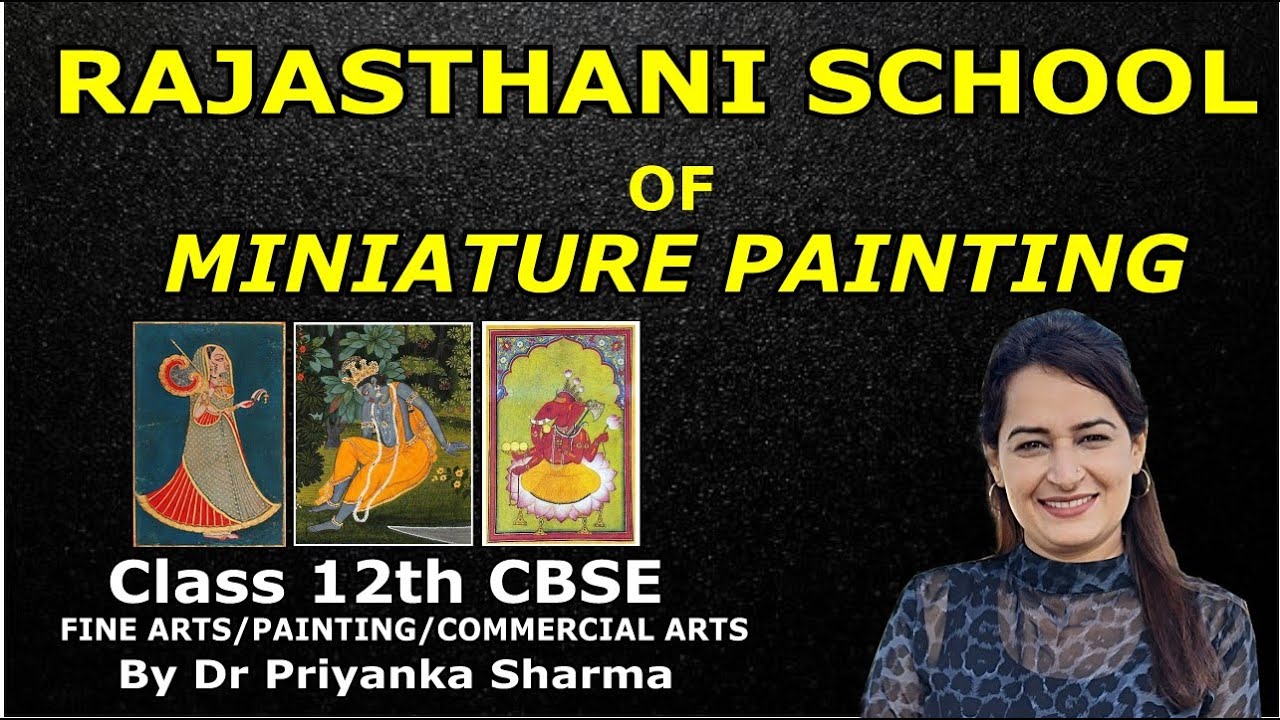
The Rajasthani School of Painting represents a bright and rich tradition of Indian miniature painting. It grew and flourished mainly between the and the across many royal kingdoms. The great scholar Anand Coomaraswamy first named these artworks Rajput Paintings in . For students of art history and competitive examinations, this topic offers a helpful view into the spiritual life and culture of medieval India, showing its deep ties to Bhakti themes and local storytelling styles.
🎯 In this chapter, you will understand:
- The historical growth and regional spread of Rajasthani miniature painting schools.
- The special materials used by court painters, including paper layers called waslis and natural colors.
- The major devotional, literary, and courtly themes that inspired artists across different kingdoms.
- The collaborative studio system and key methods like line work, coloring, and burnishing.
💡 Why this topic matters: It highlights the unique artistic identity of Indian court painting, blending spiritual devotion with local traditions and vivid natural colors.
🧠 Core Idea: Rajasthani miniatures combined Bhakti poetry, classic literature, and royal lifestyle scenes using fine detail and natural pigments.
Exploring the Vibrant Tapestry of Rajasthani Miniature Painting Schools: Features, Themes, and Period (Sixteenth to Early Nineteenth Centuries)
The Rajasthani Schools of Painting include a wide range of artistic styles that grew out of different royal kingdoms across Western and Central India.
-
This grand tradition of art flourished inside the royal courts of kingdoms located in modern-day Rajasthan and parts of Madhya Pradesh. These unique styles developed in prominent kingdoms like Mewar, Bundi, Kota, Jaipur, Bikaner, Kishangarh, Jodhpur, Malwa, and Sirohi, with each region creating its own special look.
- (i) The main time period for these artworks spans from the to the , marking an important age in Indian art.
- (ii) In , scholar Anand Coomaraswamy called these works Rajput Paintings to point out their deep Indian roots and separate them from the nearby Mughal School of Painting.
- (iii) Today, the term Rajput Schools is considered outdated in modern study and has been replaced by clearer regional names like the Rajasthani and Pahari schools.
🎨 Stylistic Diversity and Unique Characteristics Across Rajasthani Schools
Even though they shared similar cultural and spiritual ideas, the Rajasthani schools showed distinct regional differences in how paintings were made.
Regional Variation in Artistic Execution and Expression
Each kingdom expressed its style differently based on local tastes and the wishes of royal patrons.
- (i) Execution Styles: Painting methods ranged from extremely fine and intricate line work to a bold and robust visual style depending on the region.
- (ii) Color Preference: Color choices varied widely. Some courts liked brilliant and saturated shades, while others chose gentle and subdued tones for a calm, spiritual feel.
- (iii) Compositional Elements: Details like architecture, human figures, nature, and overall realism were handled differently, giving each school its own special signature.
Early Artistic Milestones: The Influence of Illustrated Texts Like Chaurpanchasika
Illustrations of religious and poetic texts helped build the early foundation of the Rajasthani style.
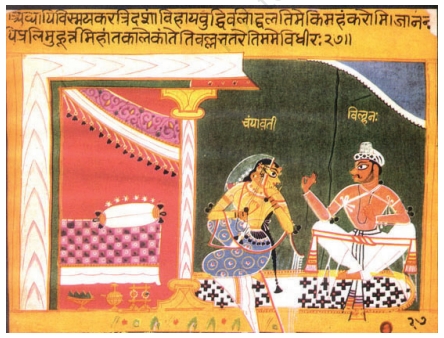
Chaurpanchasika - An illustration of the Chaurpanchasika, a love poem and manuscript text rendered in early Indian miniature style. - (a) Early illustrated works for Jain texts and devotional poems showed deep emotional strength even when the school was just starting out.
- (b) Fine details and a focus on devotion and spiritual themes set the foundation for the later growth of the Rajasthani miniature tradition.
🛠️ Materials and Techniques: The Artisanal Excellence of Rajasthani Miniatures
Creating a miniature painting was a detailed process that called for special tools, durable materials, and expert handiwork.
Surface Preparation and the Art of Pigment Making
Artists prepared strong paper supports and made high-quality natural paints that remained bright for centuries.
- (i) Waslis: Instead of simple single sheets of paper, artists glued together multiple layers of handmade paper to create a thick, strong base called waslis.
- (ii) Pigment Sources: Long-lasting colors came directly from natural minerals, plant extracts, and real metals like gold and silver mixed with natural binder.
- (iii) Outlining and Fixation: Artists drew preliminary outlines using black or brown ink. They often added color notes or small sample patches to keep colors uniform across complex scenes.
Brushes and the Final Sheen: Achieving Resplendence
Detailed work needed delicate tools, and the final look relied on a smooth finishing step.
- (a) Brushes: Fine brushes were crafted using fine hair from animals like the camel and squirrel to draw thin, precise lines.
- (b) Burnishing: To give the painting a smooth, uniform sheen and rich resplendence, artists gently rubbed the back of the finished work with a smooth stone like agate, a step called burnishing.
👨🎨 Artistic Process: Teamwork and the Role of the Master Artist
Many miniature paintings were created by teams in royal workshops, where different steps were completed by skilled assistants and master painters.
The Division of Labor in the Court Studio System
Court studios followed an organized plan where tasks were split according to each artist's special skill.
- (i) Master Artist's Role: The head painter designed the main composition and drew the essential preliminary drawings and outline.
- (ii) Pupil/Expert Contributions: Assistants and specialist artists completed tasks like coloring, drawing realistic portraiture, painting landscapes, and filling in architectural details.
- (iii) Final Touches: The master artist added the final, critical finishing touches to make sure the work met court standards.
- (iv) Scribe's Contribution: Expert scribes wrote down matching poetic lines and narrative text inside special unpainted boxes in the layout.
📜 Central Themes: Devotion, Poetry, and Princely Life in Rajasthani Art
The main themes of Rajasthani paintings came from Indian traditions, inspired by the Bhakti movement, classic literature, local folk stories, and daily life in royal courts.
Bhakti Movement and the Depiction of Divine Love
The spirit of the Bhakti movement was the biggest source of inspiration, with Lord Krishna and Rama as central figures showing divine love.
- (i) Krishna's Dual Role:Krishna was shown both as the supreme Godhead and as the ultimate ideal lover (Nāyaka), making divine ideas feel close and personal.
- (ii) Radha as the Soul: The figure of Radha represented the human soul (Jivātmā) offering pure devotion to the Divine.
Key Literary Texts Inspiring Narrative Painting Cycles
Famous classic books were turned into multi-part painting series that are highly valued today.
- Gita Govinda: Written in the by Jayadeva, this poetic work describes the love of Radha and Krishna and was painted widely across courts.
- Rasamanjari: Written by Bhanu Datta in the , this Sanskrit text gave artists clear types for the hero (Nāyaka) and heroine (Nāyikā) to portray different moods of love.
- Rasikapriya: Composed by Keshav Das in , this book helped painters capture subtle emotional feelings (Rasas) in love stories, especially in the Mewar and Pahari regions.
- Kavipriya: Also by Keshav Das, this text focused on love across different seasons and regional festivals.
- Bihari Satsai: A collection of short poems written in the by Bihari Lal, showing human emotions and life lessons, often illustrated in the Mewar style.
Diverse Secular and Courtly Subject Matters
Beside religious stories, painters documented royal daily life, local folklore, and classic musical modes.
- (a) Ragamala Paintings: These paintings visually represented musical ragas and raginis by turning musical moods into human characters and painted scenes.
- (b) Bardic Legends: Painters depicted popular regional romantic tales and bardic legends, such as the famous stories of Dhola-Maru and Sohni-Mahiwal.
- (c) Epic Narratives: Classic stories from sacred books like the Ramayana, Mahabharata, and Bhagvata Purana were painted as large visual cycles.
- (d) Courtly Life: Painters recorded royal life by drawing darbar scenes, major historical events, exciting hunting trips, colorful festivals, and royal portraits.
⚡ Quick Revision Capsule: Rajasthani Painting Highlights
A quick comparison of key terms, texts, and art features for fast review before exams:
| Category | Key Elements / Terms | Artistic & Exam Context |
|---|---|---|
| Primary Period | to | Golden era of court miniature painting across Western India. |
| Key Terminology | Wasli paper, Burnishing | Layered handmade paper support and stone-polishing for sheen. |
| Key Literary Texts | Gita Govinda, Rasikapriya, Rasamanjari | Major poetic works inspiring narrative painting series. |
| Major Devotional Focus | Bhakti Movement, Krishna & Radha | Symbolized the connection between the human soul and Divine. |
| Musical Visual Tradition | Ragamala Paintings | Painting visual forms for musical modes (ragas and raginis). |
📝 Summary
The Rajasthani School of Painting flourished from the to the across princely kingdoms like Mewar, Bundi, Jaipur, and Kishangarh. Inspired by the Bhakti movement and poetic works like Jayadeva's Gita Govinda, court painters created detailed miniatures on layered paper called waslis. Using natural colors, animal-hair brushes, and stone burnishing, artists painted devotional scenes, Ragamala musical series, folk stories, and royal court events with lasting color and detail.
🚀 Quick Revision Points
Essential facts to review before examinations:
- (i) Termed Rajput Paintings in by scholar Anand Coomaraswamy.
- (ii) Painted on thick layered paper called waslis with mineral and natural pigment colors.
- (iii) Polished using an agate stone through a process called burnishing for a glossy finish.
- (iv) Main poetic inspirations included Gita Govinda, Rasikapriya, and Rasamanjari.
- 💡 Exam Tip: Focus on linking key terms like wasli, burnishing, and Ragamala to their exact definitions, as these frequently appear in art history and competitive exam questions!
❓ Frequently Asked Questions (FAQ)
Q1: What are waslis in Rajasthani miniature painting?
A1: Waslis are thick paper bases made by gluing multiple layers of handmade paper together to support delicate miniature paint work.Q2: What is the process of burnishing in miniature art?
A2: Burnishing is the step where the back of a finished painting is rubbed gently with a smooth stone like agate to give the surface a smooth and uniform shine.Q3: What are Ragamala paintings?
A3: Ragamala paintings are visual artworks that represent Indian musical modes (ragas and raginis) as human figures in poetic and seasonal settings.