
The Amravati School of Art stands as a paramount example of ancient Indian art, flourishing uniquely between and . This tradition is globally celebrated for its purely indigenous character, remarkable narrative depth, and unparalleled artistic elegance. The distinctive Amaravati style of Buddhist sculpture exerted a profound influence on religious art across South India, Sri Lanka, and Southeast Asia, making its study essential for students aiming for excellence in history, art, and cultural examinations, particularly those focusing on Satavahana patronage of Indian art.
🎯 In this chapter, you will understand:
- The historical origins and indigenous features of the Amravati School of Art.
- Key sculptural techniques, materials, and architectural features of the Amravati Stupa.
- Comparative differences between the Amravati, Gandhara, and Mathura schools.
- Socio-cultural reflections, major sites, and lasting influence across South and Southeast Asia.
💡 Why this topic matters: The Amravati School represents the peak of indigenous Indian narrative relief sculpture, forming a critical pillar for art, history, and cultural studies.
🧠 Core Idea: Nurtured by the Satavahana and Ikshvaku dynasties, Amravati art transitioned Buddhist sculpture from symbolic themes to vibrant, dynamic storytelling using white limestone.
Historical Context, Indigenous Features, and Far-Reaching Influence (–)
The Amravati School of Art pioneered a sophisticated, indigenous sculptural style, distinguishing itself through an intense focus on detailed narrative storytelling and key Buddhist iconography.
Emerging powerfully in the region of Andhra Pradesh, this vibrant art tradition received substantial patronage from the influential Satavahana dynasty and, later, the Ikshvakus. Its sphere of influence extended to vital archaeological sites, including Bhattiprolu, Jaggayyapeta, Nagarjunakonda, Ghantasala, Goli, and even Ter, Maharashtra. A defining characteristic of this six-century-long artistic journey was the profound evolution from aniconic representations (symbolic) to fully iconic depictions of the Buddha (human form).
- (i) The school experienced its primary flourishing period between and , marked by exceptional artistic freedom, emotional depth, and bold, dynamic representations of figures.
- (ii) The thematic focus was deeply rooted in Buddhist doctrines, encompassing narratives from both Hinayanism and the emerging Mahayana traditions, though it also embraced lively secular scenes depicting dance and music as a celebration of life.
- (iii) The artists utilized white or cream limestone as their primary medium, which imparted a signature marble-like finish to the sculptures, often detailing complex reliefs and medallions that vividly narrated stories, such as the famous depiction of Buddha taming the Nalagiri elephant.
Indigenous Artistic Legacy: Overview of Amravati School of Sculpture
The Amravati School proudly holds its place as one of the three monumental Buddhist art traditions of ancient India, alongside the Gandhara and Mathura schools, yet it is uniquely defined by its distinctive southern Indian origin and unparalleled narrative sophistication.
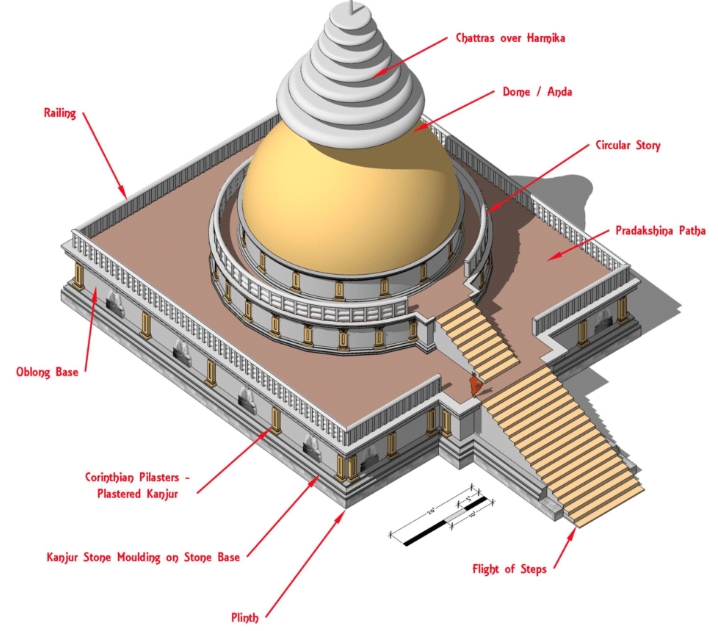
The Amravati Stupa and Key Archaeological Locations
The very heart of this artistic movement is the magnificent Amravati Stupa, a monumental structure located in Amaravati, Andhra Pradesh, which served as the canvas for some of the school’s finest work.
- (i) The Amravati Mahachaitya is the central, most critical structure associated with this school, showcasing the evolution of its sculptural style.
- (ii) Other extremely significant sites where the distinctive art style flourished include Jaggayyapeta, Nagarjunakonda, Goli, Ghantasala, and Vengi, all vital for understanding the school's geographical spread.
- (iii) While many priceless sculptural remnants are now carefully preserved and displayed in the British Museum and the Madras Museum, a large number of impressive carvings remain in situ at the site of Nagarjunakonda, offering direct contextual study.
Historical Patronage and the Cultural Context of Amravati Art
The efflorescence of the Amravati style is intrinsically linked to the powerful rule and cultural patronage of the Satavahana dynasty, whose stable reign provided the necessary environment for such high art to develop.
- (i) The art style flourished specifically between and , primarily under the powerful patronage of the Satavahanas, who nurtured both artistic expression and religious institutions.
- (ii) Its geographical development was concentrated along the fertile valleys of the Krishna and Godavari rivers in Andhra Pradesh, providing strategic links for trade and cultural exchange.
- (iii) The subject matter was richly diverse, encompassing not only profound religious narratives (Buddhist themes) but also joyful secular depictions of dance and music, suggesting a society that embraced both spiritual and material well-being.
Defining Aesthetic Features of the Amravati School
The Amravati style is instantly recognizable for its dynamic energy, intricate detail, and the characteristic use of limestone, creating figures that appear highly naturalistic, lively, and full of graceful movement.
- (i) Narrative Art: The most prominent feature is the sequential storytelling captured in the detailed relief carvings, vividly depicting moments from Buddha’s life and the Jataka tales, allowing viewers to "read" the sacred history.
- (ii) Medallions and Panels: Sculptural panels, often circular or rectangular medallions, were expertly employed to organize the continuous, sequential narrative, breaking down complex stories into digestible scenes.
- (iii) Signature Material: The consistent use of White or Cream Limestone is a crucial identifying mark, lending the final work a unique, bright, and highly polished marble-like appearance.
- (iv) Sculptural Form: Figures are typically slim, dynamic, and characterized by a fluid, almost translucent rendering of their bodies, conveying a sense of emotional intensity and graceful movement that sets them apart.
- (v) Themes and Symbolism: The art is a rich tapestry of profound symbolism related to Buddha’s life alongside vibrant secular motifs, indicating a celebratory and all-encompassing view of life.
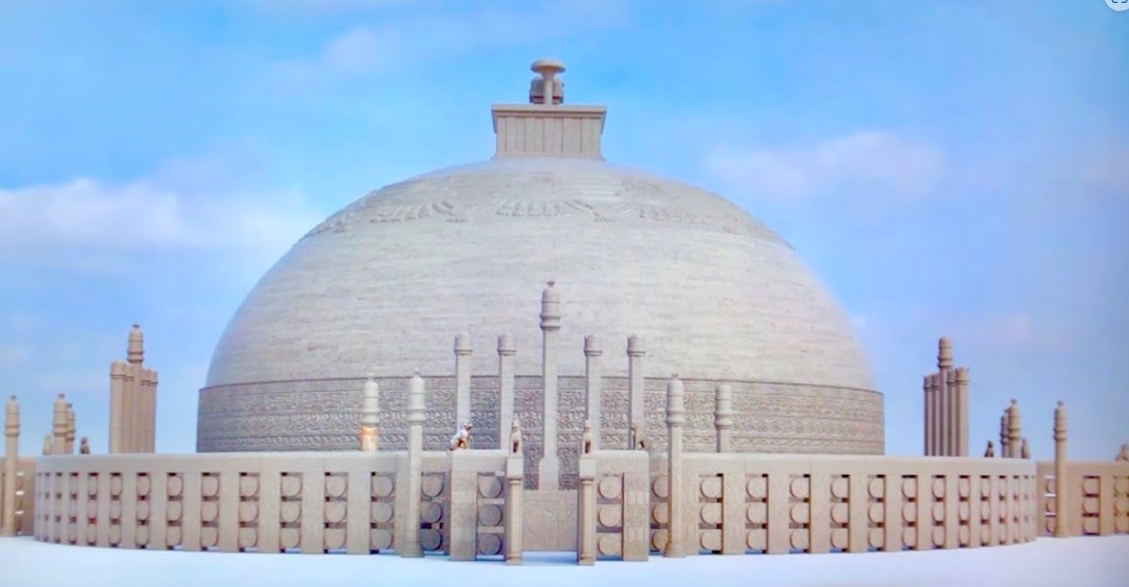
The Grand Amravati Stupa—A Masterpiece of Narrative Relief Sculpture
Stylistic Comparison with Mathura and Gandhara Schools
To fully appreciate the Amravati school’s indigenous genius, it is vital to contrast its features with its contemporaries, the Mathura and Gandhara schools, highlighting their distinct regional and stylistic characteristics.
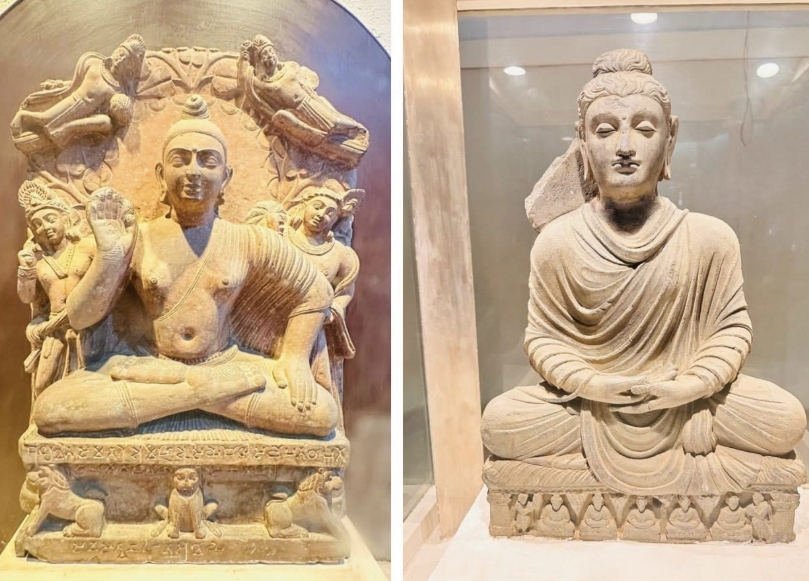
Comparative Visuals of Buddha Sculptures from Mathura and Gandhara Schools - (i) Amaravati Distinction: Originating in Southern India, its figures are notably slim, conveying intense emotional depth, dynamic postures, and a sophisticated understanding of complex human anatomy.
- (ii) Mathura Characteristics: Centered in Northern India, its figures are generally full-bodied, exhibiting a strong sense of grace, with themes encompassing Hindu, Jain, and Buddhist iconography.
- (iii) Gandhara Features: Developed in regions of modern Pakistan and Afghanistan, this school displays a marked Greco-Roman influence, resulting in highly naturalistic figures with Hellenistic drapery and facial features.
Key Technical Differences Between the Three Major Schools
The three major schools of art—Amaravati, Mathura, and Gandhara—can be clearly differentiated based on their choice of material, foreign influence, and royal patronage.
- (i) Material: Amaravati exclusively used white limestone; Mathura relied on red sandstone; Gandhara preferred bluish-grey sandstone or stucco.
- (ii) Foreign Influence: Amaravati art is recognized as purely indigenous; Mathura is also largely indigenous; Gandhara exhibits a significant Greek (Hellenistic) influence.
- (iii) Patronage: Amaravati flourished primarily under the Satavahanas; Mathura and Gandhara were most prominently patronized by the powerful Kushana rulers.
- (iv) Religious Themes: While all three schools focused on Buddhist themes, the Mathura school uniquely served as a hub for Hindu and Jain religious art as well.
Major Sites and Preservation Efforts for Amravati Art
The legacy of this school is preserved not only at its original geographical locations but also in prominent international museum collections, securing its place in art history.
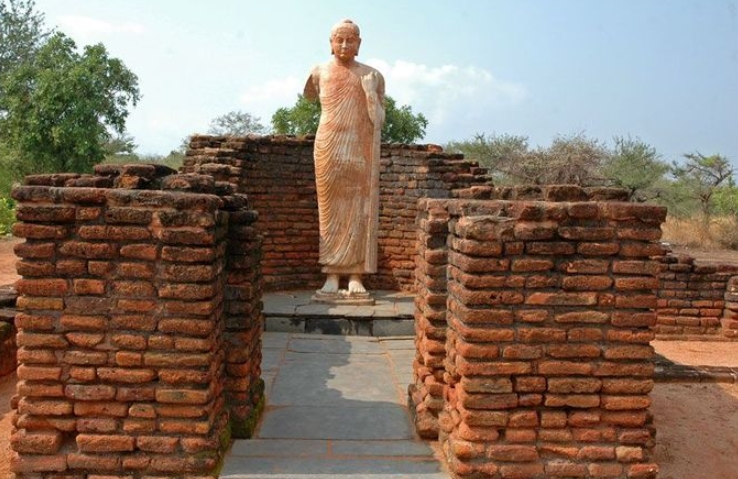
Buddha Statue at Nagarjunakonda, demonstrating the Amravati style - (i) The Amaravati Mahachaitya stands as the most famous stupa site associated with the school.
- (ii) Other significant excavated sites crucial for study include Nagarjunakonda, Goli, Ghantasala, and Vengi.
- (iii) The priceless artifacts are preserved globally in the British Museum and the Madras Museum, alongside substantial on-site remains at places like Nagarjunakonda.
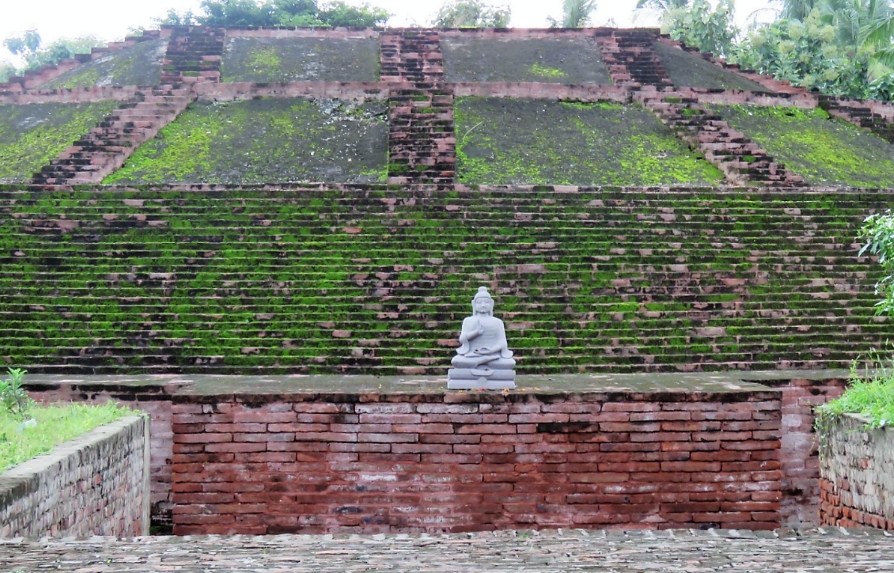
Ghantasala Buddha Image, showcasing the detailed artistry of the Amravati school
Architectural Features of the Amravati Stupa
The Amravati Stupa itself was an architectural marvel, designed not only for circumambulation but also as a primary location for the display of the school’s exquisite narrative reliefs.
- (i) The Pradakshinapatha (circumambulatory path) was meticulously enclosed by a vedika (railing), which was elaborately carved with the school's characteristic narrative reliefs.
- (ii) A distinctive feature was the domical structure, which was covered in relief slabs, turning the entire dome into a large, continuous sculptural narrative.
- (iii) It is important to note that large, anthropomorphic Buddha images only began to appear in the sculpture during the later phase, specifically the –.
- (iv) While the iconic Torana entrance is now lost, the remaining structure provides immense insight into ancient Indian stupa architecture.
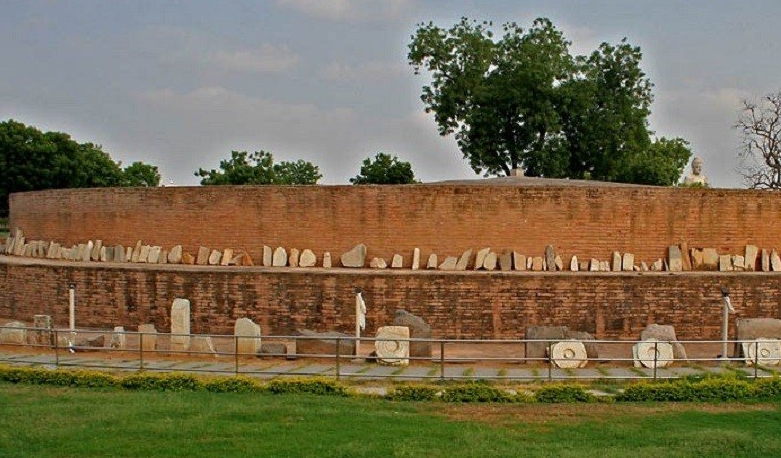
Ambulatory Passageway of the Stupa, lined with narrative relief carvings
Major Socio-Cultural Characteristics and Far-Reaching Influence
The Amravati style’s impact transcended its original location, serving as a powerful aesthetic model for Buddhist art across the wider Asian world.
- (i) Location: Centered at Amaravathi, in the Palnadu district of Andhra Pradesh, India.
- (ii) Timeline: Construction and major sculptural work spanned from the , with significant enlargement and artistic activity up to approximately .
- (iii) Influence: As one of the three major ancient Indian art styles, its aesthetic principles were critical in shaping South Indian, Sri Lankan, and Southeast Asian art, particularly in Buddhist iconography.
- (iv) Protection: The preservation and study of these priceless remains are currently managed under the auspices of the Archaeological Survey of India.
Detailed Analysis of Amravati and Nagarjunakonda Sculptures
The Kushana period witnessed the pinnacle of this art form, with sculptures from Amaravati and Nagarjunakonda showcasing extraordinary technical skill, reflecting a prosperous and dynamic Buddhist society.
- Exquisite Craftsmanship and Societal Reflection
- (i) The sculptures exhibit a masterful command of detailed ornamentation and an exquisite elegance of form, with the figures appearing almost weightless and fluid.
- (ii) The artwork serves as a vital cultural mirror, reflecting a wealthy Buddhist society deeply engaged in robust trade and maritime activity, visible in the regal attire and settings depicted.
- (iii) The inclusion of scenes depicting dance and music emphasizes the society’s capacity for celebrating the joy of life and material prosperity alongside spiritual pursuits.
- (iv) The characteristic use of White Limestone achieves a stunning, fresh, and often translucent marble-like appearance.
- (v) The growing influence of Mahayana Buddhism is vividly highlighted in the vibrancy and evolving thematic complexity of the carvings.
- (vi) Depictions predominantly focus on the critical events of Buddha’s life and the Jataka tales, with some figures exhibiting Greek-influenced curly hair, suggesting limited external aesthetic awareness without adopting foreign style wholesale.
- (vii) Motifs of Kings, palaces, and regal elements are prominently included, illustrating the close relationship between royal patronage and religious art.
- Exquisite Craftsmanship and Societal Reflection
⚡ Quick Revision Capsule: Amravati School of Art Comparison
A side-by-side comparison of the three primary ancient Indian Buddhist sculptural traditions:
| Feature | Amravati School | Mathura School | Gandhara School |
|---|---|---|---|
| Primary Region | Andhra Pradesh (Krishna-Godavari basin) | Mathura, Northern India | Gandhara (Modern Pakistan & Afghanistan) |
| Key Material | White / Cream Limestone | Red Spotted Sandstone | Bluish-Grey Sandstone / Stucco |
| Influence | Purely Indigenous | Largely Indigenous | Greco-Roman (Hellenistic) |
| Patronage | Satavahanas and Ikshvakus | Kushana Rulers | Kushana Rulers |
| Human Form & Style | Slim, dynamic, emotional, narrative focus | Full-bodied, powerful, graceful | Naturalistic, Hellenistic drapery & hair |
📝 Summary
The Amravati School of Art flourished between and along the Krishna River valley under Satavahana patronage. Celebrated for its white limestone narrative reliefs, dynamic figures, and seamless integration of sacred Jataka tales with secular life scenes, it left an indelible mark on art throughout India, Sri Lanka, and Southeast Asia.
🚀 Quick Revision Points
Essential facts to review before examinations:
- (i) White Limestone is the signature material giving a marble-like finish.
- (ii) Patronage was provided primarily by the Satavahana and Ikshvaku dynasties.
- (iii) Major sites include Amaravati, Nagarjunakonda, Ghantasala, Jaggayyapeta, and Goli.
- (iv) Characterized by continuous narrative relief medallions portraying Buddha's life and Jataka stories.
- 💡 Exam Tip: When writing answers on ancient Indian art, highlight that Amravati was purely indigenous with zero Greco-Roman influence, contrasting it directly with Gandhara's Hellenistic style and Mathura's red sandstone material.
❓ Frequently Asked Questions (FAQ)
Q1: What is the main material used in the Amravati School of Art?
A1: The primary medium was white or cream limestone, which gave the sculptures a distinct marble-like finish.Q2: Who were the main patrons of the Amravati School?
A2: The school flourished under the patronage of the Satavahana dynasty and later the Ikshvaku dynasty in Andhra Pradesh.Q3: How does Amravati art differ from Gandhara art?
A3: Amravati art is purely indigenous with slim, dynamic figures using white limestone, whereas Gandhara art features strong Greco-Roman influence using grey sandstone or stucco.
