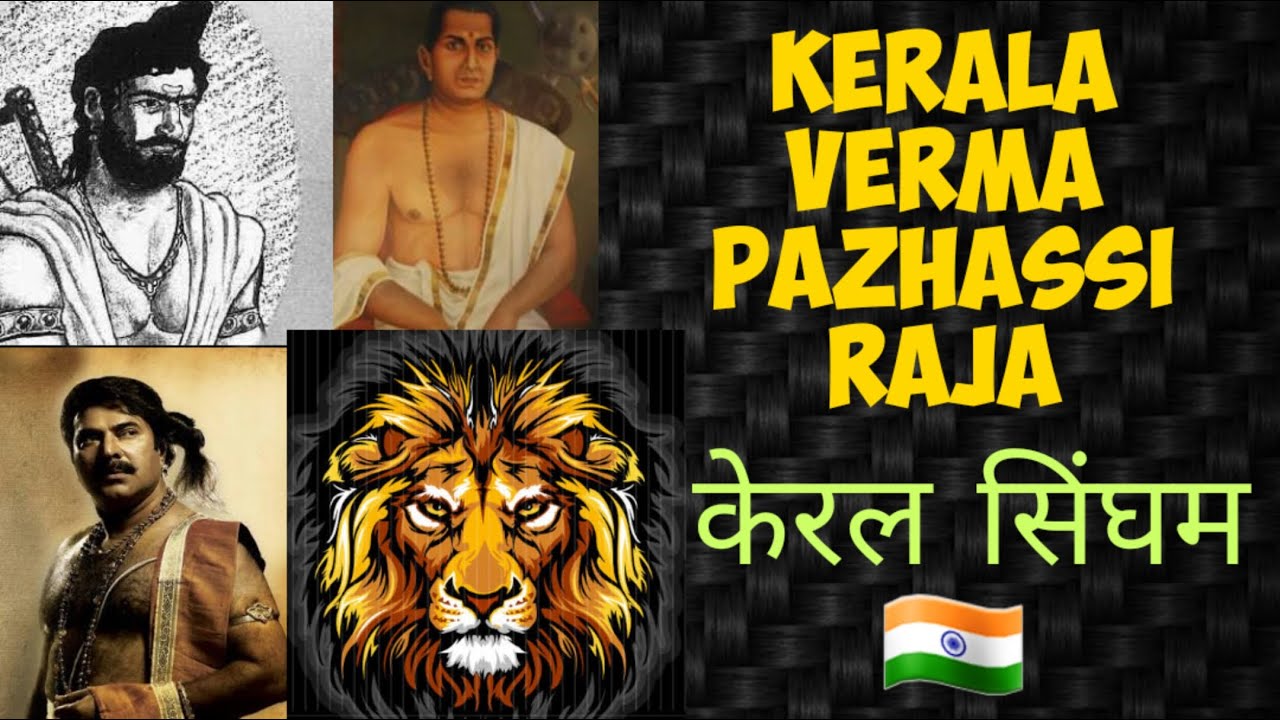
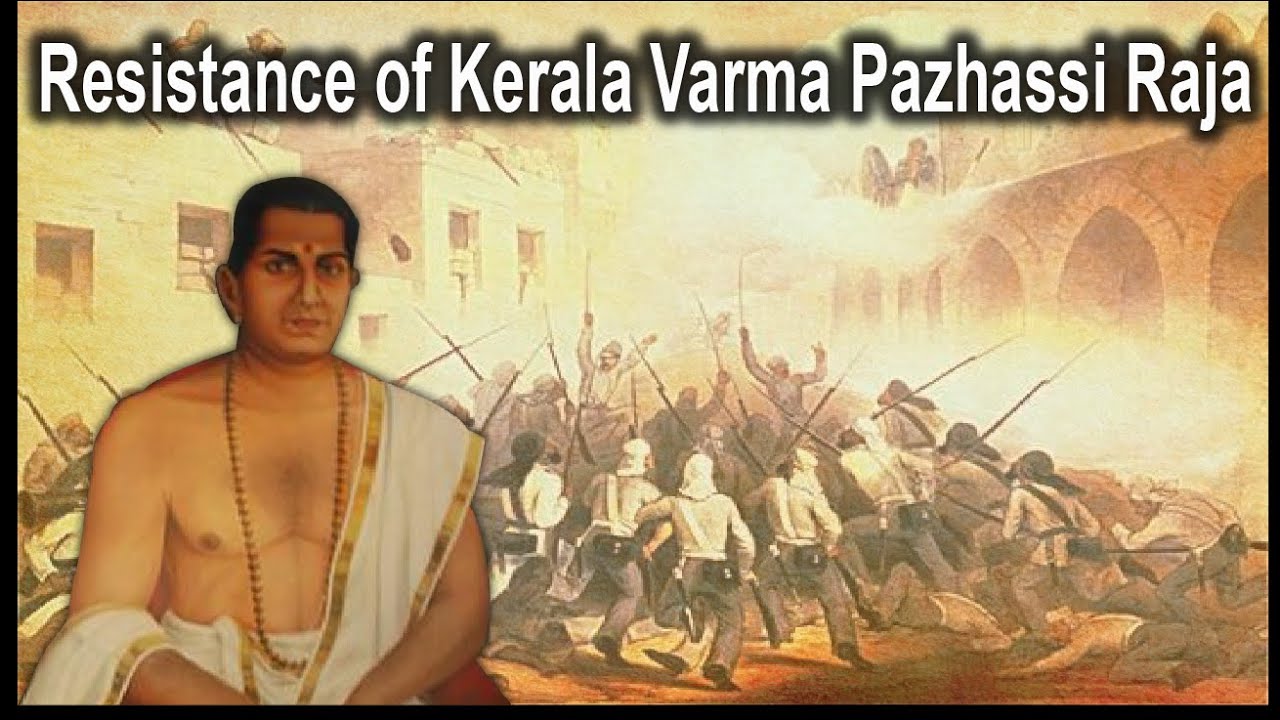
The story of Kerala Varma Pazhassi Raja, famously hailed as the Kerala Simham (Lion of Kerala), is a crucial chapter for students aiming to understand the roots of early resistance against colonial rule in India. He bravely led one of the earliest and most impactful peasant uprisings and utilized guerilla warfare tactics to challenge the growing power of British rule in the Malabar region between the pivotal years of , having first contested the authority of Hyder Ali and Tipu Sultan. This strong resistance movement highlights the deep local opposition to foreign control.
🎯 In this chapter, you will understand:
- The role of Kerala Varma Pazhassi Raja as defender of Kottayam
- The causes and events of the First Uprising (1793–1797)
- Guerilla tactics used in the Wayanad campaign (1800)
- The martyrdom at Mavila Todu and Pazhassi Raja's enduring legacy
💡 Why this topic matters: Pazhassi Raja was among the earliest Indian rulers to use organized guerilla warfare against British territorial and economic expansion.
🧠 Core Idea: Unjust land revenue policies and British betrayal united local rulers, peasants, and tribal communities in a decades-long struggle for autonomy.
Kerala Varma Pazhassi Raja’s Early Anti-Colonial Guerilla Resistance in Malabar (1793–1805)
Kerala Varma Pazhassi Raja, often referred to by the British as Pyche Raja, was the dynamic de facto ruler of the princely state of Kottayam (Cotiote), situated in the Malabar region of Kerala. His leadership was defined by a firm commitment to regional independence and the welfare of his people.
Key pillars of his early leadership and conflict timeline:
- (i) Early Assertion of Sovereignty: His defiance started even before the British East India Company became the main power, as he initially took up arms to successfully resist the expansion plans of Mysore rulers, Hyder Ali and his son Tipu Sultan.
- (ii) A Span of Defining Conflict: His famous period of armed resistance against the British lasted over a decade, from until his death in , making him a continuous challenge for colonial administrators.
- (iii) Champion of Agrarian Rights: He was not only a military leader but also a protector who defended the rights and traditional lifestyle of local farmers against oppressive policies.
The First Uprising: Causes of Conflict and The Seeds of Resistance (1793–1797)
The end of the Third Anglo-Mysore War () changed local politics by transferring authority over Kottayam from Mysore to the English East India Company, an event that directly triggered Pazhassi Raja's resistance.

British Betrayal and the Installation of a Proxy Ruler
The main cause of the dispute was the British Company's failure to honor previous promises and their manipulation of local power structures, which angered Pazhassi Raja.
- (i) Disregard for the Treaty of 1790: An earlier agreement in had clearly recognized the independence of Kottayam's traditional government, a guarantee the British ignored after defeating Mysore.
- (ii) Appointment of Vira Varma: To control the region without ruling directly, the British appointed Vira Varma, Pazhassi Raja's uncle, as a puppet ruler to create internal division.
- (iii) Unjust Revenue Farming: To maximize profits, the Company introduced a harsh revenue farming system that placed unreasonably high land taxes on local farmers.
Peasant Mobilization and the Revolutionary Uprising of 1793
The heavy taxes became the trigger that turned political anger into a popular revolt, with Pazhassi Raja emerging as the leader of the movement.
- (a) Mass Agrarian Discontent: High revenue demands led to widespread poverty among farm workers, building strong support for a regional protest.
- (b) Assumption of Leadership: Using his popular support, Pazhassi Raja led the movement, turning a tax protest into an organized military challenge against British rule.
- (c) Symbol of Rights Defense: The Uprising of showed that local leaders and farmers could unite to protect their land rights against foreign economic control.
The Lion of Kerala: Guerilla Tactics and the Temporary Peace Treaty (1797–1800)
Pazhassi Raja used guerilla warfare by taking advantage of dense forests and hills to ambush larger British forces, leading to a temporary peace treaty in .
Renewed Wayanad Dispute and the Second Rebellion (1800)
The peace agreed in broke down when the British attempted to take control of the strategic forest area of Wayanad, starting a second major rebellion.
- (i) The Wayanad Annexation: Conflict over control of Wayanad, an important area for trade and defense, reignited fighting in .
- (ii) Mobilization of Nair Forces: Pazhassi Raja gathered a strong army made up largely of loyal Nairs, the traditional warriors of Kerala.
- (iii) A United Front of Resistance: The movement gained broad support, joining forces with Mappilas and Pathans, including experienced former soldiers of Tipu Sultan.
Leadership and Key Allies in the Wayanad Campaign
Strategic factors behind the success in Wayanad:
- (a) Key Allies: Military commanders like Edachena Kunkan and Talakkal Chandu used their knowledge of the local land to plan successful surprise attacks.
- (b) Military Strategy: Small, mobile groups used thick jungle paths as natural defenses, striking British troops effectively before retreating safely into the forest.
The Martyrdom and Enduring Legacy of Kerala Varma Pazhassi Raja (1805)
Despite brave resistance and strong support, continuous pressure and greater resources from the British East India Company eventually brought an end to the campaign.
- (i) The Final Stand at Mavila Todu: In , the Kerala Simham was killed during a close gunfight at Mavila Todu, located near the border of modern Kerala and Karnataka.
- (ii) Immortalized as the Lion of Kerala: His bravery made him widely remembered as the Lion of Kerala for his moral strength and refusal to submit to colonial control.
- (iii) A Precursor to Nationalism: His early resistance against foreign rule set an example for later national freedom struggles across southern India.
⚡ Quick Revision Capsule: Pazhassi Raja's Resistance Timeline
Key phases and events in the anti-colonial struggle led by Pazhassi Raja:
| Timeframe / Event | Key Stakeholders | Core Outcome / Significance |
|---|---|---|
| Pre-1793 Period | Pazhassi Raja vs. Hyder Ali & Tipu Sultan | Protected Kottayam's autonomy against Mysorean expansion. |
| (First Uprising) | British Company, Vira Varma, Peasantry | Revolted against illegal proxy rule and high tax; forced temporary peace in . |
| (Second Rebellion) | Nairs, Mappilas, Pathans, Edachena Kunkan, Talakkal Chandu | Broad coalition waged effective guerilla warfare in Wayanad jungles. |
| Pazhassi Raja at Mavila Todu | Martyrdom in battle; cemented status as the Kerala Simham. |
📝 Summary
Pazhassi Raja – The Enduring Symbol of Agrarian and Anti-Colonial Resistance
Kerala Varma Pazhassi Raja (the Kerala Simham) stood out for his early and long resistance against British forces between , following his earlier fights against Hyder Ali and Tipu Sultan. His use of effective guerilla warfare and leadership of peasant revolts against heavy land taxes made him an enduring symbol of resistance. His martyrdom at Mavila Todu in highlights the sacrifices made for freedom, serving as an important subject for students studying India's early freedom movement.
🚀 Quick Revision Points
Essential facts to review before examinations:
- (i) Known as Pyche Raja by the British and Kerala Simham locally.
- (ii) Fought against British betrayal of the treaty and the imposition of proxy ruler Vira Varma.
- (iii) Built a broad military force including Nairs, Mappilas, Pathans, and Kurichiya tribal fighters.
- (iv) Attained martyrdom in at Mavila Todu.
- 💡 Exam Tip: Focus on how unfair land tax systems joined with broken political treaties to trigger early anti-colonial uprisings.
❓ Frequently Asked Questions (FAQ)
Q1: Why was Pazhassi Raja called the Kerala Simham?
A1: He earned the title Lion of Kerala for his brave leadership and continuous guerilla resistance against foreign rule.Q2: What triggered the initial revolt in 1793?
A2: The British ignored the treaty, appointed Vira Varma as a puppet ruler, and imposed heavy land revenue demands.Q3: Where did Pazhassi Raja make his final stand?
A3: He died fighting British forces at Mavila Todu in .