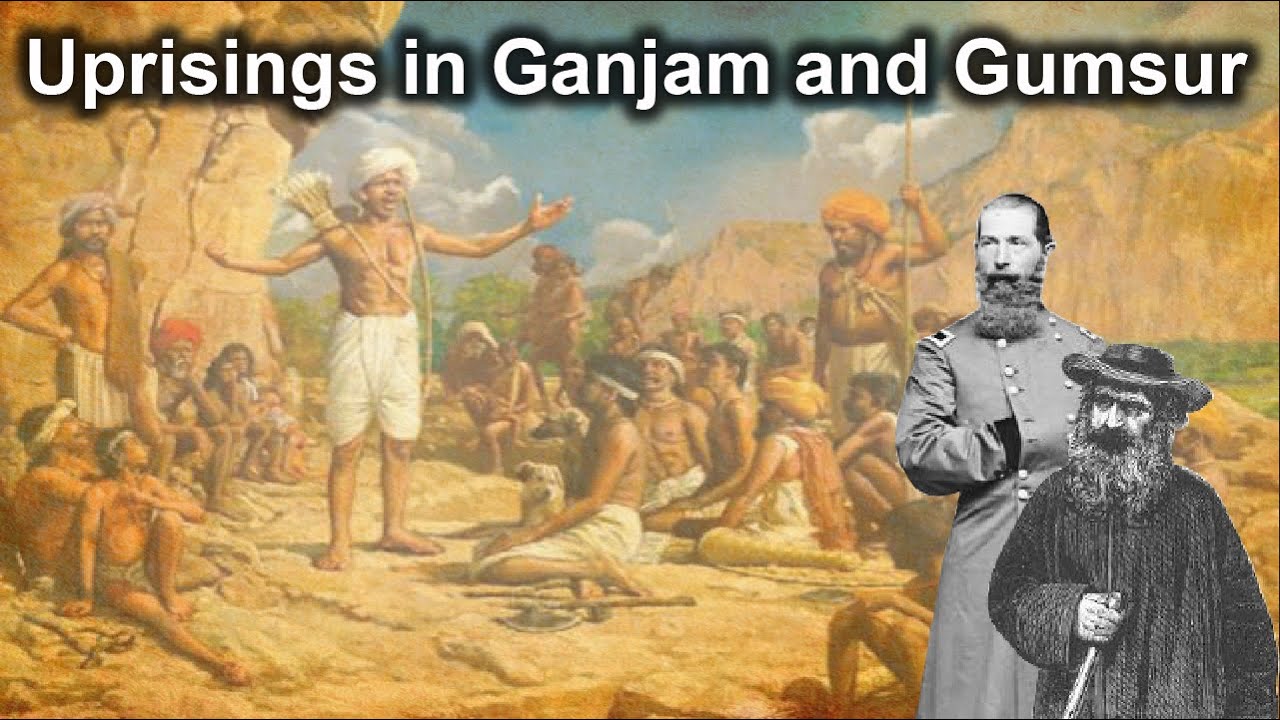
The Ganjam and Gumsur uprisings, running from to , were major early revolts against British rule in coastal Odisha (then called Orissa). Prominent local leaders, especially Strikara Bhanj and his son Dhananjaya Bhanj, led these revolts. Studying these events helps students preparing for UPSC and other competitive exams understand early 19th-century Indian history, colonial resistance, and the difficulties the British faced while establishing their administrative control.
🎯 In this chapter, you will understand:
- The causes behind early resistance in Ganjam and Gumsur against the British East India Company.
- The roles played by local chieftains Strikara Bhanj and Dhananjaya Bhanj in leading armed uprisings.
- The military actions, succession struggles, and alliances that shaped the conflict between 1800 and 1837.
- The eventual British suppression, key arrests, and the permanent forfeiture of the Gumsur estate.
💡 Why this topic matters: It highlights how early heavy tax demands and political interference triggered multi-generational armed resistance in regional India before 1857.
🧠 Core Idea: Local leaders in Odisha fought for decades to protect their land and authority from colonial revenue expansion and military control.
Overview of the Ganjam and Gumsur Uprisings (1800–1837): A Persistent Struggle Against British Rule in Odisha
These early revolts in Ganjam and Gumsur showed strong resistance against the growing power of the British East India Company. The main causes were heavy land tax demands and unwanted administrative interference by colonial authorities on local chieftains and landholders.
Key Factors in the Early Unrest
The unrest spread across several estates as British revenue pressure grew heavier.
- (i) Revolt in the Northern Circars: The Ganjam region, part of the Northern Circars, became a hotbed of revolt against British rule soon after the Company took control.
- (ii) Strikara Bhanj's Initial Defiance: The major conflict began with Strikara Bhanj, the powerful zamindar (local chieftain) of Gumsur in Ganjam district. He refused to pay high revenues in and started an open rebellion in .
- (iii) Removal of the Corrupt Collector: To calm the insurrection temporarily, the British had to remove Snodgrass, the local revenue collector, who was known for corruption and harsh demands.
- (iv) Strategic Allies in the Uprising:Strikara Bhanj built alliances with other local rulers, including Jlani Deo of Vizianagar (Poddakimedi) and Jagannath Deo of Pratapgiri (Chinakimedi).
Early Rebellions and British Suppression in Ganjam (1800–1815)
During the first fifteen years of the 19th century, local rulers repeatedly challenged British forces, making it difficult for the Company to build stable rule.

The Capture of Jagannath Deo, the Pratapgiri Zamindar
British forces slowly targeted and removed individual rebel leaders from the field.
- (i) By , British troops captured the rebel leader Jagannath Deo and imprisoned him at Masulipatnam.
- (ii) Realizing that Strikara Bhanj still held strong local support, the English handed back control of certain districts to him to maintain temporary peace and stop further fighting.
Dhananjaya Bhanj's First Major Rebellion and Succession Conflict
Internal family disputes merged with anti-British action, leading to another wave of fighting.
- (i) In , Dhananjaya Bhanj, son of Strikara, took over the family estate, forced his father to leave, and launched an armed revolt against English troops.
- (ii) After years of hard resistance, strong British military pressure forced Dhananjaya to surrender unconditionally in .
Renewed Rebellion in Ganjam and Gumsur (1835–1837)
In the mid-1830s, fighting broke out again. Local opposition to British tax collection had not gone away, leading to a final major confrontation.
The Return of Strikara Bhanj and Second Term as Zamindar
Changes in British management gave Strikara a second period in charge of the estate.
- (i) Reappointment: The British allowed Strikara to return to Ganjam as zamindar, and he managed the estate from to .
Dhananjay's Second and Final Rebellion Leading to Forfeiture
Heavy tax debts triggered the last major clash between the ruling family and British troops.
- (i) When Dhananjay took over the estate again, he could not pay the large tax arrears demanded by British officials.
- (ii) In , British forces occupied the forts at Gumsur and Kolaida, which pushed Dhananjay into his second and final rebellion.
- (iii) Although Dhananjay died in , his followers and local tribal groups kept fighting armed resistance.
Government Response and The Final Outcome of the Rebellions in Ganjam
The British government used heavy military force and administrative changes to end the long-running resistance.
Appointment of Russell with Full Discretionary Powers
A special officer was appointed to crush the uprising completely.
- (i) Intervention: The government appointed Russell and gave him full authority to manage the situation and restore order.
The End of the Struggle and Forfeiture of Gumsur Zamindari
With key leaders arrested, the traditional leadership structure was dismantled.
- (i) The fighting finally ended in after the capture of Doora Bisayi, a primary leader who had carried on the revolt after Dhananjay's death.
- (ii) Following the uprising, the British officially confiscated the zamindari of Gumsur, bringing the region under direct colonial control.
⚡ Quick Revision Capsule: Key Phases of Ganjam & Gumsur Uprisings
A structured timeline and key facts for quick review:
| Timeframe | Key Leaders Involved | Major Outcome / Historical Significance |
|---|---|---|
| Strikara Bhanj | Refusal of high revenue demands; start of open rebellion in Gumsur. | |
| Jagannath Deo, Dhananjaya Bhanj | Capture of Jagannath Deo; Dhananjaya's first revolt and surrender in . | |
| Strikara Bhanj | Temporary peace; Strikara reappointed as zamindar of Gumsur. | |
| Dhananjaya Bhanj, Doora Bisayi | Final rebellion over tax arrears; tribal resistance continues after Dhananjay's death. | |
| Russell (British Commissioner) | Arrest of Doora Bisayi; complete forfeiture of the Gumsur zamindari. |
📝 Summary
The Ganjam and Gumsur uprisings (–) are important examples of multi-generational local resistance against British rule in early 19th-century Odisha. Leaders like Strikara Bhanj and Dhananjaya Bhanj fought continuously against high land tax policies and political interference. For students, these events show how regional chieftains and tribal groups delayed colonial administrative control in coastal India.
🚀 Quick Revision Points
Essential facts to review before examinations:
- (i) Started primarily as a reaction against high revenue demands and colonial interference in traditional leadership.
- (ii) Led by father and son chieftains Strikara Bhanj and Dhananjaya Bhanj.
- (iii) Allied with regional leaders like Jagannath Deo of Pratapgiri and Jlani Deo of Vizianagar.
- (iv) Tribal groups under leaders like Doora Bisayi continued fighting even after Dhananjaya Bhanj died in .
- (v) The rebellion ended in , leading to the direct seizure (forfeiture) of the Gumsur estate by the British.
- 💡 Exam Tip: Remember that Doora Bisayi was the key tribal leader who led the final phase of armed resistance after Dhananjaya Bhanj's death in late 1835.
❓ Frequently Asked Questions (FAQ)
Q1: Who were the main leaders of the Ganjam and Gumsur uprisings?
A1: The primary leaders were Strikara Bhanj and his son Dhananjaya Bhanj, alongside tribal leader Doora Bisayi and allied chieftains like Jagannath Deo.Q2: What caused the final phase of rebellion in 1835?
A2: The final phase was caused by heavy land tax debts (arrears) that Dhananjaya Bhanj could not pay, leading to British troops occupying the Gumsur and Kolaida strongholds.Q3: How did the Gumsur uprisings officially end?
A3: The uprisings ended in after British Commissioner Russell oversaw military operations that resulted in the arrest of Doora Bisayi and the permanent loss (forfeiture) of the Gumsur estate.