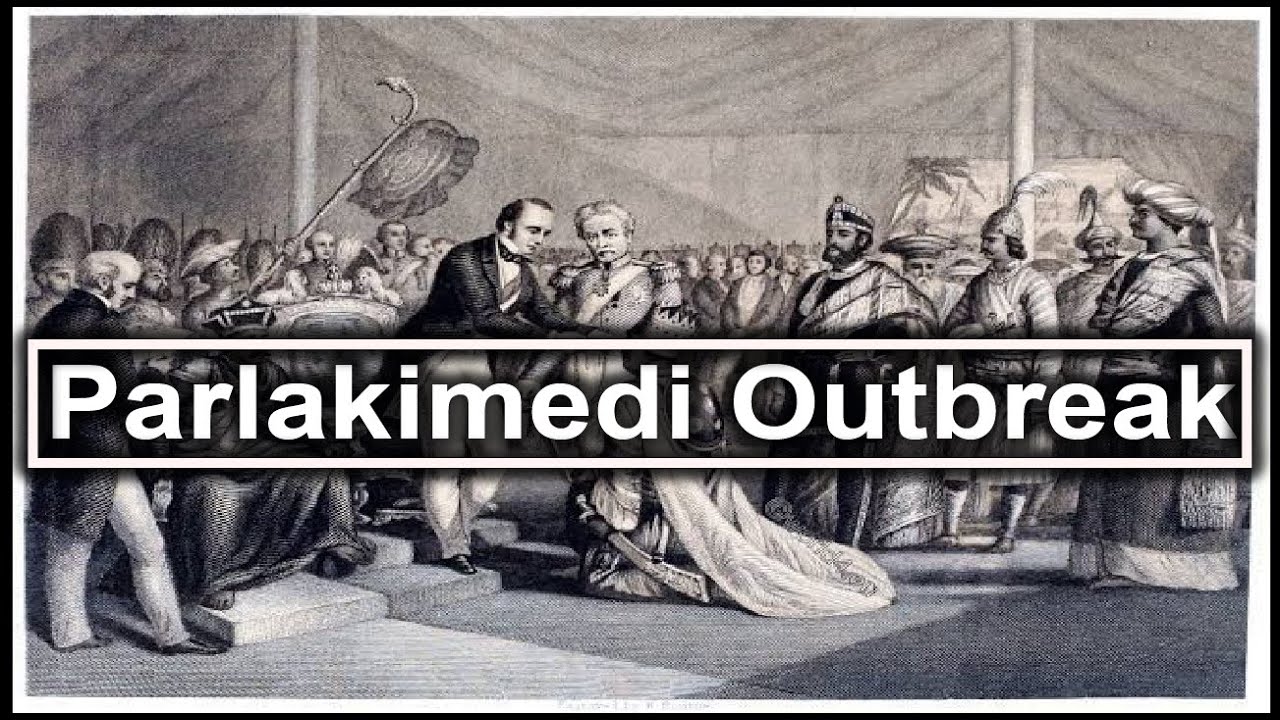
The Parlakimedi Outbreak, lasting for over two decades from to , stands as an important early chapter of resistance against the expanding rule of the British East India Company. This long struggle was led by the local ruler Narayan Deo alongside supportive local zamindars in the region of Parlakimedi. The revolt highlights how local leaders protected their rights against colonial rule. It is a critical topic for history learners studying early anti-colonial movements because it shows the causes, key leaders, and British strategies used in the Ganjam district (located in modern-day Odisha).
🎯 In this chapter, you will understand:
- The main reasons behind the Parlakimedi uprising against British revenue demands.
- The leadership role played by Narayan Deo and his family members.
- The military actions taken by the British East India Company to crush local resistance.
- The final suppression strategy executed by Special Commissioner George Russell between and .
💡 Why this topic matters: It reveals how early regional rulers fought to keep their freedom and land before the major national revolts began.
🧠 Core Idea: Local rulers and landowners resisted colonial taxes and land takeovers through persistent local warfare and community support.
🏛️ Parlakimedi Outbreak (1813–1834): Protracted Resistance Against the British East India Company in Ganjam
The historical backdrop of this revolt is set in the scenic yet politically active region of Parlakimedi, located on the western border of the Ganjam district. Local landowners, including powerful zamindars and respected rajas, felt that the takeover of their family lands by the Company was a direct attack on their traditional rights and dignity.
A Bold Assertion of Sovereignty Against Colonial Expansion in Ganjam.
- (i) The region of Parlakimedi became a center of local resistance after the Company tried to gain complete territorial and financial control over the Ganjam district (Odisha).
- (ii) The main spark for the widespread conflict was the brave stance of Narayan Deo, the rightful raja of Parlakimedi, who refused to accept British authority or pay their heavy tax demands.
- (iii) In an earlier conflict in , Colonel Peach defeated Narayan Deo and placed his son, Gajapathi Deo, as the official zamindar, but the spirit of rebellion never died out.
- (iv) Even after that military defeat, Narayan Deo continued his fight with strong support from his son Gajapathi Deo and his brothers, turning the conflict into a long campaign against British rule.
⚔️ The Prolonged Resistance and Key Leaders of Parlakimedi
The long duration of the Parlakimedi Outbreak was made possible by the commitment of the royal family and strong local backing, making it a difficult security challenge for the colonial government.

👑 Narayan Deo: The Undefeated Spirit and Leader
The story of Narayan Deo is one of continuous struggle. Even after losing official power, he never gave up his claim or his fight, becoming a respected leader for local citizens and zamindars.
- (i) Guiding the Uprising:Narayan Deo acted as the main organizer and leader, bringing together local groups even after losing his official administrative position.
- (ii) Family Support: His immediate family, including his son Gajapathi Deo and his brothers, stayed loyal and provided essential military and political support throughout the struggle.
- (iii) Mobilization: His call to fight inspired many local zamindars who wanted to protect their shared cultural heritage and lands from foreign control.
🛡️ Early British Military Interventions and Setbacks
The British East India Company sent several military troops into the area, expecting a quick victory. However, the resistance was far stronger than they anticipated.
- (a) Initial Suppression Attempts: After Colonel Peach's victory in , the British incorrectly assumed the area was fully under control, underestimating the determination of the local leader and his people.
- (b) Guerrilla Tactics: Using their knowledge of the local hills and forests, the fighters used quick strike-and-retreat tactics, making it hard for larger British armies to win a lasting victory.
- (c) Prolonged Instability: Because early British military actions failed to capture Narayan Deo or disarm his followers, the Ganjam district experienced continuous political unrest for years.
📜 Government Response and Final Resolution (1832–1834)
Seeing that regular military steps were not working, the British East India Company changed its approach. They decided to give total military and administrative power to a single experienced administrator.
🎯 George Russell and the Pacification Strategy
The turning point for the British came with the appointment of George Russell, a firm colonial officer assigned to end the rebellion completely.
- (i) Commissioner Appointment: The Presidency of Madras appointed George Russell as Special Commissioner for the area in to restore order.
- (ii) Grant of Full Powers:Russell was given total authority over civil administration, tax collection, and military operations, allowing him to act without standard delays.
- (iii) Successful Conclusion: By using these direct powers and carrying out targeted military sweeps, Russell systematically broke down the resistance network and fully controlled the Parlakimedi region by .
⚡ Quick Revision Capsule: Parlakimedi Outbreak (1813–1834)
A summary of key facts, figures, and turning points during the Parlakimedi resistance movement:
| Event / Feature | Details & Key Figures | Historical Impact |
|---|---|---|
| Primary Leader | Narayan Deo (Raja of Parlakimedi) | Led continuous opposition to British revenue demands and political interference. |
| Early Conflict | Battle of against Colonel Peach | Led to nominal placement of Gajapathi Deo, but local resistance continued. |
| Fighting Style | Guerrilla tactics aided by local zamindars | Kept the Ganjam district unstable for over twenty years. |
| British Officer | George Russell (Appointed ) | Given complete civil and military control by the Presidency of Madras. |
| Final Outcome | Pacification achieved by | Ended the long rebellion and established strict British control over the area. |
📝 Summary
The Parlakimedi Outbreak (–) was an early demonstration of regional resistance against colonial expansion in Eastern India. Driven by the leadership of Narayan Deo and supported by traditional landowners, the uprising challenged the rule of the British East India Company in Odisha for over twenty years. It finally ended when the British government gave extraordinary administrative and military powers to Special Commissioner George Russell, who fully suppressed the resistance by .
🚀 Quick Revision Points
Essential facts to review before examinations:
- (i) The main cause of the outbreak was British interference in local land ownership and heavy revenue demands.
- (ii) Narayan Deo maintained resistance with help from his son Gajapathi Deo and his brothers.
- (iii) The hilly geography of the Ganjam district helped the rebels carry out long-term guerrilla warfare.
- (iv) Special Commissioner George Russell was appointed in and completed the suppression by .
- 💡 Exam Tip: Focus on the role of George Russell and his special powers, as well as the geography of Ganjam when answering questions about British colonial suppression methods.
❓ Frequently Asked Questions (FAQ)
Q1: Who was the main leader of the Parlakimedi Outbreak?
A1: The main leader was Narayan Deo, the local ruler of Parlakimedi, who fought alongside his family and local landowners.Q2: What military tactics did the rebels use against the British forces?
A2: The rebels relied heavily on guerrilla warfare, using their detailed knowledge of the local terrain to avoid direct battles with larger British forces.Q3: How did the British East India Company finally bring the revolt to an end?
A3: The Presidency of Madras appointed George Russell as Special Commissioner in with total civil and military authority, enabling him to dismantle the rebel network by .