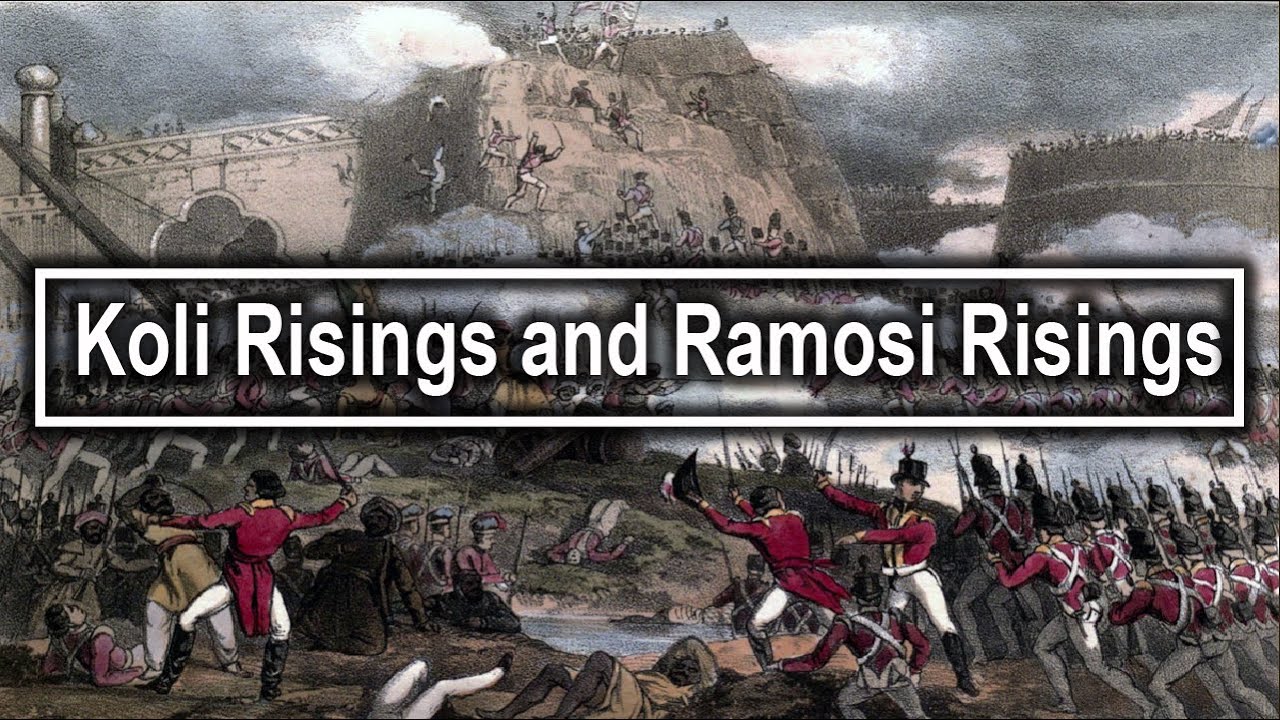
The Koli Risings and Ramosi Risings were significant tribal and hill community revolts against British and Company rule in the early 19th century. Running from to , these uprisings showed how colonial policies ruined traditional jobs, destroyed local forts, and disrupted social life. Learning about these revolts helps students understand early patterns of tribal resistance against the growing colonial power.
🎯 In this chapter, you will understand:
- The main causes behind the Koli and Ramosi uprisings in the Western Ghats.
- How loss of traditional jobs and fort defense systems triggered regional revolts.
- Key tribal leaders such as Chittur Singh, Umaji Naik, and Bapu Trimbakji Sawant.
- The British approach of military suppression combined with recruiting locals into police forces.
💡 Why this topic matters: It highlights how early tribal communities organized fierce resistance against foreign administrative and economic control long before the Revolt of 1857.
🧠 Core Idea: British annexation disrupted traditional occupations and hill defense systems, forcing communities like the Kolis and Ramosis into repeated armed rebellions to protect their livelihoods and autonomy.
📌 Early Resistance: Koli Risings and Ramosi Risings (1820s–1840s) against British Colonial Rule
The uprisings of the Kolis and Ramosis grew out of strong local grievances. These included widespread unemployment, loss of security provided by local forts, aggressive land annexation, and resentment toward British rule. Problems started right after the Company expanded its control following the defeat of the Maratha Empire.
Overview of Key Events:
- (i) The Kolis, who lived near the Bhils in the Western Ghats, rebelled against Company rule in , , and again from to .
- (ii) They fought back because Company laws caused heavy job losses and dismantled their local forts and defense arrangements.
- (iii) The Ramosis, known as hill tribes of the Western Ghats, started resisting British annexation as early as .
- (iv) This group lost their usual income when British forces annexed Maratha territory.
- (v) The first Ramosi revolt broke out under Chittur Singh in , whose forces raided areas around Satara.
- (vi) More rebellions followed in under leaders like Umaji Naik of Poona and Bapu Trimbakji Sawant, with unrest lasting until .
- (vii) Fresh trouble started in when the British removed and banished Raja Pratap Singh of Satara, leading to more fights in .
- (viii) Modern British troops eventually put down the revolts, though the colonial government later hired some Ramosis into the local hill police.
📌 Koli Risings: Socio-Economic Roots, Causes, and Repeated Impact
The Koli Risings happened because of severe economic trouble, job losses, and the destruction of local forts under Company rule, leading to rebellions in , , and .

Colonial Disruption and Fort Disarmament: The Koli Grievance
Under earlier rulers, Kolis worked in local defense and administration. The shift to British control ruined these roles and stripped away their social position.
- (i) The Kolis lost their long-held jobs due to new Company rules that excluded them.
- (ii) Forts, which were local hubs for defense and management, were torn down or closed by the British.
- (iii) Spanning nearly two decades, these repeated uprisings showed the community's refusal to accept forced displacement.
Patterns of Koli Resistance
- (a) The rebellions proved the Kolis could organize effectively against colonial control.
- (b) Their long fight from to forced the British to spend heavily on military forces to secure mountain passes.
📌 Ramosi Risings: Annexation Resistance and Key Leadership in the Western Ghats
The Ramosis fought hard against British annexation across the Western Ghats. They carried out several revolts between and under strong local leaders.
The Ramosi Warriors: Leadership of Chittur Singh and Umaji Naik
The Ramosis lost their traditional positions as guards and soldiers in the Maratha kingdom. Left without work, their leaders used armed attacks to survive and protest.
Ramosi Hill Warriors in the Western Ghats Terrain - (i) Chittur Singh led the first major uprising in , raiding villages near Satara using guerrilla actions.
- (ii) Leaders like Umaji Naik of Poona and Bapu Trimbakji Sawant continued the fight during , keeping the struggle alive until .
- (iii) New revolts began in after the British removed Raja Pratap Singh, lasting into .
The British Response: Suppression and Strategic Co-option of Ramosis
The British used two methods to handle the Ramosi threats: direct military force to stop fighting, followed by offering jobs in local security.
- (a) Better weapons and organized military units helped British forces end the widespread Ramosi revolts.
- (b) To maintain peace, the British hired some Ramosis into the new local hill police, using their knowledge of the area for security.
- (c) These long revolts made clear how strongly hill communities resisted colonial expansion.
⚡ Quick Revision Capsule: Koli vs. Ramosi Risings Comparison
A quick summary comparing the key features, timeline, leaders, and triggers of both uprisings:
| Feature | Koli Risings | Ramosi Risings |
|---|---|---|
| Primary Region | Western Ghats (neighboring Bhils) | Hill regions of Western Ghats, Satara, Poona |
| Timeframe | , , | , , , |
| Key Leaders | Local Koli Chiefs & Tribal Leaders | Chittur Singh, Umaji Naik, Bapu Trimbakji Sawant |
| Main Trigger | Disarmament of forts & loss of traditional garrison jobs | Annexation of Maratha state & loss of hereditary guard roles |
| British Settlement | Heavy military enforcement in mountain passes | Military suppression & recruitment into hill police force |
📝 Summary
The story of the Koli and Ramosi Risings gives us an example of early 19th-century tribal resistance against early Company rule. Running from to , these events show how lost jobs, territorial annexation, and demolished forts pushed local people to fight back. Studying these revolts helps explain how early colonial resistance took root across the Western Ghats.
🚀 Quick Revision Points
Essential facts to review before examinations:
- (i) Both revolts were triggered by the fall of the Maratha Empire and subsequent Company policies.
- (ii) Chittur Singh led the first major Ramosi wave in near Satara.
- (iii) Umaji Naik of Poona was a central leader during the phase.
- (iv) Dismantling of local forts was a main grievance for the Koli community.
- 💡 Exam Tip: Note the dual British strategy regarding the Ramosis: using armed force first, then absorbing them into the hill police to secure local terrain.
❓ Frequently Asked Questions (FAQ)
Q1: What caused the Koli Risings in the 1820s to 1840s?
A1: They were caused by severe job losses and the destruction of local forts that used to provide security and administrative work for the community.Q2: Who led the initial Ramosi Rising in 1822?
A2: Chittur Singh led the initial revolt in , raiding areas around Satara against British rule.Q3: How did the British resolve the Ramosi rebellions long term?
A3: They combined military force with co-option by hiring Ramosis into the newly created local hill police.