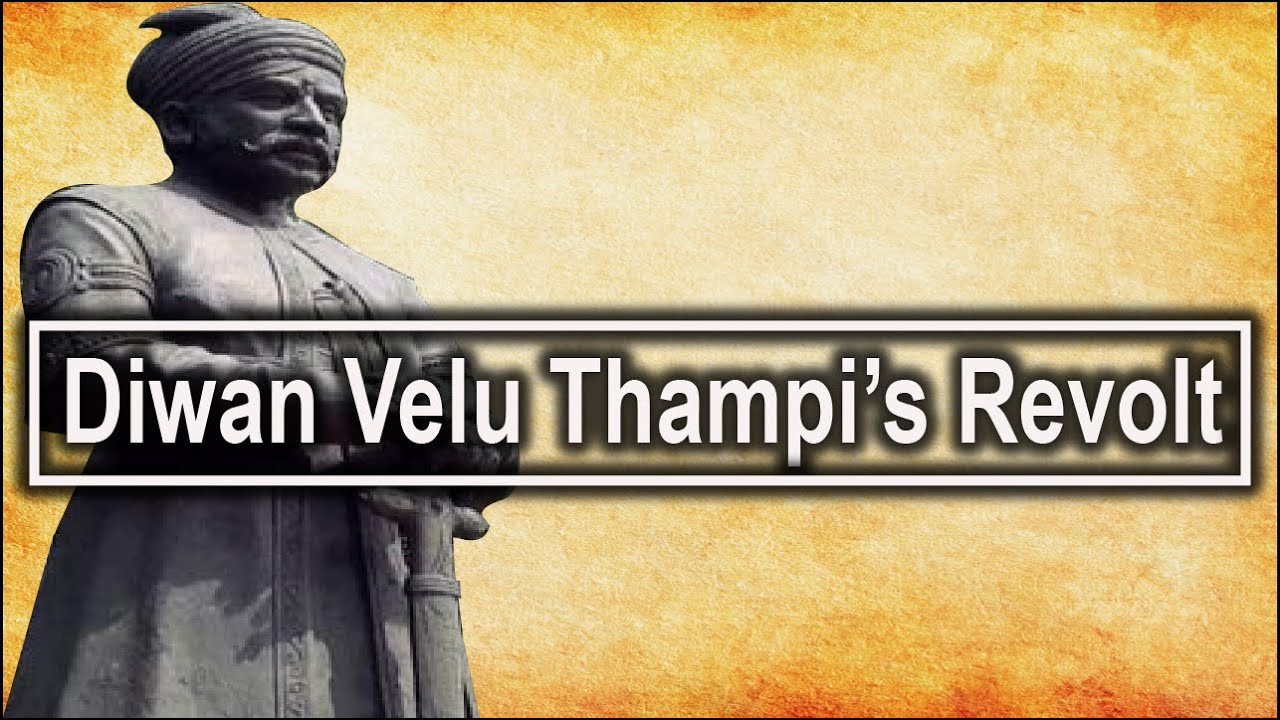
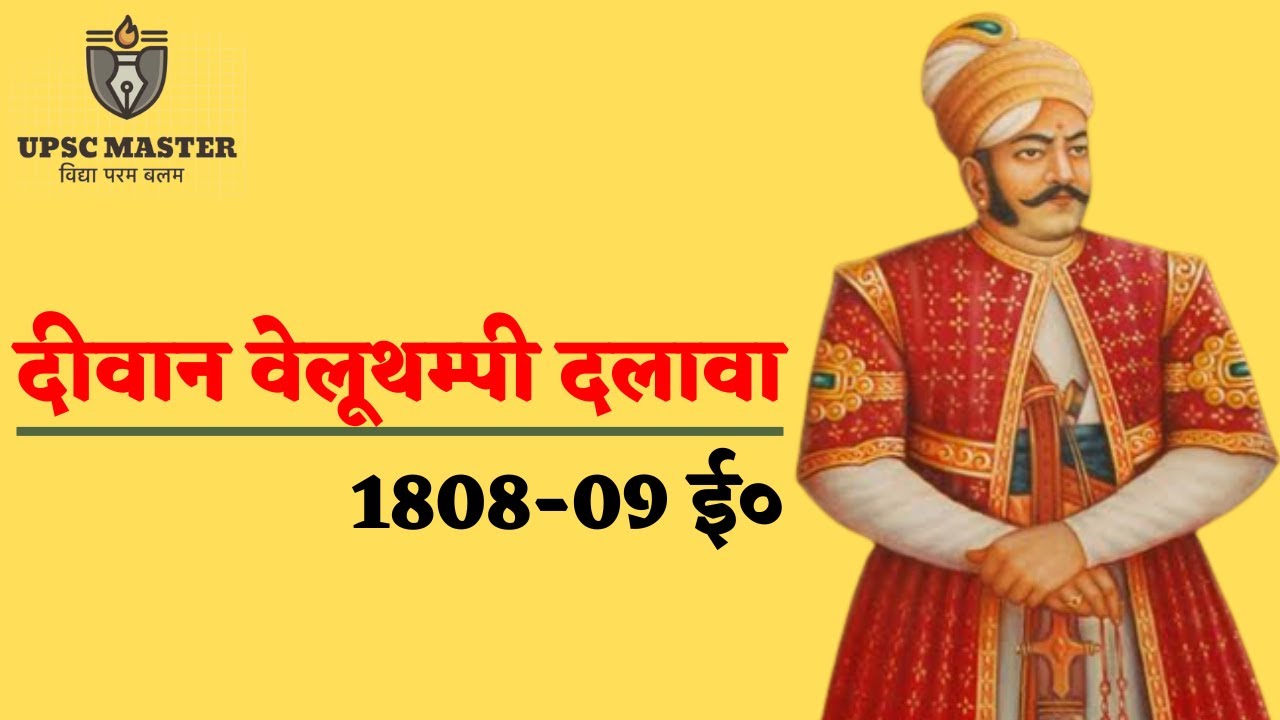
The Diwan Velu Thampi Revolt of was a major uprising in the kingdom of Travancore. It marked an important early fight against the growing power of the East India Company. This struggle started mainly because of heavy economic pressure, deep interference by the British Resident, and anger over unfair colonial rules. Led by Dalawa Velu Thampi, this event is key for history students because it shows how the Subsidiary Alliance System worked and how early anti-colonial resistance began.
🎯 In this chapter, you will understand:
- The main economic and political causes behind the Travancore uprising.
- The role of Dalawa Velu Thampi and the historic Kundara Proclamation.
- The military clashes between native forces and the East India Company.
- The ultimate outcome, historical importance, and key facts for exams.
💡 Why this topic matters: It highlights how early Indian native rulers and administrators fought against British financial exploitation and loss of state freedom.
🧠 Core Idea: Unfair monetary demands under the Subsidiary Alliance forced Travancore into conflict, leading to an organized popular rebellion against foreign control.
Understanding Diwan Velu Thampi’s Revolt (1808–1809): Core Causes, Key Leaders, and Historical Background in Travancore
The uprising started mainly because of high money demands and excessive control by the East India Company in Travancore. Relations broke down after the signing of the Subsidiary Alliance, which placed a huge burden on the kingdom’s finances and independence.
Key background causes that led to the conflict:
- (i) After signing a subsidiary alliance treaty in , Travancore was forced to pay heavy financial demands every year to maintain the British military force kept inside its borders.
- (ii) Due to this severe money strain, the Maharaja of Travancore fell behind on mandatory subsidy payments. The Company used this delay as a reason to increase its direct control over local government and state finances.
- (iii) Seeing the loss of state freedom and economic ruin, the Dalawa (Prime Minister) Velu Thampi took a firm stand. He gathered the loyal Nair troops and announced the famous Kundara Proclamation in , calling on everyone to unite and fight against the British forces.
Major Key Events, Military Clashes, and Definitive Outcome of Diwan Velu Thampi’s Uprising
The conflict quickly grew from political protests into full-scale fighting across the region. This forced the East India Company to send strong army units, changing the future governance of Travancore.

Intense Rebellion, Widespread Unrest, and the Firm British Military Response
The rebellion organized by Velu Thampi rallied many people and caused huge disturbance across the state. However, the British moved quickly with stronger military forces to crush the uprising.
- (i) Armed attacks on the British Residency and related posts forced the British to start a large military operation under officers like Colonel St. Leger to regain complete control and restore stability.
- (ii) Under heavy pressure and fearing total loss of his throne, the Maharaja of Travancore chose not to fully support Velu Thampi. Instead, he allied with the stronger Company, leaving the rebellious Dalawa without royal support.
Velu Thampi’s Tragic Demise and the Formal Conclusion of the Revolt
Although the resistance started strong, the lack of kingly backing and the organized Company army turned the war against the rebels.
- (a) Realizing the revolt was failing and refusing to let the British capture him alive, Velu Thampi chose suicide at the Mannadi Temple.
- (b) After the death of its leader, the rebellion ended by . The British imposed harsher rules on Travancore, increased the yearly payments, and placed a British Resident with far greater administrative power.
Historical Significance and Summary of Diwan Velu Thampi’s Revolt for Students and Exams
The Diwan Velu Thampi Revolt was a brave, short-lived fight against the harsh rule of the East India Company in Travancore. Even though it did not bring lasting independence, its place in history is very important. It proved that local leaders could mobilize regional troops and common people against colonial rule. Occurring between and , this uprising prepared the ground for future anti-British movements and remains an essential topic for history students.
⚡ Quick Revision Capsule: Diwan Velu Thampi Revolt ()
Below is a quick overview of key details regarding the Travancore uprising for fast exam review:
| Aspect | Details | Exam Relevance |
|---|---|---|
| Primary Leader | Velu Thampi (Dalawa / Prime Minister of Travancore) | Key anti-colonial figure in Southern India |
| Core Cause | Exploitative financial burden under the Subsidiary Alliance () | Understanding British economic subjugation |
| Major Call to Arms | Kundara Proclamation () | Famous historic appeal for popular rebellion |
| British Commander | Colonel St. Leger | Military suppression of native resistance |
| End of Conflict | Velu Thampi's suicide at Mannadi Temple () | Expansion of British Resident's power in Travancore |
📝 Summary
The conflict of in Travancore remains a major example of early Indian defiance. Driven by huge money demands and political interference under the Subsidiary Alliance, Prime Minister Velu Thampi united regional forces against the East India Company. Though crushed militarily, the movement stands out in historical records as a brave effort to protect native independence.
🚀 Quick Revision Points
Essential facts to review before examinations:
- (i) Treaty of placed severe financial obligations on the kingdom of Travancore.
- (ii) Velu Thampi issued the Kundara Proclamation in to unite people against British rule.
- (iii) British military intervention led by Colonel St. Leger overwhelmed local forces.
- (iv) The rebellion ended in after Velu Thampi passed away at Mannadi Temple.
- 💡 Exam Tip: Focus on the connection between the Subsidiary Alliance signed in and the Kundara Proclamation of for main history exam questions.
❓ Frequently Asked Questions (FAQ)
Q1: What was the main cause of the Diwan Velu Thampi Revolt?
A1: The main cause was the heavy financial subsidy imposed by the East India Company under the Subsidiary Alliance, along with direct interference by the British Resident.Q2: What was the Kundara Proclamation?
A2: Issued by Velu Thampi in , it was an open call asking the people of Travancore to rally together and defend their state against British forces.Q3: How did the revolt end?
A3: Facing defeat due to superior British military power and lack of backing from the Maharaja, Velu Thampi committed suicide at Mannadi Temple in .