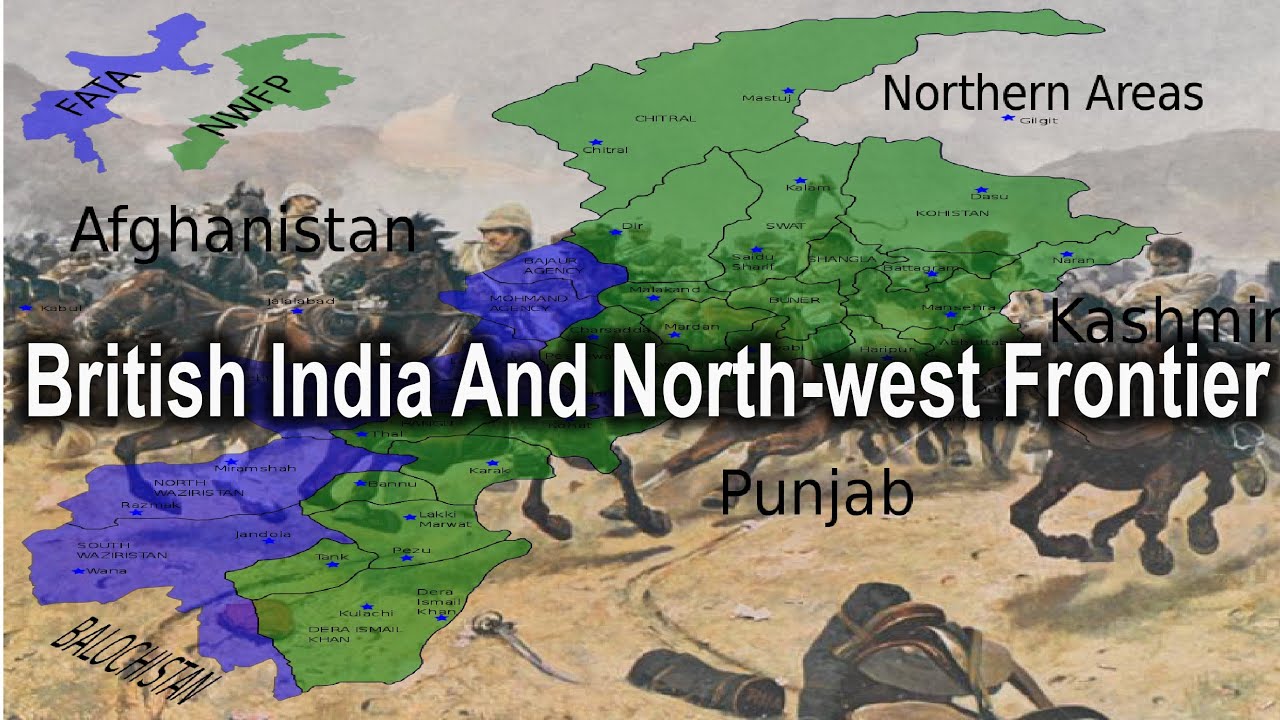
The British expansion in India during the transformative 19th century brought about a radical shift in the political and territorial map of the subcontinent, particularly focusing on the Indus region and the strategic frontier. This detailed narrative explores the crucial conquest of Sindh and Punjab, the subsequent strategic occupation of the critical Gilgit Valley, and the pivotal role of Curzon’s innovative frontier policies, which culminated in the administrative creation of the North-West Frontier Province (NWFP), an essential topic for students preparing for historical and geopolitical examinations.
🎯 In this chapter, you will understand:
- How British forces expanded control across the Indus Valley through the conquest of Sindh and Punjab.
- The strategic military operations in Hunza, Nagar, and the Gilgit Valley during the Great Game era.
- Lord Curzon’s policy of withdrawal and concentration along the northwest border.
- The administrative creation, development, and geopolitical legacy of the North-West Frontier Province (NWFP).
💡 Why this topic matters: It highlights how 19th-century British border decisions shaped modern South Asian political boundaries, including the Durand Line and regional security dynamics.
🧠 Core Idea: British imperial expansion shifted from direct military conquest in the Indus plains to proxy control and specialized border administration under Lord Curzon in the rugged northwestern mountains.
The British Imperial Expansion in India: Conquest of Sindh, Punjab, and Strategic Frontier Policies (19th Century)
During the 19th century, British territorial strategy moved systematically across northern India to secure key rivers and natural mountain borders against foreign influences.
The Strategic Consolidation of British Power Across the Indus River
Driven by trade and defense priorities, the British East India Company targeted areas beyond the Indus River to safeguard the imperial northwest border. This expansion brought British forces into direct conflict with local sovereign rulers and autonomous frontier tribes.
- (i) A major expansion occurred with the swift British annexation of Sindh in , securing control over the lower Indus region. Soon after, the comprehensive conquest of Punjab in following the Anglo-Sikh Wars extended British rule across the entire Indus Valley.
- (ii) This territorial movement brought the British administration into close contact with independent border communities, mainly the Baluch and Pathan tribes, whose lands bordered regions influenced by the Amir of Afghanistan.
British Control in Hunza and Nagar: Securing the Strategic Mountain Passes of Gilgit Valley
To defend against potential rival powers from northern Asia during the Great Game, British leadership prioritized securing high mountain passes near Afghanistan and China.

Military Occupation of Hunza and Nagar During 1891-92 and Afghan Reaction
Between 1891 and 1892, British campaigns advanced into high-altitude mountain kingdoms to secure northern passes, creating geopolitical reactions among nearby sovereign rulers.
- (i) During , British forces took decisive control of Hunza and Nagar, two important mountain principalities in the highly sensitive Gilgit Valley. This movement caused deep concern for Abdur Rahman, the ruler of Afghanistan, who viewed it as an entry into his sphere of influence.
- (ii) To reduce tensions and establish clear borders, both powers signed the Durand Line agreement in , defining the official boundary between Afghan territories and British India.
- (iii) Despite the agreement, local tribal uprisings against British posts and new boundary lines continued throughout the region until .
Lord Curzon’s Policy of Withdrawal and Concentration: A New Administrative Approach
High military expenditures and difficult mountain terrain prompted a structural shift in frontier governance, moving away from maintaining large garrisons in remote locations.
Lord Curzon’s Administration (1899-1905) and Strategic Shifts
During his tenure as Viceroy, Lord Curzon revised frontier management through his strategy of "withdrawal and concentration," using local forces and reformed administrative units to reduce military costs.
- (i) Curzon began by withdrawing expensive regular British troops from far-flung outposts deep inside tribal territory.
- (ii) These regular units were replaced by locally raised tribal levies who were trained and led by British officers to maintain local security at lower costs.
- (iii) Curzon worked to gain support from prominent tribal chiefs to maintain peace, while forming the new North-West Frontier Province (NWFP) in to focus border administration directly under the central government.
⚡ Quick Revision Capsule: British NW Frontier Policies
Key historical milestones and administrative changes across the 19th-century Indus frontier.
| Event / Policy | Timeframe | Key Significance |
|---|---|---|
| Annexation of Sindh | Secured control over the lower Indus Valley and coastal water routes. | |
| Conquest of Punjab | Extended British rule up to the western tribal mountain belts. | |
| Hunza-Nagar Campaign | Secured strategic mountain passes within the Gilgit Valley. | |
| Durand Line Agreement | Formally marked the border separating British India and Afghanistan. | |
| NWFP Formation | Created a specialized border province under Lord Curzon. |
📝 Summary
The expansion and subsequent governance strategies in the Indus region, culminating in the creation of the North-West Frontier Province (NWFP) under Lord Curzon, are essential chapters in understanding the development of modern South Asian geopolitics. The conquest of Sindh and Punjab provided the base, while the strategic control of the Gilgit Valley secured the northern frontiers. This narrative holds significant relevance for students, as it illustrates classic examples of imperial strategic planning, frontier management, and the long-term impact of boundary-making, such as the Durand Line, on contemporary political boundaries and regional stability.
Formation of the NWFP and Its Profound Historical Aftermath
The establishment of the North-West Frontier Province created an administrative framework for the frontier region that lasted through the remainder of British rule into post-independence history.
Maintaining Peace and Constitutional Status of the NWFP
Curzon's balance of administrative oversight and local tribal management led to reduced major conflicts along the border, though localized security issues occasionally reoccurred.
- (i) The governance framework brought improved stability across the north-west frontier, although minor local uprisings occurred at intervals due to the region's strong tradition of independence.
- (ii) As part of broader provincial reforms in British India, the NWFP was upgraded to a full governor’s province in .
- (iii) Following the partition in , the NWFP became a territory of Pakistan, completing a permanent geopolitical shift in the region.
🚀 Quick Revision Points
Essential facts to review before examinations:
- (i) Sindh () and Punjab () brought the entire Indus Basin under British rule.
- (ii) The Hunza-Nagar expedition secured access through the Gilgit Valley.
- (iii) The Durand Line () established the boundary with Afghanistan.
- (iv) Lord Curzon created the NWFP in and replaced British garrisons with local levies.
- 💡 Exam Tip: Focus on how Curzon’s "withdrawal and concentration" policy differed from earlier direct military forward policies when writing answer responses on frontier management.
❓ Frequently Asked Questions (FAQ)
Q1: What were the main conquests that extended British rule to the Indus?
A1: The key steps were the annexation of Sindh in and the conquest of Punjab in after the Anglo-Sikh Wars.Q2: What was Lord Curzon’s "withdrawal and concentration" policy?
A2: It was a strategy of withdrawing regular British troops from remote outposts and replacing them with local tribal levies commanded by British officers.Q3: When was the North-West Frontier Province (NWFP) created?
A3: It was established as a separate administrative unit in under Lord Curzon and later became a full governor's province in .