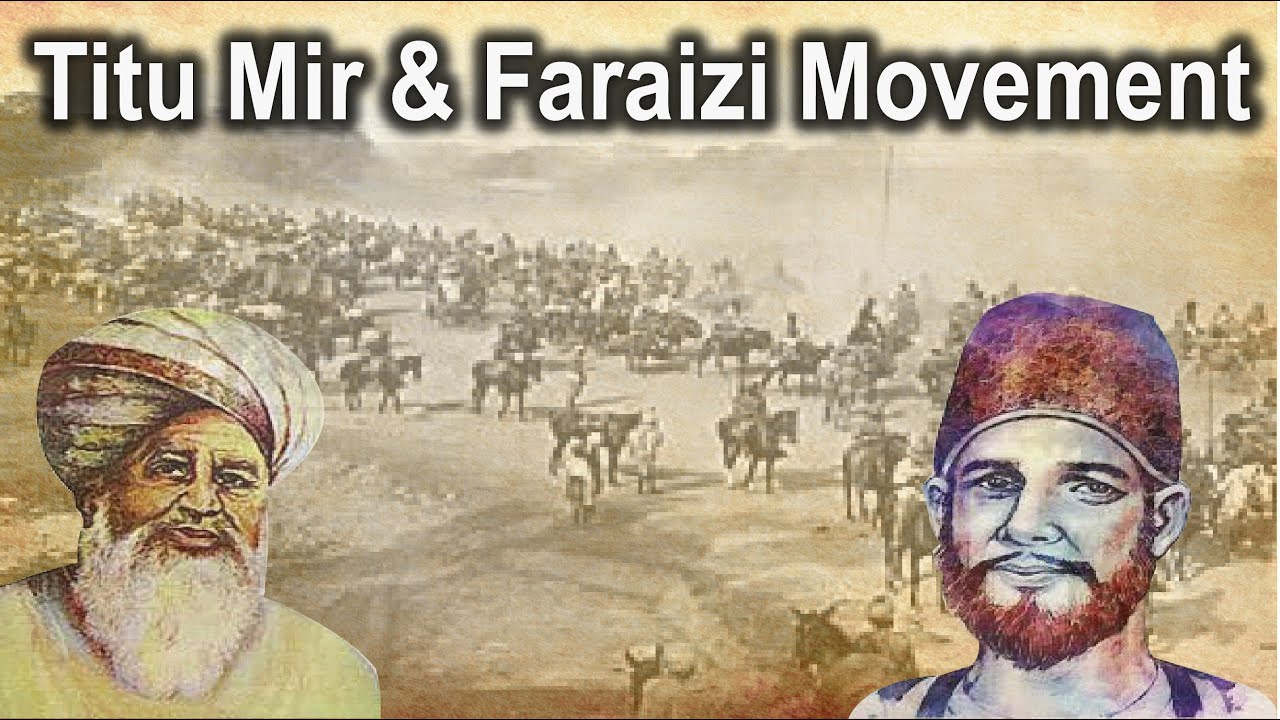
The Titu Mir’s Movement in 19th-century Bengal stands as a monumental socio-religious uprising led by the charismatic Saiyid Mir Nisar Ali, better known as Titu Mir. Deeply influenced by Sayyid Ahmed Barelvi and the Wahabi ideology, this struggle successfully mobilized Muslim peasants against the dual oppression of Hindu landlords and British indigo planters. The climactic confrontation with British police in makes this a vital historical case study for students preparing for competitive exams and civil services aspirants.
🎯 In this chapter, you will understand:
- The origins and leadership of Saiyid Mir Nisar Ali (Titu Mir) in 19th-century Bengal.
- The influence of the Wahabi Movement and Sayyid Ahmed Barelvi on rural reform.
- The economic struggle of Muslim peasants against landlords and British indigo planters.
- The construction of the Bamboo Fortress and the final battle of .
💡 Why this topic matters: It highlights how religious reform merged with peasant resistance to challenge colonial land exploitation in 19th-century Bengal.
🧠 Core Idea:Titu Mir organized rural farmers against unfair land taxes and colonial oppression using spiritual unity and social reform.
📌 The Saga of Titu Mir’s Movement: Peasant Resistance and Religious Reform in 1831 Bengal
The Titu Mir’s Movement was a transformative chapter in Bengal's history, weaving together a narrative of spiritual revival and socio-economic defiance.
The movement began not just as a rebellion, but as a quest for identity and justice under the leadership of Saiyid Mir Nisar Ali. His journey from a common man to a revolutionary leader defined the peasant psyche of the 19th century.
- (i) Saiyid Mir Nisar Ali, historically immortalized as Titu Mir, emerged as the pivotal figure who bridged the gap between religious piety and social activism.
- (ii) As a dedicated disciple of Sayyid Ahmed Barelvi, he transported the fervor of the Wahabi Movement to the rural heartlands of Bengal.
- (iii) The movement sought the strict implementation of Sharia law, envisioning a society governed by divine justice rather than colonial exploitation.
- (iv) He successfully united the Muslim peasants, creating a formidable front against the exorbitant taxes of Hindu landlords and the tyrannical British indigo planters.
- (v) Contrary to the aggressive narratives found in some British records, the movement maintained a largely peaceful reformist character until pushed to its final militant phase.
- (vi) The resistance reached its tragic zenith in , when Titu Mir sacrificed his life in a fierce battle against the British police and military forces.
📌 The Ideological Bedrock and Social Impact of Titu Mir
The strength of the movement lay in its deep-rooted Wahabi philosophy, which provided the moral and social framework for the peasantry to challenge the status quo.

The Catalyst of Wahabi Influence
The spiritual guidance of Sayyid Ahmed Barelvi served as the primary spark for Titu Mir, turning a local grievance into a broader ideological crusade for pure Islamic values.
- (i) Titu Mir acted as the local conduit for the Wahabi Movement, emphasizing a return to the foundational principles of the faith.
- (ii) He tirelessly advocated for the rejection of un-Islamic local customs, urging followers to embrace pure Islamic values as a means of spiritual and social liberation.
- (iii) By promoting unity through a shared religious identity, he transformed scattered Muslim peasants into a cohesive and disciplined social force.
The Struggle for Socio-Economic Justice
Beyond religion, the movement was a story of the soil, fighting against the crushing weight of colonial-era agrarian exploitation and unfair land revenue systems.
- (a) Resistance against Landlords: The movement took a firm stand against the Hindu landlords whose exploitative practices had left the peasantry in a state of perpetual debt.
- (b) Opposition to Indigo Planters: A core pillar of the struggle was the defiance against British indigo planters, who used coercive contracts to drain the wealth of the Bengal countryside.
- (c) Legal Framework: The advocacy of Sharia law was presented not just as a religious mandate, but as a superior alternative for social justice and equitable resource distribution.
The Path to Militancy and the Final Confrontation
As the British authorities and local elites intensified their crackdown, Titu Mir's peaceful reforms were forced to take a defensive, militant turn.
Redefining the Nature of the Movement
- (i) While British records often label the movement as purely militant, historical evidence suggests the confrontation was a last resort after peaceful petitions failed.
- (ii) The transition to armed resistance was a direct response to the escalating violence from British police and the private armies of the landlords.
The Final Battle and Martyrdom
- (i) In the year , the tension culminated in a massive clash between Titu Mir’s followers and the organized British police forces.
- (ii) The legendary Bamboo Fortress (Bansher Kella) became the symbol of this resistance during the final assault.
- (iii) Titu Mir was killed in action, a moment that marked the end of the organized uprising but the beginning of his legacy as a folk hero.
📌 Historical Significance and Legacy
The movement remains an inspiring story of rural self-respect and organized resistance against harsh economic policies in colonial India.
Architectural layout representation of the legendary Bamboo Fortress - Leader:Saiyid Mir Nisar Ali (Titu Mir)
- Ideological Guide:Sayyid Ahmed Barelvi (Wahabi Movement)
- Key Targets:Hindu landlords and British indigo planters
- Climax Year: at the Bamboo Fortress
⚡ Quick Revision Capsule: Titu Mir's Peasant Movement
Here is a concise overview of key parameters regarding the movement for fast examination review:
| Feature Aspect | Historical Detail | Exam Relevance |
|---|---|---|
| Movement Leader | Saiyid Mir Nisar Ali (Titu Mir) | Key figure in 19th-century Bengal rebellions |
| Ideological Source | Wahabi Movement via Sayyid Ahmed Barelvi | Socio-religious reform background |
| Opposing Entities | Hindu landlords and British indigo planters | Dual resistance to feudal and colonial forces |
| Key Defense Symbol | Bamboo Fortress (Bansher Kella) | Iconic symbol of peasant defense |
| Final Climax Year | Battle of | Chronological marker for modern Indian history |
📝 Summary
The Titu Mir’s Movement of in Bengal represents a powerful fusion of religious reform and peasant resistance against colonial hegemony. Under the leadership of Saiyid Mir Nisar Ali, and inspired by the Wahabi teachings of Sayyid Ahmed Barelvi, it challenged the authority of Hindu landlords and British indigo planters. For students, this event serves as a critical example of how socio-religious ideologies can drive political change and mobilize marginalized communities in colonial India.
🚀 Quick Revision Points
Essential facts to review before examinations:
- (i) Titu Mir (Saiyid Mir Nisar Ali) led rural peasants in Bengal against unfair land taxes.
- (ii) The movement drew moral strength from the Wahabi Movement and Sayyid Ahmed Barelvi.
- (iii) Key opponents included local feudal landlords and British indigo planters.
- (iv) The struggle ended heroically in with the siege of the Bamboo Fortress.
- 💡 Exam Tip: Focus on how Titu Mir’s Movement combined religious reform with economic peasant grievances against indigo planters when answering civil services questions.
❓ Frequently Asked Questions (FAQ)
Q1: Who was Titu Mir?
A1: Titu Mir, born Saiyid Mir Nisar Ali, was a leader who mobilized rural Muslim peasants in 19th-century Bengal.Q2: What was the Bamboo Fortress?
A2: The Bamboo Fortress (Bansher Kella) was a structure built by Titu Mir and his followers in to resist British police and military forces.Q3: What influenced Titu Mir's ideology?
A3: He was deeply inspired by the Wahabi Movement teachings of Sayyid Ahmed Barelvi, advocating spiritual purity and social justice.