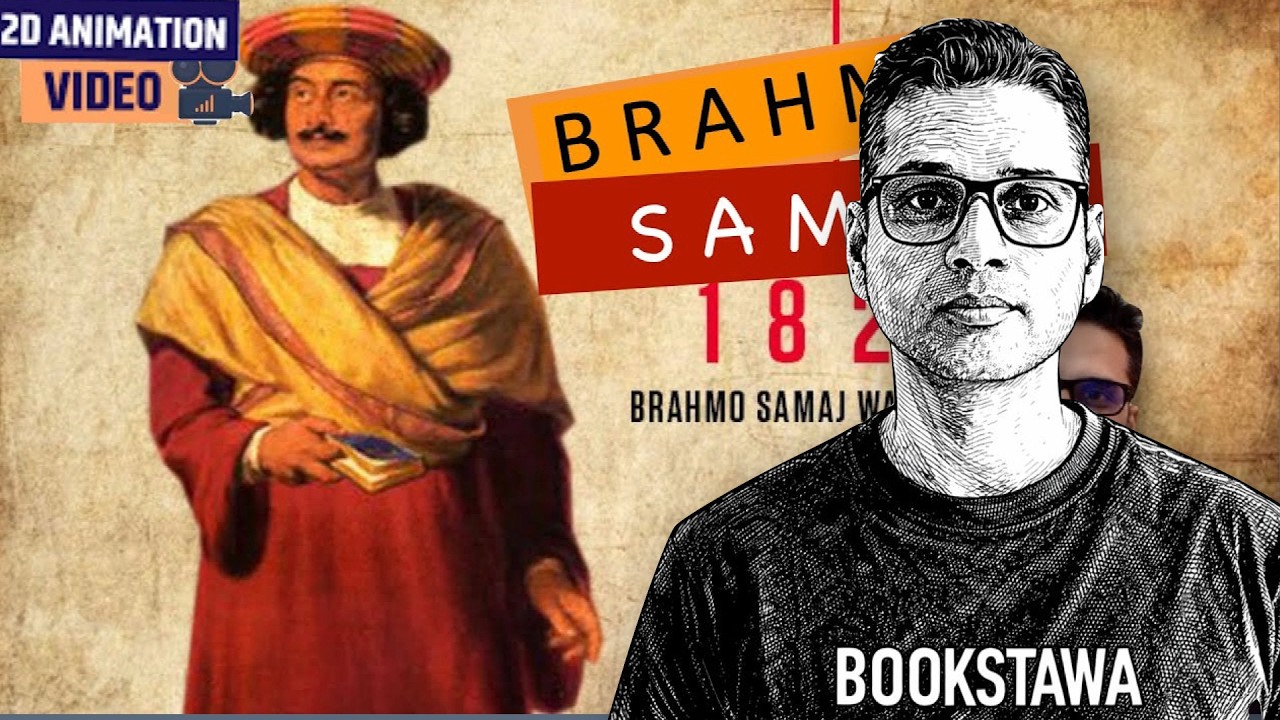
The rise of the Brahmo Samaj and Prarthana Samaj represents a pivotal chapter in the social reform movements in India, marking the dawn of a new intellectual era. These organizations championed women's empowerment and the eradication of caste discrimination within Hindu society, making them essential study topics for students aiming to master the reformist legacy of modern Indian history.
🎯 In this chapter, you will understand:
- The role of Brahmo Samaj and Prarthana Samaj as catalysts for rationalism, human dignity, and social reform.
- Key social campaigns targeting Sati, child marriage, polygamy, and caste rigidity.
- The leadership contributions of visionaries like Keshab Chandra Sen, Mahadeo Govind Ranade, and R.G. Bhandarkar.
- Practical institutional welfare initiatives, including widow remarriage support and universal education.
💡 Why this topic matters: These movements challenged centuries of orthodox traditions, laying the structural foundation for modern democratic values, social justice, and gender equity in India.
🧠 Core Idea: Rationalism and theistic devotion can be harnessed to eliminate social inequalities and empower marginalized groups through education and legal reform.
Brahmo Samaj and Prarthana Samaj: Pioneers of Indian Social Renaissance during the
A transformative era of intellectual awakening began as these movements sought to purge the social fabric of its deepest inequalities.
The journey of Indian modernization was fueled by the Brahmo Samaj and Prarthana Samaj, which acted as catalysts for rationalism and humanitarianism. These movements were not merely religious shifts but profound social overhauls that challenged centuries of tradition.
- (i) The narrative of reform begins with the Brahmo Samaj, the first organized effort to introduce liberalism into the Indian psyche.
- (ii) This was followed by the Prarthana Samaj, which localized these progressive values within the Bombay Presidency.
- (iii) Together, they formed a collective front against orthodox rigidity, influencing the Acts and Laws of the British era.
The Intellectual Crusade of the Brahmo Samaj and its Reformative Legacy
Under the guidance of visionary leaders, the Brahmo Samaj became the epicenter of a cultural revolution in Bengal, focusing on human dignity and rational thought.

Detailed Social Reform Efforts and the Empowerment of Women
The Brahmo Samaj led a fierce campaign against the degradation of women and the irrational dogmas that held Hindu society captive. By advocating for monotheism and rationalism, it paved the way for a more equitable social structure.
Eradicating Social Evils and Promoting Education
- (i) The movement was instrumental in the condemnation of Sati and the Purdah system, viewing them as symbols of gender oppression.
- (ii) It worked tirelessly to dismantle child marriage and polygamy, while simultaneously creating educational opportunities for women to ensure their self-reliance.
Challenges to the Caste System and Regional Limitations
- (i) Although it critiqued untouchability and casteism, the movement’s primary impact was seen among the intellectual elite.
- (ii) Its influence was largely concentrated in Calcutta and Bengal, which somewhat restricted its pan-Indian footprint during its early years.
The Prarthana Samaj: Shaping the Social Renaissance in Western India
Established in , the Prarthana Samaj emerged as the Western Indian counterpart to the Brahmo ideology, focusing on practical reforms and theistic devotion.
The Foundations and Leadership of the Prarthana Samaj in Bombay
The birth of the Prarthana Samaj in Bombay was a result of the intellectual ferment caused by the visit of Keshab Chandra Sen, who inspired local thinkers to organize for social justice.
From Paramahansa Sabha to Public Reform
Social reform institutions in 19th-century Western India - (i) The Paramahansa Sabha served as a secret precursor, where members initially gathered to break caste barriers in private.
- (ii) With the transition to the Prarthana Samaj, these efforts became public, focusing on communal harmony and liberal education.
The Visionary Leadership of Ranade and Bhandarkar
- (a) Mahadeo Govind Ranade elevated the movement to a national level, integrating social reform with political consciousness.
- (b) R.G. Bhandarkar and N.G. Chandavarkar provided the scholarly foundation necessary to argue against orthodox practices using Vedic interpretations.
Practical Initiatives: Widow Remarriage and Universal Education
Unlike some radical groups, the Prarthana Samaj preferred persuasion and education as tools for change, focusing heavily on widow welfare and marriage reforms.
The Widows’ Home Association and Institutional Support
- (i) Visionaries like Dhondo Keshav Karve and Vishnu Shastri, supported by Ranade, established the Widows’ Home Association.
- (ii) This institution provided vocational training and a safe haven for widows, effectively challenging the social stigma attached to their status.
Marriage Reform and the Monotheistic Ideal
- (i) The Samaj was a vocal advocate for increasing the legal age of marriage for both males and females to ensure physical and mental maturity.
- (ii) While rooted in monotheism, the movement’s primary success lay in its ability to mobilize public opinion for educational progress.
⚡ Quick Revision Capsule: 19th Century Indian Social Reform Movements
A quick comparison of key features, reform goals, and prominent figures of both movements:
| Feature / Aspect | Brahmo Samaj | Prarthana Samaj |
|---|---|---|
| Primary Region | Bengal (Centered in Calcutta) | Bombay Presidency (Western India) |
| Key Pioneers | Promoted by leaders including Keshab Chandra Sen | Mahadeo Govind Ranade, R.G. Bhandarkar, N.G. Chandavarkar |
| Precursor / Roots | Early organized liberal movement in Bengal | Evolved from the secret Paramahansa Sabha |
| Core Focus | Monotheism, rationalism, opposing Sati, Purdah, and caste evils | Practical reform, educational growth, widow welfare, raising marriage age |
| Key Institutions | Educational initiatives for women and rationalist forums | Widows’ Home Association founded with leaders like D.K. Karve |
📝 Summary
The Brahmo Samaj and Prarthana Samaj were instrumental in initiating the modernization of India. By addressing casteism and women's rights, they created a blueprint for future social reforms. For students, understanding the contributions of Ranade and Keshab Chandra Sen is vital for grasping the evolution of Indian democracy and social justice through Vedic interpretations and legal reforms.
🚀 Quick Revision Points
Essential facts to review before examinations:
- (i) Brahmo Samaj pioneered organized liberal social reform and condemned practices like Sati and Purdah.
- (ii) Prarthana Samaj was founded in in Bombay following the visit of Keshab Chandra Sen.
- (iii) The secret Paramahansa Sabha acted as the private precursor to the public reform work of Prarthana Samaj.
- (iv) Visionaries like D.K. Karve and M.G. Ranade built real institutions like the Widows’ Home Association to provide vocational training.
- 💡 Exam Tip: Pay special attention to the geographical spread (Bengal vs. Bombay Presidency) and key leaders associated with each Samaj (e.g., Keshab Chandra Sen vs. M.G. Ranade & R.G. Bhandarkar) for competitive history exams.
❓ Frequently Asked Questions (FAQ)
Q1: What was the main difference in approach between Brahmo Samaj and Prarthana Samaj?
A1: Brahmo Samaj focused on intellectual awakening and rational religious overhaul in Bengal, whereas Prarthana Samaj in Western India prioritized practical social reform, education, and institutional welfare without breaking completely from traditional social structures.Q2: What role did the Paramahansa Sabha play in Western India's reform movement?
A2: The Paramahansa Sabha served as a secret precursor in Bombay where members gathered privately to break caste rules before transitioning into the public and open Prarthana Samaj.Q3: Who were the key figures behind widow remarriage efforts in the Prarthana Samaj?
A3: Key visionaries included Dhondo Keshav Karve and Vishnu Shastri, strongly supported by Mahadeo Govind Ranade, who together established the Widows’ Home Association.