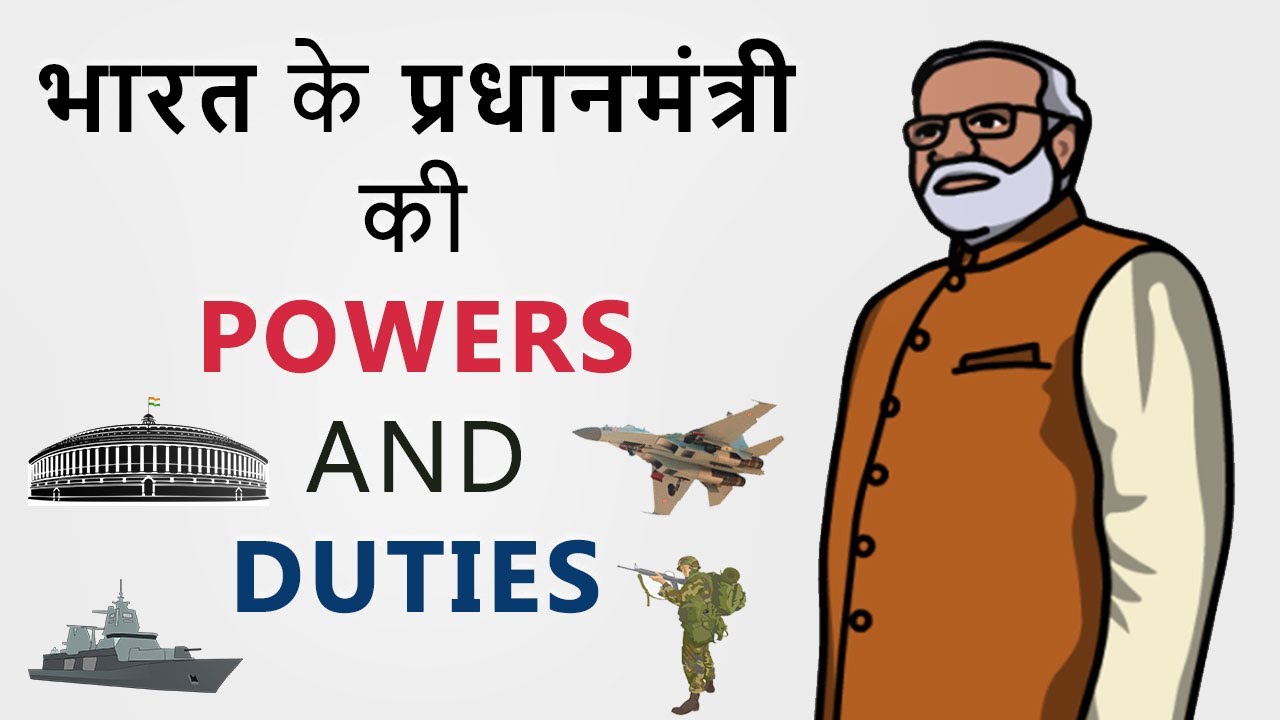
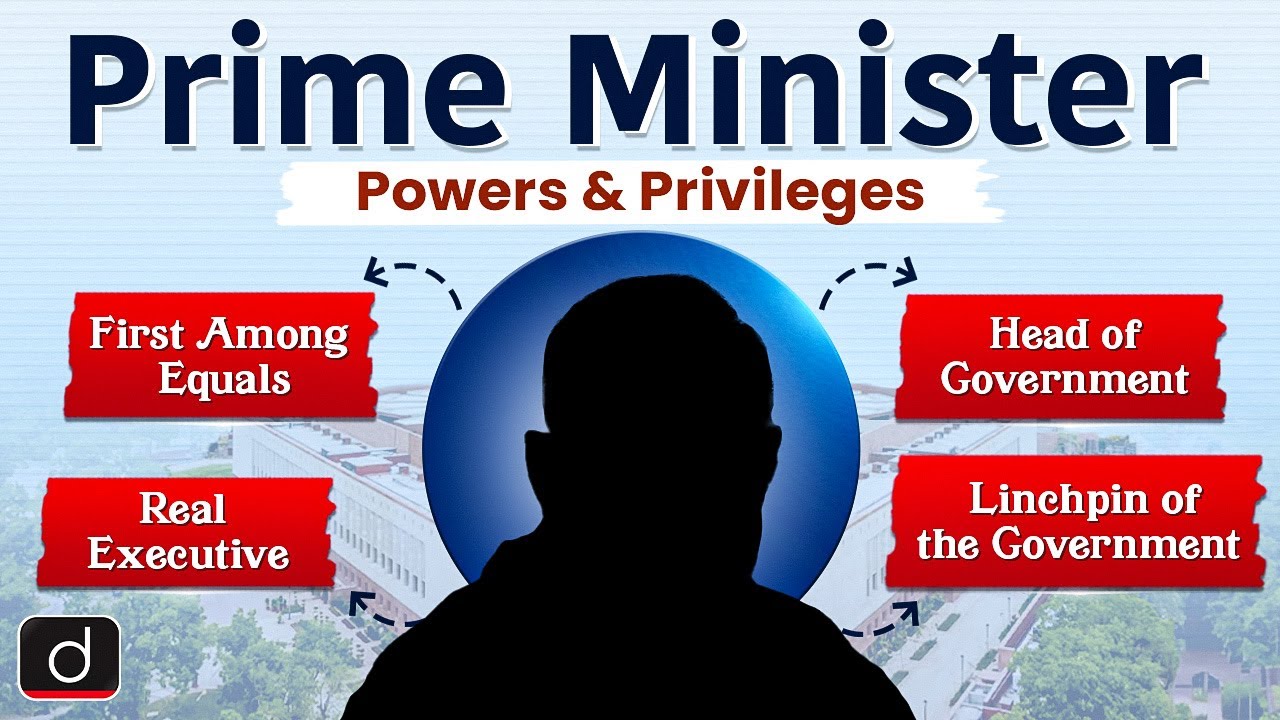
Explore the intricate dynamics of the Indian political system by understanding the Prime Minister’s role, a cornerstone for civil services students. This guide explains the provisions of Article 75 of the Constitution and the executive powers essential for examination preparation and for mastering India’s parliamentary form of government. In simple words, India has two important leaders at the top: the President, who is the formal Head of State, and the Prime Minister, who leads the government in everyday political and administrative matters.
🎯 In this chapter, you will understand:
- The difference between the President as the nominal executive and the Prime Minister as the real executive.
- How the Prime Minister is appointed under Article 75 and parliamentary conventions.
- When the President may use discretion while appointing a Prime Minister.
- The Prime Minister’s oath, term of office, salary, and constitutional importance.
💡 Why this topic matters: The Prime Minister is the central figure in India’s government. Understanding this role helps students see how laws are made effective, how the Council of Ministers works, and how the government remains answerable to the Lok Sabha.
🧠 Core Idea: India follows a parliamentary system in which the President is the constitutional Head of State, while the Prime Minister is the Head of Government and holds real political power.
Role and Authority of the Prime Minister in the Parliamentary System
In the grand structure of India’s parliamentary form of governance, political power is divided between a nominal leader and an actual leader. This arrangement may look confusing at first, but it becomes easy to understand when we remember that the President mainly represents the country, while the Prime Minister actually runs the government. The Constitution creates this balance so that the dignity of the Republic is protected, while day-to-day administration remains efficient and politically responsible.
The constitutional framework establishes a dual executive system. The President functions as the nominal de jure executive authority and serves as the ceremonial Head of State. On the other hand, the Prime Minister holds the actual de facto executive powers and acts as the Head of Government who guides the working of the Union Government.
Think of it like a school: the President is similar to the chief guest or formal head who represents the institution, while the Prime Minister is like the principal who takes important daily decisions and leads the team. This does not mean the President is unimportant. The President gives legal approval to major decisions, represents India at the highest level, and helps maintain constitutional continuity.
- (i) The President represents the dignity and continuity of the Republic of India.
- (ii) The Prime Minister exercises real political power and leads the Council of Ministers.
- (iii) This distinction ensures checks and balances while maintaining an efficient administrative machinery.
Appointment of the Prime Minister
The journey to the highest executive office in India is guided mainly by democratic conventions and constitutional provisions rather than by one detailed, step-by-step rulebook. The Constitution does not describe every possible situation. Instead, it gives the President the power to appoint the Prime Minister, while political practice and judicial decisions explain how that power should be used in different circumstances.
Constitutional Provisions and Parliamentary Conventions
Although the Constitution does not lay down a detailed selection procedure, Article 75 provides the main rule: the Prime Minister is appointed by the President. However, this power is not unlimited. In a parliamentary democracy, the President normally appoints the person who is most likely to enjoy the support of the majority in the Lok Sabha.
This rule keeps the government democratic. If the Prime Minister did not have support in the Lok Sabha, it would be difficult to pass laws, manage the budget, or run the administration smoothly. Therefore, the real test of a Prime Minister’s authority is not only appointment by the President but also continued confidence in the House of the People.
- (i) In a normal situation, when a single party wins a clear majority in the Lok Sabha, the President appoints the leader of that party as Prime Minister.
- (ii) The appointed Prime Minister then advises the President on the appointment of other ministers, forming the Council of Ministers.
The Challenge of a Hung Parliament
A hung parliament occurs when no single party or alliance wins enough seats to form a government on its own. In such a situation, the President may need to use personal judgement and discretionary power. The President usually invites the leader of the largest single party or a pre-poll coalition to try to form a government.
- (a) When no party attains a majority, the President may exercise personal judgement and discretionary power.
- (b) Typically, the leader of the largest single party or a pre-poll coalition is invited to form the government.
- (c) Such an appointee must prove majority support by securing a vote of confidence on the floor of the House within .
- (iii) Historical milestone: In , President Neelam Sanjiva Reddy used his discretion to appoint Charan Singh after the collapse of the Morarji Desai-led Janata Party government.
Special Circumstances for Presidential Discretion
History sometimes creates unexpected situations in which the President must act carefully to keep the Union Government running. These situations usually arise when there is no obvious successor or when the ruling party has not had enough time to choose a new leader. The President’s aim in such cases is to ensure political stability and constitutional continuity.
Sudden vacancy: If an incumbent Prime Minister dies unexpectedly without a clear successor, the President may need to intervene. This is a sensitive moment because the country needs a functioning government, while the ruling party may still be deciding who should lead it.
The 1984 Succession Story
- (a) Following Indira Gandhi’s assassination in , President Zail Singh did not follow the practice of appointing a caretaker Prime Minister.
- (b) He directly appointed Rajiv Gandhi, and this appointment was later ratified by the choice of the party.
- (ii) Party leadership changes: If the ruling party quickly elects a new leader after the death of the Prime Minister, the President’s discretion becomes limited. In such a case, the President is expected to appoint the person chosen by the party as the new Prime Minister.
Judicial Rulings and House Membership
The judiciary has helped clarify important questions about who can become Prime Minister and when a newly appointed Prime Minister must prove majority support. These rulings make the appointment process clearer and help prevent confusion during politically uncertain times.
The Delhi High Court ruling (): The court clarified that a Prime Minister need not prove majority support before appointment. The President may first appoint a Prime Minister and then allow a reasonable period to demonstrate support in the Lok Sabha.
- (i) This precedent facilitated the appointments of V. P. Singh in , P. V. Narasimha Rao in , and A. B. Vajpayee in .
- The Supreme Court verdict (): The Court ruled that a person who is not a member of either House of Parliament can be appointed Prime Minister for , provided that the person gets elected to Parliament within that period.
Dual House eligibility: Unlike Britain, where the Prime Minister must belong to the House of Commons, the Indian Prime Minister may belong either to the Lok Sabha or the Rajya Sabha. This flexibility allows experienced leaders from the Upper House also to lead the government.
- (i) Notable examples include Indira Gandhi in and Manmohan Singh in , who served as Prime Minister while being members of the Rajya Sabha.
Oath, Term, and Salary of the Prime Minister
Every Prime Minister must complete a formal induction process before taking charge. This process includes taking oaths before the President and following legal and financial rules laid down by Parliament. These rules remind the Prime Minister that the office is a public trust, not a personal position.
The Solemn Oath and Secrecy
Before entering the Prime Minister’s Office, the President administers two important oaths to the appointee. These oaths ensure constitutional morality, meaning that the Prime Minister must act according to the Constitution and in the interest of the nation.
- (i) Oath of office: The Prime Minister pledges to uphold the sovereignty and integrity of India and to remain faithful to the Constitution.
- (ii) Oath of secrecy: The Prime Minister promises not to reveal confidential matters of State except when required for the proper performance of official duties.
- (iii) The Prime Minister also swears to act fairly, without fear or favour, affection or ill-will.
Term of Office and Financial Entitlements
The Prime Minister’s tenure is closely linked to the confidence of the Lok Sabha. The Prime Minister does not have a fixed personal term independent of the House. As long as the Prime Minister commands majority support in the Lok Sabha, the government can continue. If that support is lost, the Prime Minister must resign.
The doctrine of pleasure: Technically, the Prime Minister holds office during the pleasure of the President. In practice, however, the Prime Minister cannot be dismissed as long as they enjoy majority support in the Lok Sabha.
- (ii) Resignation and dismissal: If the Prime Minister loses the confidence of the Lok Sabha, resignation becomes necessary. If the Prime Minister does not resign, the President may dismiss the Prime Minister.
Salary and perks: Parliament decides the Prime Minister’s salary and allowances. These benefits help the Prime Minister perform official duties and maintain an appropriate standard of living connected with the office.
Remuneration Breakdown
- (a) Parliament determines the salary, which is the same as the entitlement of a Member of Parliament.
- (b) The sumptuary allowance was increased from ₹1,500 to ₹3,000 in .
- (c) Additional benefits include a rent-free official residence, comprehensive medical facilities, and high-level travel provisions.
Summary of the Prime Minister’s Constitutional Significance
Understanding the role and authority of the Prime Minister is vital for students of Political Science and UPSC aspirants. As the Head of Government, the Prime Minister’s appointment through Article 75 and the subsequent Oath of Office represent the heart of Indian democracy. The Prime Minister leads the Council of Ministers, depends on the confidence of the Lok Sabha, and works within the framework of the Constitution. Learning the historical examples and judicial rulings helps students understand how real political power is exercised in a parliamentary system.
⚡ Quick Revision Capsule: Prime Minister of India
The following table brings together the most important facts about the Prime Minister’s position, appointment, and responsibilities for quick revision.
| Aspect | Key Provision or Practice | Important Point |
|---|---|---|
| Constitutional position | The Prime Minister is the real executive and Head of Government. | The President is the nominal executive and Head of State. |
| Appointment | Under Article 75, the President appoints the Prime Minister. | Normally, the leader most likely to command a majority in the Lok Sabha is appointed. |
| Hung parliament | The President may use discretion when no party has a clear majority. | The appointee must prove majority through a vote of confidence. |
| House membership | The Prime Minister may belong to either the Lok Sabha or the Rajya Sabha. | A non-member may serve for up to after appointment. |
| Tenure | The Prime Minister holds office during the pleasure of the President. | In practice, the Prime Minister remains in office while enjoying the confidence of the Lok Sabha. |
| Salary and benefits | Parliament determines the Prime Minister’s salary and allowances. | Benefits include a rent-free residence, medical facilities, and travel provisions. |
📝 Summary
The Prime Minister occupies the most powerful position in India’s Union Government. Under Article 75, the President appoints the Prime Minister, but parliamentary conventions require the appointee to enjoy the confidence of the Lok Sabha. The President is the ceremonial Head of State, while the Prime Minister leads the Council of Ministers and takes the main decisions of the government. The Prime Minister must take the Oath of Office and Oath of Secrecy, remain answerable to the Lok Sabha, and follow the financial rules made by Parliament.
🚀 Quick Revision Points
Essential facts to review before examinations:
- (i) The Prime Minister is appointed by the President under Article 75.
- (ii) The President is the nominal executive, while the Prime Minister is the real executive.
- (iii) In a hung parliament, the President may use discretion and the appointee must prove a vote of confidence.
- (iv) A person who is not a member of either House may be appointed Prime Minister for , subject to election to Parliament within that period.
- (v) The Prime Minister may belong to either the Lok Sabha or the Rajya Sabha.
- 💡 Exam Tip: Remember the pair “President = nominal executive; Prime Minister = real executive.” Also remember that Article 75 deals with appointment, tenure, and the six-month membership rule.
❓ Frequently Asked Questions (FAQ)
Q1: Who appoints the Prime Minister of India?
A1: The President appoints the Prime Minister under Article 75. In practice, the President appoints the leader who is most likely to command majority support in the Lok Sabha.Q2: Can a person who is not a Member of Parliament become Prime Minister?
A2: Yes. Such a person can be appointed Prime Minister, but must become a member of either House of Parliament within to continue in office.Q3: What happens if the Prime Minister loses the confidence of the Lok Sabha?
A3: The Prime Minister must resign. If the Prime Minister does not resign after losing the confidence of the Lok Sabha, the President may dismiss the Prime Minister.