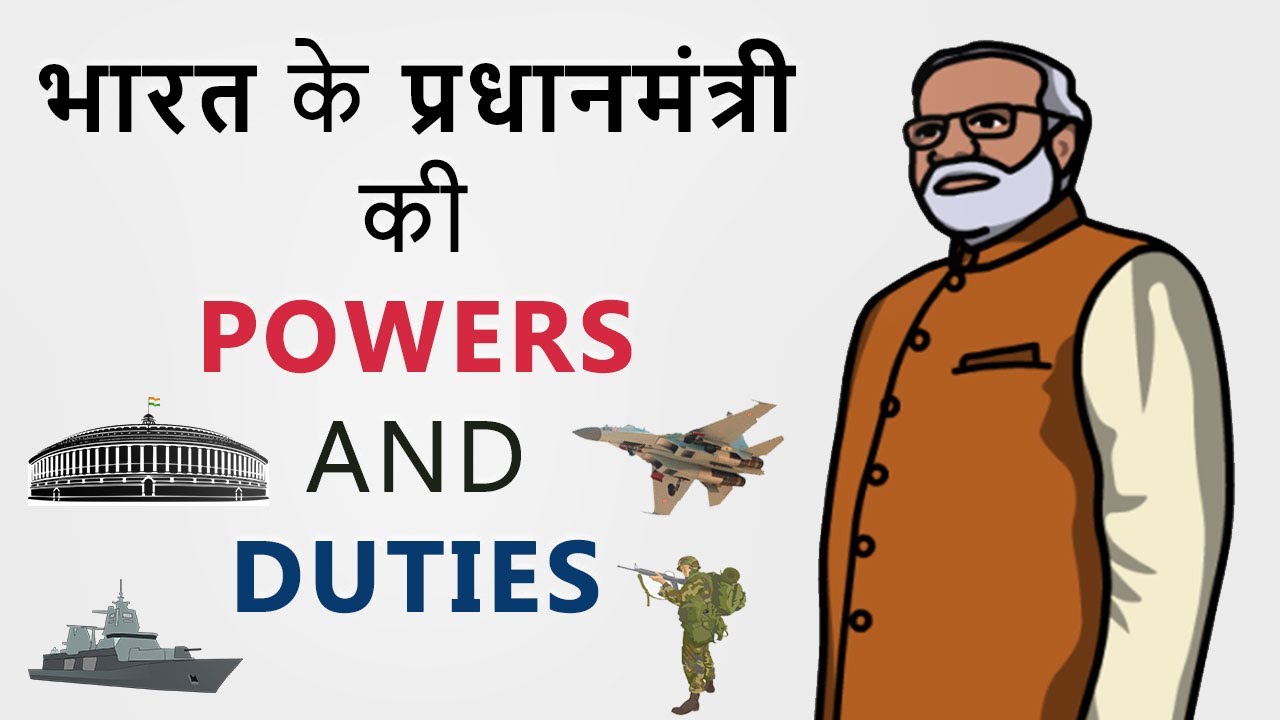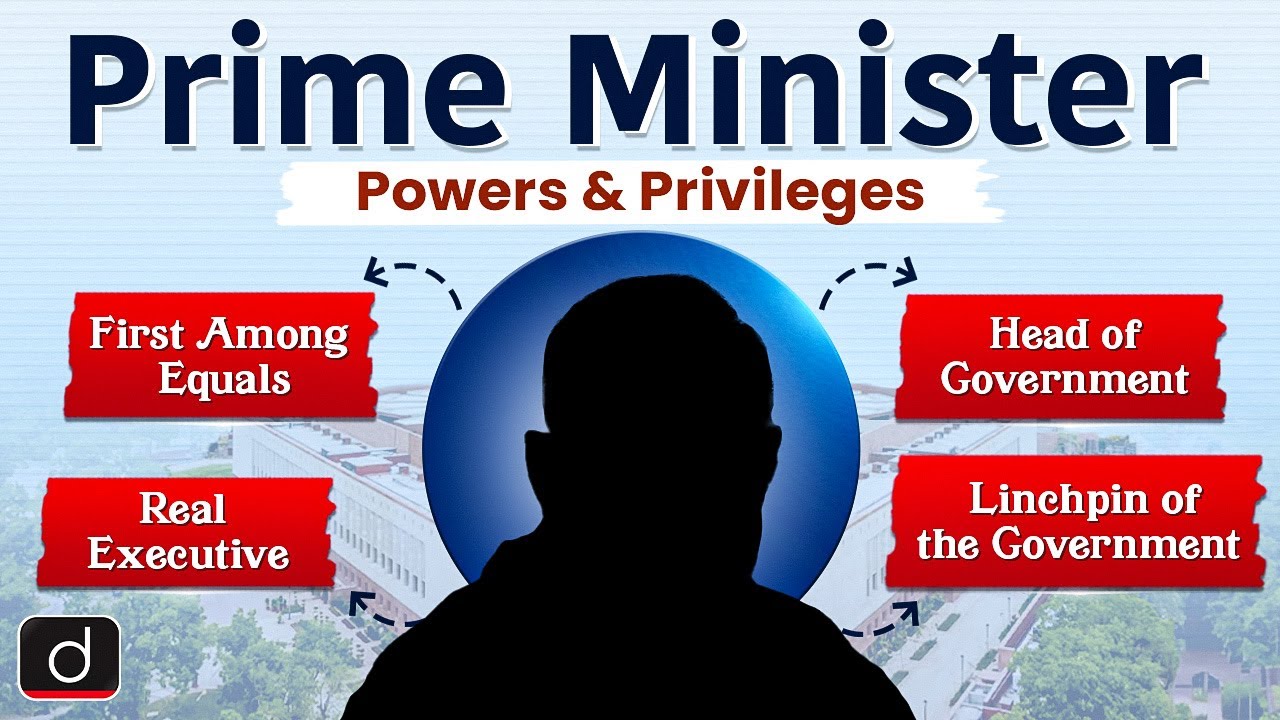
In India’s parliamentary form of governance, the Prime Minister is the real head of the government. While the President is the formal Head of State, the Prime Minister leads the government, guides the Council of Ministers, and plays the most important role in day-to-day administration. This chapter explains the appointment, oath, term, salary, powers, functions, and relationship of the Prime Minister with the President and Parliament.
🎯 In this chapter, you will understand:
- The difference between the President as nominal executive and the Prime Minister as real executive.
- How the Prime Minister is appointed, takes oath, remains in office, and receives salary and allowances.
- The Prime Minister’s powers over the Council of Ministers, the President, Parliament, and other important institutions.
- Why experts describe the Prime Minister as the central figure of the parliamentary system.
💡 Why this topic matters: The Prime Minister is the most powerful political leader in India’s Union Government. Understanding this role helps us understand how laws are made, how ministers work together, and how the government remains responsible to the Lok Sabha.
🧠 Core Idea: The Prime Minister is the Head of Government. The President appoints the Prime Minister, but in practice the leader who enjoys majority support in the Lok Sabha becomes Prime Minister and leads the government.
Role and Authority of the Prime Minister in the Parliamentary System
India follows a parliamentary form of governance, in which the government works through a council of ministers responsible to the elected house. In this system, the President is the nominal or de jure executive authority, meaning the President holds the formal position of executive head under the Constitution. However, the Prime Minister holds the actual or de facto executive powers, because the Prime Minister leads the government and takes major political and administrative decisions with the Council of Ministers.
This division of roles can be understood easily through two simple positions. The President acts as the Head of State, representing the country in a formal and constitutional manner. The Prime Minister acts as the Head of Government, responsible for running the administration, guiding ministers, and presenting government policies. Thus, the President is like the constitutional face of the nation, while the Prime Minister is the working leader of the government.
Appointment of the Prime Minister
The Constitution does not lay down a detailed step-by-step procedure for choosing the Prime Minister. Instead, it follows the practice and conventions of a parliamentary democracy. Article 75 says that the Prime Minister is appointed by the President, but this does not give the President complete freedom to choose anyone. The President must normally appoint the person who can command the confidence of the Lok Sabha.
- (i) If one political party has a clear majority in the Lok Sabha, the President appoints the leader of that party as Prime Minister. This is the simplest situation because the majority party can clearly show that it has the support needed to run the government.
- (ii) In a hung Parliament, where no single party has a clear majority, the President may use personal judgement. Usually, the leader of the largest party or coalition is appointed and asked to prove majority by securing a vote of confidence within one month.
Historical Example of Appointment
In , after the Morarji Desai-led Janata Party government fell, President Neelam Sanjiva Reddy appointed Charan Singh as Prime Minister. This example shows that in uncertain political situations, the President may have to make an important decision about who is most likely to form a workable government.
Special circumstances for Presidential discretion: The President’s role becomes more important when the political situation is unclear. For example, if the sitting Prime Minister dies suddenly and there is no obvious successor, the President may need to choose a suitable leader. After Indira Gandhi’s assassination in , President Zail Singh appointed Rajiv Gandhi as Prime Minister without naming a caretaker Prime Minister. Also, if the ruling party elects a new leader after the Prime Minister’s death, the President must appoint that newly elected leader.
Judicial rulings on appointment: The courts have also clarified how appointment works. In , the Delhi High Court held that a person need not prove majority before being appointed Prime Minister; the President may ask for proof within a reasonable period. Leaders such as Charan Singh in , V.P. Singh in , Chandrashekhar in , P.V. Narasimha Rao in , A.B. Vajpayee in and , Deve Gowda in , and I.K. Gujral in were appointed in this manner. In , the Supreme Court held that a non-Member of Parliament can be Prime Minister for up to six months, during which the person must become a member of either House of Parliament.
House membership requirement: The Prime Minister may belong to either the Lok Sabha or the Rajya Sabha. For example, Indira Gandhi in , Deve Gowda in , and Manmohan Singh in were members of the Rajya Sabha when they became Prime Minister. This is different from Britain, where the Prime Minister must be a member of the Lower House, known as the House of Commons.
Oath, Term, and Salary of the Prime Minister
Before a newly appointed Prime Minister can begin official work, the President administers the oath of office. This oath is important because it reminds the Prime Minister that public power must be used according to the Constitution and for the welfare of the nation. The Prime Minister also takes an oath of secrecy, which ensures that confidential government matters are protected.

Oath of Office and Secrecy
The Oath of Office is administered by the President before the Prime Minister assumes duties. Through this oath, the Prime Minister promises to uphold faith and allegiance to the Constitution of India, protect the sovereignty and integrity of the nation, perform duties conscientiously, and act fairly without bias. These promises ensure that the Prime Minister places the country and the Constitution above personal or political interests.
The Oath of Secrecy is equally important. The Prime Minister promises not to reveal confidential matters except when disclosure is required for official duties. This helps maintain trust within the government and protects sensitive information related to administration, security, and policy.
Term of Office
The Prime Minister holds office at the pleasure of the President. However, this does not mean the President can remove the Prime Minister at will. As long as the Prime Minister enjoys the support of a majority in the Lok Sabha, the Prime Minister continues in office. If the Prime Minister loses the confidence of the Lok Sabha, then the Prime Minister must either resign or may be dismissed by the President.
Salary and Allowances
The salary and allowances of the Prime Minister are decided by Parliament. The Prime Minister receives the same entitlements as a Member of Parliament, along with additional facilities. These include a sumptuary allowance, which was raised from ₹1,500 to ₹3,000 in , an official residence, and travel and medical facilities. These provisions help the Prime Minister perform official responsibilities effectively.
Powers and Functions of the Prime Minister
The Prime Minister is not only the head of the Council of Ministers but also the main link between the government, the President, Parliament, political parties, and the public. The responsibilities of the Prime Minister can be grouped into different categories based on their scope and authority. Together, these functions make the Prime Minister the central figure in India’s politico-administrative system.
In Relation to the Council of Ministers
As the head of the Union Council of Ministers, the Prime Minister has wide powers. The Prime Minister recommends the names of individuals to be appointed as ministers, and the President appoints only those persons suggested by the Prime Minister. The Prime Minister also allocates and reshuffles ministerial portfolios whenever required, ensuring that important work is distributed among ministers properly.
- (i) The Prime Minister may ask a minister to resign or advise the President to remove a minister if there is a serious disagreement.
- (ii) The Prime Minister chairs meetings of the Council of Ministers and influences its decisions.
- (iii) The Prime Minister guides, supervises, and coordinates the work of all ministers so that the government works in a united manner.
- (iv) The Prime Minister can bring about the fall of the entire Council of Ministers by resigning from office.
Impact of resignation or death: The resignation or death of the Prime Minister automatically dissolves the entire Council of Ministers. This happens because the Council exists under the leadership of the Prime Minister. On the other hand, if any other minister resigns or dies, only that minister’s post becomes vacant. The Prime Minister may then choose to fill the vacancy or keep it vacant for some time.
In Relation to the President
The Prime Minister acts as the main link between the President and the Council of Ministers. The Prime Minister communicates the decisions of the Council concerning the administration of the Union and proposals for legislation. The Prime Minister also provides information to the President whenever it is asked for regarding Union administration or legislative proposals.
Under Article 78, if the President requires, the Prime Minister must place before the Council of Ministers any matter that has been decided by an individual minister but has not yet been considered by the Council. This ensures that important decisions are discussed collectively and that the President remains properly informed about government affairs.
The Prime Minister also advises the President on important appointments, including the Attorney General of India, the Comptroller and Auditor General of India, the Chairman and members of the UPSC, Election Commissioners, the Chairman and members of the Finance Commission, and other high-ranking constitutional authorities. Through this advisory role, the Prime Minister influences the selection of persons who hold key positions in the Indian administrative and constitutional system.
In Relation to Parliament
As the Leader of the Lok Sabha, the Prime Minister plays an important role in the working of Parliament. The Prime Minister advises the President on convening and adjourning sessions of Parliament. The Prime Minister can also recommend the dissolution of the Lok Sabha at any time. In addition, the Prime Minister makes important policy announcements on the floor of the House, explaining the government’s plans and decisions to elected representatives.
Other Powers and Functions
Beyond the Council of Ministers, the President, and Parliament, the Prime Minister performs several other significant roles. The Prime Minister chairs important bodies such as the Planning Commission, now known as NITI Aayog, the National Development Council, the National Integration Council, the Inter-State Council, and the National Water Resources Council. These roles allow the Prime Minister to coordinate policies between the Union Government and the states.
- (i) The Prime Minister plays a decisive role in shaping India’s foreign policy and represents the country in international matters.
- (ii) The Prime Minister serves as the chief spokesperson of the Union Government.
- (iii) The Prime Minister acts as the crisis manager-in-chief during emergencies.
- (iv) The Prime Minister meets various groups and delegations from different states, receives petitions, and listens to public feedback.
- (v) The Prime Minister leads the ruling political party and provides political direction to the government.
- (vi) The Prime Minister serves as the political head of the civil services.
Expert Opinions on the Role of the Prime Minister
Many eminent political scientists and constitutional experts have described the Prime Minister as the most important person in a parliamentary system. Their observations were mainly made about the Prime Minister’s role in Britain, but they are also highly relevant in the Indian parliamentary context. These views help us understand why the Prime Minister is often considered more powerful than any other single office-holder in the government.
Views of Distinguished Thinkers
Lord Morley described the Prime Minister as primus inter pares, meaning “first among equals,” and called the Prime Minister the “keystone of the cabinet arch.” According to him, the head of the cabinet occupies a position of exceptional and unique authority as long as it lasts. This means that although the Prime Minister is one member of the cabinet, the Prime Minister stands above the other ministers in influence and leadership.
Herbert Morrison agreed with the phrase “primus inter pares” but felt that it was too modest a description of the Prime Minister’s actual influence. Sir William Vernon Harcourt described the Prime Minister as inter stellas luna minores, meaning “a moon among lesser stars.” This comparison shows that the Prime Minister shines more brightly than other ministers.
Jennings compared the Prime Minister to the sun around which all planets revolve. He called the Prime Minister the keystone of the constitution and observed that all roads in the constitution lead to the Prime Minister. H.J. Laski similarly said that the Prime Minister is central to the formation, life, and death of the cabinet. He portrayed the Prime Minister as the pivot around which the entire governmental machinery revolves.
H.R.G. Greaves remarked that the government is the master of the country and the Prime Minister is the master of the government. Munro described the Prime Minister as the captain of the ship of the state, while Ramsay Muir portrayed the Prime Minister as the steersman at the wheel of the ship of the state. These expressions highlight the Prime Minister’s role in giving direction to the government.
Concept of Prime Ministerial Government
The influence of the Prime Minister in the British parliamentary system became so strong that many scholars began to describe it as a Prime Ministerial government. R.H. Crossman stated that the post-war era marked the complete transformation of cabinet government into Prime Ministerial government. This means that the cabinet system did not disappear, but the Prime Minister became far more dominant within it.
Humphrey Berkeley argued that Parliament is no longer sovereign in practice, that parliamentary democracy at Westminster has collapsed, and that the core defect lies in the super-ministerial powers of the Prime Minister. This analysis applies equally well to the Indian parliamentary setup, where the Prime Minister’s leadership strongly shapes the working of the Council of Ministers and the direction of the government.
Relationship Between the President and the Prime Minister
The Constitution of India contains specific provisions that explain the formal relationship between the President and the Prime Minister. These provisions show that the President acts on the advice of the Council of Ministers headed by the Prime Minister, while the Prime Minister keeps the President informed about important government decisions.
Relevant Constitutional Provisions
Article 74 establishes a Council of Ministers headed by the Prime Minister to aid and advise the President. The President must act in accordance with this advice. However, the President may ask the Council to reconsider its advice. After reconsideration, the President must act according to the advice given by the Council.
Article 75 states that the Prime Minister is appointed by the President. Other ministers are appointed by the President on the advice of the Prime Minister. Ministers hold office at the pleasure of the President, and the Council of Ministers is collectively responsible to the Lok Sabha. This collective responsibility is the foundation of parliamentary government because the entire government must retain the confidence of the elected house.
Article 78 makes it the duty of the Prime Minister to communicate to the President all decisions of the Council relating to Union administration and legislative proposals. The Prime Minister must also provide information sought by the President on Union affairs and legislation. If required by the President, the Prime Minister must place before the Council any matter decided by a minister but not yet considered by the Council.
Chief Ministers Who Became Prime Ministers
Six leaders have risen from being Chief Ministers of states to the post of Prime Minister of India. Their journeys show that experience as a state leader can prepare a person for national leadership. It also shows how Indian politics connects state governments with the Union Government.
- (i) Morarji Desai: Chief Minister of the erstwhile Bombay State from to . He became the first non-Congress Prime Minister in .
- (ii) Charan Singh: Chief Minister of undivided Uttar Pradesh in and . He succeeded Morarji Desai as Prime Minister.
- (iii) V.P. Singh: Former Uttar Pradesh Chief Minister who led the short-lived National Front government from to .
- (iv) P.V. Narasimha Rao: First Prime Minister from South India. He was Chief Minister of Andhra Pradesh from to and served as Prime Minister from to .
- (v) H.D. Deve Gowda: Chief Minister of Karnataka before leading the United Front government in .
- (vi) Narendra Modi: Chief Minister of Gujarat from to . He became Prime Minister in after serving four consecutive terms as Chief Minister.
⚡ Quick Revision Capsule: Prime Minister of India
This table helps you quickly revise the most important facts about the Prime Minister’s role, appointment, powers, and relationship with other constitutional bodies.
| Area | Key Provision or Role | Important Point |
|---|---|---|
| Executive authority | The President is the nominal executive, while the Prime Minister is the real executive. | The Prime Minister is the Head of Government. |
| Appointment | Under Article 75, the President appoints the Prime Minister. | Normally, the leader with Lok Sabha majority is appointed. |
| Membership | The Prime Minister may be a member of either House. | A non-MP may remain Prime Minister for six months. |
| Council of Ministers | The Prime Minister recommends ministers and allocates portfolios. | The Prime Minister’s resignation dissolves the entire Council. |
| President | Under Article 74 and Article 78, the Prime Minister aids, advises, and informs the President. | The President acts according to the advice of the Council of Ministers. |
| Parliament | The Prime Minister is the Leader of the Lok Sabha. | The Prime Minister may advise dissolution of the Lok Sabha. |
| Expert view | Lord Morley called the Prime Minister primus inter pares. | The Prime Minister is “first among equals.” |
📝 Summary
The Prime Minister is the real executive head of the Indian Union Government. Although the President formally appoints the Prime Minister under Article 75, the person appointed is normally the leader who can command a majority in the Lok Sabha. The Prime Minister leads the Council of Ministers, advises the President, guides Parliament, shapes foreign policy, and provides leadership to the ruling party and civil services. The constitutional relationship between the President and Prime Minister is mainly explained through Articles 74, 75, and 78 of the Constitution of India. Experts describe the Prime Minister as the keystone of the cabinet and the central force around which the government works.
🚀 Quick Revision Points
Essential facts to review before examinations:
- (i) The President is the de jure executive, while the Prime Minister is the de facto executive.
- (ii) The Prime Minister is appointed by the President but must command the confidence of the Lok Sabha.
- (iii) A non-Member of Parliament can be Prime Minister for a maximum of six months.
- (iv) The Prime Minister may belong to either the Lok Sabha or the Rajya Sabha.
- (v) The resignation or death of the Prime Minister dissolves the entire Council of Ministers.
- (vi) Under Article 78, the Prime Minister communicates Council decisions and information to the President.
- (vii) Lord Morley described the Prime Minister as primus inter pares, meaning “first among equals.”
- 💡 Exam Tip: Remember the difference between the President and Prime Minister: President = Head of State and nominal executive; Prime Minister = Head of Government and real executive. Also remember that Articles 74, 75, and 78 are directly connected with the Prime Minister’s relationship with the President and Council of Ministers.
❓ Frequently Asked Questions (FAQ)
Q1: Who appoints the Prime Minister of India?
A1: The President appoints the Prime Minister under Article 75. In practice, the President appoints the leader who can secure the confidence of the Lok Sabha.Q2: Can a person who is not a Member of Parliament become Prime Minister?
A2: Yes. A non-MP can become Prime Minister, but according to the Supreme Court’s ruling, the person must become a member of either House within six months.Q3: What happens if the Prime Minister resigns or dies?
A3: The resignation or death of the Prime Minister automatically dissolves the entire Council of Ministers. This is different from the resignation or death of another minister, which only creates a vacancy.