The relationship between the President and the Prime Minister is a cornerstone of Indian democracy. It is mainly defined by Articles 74, 75 and 78 of the Constitution of India. These provisions explain how the nominal head of the State and the real head of the Government work together. Students preparing for competitive examinations should understand this relationship because it explains how the Executive branch functions under the Indian Constitution.
🎯 In this chapter, you will understand:
- The constitutional relationship between the President and the Prime Minister.
- The role of Articles 74, 75 and 78 in Indian governance.
- The meaning of collective responsibility and ministerial accountability.
- The leaders who moved from Chief Minister to Prime Minister of India.
💡 Why this topic matters: This topic explains how India’s parliamentary system balances the ceremonial authority of the President with the practical decision-making power of the Prime Minister and the Council of Ministers. It is important for understanding Indian Polity and for examinations.
🧠 Core Idea: The President is the constitutional head of the State, while the Prime Minister leads the elected government. The Prime Minister and the Council of Ministers advise the President, and the government remains responsible to the Lok Sabha.
The Executive Synergy: Relationship Between the President and the Prime Minister of India
The foundation of Indian governance rests on a careful balance between the nominal head and the real executive. The President represents the nation and performs many important constitutional functions, but the Prime Minister leads the government and takes major political decisions along with the Council of Ministers. This arrangement helps India function as a parliamentary democracy, where elected representatives hold real administrative power.
The Constitution of India works like the ultimate guidebook for the country. It contains clear and mandatory provisions that describe the formal relationship between the President and the Prime Minister. These rules ensure that the government remains stable, accountable and connected to the will of the people. They also create a system of checks and balances through collective responsibility.
Foundational Governance and Balance of Power
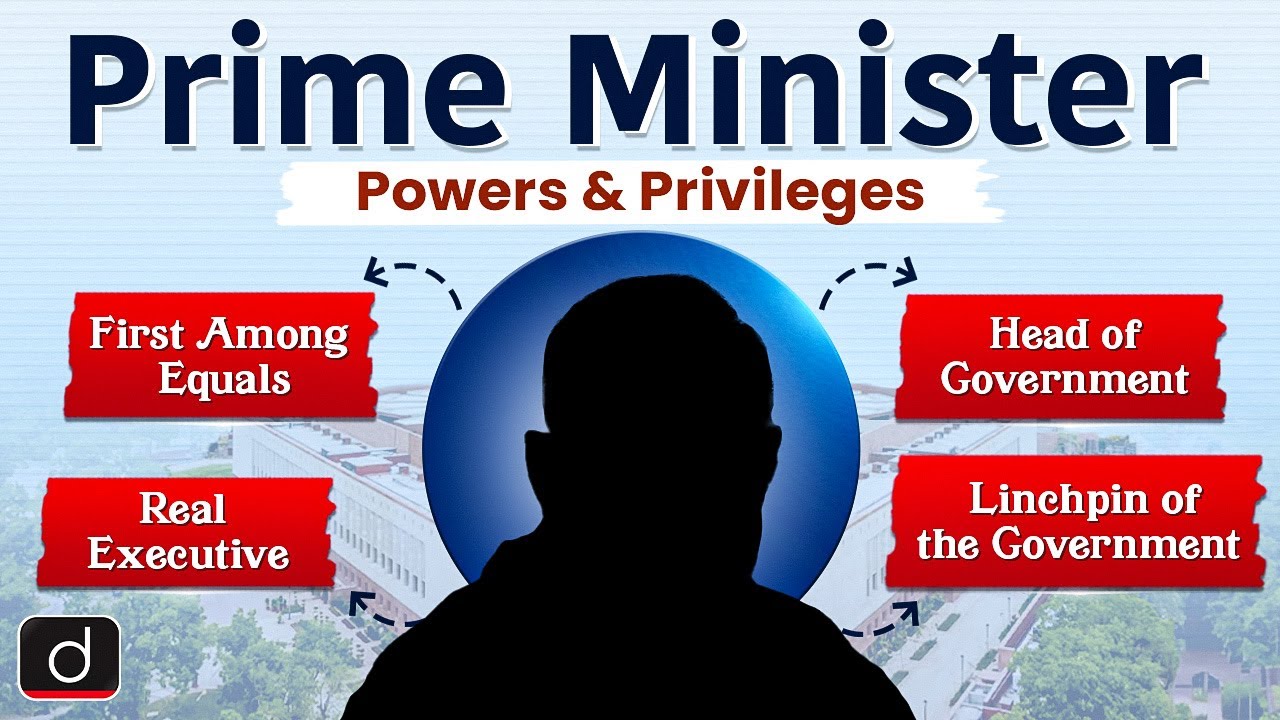
The President acts as the de jure head, meaning the legal or constitutional head of the country. The Prime Minister acts as the de facto leader, meaning the practical leader who guides the working of the government. This distinction is important because it shows that India follows a parliamentary form of government rather than a presidential form of government.
Their interaction is governed by strict constitutional mandates. These mandates help maintain administrative stability and prevent confusion about who advises the President and who is answerable to Parliament. Over the decades, this relationship has evolved and reflects the maturity of Indian Parliamentary Democracy.
- (i) The President acts as the de jure head, while the Prime Minister is the de facto leader of the nation.
- (ii) Their interaction is governed by strict constitutional mandates to ensure administrative stability.
- (iii) The evolution of this bond reflects the maturity of Indian Parliamentary Democracy over the decades.
Relevant Constitutional Provisions and Legal Mandates
The legal framework that defines the conduct of the Union Executive is mainly found in three important Articles of the Constitution of India: Article 74, Article 75 and Article 78. Together, these Articles explain who advises the President, how ministers are appointed, how the government remains answerable to Parliament, and how the Prime Minister keeps the President informed.
These provisions are not isolated rules. They work together as a system. Article 74 creates the Council of Ministers and explains its advisory role. Article 75 explains appointment, tenure and responsibility. Article 78 makes the Prime Minister the main communication link between the Council of Ministers and the President.
Article 74: The Council of Ministers and Presidential Aid
In the story of Indian governance, Article 74 acts as the bridge between the Council of Ministers and the President. It establishes that there shall be a Council of Ministers with the Prime Minister at its head to aid and advise the President. In simple words, the Prime Minister leads the team of ministers that helps the President perform constitutional duties.
Under the normal constitutional procedure, the President acts in accordance with the advice given by the Council of Ministers. This ensures that the decisions of the elected government receive effect. However, the Constitution also gives the President one limited opportunity to ask the Council of Ministers to reconsider its advice. After reconsideration, the President must act according to the advice given.
- (i) It establishes a Council of Ministers headed by the Prime Minister specifically to aid and advise the President in the exercise of their functions.
- (ii) Under standard procedures, the President must act in accordance with this advice, ensuring the elected government’s will is supreme.
- (iii) Constitutional Flexibility: The President holds the right to request the council to reconsider such advice; however, after this reconsideration, the President is bound to act upon the subsequent advice provided.
Article 75: Appointments and Collective Responsibility
Article 75 explains how the government is formed and to whom it is truly accountable. It gives special importance to the Prime Minister in the selection of the Council of Ministers. Although the President formally appoints ministers, the Prime Minister’s advice plays the central role in deciding who becomes a minister.
This Article also establishes the principle of collective responsibility. This means that all ministers work as one team. If the Lok Sabha passes a no-confidence motion against the Council of Ministers, the entire Council must resign. This keeps the executive answerable to the elected representatives of the people.
The Appointment and Tenure Process
The appointment process begins after a general election or when a new government has to be formed. The President appoints the Prime Minister, generally the leader who can command majority support in the Lok Sabha. After this, other ministers are appointed on the Prime Minister’s advice.
- (i) The Prime Minister is formally appointed by the President, usually following a general election victory.
- (ii) All other ministers within the Council of Ministers are appointed by the President, but strictly on the advice of the Prime Minister.
- (iii) It is a unique legal standard that ministers hold office at the pleasure of the President, though they remain in power as long as they enjoy majority support.
Principle of Collective Responsibility
Collective responsibility is one of the most important features of India’s parliamentary system. It means that the Council of Ministers is responsible to the Lok Sabha as a single body. A minister cannot remain in office while openly opposing the collective decision of the government.
- (i) The Council of Ministers is collectively responsible to the Lok Sabha, the Lower House of Parliament.
- (ii) This ensures that the executive remains answerable to the people’s representatives at all times.
Article 78: The Duties of the Prime Minister as a Communicator
Article 78 is often regarded as the communication channel between the Prime Minister and the President. It defines the specific duties of the Prime Minister in keeping the President informed about the administration of the Union and proposals for legislation. This Article helps the President remain aware of important government decisions without directly taking part in day-to-day administration.
The Article creates a regular flow of information. The Prime Minister must inform the President about decisions taken by the Council of Ministers, provide information when asked, and bring certain ministerial decisions before the full Council if the President requests it. This process supports transparency and coordinated governance.
- (a) Administrative Communication: The Prime Minister must communicate to the President all decisions of the Council of Ministers related to Union administration and legislative proposals.
- (b) Provision of Information: It is mandatory to provide information sought by the President regarding Union affairs and ongoing legislation.
- (c) Council Review: If requested by the President, the Prime Minister must place before the Council any matter that has been decided by an individual minister but has not yet been collectively considered by the full Council.
State Leadership to National Governance: Chief Ministers Who Became Prime Ministers
The journey from regional administration to national leadership has been a recurring theme in the Indian political landscape. Several leaders first gained administrative and political experience as Chief Ministers of their states. Later, they became Prime Minister of India and guided the country at the national level.
This transition shows the depth of leadership available within Indian states. Chief Ministers handle state administration, law and order, development programmes and political challenges. This experience can prepare them for the larger responsibilities of leading the Union Government.
Profiles of Six Leaders Who Rose from States
Throughout history, six distinguished leaders successfully moved from being Chief Ministers of their respective states to holding the prestigious post of Prime Minister of India. Their careers show how state-level political experience can become a pathway to national leadership.
- (i) Morarji Desai: Served as Chief Minister of the erstwhile Bombay State from . He later made history by becoming the first non-Congress Prime Minister in .
- (ii) Charan Singh: A stalwart from Uttar Pradesh, he served as Chief Minister in and again in before succeeding Morarji Desai on the national stage.
- (iii) V.P. Singh: After serving as the Uttar Pradesh Chief Minister, he led the National Front government during a transformative period from .
- (iv) P.V. Narasimha Rao: Recognised as the first Prime Minister from South India, he was Chief Minister of Andhra Pradesh from before leading the nation through economic reforms from .
- (v) H.D. Deve Gowda: He held the office of Chief Minister of Karnataka shortly before leading the United Front government as Prime Minister in .
- (vi) Narendra Modi: Serving four consecutive terms as Chief Minister of Gujarat from , he became Prime Minister in , marking a significant era in contemporary politics.
Summary of Executive Relations and Political Evolution
Understanding the relationship between the President and the Prime Minister is vital for students because it clarifies the operational logic of the Indian Constitution. By studying Articles 74, 75 and 78, learners can understand how collective responsibility and administrative duty shape the working of the world’s largest democracy.
This knowledge is fundamental for mastering Indian Polity. It helps students answer questions on the Union Executive, parliamentary government, ministerial responsibility and the role of the Prime Minister. It is especially useful for academic examinations and civil-service preparation.
⚡ Quick Revision Capsule: President–Prime Minister Relationship
The following table gives a quick overview of the major constitutional provisions and ideas related to the President, Prime Minister and Council of Ministers.
| Provision / Leader | Main Constitutional or Political Role | Key Point for Revision |
|---|---|---|
| Article 74 | Creates a Council of Ministers headed by the Prime Minister to aid and advise the President. | The President acts according to the advice; after reconsideration, the President must accept the revised advice. |
| Article 75 | Explains the appointment of the Prime Minister and other ministers. | The President appoints the Prime Minister and appoints other ministers on the Prime Minister’s advice. |
| Collective Responsibility | Makes the Council of Ministers answerable to the Lok Sabha. | The entire Council works as one team and must resign if it loses the confidence of the Lok Sabha. |
| Article 78 | Defines the Prime Minister’s duties to communicate and furnish information to the President. | The Prime Minister shares Council decisions, provides requested information and submits certain matters for Council consideration. |
| Chief Ministers Who Became PMs | Six leaders moved from state leadership to national leadership. | They include Morarji Desai, Charan Singh, V.P. Singh, P.V. Narasimha Rao, H.D. Deve Gowda and Narendra Modi. |
📝 Summary
The President and the Prime Minister perform different but connected roles in India’s parliamentary democracy. The President is the constitutional head of the State, while the Prime Minister leads the Council of Ministers and the day-to-day working of the government. Articles 74, 75 and 78 of the Constitution of India explain this relationship clearly.
🚀 Quick Revision Points
Essential facts to review before examinations:
- (i) Article 74 provides for a Council of Ministers headed by the Prime Minister to aid and advise the President.
- (ii) The President may ask the Council of Ministers to reconsider advice, but must act according to the advice given after reconsideration.
- (iii) Article 75 states that the Prime Minister is appointed by the President and other ministers are appointed on the Prime Minister’s advice.
- (iv) Article 78 requires the Prime Minister to communicate Council decisions and furnish information relating to the administration of Union affairs and proposals for legislation.
- 💡 Exam Tip: Remember the simple sequence: Article 74 means “aid and advice,” Article 75 means “appointment and collective responsibility,” and Article 78 means “communication and information.”
❓ Frequently Asked Questions (FAQ)
Q1: Who is the real executive head of the Indian government?
A1: The Prime Minister is the real executive head because the Prime Minister leads the Council of Ministers and guides the working of the government.Q2: What is collective responsibility?
A2: Collective responsibility means that the Council of Ministers is jointly responsible to the Lok Sabha. If the Lok Sabha withdraws its confidence, the whole Council must resign.Q3: Which Articles define the President–Prime Minister relationship?
A3: Articles 74, 75 and 78 of the Constitution of India define this relationship. Article 74 deals with advice, Article 75 with appointments and responsibility, and Article 78 with the Prime Minister’s duty to provide information to the President.