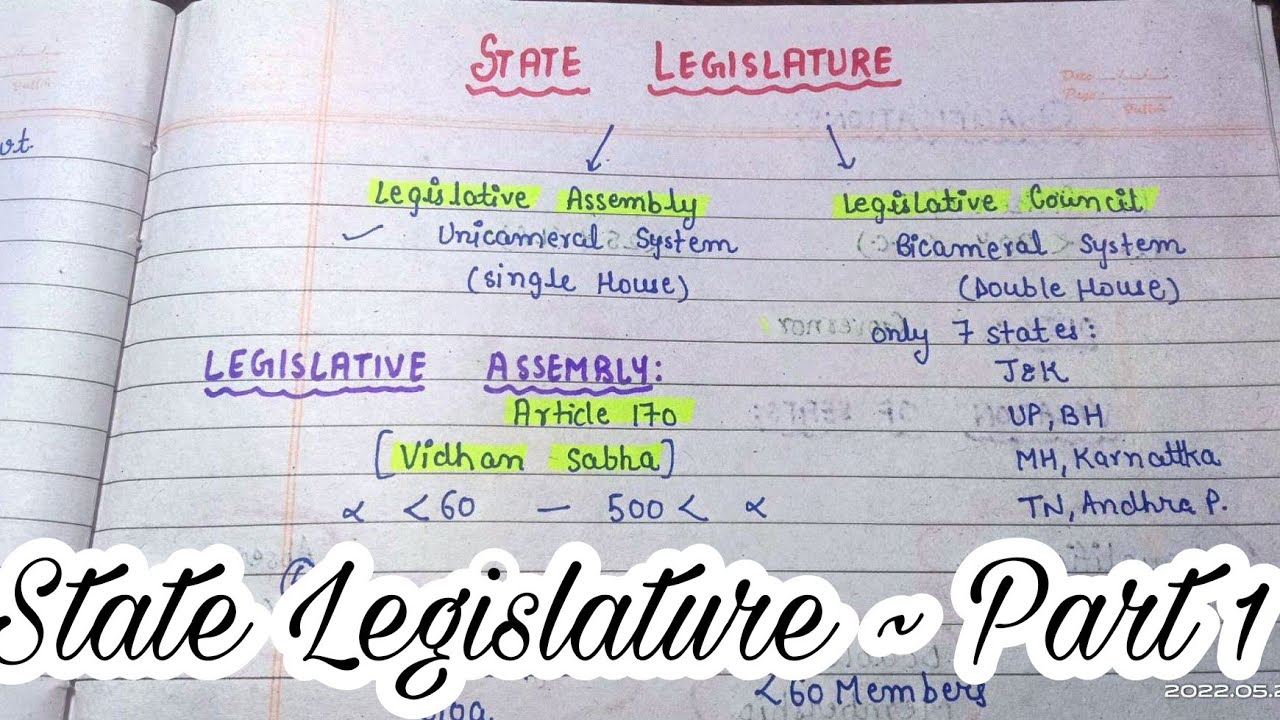
Explore the essential Privileges of the State Legislature, a vital topic for students preparing for competitive examinations such as the UPSC and State PSC examinations. This guide explains the constitutional immunities and important legislative provisions that have shaped legislative independence from onwards. It also explains the special rights enjoyed by members of the State Legislature, helping students understand how these protections keep law-making free, fair, and independent.
🎯 In this chapter, you will understand:
- The meaning and purpose of the privileges of the State Legislature.
- The difference between collective privileges and individual privileges.
- The constitutional articles that govern the State Legislature and its members.
- The importance of Article 194 in protecting legislative independence.
💡 Why this topic matters: Legislative privileges help the State Legislature work without fear, pressure, or outside interference. They protect the dignity of the House and allow elected representatives to speak freely while performing their democratic duties.
🧠 Core Idea: The privileges of a State Legislature are special legal protections given to the House, its committees, and its members so that they can carry out their constitutional responsibilities independently.
Privileges of the State Legislature: Powers and Immunities in India
The Privileges of a State Legislature are not ordinary benefits or comforts given to legislators. They are indispensable tools that allow the House to function smoothly without external interference. These privileges are rooted in the need for sovereignty within its sphere, which means that the legislature should be able to manage its own work and protect its own authority within the limits of the Constitution.
These rights protect both the legislature as a collective body and its individual members. Without such protection, members may hesitate to express unpopular opinions, question the government, or take strong decisions during debates. Therefore, privileges help maintain a healthy democratic system where representatives can perform their duties honestly and confidently.
- These rights represent a specialised set of immunities and exemptions enjoyed by the Houses of the State Legislature, their committees, and their members.
- The core objective is to maintain the dignity, authority, and honour of the legislative institution.
- The Constitution extends these protections to the Advocate-General of the State and State Ministers who participate in the proceedings of the legislature.
The Dual Classification of Legislative Privileges
To ensure complete independence, the legal framework divides legislative privileges into two broad categories: privileges enjoyed by the House as a group and privileges enjoyed by individual members. This division is important because the legislature is not only an institution; it is also made up of elected representatives who need personal protection while performing their public duties.
Collective privileges protect the authority and working of the entire House. Individual privileges, on the other hand, protect legislators from unnecessary legal trouble or pressure that may prevent them from participating freely in legislative work. Together, these two categories create a balanced system of legislative autonomy.
Collective Privileges: The Power of the House as a Whole
The House acts as a unified entity to guard its proceedings and penalise those who disrespect its mandates or overstep legal boundaries. These powers help the legislature maintain discipline within its premises and protect the value of its official work.
For example, if an outsider tries to disturb the proceedings, publish restricted material, or misuse official legislative records, the House can take action under its collective privileges. Such powers ensure that the legislature remains a respected and independent institution.
- Right of Publication: The House can publish its own reports and debates while prohibiting outsiders from doing the same if it considers this necessary. This control helps prevent misleading or unauthorised use of official legislative material.
- Secret Sittings: For matters of high importance, the House may exclude strangers and hold closed-door sessions. This allows sensitive matters to be discussed freely without unnecessary public pressure or disturbance.
- Rule-Making Authority: Under the Constitution, the House has the sole power to regulate its internal procedure and conduct of business. This means it can decide how meetings are conducted, how debates are organised, and how legislative business is managed.
- Punitive Powers: The House can punish members or outsiders for breach of privilege through reprimand, suspension, or even imprisonment. These punishments help protect the authority of the legislature and discourage actions that disrespect its proceedings.
Legal and Judicial Limitations
The law also places certain limits on courts and legal authorities so that legislative proceedings remain independent. These limitations do not mean that the legislature is above the Constitution; rather, they protect the internal working of the House from unnecessary outside interference.
- Courts are strictly barred from inquiring into the internal proceedings of the Legislature. This ensures that judges do not interfere with debates, decisions, or procedural matters that fall within the House’s own authority.
- No legal process, whether civil or criminal, can be executed within the precincts of the legislature without the consent of the Presiding Officer. This rule protects the peaceful and uninterrupted functioning of the House.
Individual Privileges: Safeguarding the Legislators
Individual members are granted specific protections to ensure that they can speak and act without fear of retribution or unnecessary detention. These privileges are especially important because legislators must be able to question the government, criticise policies, and represent the people without worrying about personal legal consequences arising directly from their legislative work.
These protections do not give members complete freedom to break the law. Instead, they protect actions directly connected with legislative duties, such as speaking in the House, voting on a bill, or participating in a committee meeting.
- Freedom from Arrest: Members cannot be arrested in civil cases during a session of the legislature and for before or after its commencement. This protection helps members attend sessions and perform their legislative duties without sudden civil arrest.
- Freedom of Speech: No member is liable in court for anything said or any vote given within the House or its committees. This freedom encourages open discussion and allows members to express their views without fear of court action.
- Exemption from Jury Service: Members can refuse to appear as witnesses or serve on juries while the House is in active session. This exemption ensures that legislative work is not interrupted by outside legal duties.
Constitutional Articles Related to State Legislature at a Glance
A detailed understanding of the Articles of the Indian Constitution is necessary to understand how the State Legislature is created, organised, and regulated. These articles explain the composition of the legislature, the qualifications of members, the role of presiding officers, financial procedures, and the powers and privileges of the House.
Students should remember that these provisions work together as one system. Some articles create the legislature, some manage its daily working, and others explain how laws and budgets are passed. Reading them together makes the structure of state-level governance much easier to understand.
General Provisions and Membership Composition
The foundation of the State Legislature is laid out through articles that define how a House is created, how it is composed, and when it may be dissolved. These provisions ensure that every state legislature follows a clear constitutional structure.
They also help maintain uniformity across states while allowing flexibility where a state has both a Legislative Assembly and a Legislative Council.
- Articles 168 and 169: Deal with the constitution of the State Legislature and the abolition or creation of Legislative Councils. These provisions decide whether a state will have one House or two Houses.
- Articles 170 and 171: Outline the specific composition of both the Legislative Assembly and the Legislative Council. They explain how members are chosen and how many representatives each House may have.
- Articles 173 and 174: Set the qualifications for membership and the rules regarding sessions, prorogation, and dissolution. These articles ensure that members meet the required legal standards and that the House follows a proper timetable.
Legislative Officers and Business Conduct
This section governs the Presiding Officers who manage the floor of the House and the rules for daily legislative operations. These officers play an important role because they maintain order, allow members to speak, and ensure that debates follow the rules of the House.
The Constitution also provides for an independent secretariat so that the legislature can manage its administrative work without depending too much on the executive government.
- Articles 178 to 185: Provide detailed rules for the Speaker, Deputy Speaker, Chairman, and their removal processes. These articles define the authority and responsibilities of the officers who lead the proceedings of the House.
- Article 187: Establishes a separate Secretariat for the State Legislature to maintain administrative independence. This helps the legislature manage its staff, records, and official work independently.
- Article 189: Defines the Quorum and the power of the Houses to act despite vacancies. A quorum is the minimum number of members needed for the House to conduct its business validly.
Legislative and Financial Procedures
The Constitution explains how laws are made and how the state’s finances are controlled through clear constitutional mandates. These provisions are important because they ensure that public money is spent only after proper approval by the elected legislature.
They also define the special procedure for Money Bills, the presentation of the state budget, and the Governor’s power to issue ordinances when the legislature is not in session.
- Article 194: Explicitly mentions the powers, privileges, and immunities of the Houses of the State Legislature and their members. This is the central provision for understanding legislative privileges at the state level.
- Articles 198 and 199: Provide special procedures for and define Money Bills. These bills deal with taxation, government spending, borrowing, and other financial matters.
- Article 202: Requires the presentation of the Annual Financial Statement, commonly known as the Budget. This document shows the state government’s expected income and expenditure for the coming year.
- Article 213: Gives the Governor the power to promulgate Ordinances when the House is in recess. An ordinance is a temporary law that has the same force as an Act until the legislature meets again.
Summary of Legislative Privileges and Constitutional Significance
The Privileges of the State Legislature are fundamental to the Indian Parliamentary system. They ensure that State Ministers, legislators, and legislative bodies can operate with independence while performing their constitutional duties. These privileges protect free speech in the House, prevent unnecessary court interference, and allow the legislature to maintain discipline within its own premises.
Understanding Article 194 and the distinction between collective and individual rights is essential for students who want to understand the working of Indian Polity. These provisions show how the Constitution balances the authority of the legislature with the need for responsible and democratic governance.
⚡ Quick Revision Capsule: Privileges of the State Legislature
This quick revision table helps students revise the most important privileges, protections, and constitutional provisions related to the State Legislature.
| Area | Key Provision or Privilege | Meaning for Students |
|---|---|---|
| Article 194 | Powers, privileges, and immunities of State Legislature Houses and members. | It is the main constitutional provision protecting legislative independence. |
| Collective Privileges | Publication rights, secret sittings, rule-making power, and punitive powers. | These protect the authority and internal working of the House. |
| Individual Privileges | Freedom of speech, freedom from arrest in civil cases, and exemption from jury service. | These protect legislators while they perform their official duties. |
| Freedom from Arrest | Available in civil cases during a session and for before or after it. | It helps members attend legislative sessions without sudden civil arrest. |
| Money Bills | Governed by Articles 198 and 199. | These articles provide a special procedure for financial legislation. |
📝 Summary
The privileges of the State Legislature are essential protections that allow the legislature to function independently and with dignity. Since , the Indian Constitution has provided these safeguards to protect legislative debates, proceedings, and members from outside pressure. The central provision is Article 194 of the Constitution of India, which recognises the powers, privileges, and immunities of the State Legislature and its members.
🚀 Quick Revision Points
Essential facts to review before examinations:
- The privileges of the State Legislature protect the House, its committees, and its members.
- Collective privileges include publication rights, secret sittings, rule-making authority, and punishment for breach of privilege.
- Individual privileges include freedom of speech, freedom from arrest in civil cases, and exemption from jury service.
- Article 194 is the main provision dealing with the powers, privileges, and immunities of the State Legislature.
- 💡 Exam Tip: Remember the difference between collective and individual privileges. Collective privileges belong to the House as an institution, while individual privileges protect members personally during legislative work.
❓ Frequently Asked Questions (FAQ)
Q1: What are the privileges of the State Legislature?
A1: They are special powers, immunities, and exemptions given to the State Legislature, its committees, and its members to help them perform their duties independently.Q2: Which article deals with the privileges of the State Legislature?
A2: Article 194 of the Indian Constitution deals with the powers, privileges, and immunities of the State Legislature and its members.Q3: What is the difference between collective and individual privileges?
A3: Collective privileges protect the House as a whole, such as its right to regulate proceedings and punish breach of privilege. Individual privileges protect members, such as their freedom of speech and freedom from arrest in civil cases during legislative sessions.