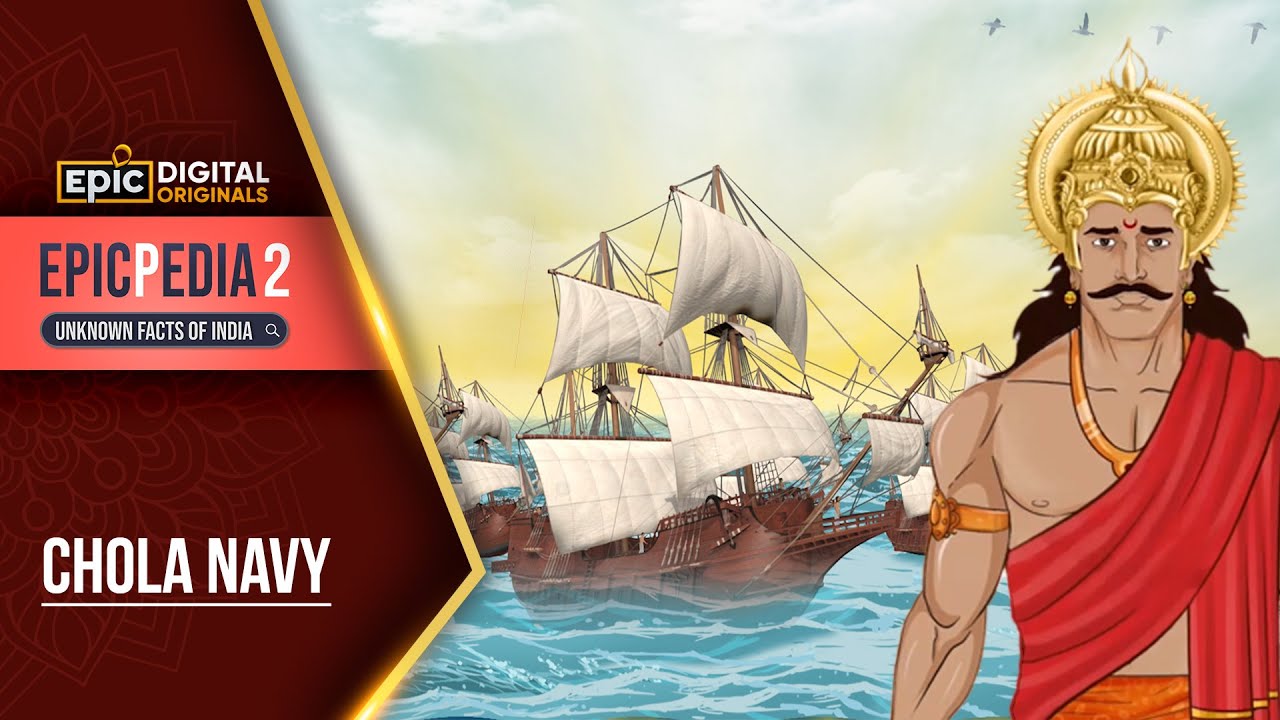
The Chola Dynasty’s naval might and their ambitious foreign policy led to significant Chola Conquests Beyond India, particularly focusing on crucial Southeast Asian trade routes. These expeditions, most notably under Rajendra I, were pivotal for expanding Indian overseas commerce, making this a vital topic for students preparing for historical examinations. The expansion into the Sri Vijaya Empire showcased the dominance of the Chola navy during this medieval period.
In this chapter, you will understand:
- The tactical economic drivers behind Rajendra I's distant maritime campaigns.
- The geographic reach and structural influence of the Sri Vijaya Empire under the Sailendra Dynasty.
- How the Bay of Bengal transformed into a secure, controlled 'Chola Lake'.
- The commercial scale and value of high-level diplomatic missions to Imperial China.
Why this topic matters: This historical phase marks the peak of classical Indian naval projection, demonstrating how economic incentives directly dictated medieval statecraft, overseas military campaigns, and complex trans-oceanic alliances.
Core Idea: Driven by a strong desire to bypass heavy maritime blockades and open direct routes to China, the Chola emperors effectively leveraged their supreme naval forces. This led to a complete restructuring of power across Southeast Asian trade loops, securing centuries of commercial security for Indian merchant guilds.
Rajendra Chola I’s Conquest and Expansion of Maritime Trade Routes (1014-1044 CE)
The powerful Chola emperors actively sought to dominate key commercial hubs and trading centers situated outside the Indian subcontinent to boost their empire's wealth and influence. This expansionist vision was primarily driven by economic motives, aiming to control the lucrative trade flowing through the vital choke points in Southeast Asia.
Sri Vijaya’s Maritime Dominance and Initial Diplomatic Ties with the Cholas
The Sri Vijaya Empire was a sprawling maritime power, revived in the 10th century, and its control extended across a vast area crucial for international commerce.
Geographical and Political Reach of the Sri Vijaya Empire
The vast maritime empire held dominion over the Malay Peninsula, the large islands of Sumatra and Java, and numerous neighboring islands, thus commanding the highly profitable sea trade routes linking the West and the Far East.
- (i) The rulers of Sri Vijaya belonged to the Sailendra dynasty, who were devout Buddhists, influencing the culture and trade practices of the region.
- (ii) Initially, relations between the Chola rulers and the Sailendra dynasty were remarkably cordial and friendly, rooted in mutual respect and perhaps shared commercial interests.
Buddhist Monastery at Nagapatnam: A Symbol of Early Amity
A notable instance of this goodwill was the construction of a Buddhist monastery at Nagapatnam by a Sailendra ruler on Chola land, demonstrating the peace between the two powers.
- (a) The Chola Emperor, Rajendra I, reciprocated this gesture of goodwill by officially endowing a village specifically for the sustenance and upkeep of the newly built monastery.
- (b) This early period of harmony suggests that the subsequent conflict was driven by evolving geopolitical and trade pressures, rather than historical animosity.
The Strategic Conflict: Reasons for Chola-Sailendra Break and Expansion
The peaceful phase gave way to military confrontation, primarily motivated by the Cholas' desire to eliminate trade barriers and secure direct, unhindered access to the lucrative markets of China and Southeast Asia.

- Captured targets included Kadaram (Kedah), the Malay Peninsula, and key ports across Sumatra.
Chola’s Primary Objective: Removing Obstacles for Indian Traders
The fundamental cause of the breach was the Chola kingdom's increasing eagerness to remove any and all obstacles that restricted the free movement and profitable activities of Indian traders across the crucial Southeast Asian maritime routes.
- (i) This led directly to Rajendra I's naval campaign, resulting in the successful conquest of key strategic ports and regions.
- (ii) Among the prominent places captured were Kadaram (Kedah), along with other significant locations throughout the Malay Peninsula and the island of Sumatra.
Chola Naval Supremacy: The Bay of Bengal as a 'Chola Lake'
The success of these distant conquests was a direct testament to the unparalleled power of the Chola navy, which was undeniably the strongest maritime force in the entire region during that era.
- (a) For a significant duration following these conquests, the Bay of Bengal—a central waterway for South and Southeast Asian trade—was colloquially referred to as a ‘Chola Lake’.
- (b) This historical moniker powerfully underlines the absolute naval dominance and territorial control the Cholas exerted over the sea lanes, guaranteeing the security of Indian maritime commerce.
Chola Diplomatic and Commercial Relations with Imperial China
Beyond military conquests, the Chola emperors proactively engaged in high-level diplomatic efforts with China, recognizing the immense commercial opportunities in the vast Chinese market.
- Chola global interaction extended to strategic state deployments and structured merchant coalitions.
Chola Embassies to China: Blending Diplomacy with Commerce
The Cholas dispatched multiple official embassies to the Chinese court, which were cleverly designed to serve dual purposes—strengthening diplomatic ties while aggressively promoting Chola commercial interests.
- (i) Early diplomatic missions were recorded in the years 1016 and again in 1033, establishing the Chola Empire's presence in the Far East.
- (ii) A particularly large and significant mission, comprising 70 Chola merchants, successfully reached China in the year 1077, indicating the large scale of their commercial ambition.
- (iii) This 1077 mission was highly successful commercially, as the delegates received a large payment of 81,800 strings of copper-cash from the Chinese authorities, an amount equivalent to over four lakh rupees, demonstrating the value of Chola trade.
The ‘Tribute’ Designation and Chola Export Goods
The Chinese practice involved referring to all goods received through foreign trade missions as ‘tribute’, though in reality, these were valuable commercial exchange items traded by the Chola envoys.

Exotic Commodities of Medieval Indian Trade: Premium exports destined for early Chinese markets. - (a) Key trade commodities exported by the Chola missions included luxury and high-value items such as exquisite glassware, aromatic camphor, finely woven brocades, rare rhinoceros horns, and intricately carved ivory.
- (b) This extensive list underscores the sophistication and diversity of the Chola Empire’s manufacturing and trade economy during this golden age.
Quick Revision Capsule
A quick breakdown of key milestones in the overseas trade expansions and diplomatic endeavors of the Chola Dynasty:
| Strategic Landmark / Year | Target Region & Focus Area | Primary Historical Outcome |
|---|---|---|
| 1014 - 1044 CE | Sri Vijaya Empire & Southeast Asian Straits | Rajendra Chola I launches major maritime strikes to clear direct commercial avenues. |
| Nagapatnam | Chola Territory Coastal Base | Site of a Sailendra-built Buddhist monastery, symbolizing early international diplomacy. |
| Bay of Bengal | South Asian Main Maritime Block | Completely dominated by the royal fleet and colloquially designated as a 'Chola Lake'. |
| 1016 & 1033 CE | Imperial Chinese Court | Initial diplomatic envoys establish direct contact with far eastern trade blocks. |
| 1077 CE | Chinese Dynastic Core | A massive contingent of 70 merchants secures 81,800 strings of traditional copper-cash. |
Summary
The period of Chola conquests beyond India, epitomized by Rajendra I’s successful campaign against the Sri Vijaya Empire, represents a golden age of Indian maritime history. This era decisively established the Chola Empire as the dominant naval power in the Indian Ocean world, earning the Bay of Bengal the designation of a 'Chola Lake'. Understanding the economic motivations—the drive to secure overseas trade routes to China—behind these naval expeditions is crucial for students, as it highlights the interplay between trade, diplomacy, and military might in shaping the history of South and Southeast Asia.
Quick Revision Points
Review these essential structural concepts for high scoring answers:
- (i) Economic drivers overrode territorial greed; the primary focus was dismantling local Sri Vijaya trade tariffs.
- (ii) The Sailendra rulers of Sri Vijaya were dedicated Buddhists who originally shared solid, peaceful terms with the Cholas.
- (iii) Key premium products exported to China included high-grade glassware, camphor, brocades, and ivory.
- (iv) Absolute naval sovereignty effectively protected domestic merchant guilds operating throughout eastern trade routes.
- Exam Tip: Whenever answering questions on Rajendra I's foreign policy, always use the keyword term 'Chola Lake' to describe the status of the Bay of Bengal and explicitly link his military actions to the objective of direct trade access with China.
Frequently Asked Questions (FAQ)
Q1: Why did the early cordial relationship between the Cholas and Sri Vijaya turn into a military conflict?
A1: The shift occurred due to intense economic pressures. Sri Vijaya controlled key oceanic bottlenecks, and their restrictive trade barriers directly hindered the profitability and movement of Indian traders attempting to reach Chinese markets.Q2: What is the historical significance of the term 'Chola Lake'?
A2: This term underscores the complete maritime supremacy achieved by the Chola Navy over the Bay of Bengal, which allowed them to secure shipping corridors, suppress piracy, and dominate international transport lanes.Q3: How successful were the Chola commercial missions sent to China?
A3: They were remarkably successful. The milestone mission of 1077 CE, consisting of 70 traders, successfully brought back massive returns totaling 81,800 strings of copper-cash, indicating a highly lucrative commercial footprint.