Managing the massive territory of the Mauryan Empire required an extraordinarily well-structured state machine. Ruling an area that spanned almost the entire Indian subcontinent was no easy task, so the Mauryan rulers built a centralized system that handled everything from local revenue to national security. Our understanding of this sophisticated apparatus comes primarily from three invaluable literary and archaeological foundations: Kautilya'sArthashastra, the detailed observational logs of the Greek ambassador Megasthenes (Indika), and the widespread rock and pillar edicts issued by Emperor Ashoka. Together, these records reveal an empire that balanced absolute monarchical power with meticulous administrative planning and genuine concern for public welfare.
In this chapter, you will understand:
- The provincial division of the Mauryan state and key regional headquarters.
- The role of the King, the advisory council (Mantri Parishad), and city boards.
- The internal security framework, including the military and intelligence network.
- The judicial hierarchy, tax collection mechanisms, and public welfare initiatives.
Why this topic matters: Understanding Mauryan governance provides a foundational look at ancient statecraft, showing how administrative centralization, legal frameworks, and welfare policies developed in early South Asia.
Core Idea: The Mauryan Empire functioned as a highly organized administrative network. It united strong central monarchy with localized provincial governance, sophisticated urban management boards, a complex espionage setup, and widespread public works.
Provincial Administration and Key Officials
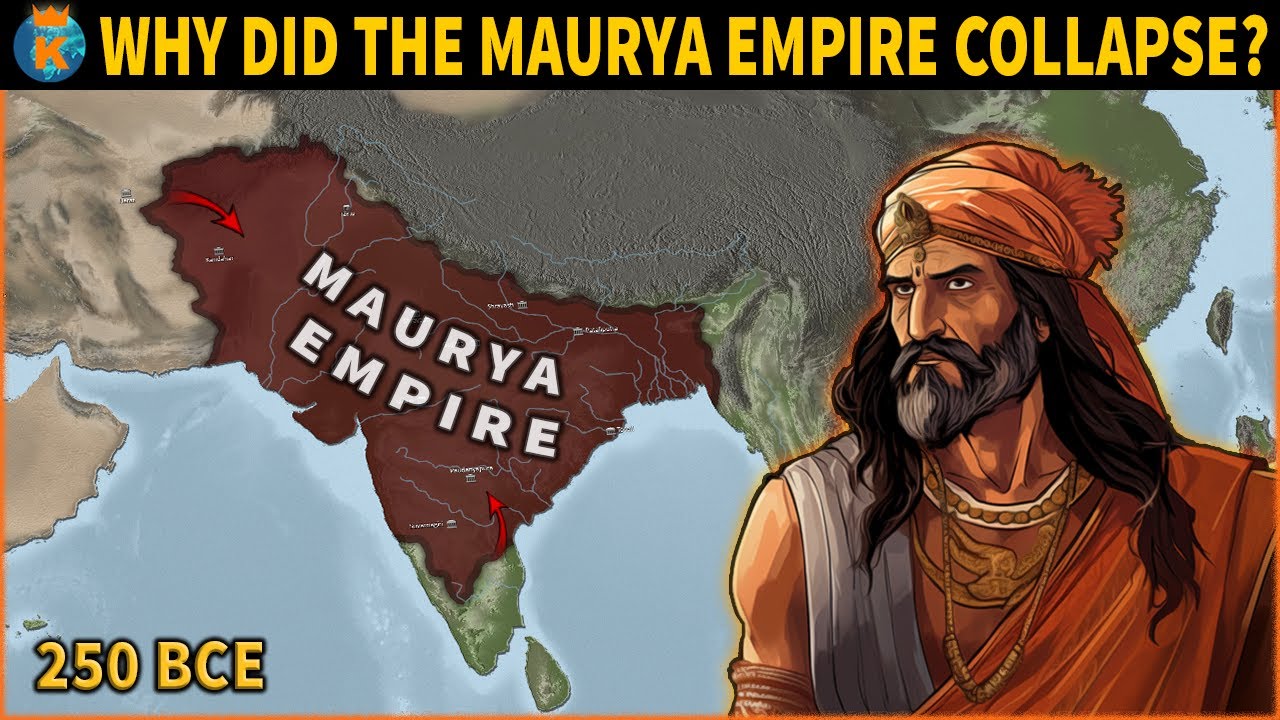
To keep governance smooth across vast distances, the empire was partitioned into major administrative provinces. Each province was placed under a viceroy—usually a prince (kumara) or a trusted member of the royal family—to ensure unwavering loyalty to the central throne.
Regional Capitals and Field Officers
Ashokan inscriptions explicitly outline four major provincial seats that served as centers of regional power:
- (i) Southern Province: Headquartered at Suvarnagiri.
- (ii) Northern Province: Governed from the key border hub of Taxila.
- (iii) Western Province: Managed from the trade hub of Ujjayini.
- (iv) Eastern Province: Controlled from the coastal seat of Tosali.
- (v) High-ranking inspecting officers called pradeshikas toured these regions every 5 years to audit accounts and supervise local bureaucrats. Meanwhile, judicial and land officers called rajukas worked at ground level in both towns and villages, dispensing justice, surveying land, and assessing tax obligations.
Central Governance, Monarchy, and Urban Management
At the center of this immense apparatus stood the imperial capital, controlling state policy, revenue collection, security, and civic administration.

- The imperial center harmonized executive decision-making with specialized municipal governance boards.
The King: Supreme Authority and Duties
The sovereign served as the core engine of the state, holding ultimate executive, judicial, and military authority.
- (a) The king held the exclusive right to appoint or dismiss state ministers, direct the imperial treasury, and oversee public safety. State interest was paramount, and the sovereign's directives could override prevailing custom or religious advice when necessary.
- (b) Classical texts specified that a ruler must display high birth, intellect, and firm control over officials. Emperor Ashoka embodied this by framing his rule around a paternal principle, taking the title Devanampiya (Beloved of the Gods) to unify his moral authority with political control.
Council of Ministers (Mantri Parishad)
While the monarch held final say, daily governance depended on an experienced administrative cabinet.
- (a) The Mantri Parishad acted as an advisory body composed of senior ministers (amatyas) who assisted in executing public policies.
- (b) Decisions were generally reached by majority consensus, though all conclusions had to be submitted directly to the king for ultimate authorization.
- (c) Inner cabinet members (mantrins) handled high-priority security and diplomatic matters, and were expected to maintain complete financial integrity and personal loyalty.
City Administration: Megasthenes' Accounts of Pataliputra
Urban governance was exceptionally structured, particularly in the imperial capital of Pataliputra (modern-day Patna).
- (a) Megasthenes recorded that Pataliputra was managed by a dedicated city council made up of 30 members divided into 6 specialized committees (5 members each).
- (b) These six sub-committees handled specific urban tasks:
- 1. Industry & Crafts: Supervised manual arts and fixed worker wages.
- 2. Foreigners: Arranged security, lodging, and medical care for foreign visitors.
- 3. Vital Statistics: Maintained official records of births and deaths.
- 4. Trade & Commerce: Regulated market weights, measures, and trade licenses.
- 5. Manufactured Goods: Inspected commodity quality and prevented mixing of old and new goods.
- 6. Tax Collection: Collected a 10% sales tax (1/10th) on all items sold in urban markets.
- (c) The Arthashastra supports this setup, listing matching superintendents like the Panyadhyaksha (Trade), Sulkadhyaksha (Tolls/Taxes), and Gopa (Registrar). The supreme city governor was known as the Nagarika, supported by police units (Rakshi).
Defense Systems, Intelligence, and Law
Maintaining peace across a empire required a permanent standing army, a sophisticated intelligence branch, and a formal legal system.
- Military power and domestic intelligence worked hand-in-hand to prevent internal revolts and external aggression.
Military Organization and Divisions
The Mauryan military was large, well-equipped, and directly funded by the state treasury.
The four traditional arms (Chaturanga) of the Mauryan army. - (a) The army comprised four primary combat wings: infantry, cavalry, war elephants, and chariots, supported by dedicated transport and supply logistics.
- (b) Each wing operated under a specialized superintendent: Patyadhyaksha (Infantry), Ashvadhyaksha (Cavalry), Rathadhyaksha (Chariots), and Hastyadhyaksha (Elephants).
- (c) Foreign accounts highlight that the military also maintained dedicated medical corps, including field surgeons and nurses, to treat wounded soldiers on the battlefield.
Intelligence Network: Samstha and Sanchara
A sophisticated intelligence network kept the central government informed about domestic stability and administrative corruption.
- (a) The chief revenue and security coordinator, the samahartta, directed the espionage system, reporting crucial findings straight to the throne.
- (b) Spies were divided into two main operational categories:
- • Stationary Spies (samstha): Agents stationed permanently inside specific institutions, markets, or offices.
- • Roving Spies (sanchara): Mobile agents who traveled continuously across provinces to gather secret intelligence.
- (c) Agents used various disguises—operating as ascetics, merchants, or students—and women were actively recruited into the intelligence network.
Judicial Administration and Public Welfare
Law enforcement combined strict penalties with clear procedural fairness and state-sponsored public welfare.
- (a) Civil and criminal disputes were handled by civil courts (dharmasthiyas) and criminal courts (pradeshtris), with the king serving as the ultimate court of appeal.
- (b) Legal codes contained detailed fines and physical punishments. However, Ashokan inscriptions strongly stressed judicial impartiality, ordering that no person should be imprisoned or punished without proper review and credible evidence.
- (c) The state actively managed irrigation projects, built trunk roads, established rest houses, provided medical facilities, and maintained grain reserves to protect citizens during famines and natural disasters.
Quick Revision Capsule
Key administrative components and their respective functions in the Mauryan state:
| Administrative Unit / Title | Core Function / Role | Key Operational Metric / Detail |
|---|---|---|
| Kumara / Aryaputra | Provincial Viceroy | Governed main provincial capitals like Taxila and Ujjayini. |
| Mantri Parishad | Advisory Council of State | Deliberated policy; worked on majority decision rules under royal review. |
| Nagarika & City Boards | Urban Governance Executives | Managed 6 municipal committees of 5 members each in Pataliputra. |
| Samstha & Sanchara | Imperial Intelligence Branch | Stationary (samstha) and roving (sanchara) spy networks. |
| Rajukas & Pradeshikas | District Judicial & Audit Officers | Handled land surveys, local justice, and 5-year provincial audits. |
Summary
The Mauryan administrative framework was a milestone in ancient statecraft. By combining centralized monarchical direction with systematic provincial administration, professional municipal oversight, a strong army, and an active espionage network, the empire maintained stability across vast distances. At the same time, its focus on public works, road construction, irrigation, and judicial fairness ensured that authority was balanced with genuine concern for public welfare.
Quick Revision Points for Students
Essential facts to review before examinations:
- (i) Four Main Provincial Centers:Suvarnagiri (South), Taxila (North), Ujjayini (West), and Tosali (East).
- (ii) Urban Management:Pataliputra's city council had 30 members split into 6 committees of 5 members each.
- (iii) Revenue & Security: The sales tax in cities was set at 1/10th of commodity values; intelligence was run by stationary (samstha) and mobile (sanchara) agents.
- (iv) Key Primary Sources:Kautilya'sArthashastra, Megasthenes'Indika, and Ashoka's rock edicts.
- Exam Tip: Pay special attention to the terminology used for officials—such as Nagarika (City Governor), Rajuka (Judicial/Revenue Officer), and Samahartta (Collector General)—as these frequently appear in competitive examination questions.
Frequently Asked Questions (FAQ)
Q1: How was the imperial capital Pataliputra managed according to Megasthenes?
A1: According to Megasthenes, Pataliputra was governed by a central council of 30 members divided into 6 specialized boards of 5 members each. These boards oversaw industrial arts, foreign visitors, birth and death records, trade standards, manufactured goods, and sales tax collection.Q2: What was the difference between Samstha and Sanchara spies in the Mauryan espionage system?
A2: Samstha spies were stationary agents positioned permanently inside specific locations like markets or government offices. Sanchara spies were mobile agents who traveled continuously throughout the empire to collect intelligence.Q3: What role did the Rajukas play in Mauryan administration?
A3: The Rajukas were judicial and revenue officers operating in rural and urban areas. They surveyed land, assessed taxes, and administered justice, with Emperor Ashoka granting them expanded authority to promote fair legal practices.