The Mesolithic Age, or the Middle Stone Age, represents a crucial transitional phase in human history, bridging the gap between the nomadic Paleolithic hunter-gatherers and the settled communities of the Neolithic Age. This period, starting around 8000 B.C. in India, is defined by the revolutionary development of microliths—smaller, sharper, and more refined stone tools. Understanding this era, particularly sites like the Bhimbetka Rock Shelters in Madhya Pradesh, is essential for students preparing for Ancient History and archaeology examinations.
Mesolithic Age: The Crucial Transition to Agriculture, Microlith Tools, and Prehistoric Art (8000 B.C. to 4000 B.C.)
The Mesolithic Age served as a pivotal transitional period, marked by the climatic shift following the Last Glacial Maximum and critical advancements in stone tool technology.
- (i) Known as the Late Stone Age or the Middle Stone Age, the Mesolithic successfully interconnected the older Paleolithic Age with the subsequent Neolithic Age.
- (ii) In the context of India, this phase commenced approximately in 8000 B.C. and extended up to around 4000 B.C., showcasing a gradual shift in human subsistence patterns.
- (iii) Globally, the Mesolithic period signifies the transformation from established hunter-gatherer cultures towards the nascent stages of early agriculture, acting as a direct precursor to the transformative Neolithic Revolution.
Overview of the Mesolithic Era: Key Characteristics, Microliths, and Early Settlements
This period in Indian history is distinctly characterized by the advent of microliths and the formation of small settlements, reflecting a more adapted and efficient lifestyle than the preceding era.
Defining Characteristics and the Rise of Microlith Technology
The defining feature of the Late Stone Age is the sophisticated creation of microliths—stone tools that were noticeably smaller and far more refined than the heavy implements of the Paleolithic era, signifying a great leap in technological application.
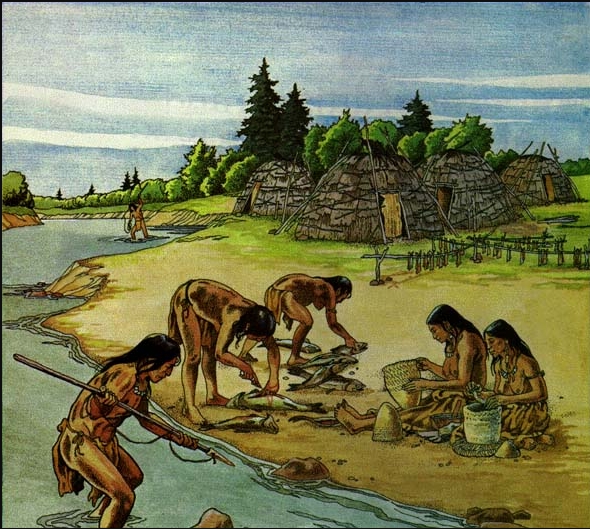
Mesolithic (Middle Stone Age) image - (i) The Mesolithic Age in India flourished between 8000 B.C. and 4000 B.C., preceding the Neolithic Age as evidenced by few scientifically dated discoveries.
- (ii) Key Mesolithic sites are distributed across India, with significant concentrations observed in Chotanagpur, various parts of central India, and regions situated south of the mighty river Krishna.
- (iii) The Bélan Valley, located on the northern spurs of the Vindhyas, provides a crucial sequential record, where all three phases: Paleolithic, Mesolithic, and Neolithic, have been discovered in perfect succession.
- (iv) During this age, the tendency for small settlements began to manifest, with groups often strategically locating themselves near water bodies to ensure a steady food supply and security.
Mesolithic Phases: Cultural and Technological Evolution
The Mesolithic era is not a monolithic period but is segmented into various phases based on meticulous archaeological evidence and the demonstrable changes in culture and technology across different regions.
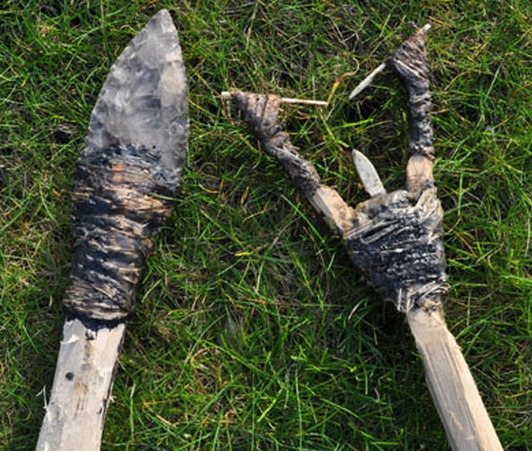
Tools from the Mesolithic Era - (a) These phases are primarily characterized by the significant evolution of stone tools, demonstrating a clear transition from bulkier hand axes to the highly efficient, smaller, and sharper microliths.
- (b) There were observable changes in settlement patterns, moving away from purely nomadic lifestyles towards the establishment of semi-permanent settlements, suggesting a more stable way of life.
- (c) The latter stages of this period saw the pivotal introduction of pottery in certain geographic regions, a signifier of the burgeoning need for food storage and noticeable advancements in early cooking techniques.
Mesolithic Tools and Technology: Specialized Composite Tools for Enhanced Hunting Efficiency
The technological hallmark of the Mesolithic period was the shift towards tools that were smaller, lighter, and distinctly sharper compared to the heavy-duty implements of the earlier Paleolithic Age.
Microliths, Composite Tools, and the Introduction of the Bow and Arrow
The most commonly discovered tools were the revolutionary microliths, diminutive stone pieces, often skillfully mounted onto wood or bone to create specialized composite tools like arrows, spears, and sickles, dramatically increasing their utility.
- (i) Microliths are small stone tools, typically made from high-quality materials such as flint or chert, used across continents like Europe, Africa, Asia, and Australia between 35,000 and 3,000 years ago.
- (ii) These components were integral for crafting essential composite tools, including spearheads, arrowheads, knives, sickles, harpoons, and daggers, providing early humans with more specialized capabilities.
- (iii) Certain Mesolithic cultures are credited with developing the formidable bow and arrow, a composite weapon that significantly elevated the efficiency and range of their hunting endeavors.
Mesolithic Art and Culture: Depicting Ancient Social Life in Rock Paintings
Art during the Mesolithic Age provides invaluable insights into the daily routines, belief systems, and social activities of ancient communities through extensive rock paintings and sophisticated sculpture.
Artistic Expressions in Bhimbetka and Iberian Basins
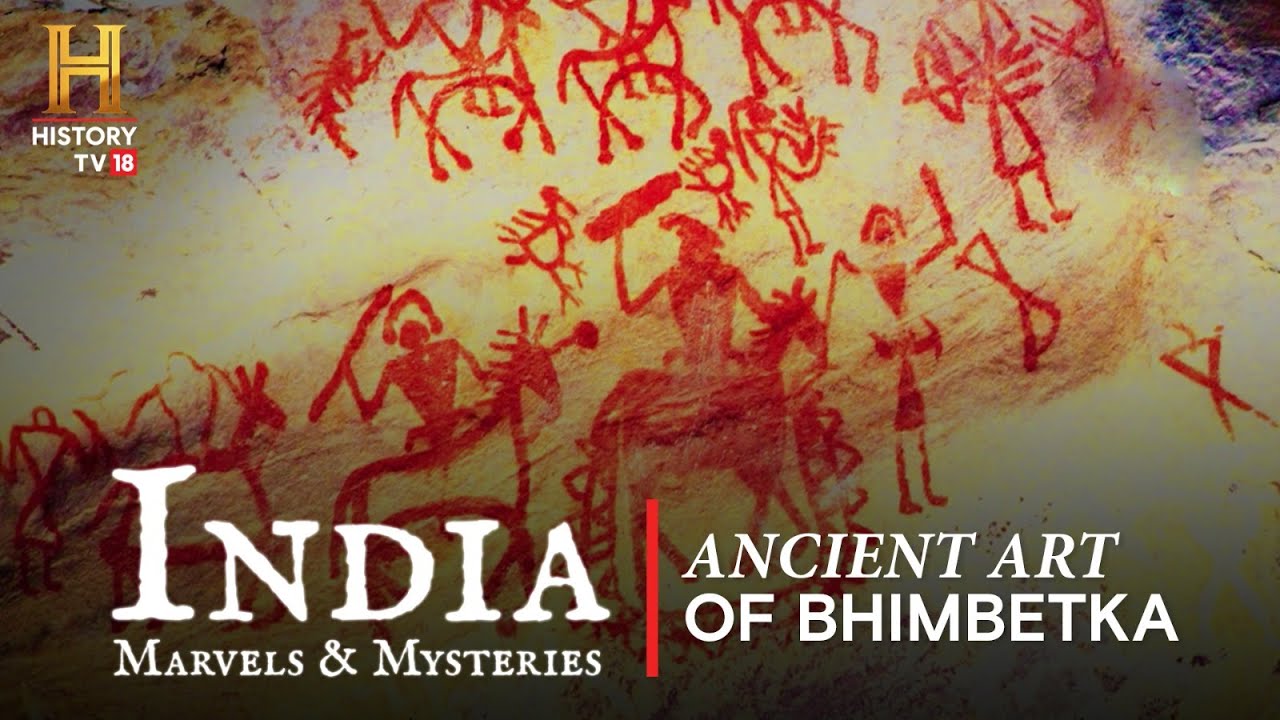
Prominent Mesolithic rock paintings have been discovered in famous locations such as the Bhimbetka Caves in India and the Iberian Mediterranean Basin in Spain, illustrating a vibrant prehistoric world.
- (a) The art meticulously depicts vivid scenes of intense Hunting activities and routine food-gathering practices, forming a visual record of their subsistence economy.
- (b) Paintings often feature humans engaging with various animals, as well as complex scenes of significant Rituals, enthusiastic Dancing, and other forms of structured social activities.
- (c) A notable example of Mesolithic sculpture is the Shigir Idol from Russia, which stands remarkably over 5 meters tall, serving as one of the most spectacular artifacts from this period.
Mesolithic Period in India: Key Archaeological Sites and the Dawn of Early Farming
The spread of Mesolithic culture in India is confirmed by the discovery of numerous sites, which collectively chart the transition from purely hunter-gathering to the very beginnings of agricultural practices.
Prominent Indian Mesolithic Sites and Their Significance
A few critical sites stand out for providing definitive evidence and deep insights into the lifestyle, tools, and practices of the Mesolithic man in India.
- (i) Bagor (Rajasthan): Recognized as one of the largest Mesolithic sites in the country, yielding a wealth of archaeological material.
- (ii) Damdama (Uttar Pradesh) and Sarai Nahar Rai (Uttar Pradesh): Both are important burial sites, offering evidence of early human burials and a rich collection of microliths.
- (iii) Bhimbetka Rock Shelters (Madhya Pradesh): An internationally significant site, famous as the home to thousands of invaluable prehistoric rock paintings.
- (iv) Crucially, in some regions, the transition from the traditional hunting-gathering mode to the innovative practice of early farming commenced during the latter stages of the Late Mesolithic period.
The Mesolithic Culture or Middle Stone Age: A Detailed Study
The Mesolithic culture, or the Middle Stone Age, is etymologically derived from the Greek words Mesos (meaning "middle") and Lithos (meaning "stone"), highlighting its status as the intermediate cultural phase.
Mesolithic Sites in India: Diversity in Subsistence Patterns
The majority of Mesolithic sites in India have been identified primarily through surface collections of their characteristic tools. Archaeological findings reveal that different Mesolithic cultures co-existed, displaying a diversity of subsistence patterns, where traditional hunting cultures often shared the landscape with incipient pastoral and early agricultural communities.
- (i) First Proof in India: The earliest record of Mesolithic humans in India was documented between 1867-68 A.D. by the English Archaeologist A.C.L. Carlyle, who discovered numerous microliths in the Kaimur Range of the Mirzapur District, Uttar Pradesh.
- (ii) First Excavated Site: The first systematic excavation of a Mesolithic site was later conducted in 1950 A.D. by H.D. Sankalia (Hashmukh Dhirajlal Sankalia) at Langham and other related locations within Gujarat.
Changes in Hunting Techniques and Improved Tool Efficiency
A significant behavioral change during the Mesolithic era was the strategic shift in hunting focus: moving from exclusively pursuing large game to a more adaptive approach involving the hunting of smaller, faster-moving animals. Man remained a nomadic hunter-gatherer but significantly upgraded his toolkit, allowing for the efficient hunting of animals like the deer-family and flying birds.
- (a) The key technological upgrade was the proliferation of microliths, small stone tools ranging from just 1 to 8 centimeters in length, used to create more effective weapons.
- (b) Primary types included blades, cores, points, triangles, and trapezes; however, older Palaeolithic tools like scrapers, burins, and choppers were not entirely abandoned but continued to be utilized.
Social Life and Economic Activities: Insights from Rock Art
Detailed insights into the Social Life and Economic Activities of the Mesolithic people are richly provided by the extensive rock paintings and art found at key sites like Bhimbetka, Adamgarh, Pratapgarh, and Mirzapur across India.
- (i) These artworks vividly depict daily activities such as aggressive Hunting of game, communal Gathering of plant resources, skillful Trapping of animals, community Eating together, and scenes of joyful Dancing and playing instruments.
- (ii) Animal depictions—including large creatures like mammoths, various types of deer, and others—are the most frequent subjects, often serving as a documentation of their primary food sources.
- (iii) More unusually, complex scenes, such as chariots being fiercely attacked by men armed with spears and bows, were captured, notably at the Morhana Pahar group of rock shelters near Mirzapur.
Bhimbetka Rock Shelters: Prehistoric Art, Archaeological Significance, and Human Life Continuity
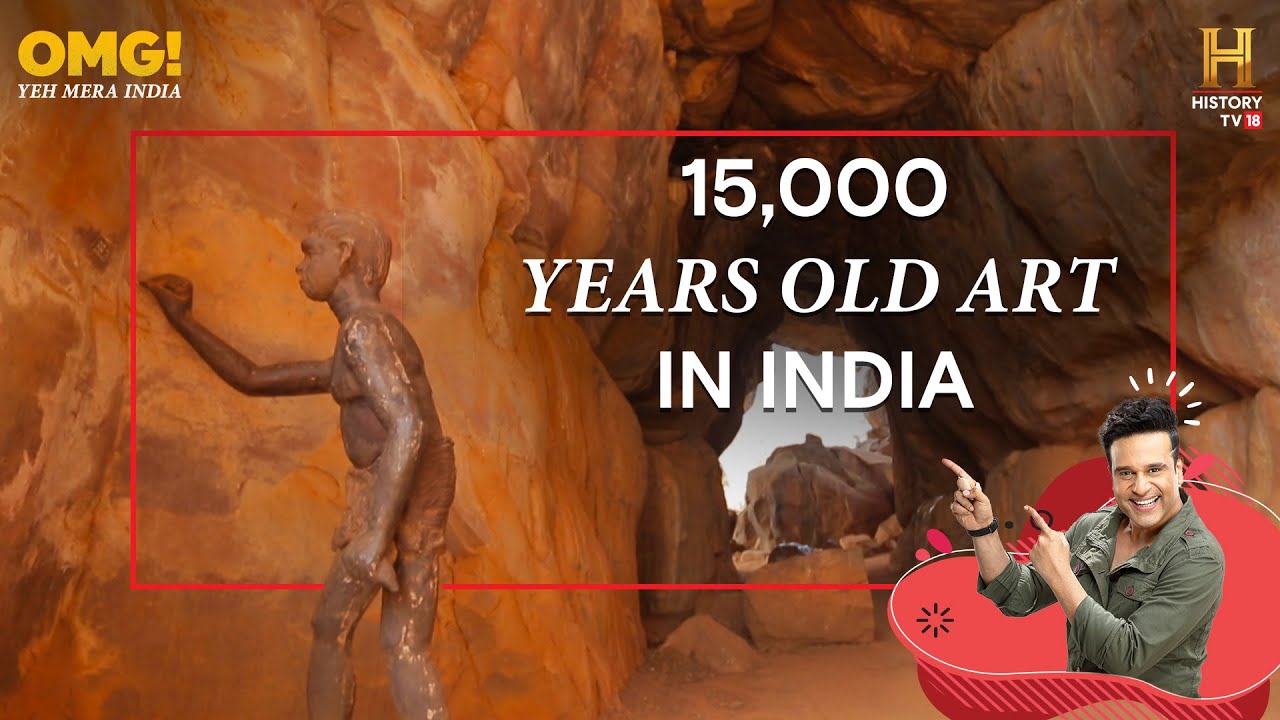
The Bhimbetka Rock Shelters in Madhya Pradesh are a UNESCO World Heritage Site, offering the earliest known traces of human life and continuous settlement in India from the Paleolithic through the Mesolithic periods. This massive archaeological site provides an unparalleled window into the prehistoric existence of humanity, preserved within hundreds of rock shelters and ancient art.
Location and Geographical Context of Bhimbetka
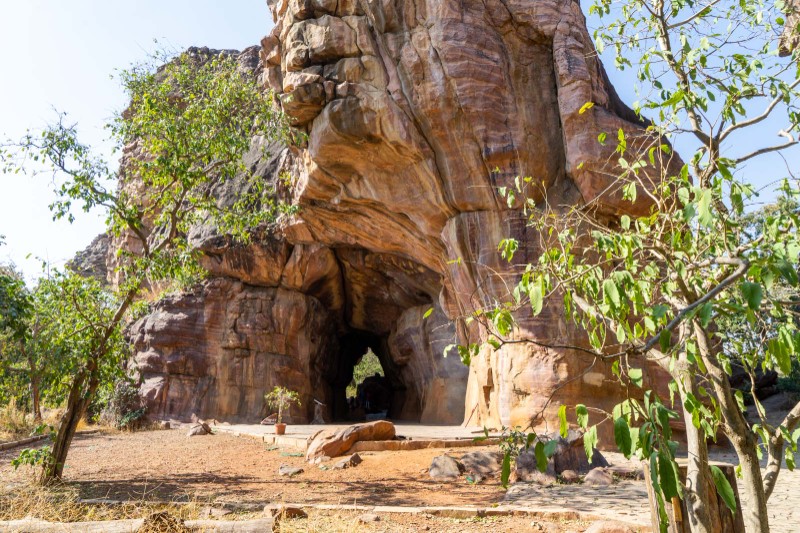
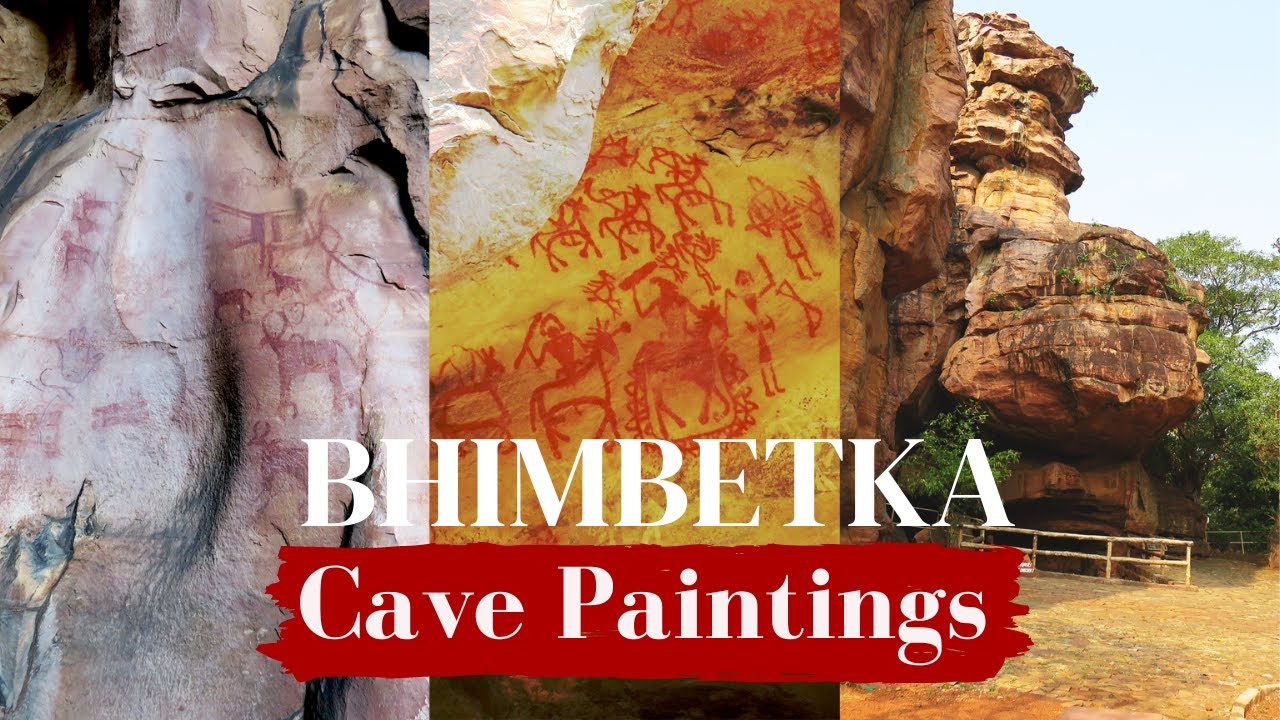
Bhimbetka Caves The Bhimbetka rock shelters are situated approximately 45 kilometers south-east of Bhopal, Madhya Pradesh, strategically positioned at the southern edge of the Vindhya Range.
- (i) The complex is a vast archaeological site spanning both the Paleolithic and Mesolithic periods, exhibiting evidence of the Stone Age starting from the ancient Acheulian period.
- (ii) Recognized as a UNESCO World Heritage Site, the area encompasses a total of seven hills and an astounding collection of over 750 rock shelters distributed across a span of 10 km.
- (iii) The shelters have been shown to have been inhabited for over 100,000 years ago, demonstrating an extraordinary continuity of human settlement in India.
The Origins and Discovery of Bhimbetka
The name Bhimbetka itself is rich in cultural heritage, meaning "Bhima's resting place" or "Bhima's lounge", derived from the legendary figure Bhima from the epic Mahabharata and the Sanskrit word Baithaka (seat or lounge).
- (a) The site was first mentioned by W. Kincaid in 1888, though he initially described it primarily as a Hinduism site.
- (b) The first decisive archaeological exploration was carried out much later in 1957 by V. S. Wakankar, leading to the discovery of over 750 rock shelters and the subsequent evidence of continuous human settlement from the Stone Age.
- (c) The site is structurally spread across seven distinct hills, including Vinayaka, Bhonrawali, Bhimbetka, Lakha Juar west, Lakha Juar east, Jhondra, and Muni Babaki Pahari.
Bhimbetka's Architectural Wonders: Auditorium and Zoo Caves
Among the hundreds of shelters, two stand out for their unique architecture and spectacular display of prehistoric art, providing unique insights into the community's gathering places and artistic themes.
Auditorium Cave: Architecture and Historical Significance

Dance Painting at Bhimbetka The Auditorium Cave is an imposing structure, often likened to a cathedral-like structure with distinct Gothic arches, naturally formed and surrounded by imposing quartzite towers.
- (i) It is recognized as the largest shelter found at the entire Bhimbetka complex, suggesting its significance as a communal space.
- (ii) Its ground plan distinctively resembles a "right-angled cross", with the main entrance orientation pointing towards the east.
- (iii) The entrance is marked by a unique, distinctive boulder, which has been historically named the "Chief's Rock".
Zoo Rock Shelter: Ancient Animal Art and Cupules
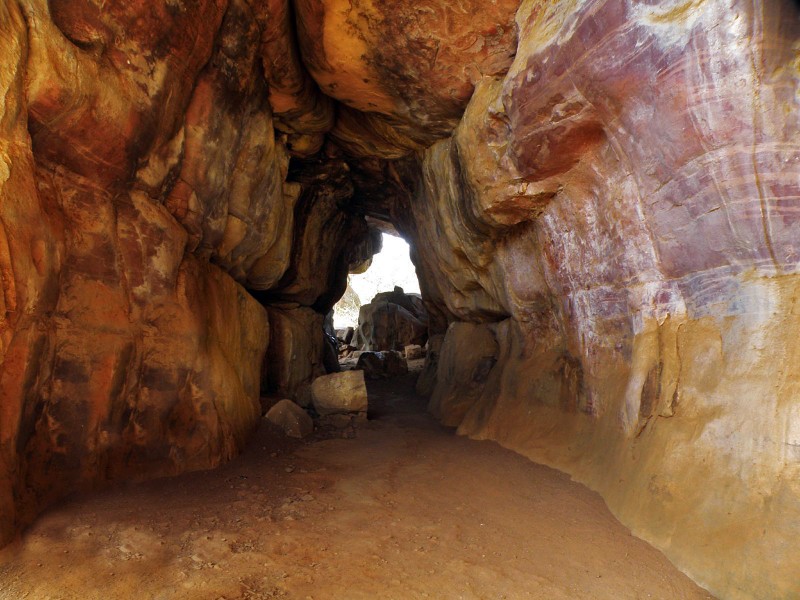
Closer Look of Bhimbetka Caves The Zoo Rock Shelter is globally renowned for its extraordinary combination of ancient cupules (small, non-utilitarian circular depressions) and a rich collection of paintings focusing intensely on animals.
- (a) The art in this shelter prominently features a range of fauna, including powerful bisons, tigers, lions, elephants, and many other creatures, offering a comprehensive look at the ecosystem of the time.
Rock Art at Bhimbetka: The Chronology of Prehistoric Life
The rock art found within the Bhimbetka Rock Shelters is a stratified chronology of human life, where paintings vary dramatically from simple geometric forms to complex, dynamic depictions of daily life, animals, and elaborate rituals.
Paintings, Colors, and Thematic Chronology
The earliest art in the caves uses a limited palette, while successive periods demonstrate a wider range of colors and more intricate subject matter, revealing a clear progression in artistic skill and thematic focus.
- (i) The Oldest paintings predominantly illustrate various animals and basic geometric forms, utilizing the colors green and dark red derived from natural pigments.
- (ii) Successive periods showcase the increasing importance of the human figure, now engaged in specific activities like active hunting, dancing, and various forms of essential daily activities.
- (iii) The Later paintings exhibit highly complex and detailed scenes, sometimes including large-scale battles and well-defined rituals, suggesting the development of more complex societal structures.
- (iv) The pigments used for these timeless artworks were exclusively derived from natural materials, such as manganese, hematite (for red ochre), and charcoal (for black).
Summary
The Mesolithic Age, with its key site at the Bhimbetka Rock Shelters, represents a pivotal and non-negotiable chapter in Ancient Indian History. This era was the crucial transitional phase that witnessed the fundamental shift from large-scale hunting to more efficient, specialized hunting using revolutionary microliths and the inception of semi-permanent settlements. The rock paintings at Bhimbetka, a UNESCO World Heritage Site, provide primary source visual evidence of the lifestyle, social structure, and economic activities of ancient man. For students, understanding the chronology of tools, the art, and the shift towards early agriculture in this period (8000 B.C. to 4000 B.C.) is absolutely essential for comprehensive exam preparation.
Quick Revision Points for Students
Reviewing the core empirical and regulatory facts ensures full retention for examinations.
- (i) The Mesolithic Age acts as a transitional bridge in human timeline bridging the nomadic Paleolithic hunters and settled Neolithic farming communities.
- (ii) In India, this phase spanned from approximately 8000 B.C. to 4000 B.C., defined by the rapid evolution of microlith technology.
- (iii) The first proof of microliths in India was recorded between 1867-68 A.D. by A.C.L. Carlyle within the scenic Kaimur Range.
- (iv) Bhimbetka Rock Shelters in Madhya Pradesh host over 750 rock shelters across seven hills, preserving continuous habitation dating back over 100,000 years.
Frequently Asked Questions (FAQ)
Q1: What are microliths and why are they important to the Middle Stone Age?
A1: Microliths are highly refined, small stone tools (1 to 8 cm) typically fashioned from flint or chert. They allowed early humans to create efficient composite tools like arrows and spears, transforming hunting capabilities.Q2: Who discovered the Bhimbetka Rock Shelters and when?
A2: The site's archaeological significance was decisively brought to light in 1957 by archaeologist V. S. Wakankar, who uncovered an extensive complex of prehistoric art across seven distinct hills.Q3: What makes the Auditorium Cave at Bhimbetka unique?
A3: The Auditorium Cave is the largest shelter at the site, featuring an iconic cathedral-like structure with natural Gothic arches, a cross-like layout, and a prominent entrance rock known as the "Chief's Rock".