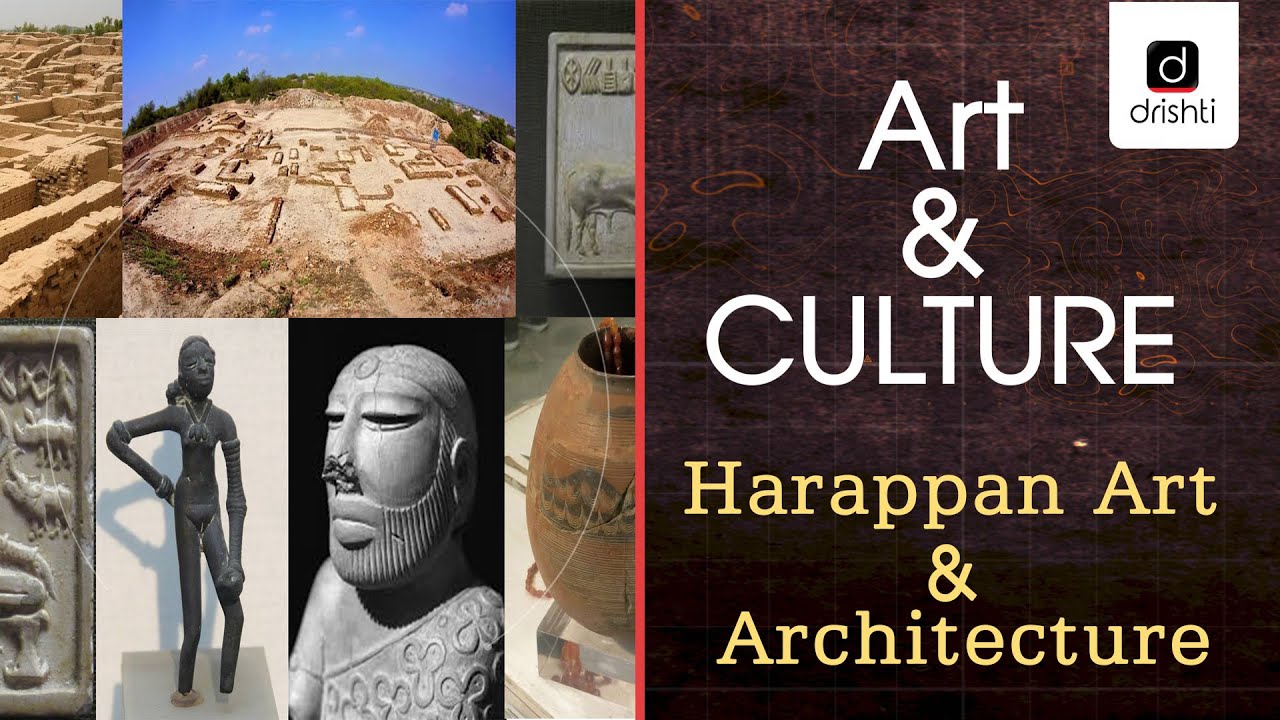
The Art and Architecture of the Indus Valley Civilisation (IVC), which flourished remarkably around the , constitutes a pivotal landmark in ancient Indian heritage and urban development. Their technical prowess encompassed sophisticated sculpture, intricate seals, functional pottery, elaborate jewellery, expressive terracotta figures, refined stone statues, and pioneering bronze casting. This comprehensive subject is paramount for students and competitive exam aspirants, as it offers profound insights into the cultural legacy and the advanced principles of urban planning exemplified by major ancient centres like Harappa and Mohenjodaro.
🎯 In this chapter, you will understand:
- The key features and civic innovations of the Indus Valley Civilisation.
- The diverse artistic mediums including stone, steatite seals, pottery, and terracotta.
- The lost-wax bronze casting technique and famous works like the 'Dancing Girl'.
- The naturalistic realism and lasting cultural significance of Harappan art forms.
💡 Why this topic matters: It reveals how early urban planning and advanced craftsmanship laid the foundation for Indian art and civic engineering.
🧠 Core Idea: Harappan artists blended functional utility with high artistic realism using stone, terracotta, metal, and steatite.
Key Features and Examples of Cultural Legacy in Indus Valley Art and Architecture ()
The artistic and civic innovations of the Indus Valley Civilisation beautifully narrate a compelling story of advanced societal organization, innate creativity, and exceptional technical skill achieved in antiquity.
The civilisation bequeathed a rich collection of artistic expressions and established a remarkable blueprint for highly developed urban centres, which collectively provide invaluable archaeological documentation of their daily life, underlying beliefs, and overall cultural trajectory.
- (i) A diverse array of artistic mediums, encompassing detailed stone sculptures, intricately engraved seals, finely painted pottery, elaborate personal jewellery, and carefully modelled terracotta figures, were central components of their cultural and spiritual life.
- (ii) Major urban hubs, most notably Harappa and Mohenjodaro, displayed exemplary civic planning and engineering, characterized by standardized construction techniques, organized street patterns laid out on a meticulous grid system, and remarkably efficient municipal drainage systems.
- (iii) The extensive scope of excavated sites spanning modern-day India and Pakistan serves to powerfully underline the vast geographical reach and the shared civilisational achievements of the widespread Harappan Culture and its unique urban design.
Art Forms of the Indus Valley Civilisation: Reflecting Realism and Symbolic Imagination in Ancient Works
The core Indus art forms distinctly showcase a remarkable blend of sharp naturalistic realism and symbolic, abstract imagination, employing durable materials such as expertly cut stone, stable fired clay (terracotta), and skillfully cast metals, particularly bronze.
Sculptures, Seals, Pottery, Jewellery, and Terracotta: The Variety of Harappan Artistic Expressions and Advanced Craftsmanship
The prolific Harappan artists worked masterfully across variations in both scale and material, consistently producing artifacts that were both aesthetically sophisticated and deeply integrated into their religious, social, and commercial lives, often displaying a high level of advanced craftsmanship and technical knowledge.
- (i) Sculptures: These pieces, though relatively few in total number, were generally crafted with a vivid artistic imagination and an impressively refined, naturalistic sensibility, successfully capturing three-dimensional volumes, human posture, and detailed forms with great skill.
- (ii) Seals: Predominantly manufactured from the soft stone steatite, these ubiquitous seals frequently depicted realistic, highly detailed figures of various animals (like the unicorn and the bull) and humans, often accompanied by the still undeciphered pictographic script, suggesting their use in trade and administration.
- (iii) Pottery: Renowned for both their fundamental utility in daily life and their intricate geometric or expressive animal-based decorative designs, the Harappan pottery production demonstrated an advanced mastery of the potter's wheel and complex decorative painting techniques.
- (iv) Jewellery: The creation of personal ornaments, ranging from elaborate necklaces and pendants to practical armlets and finger rings, represented advanced skills in metallurgy, precision bead-making (using valuable materials like carnelian, agate, and lapis lazuli), and the overall refined art of personal ornamentation.
- (v) Terracotta Figures: These figures were carefully modelled, especially the common forms of various animals (including the rhinoceros, monkeys, and dogs) and the highly important female figurine known as the Mother Goddess, providing crucial insights into their domestic life, agricultural practices, and religious beliefs.
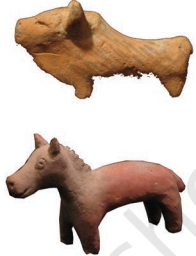
Terracotta Toys - Small terracotta toys excavated from sites of the Indus Valley Civilization, offering a tangible insight into the daily life and common children's playthings of the time, highlighting the simplicity of domestic art.
Pioneering Bronze Casting and the Famous ‘Dancing Girl’ of Mohenjodaro
The Harappan Civilization was among the earliest in the world to master the lost-wax technique (Cire Perdue) of bronze casting, enabling the creation of complex metal sculptures, the most famous example being the 'Dancing Girl'.
- (a) Bronze Technique: The use of the lost-wax process allowed for greater detail and fluidity in their metal work, a testament to their sophisticated metallurgical knowledge.
- (b) The Dancing Girl: This small yet iconic sculpture, discovered at Mohenjodaro, powerfully captures a young female figure in a dynamic pose, showcasing a strong sense of anatomical realism and confident posture, reflecting advanced aesthetic values.
- (c) Other Bronze Works: The technique was also applied to casting figures of animals, such as the Buffalo with a lifted head, demonstrating a range of subjects and a consistent quality in their metal art.
Realism in Harappan Art and its Deep Cultural Significance
A striking and defining feature of the entire Indus artistic tradition is its consistent commitment to naturalistic realism, a characteristic that uniquely sets it apart from many contemporary cultures and strongly solidifies its place in the timeline of ancient Indian heritage.
- (i) The excavated art consistently reflects a realistic and proportionate representation of both human and animal anatomy, clearly showcasing the artists' profound understanding of natural forms and physical structures.
- (ii) This unique and highly detailed artistic style lends the art immense cultural and historical significance, making the artefacts a critical, non-textual source for fully understanding the organization, beliefs, and daily routine of the Harappan Society.
⚡ Quick Revision Capsule: Indus Valley Art Forms & Artifacts
A consolidated overview of primary Harappan art forms, materials, and key excavated examples:
| Art Form | Primary Material / Technique | Key Examples & Significance |
|---|---|---|
| Seals | Steatite (soft stone) carving | Unicorn, Bull, and Pasupati seals with undeciphered script used for trade. |
| Bronze Sculpture | Lost-wax technique (Cire Perdue) | 'Dancing Girl' from Mohenjodaro and Buffalo with a lifted head. |
| Terracotta | Fired clay modeling | Mother Goddess figures, animal forms, and domestic children's toys. |
| Pottery | Potter's wheel with painted black designs | Utility jars and pots adorned with geometric and animal motifs. |
| Jewellery | Carnelian, agate, lapis lazuli, gold, silver | Precision-beaded necklaces, armlets, and pendants highlighting metallurgy. |
Summary: Enduring Importance of Indus Valley Civilisation Art and Architecture for Modern Students
The Art and Architecture of the Indus Valley Civilisation stand as enduring testaments to the highly advanced nature of this ancient society. These achievements highlight not only their sophisticated urban planning and engineering ingenuity but also their deep engagement with artistic expression through materials like steatite, bronze, and terracotta. The realism, intricate detail, and variety in their seals, sculptures, and pottery provide invaluable historical evidence, making the study of this cultural legacy from the absolutely essential for students preparing for exams on ancient Indian history and heritage.
📝 Summary
The Indus Valley Civilisation () established landmark achievements in urban planning and artistic craftsmanship across major urban centers like Harappa and Mohenjodaro. Their mastery encompassed steatite seals, wheel-turned pottery, terracotta figurines, lost-wax bronze casting, and fine bead-making.
🚀 Quick Revision Points
Essential facts to review before examinations:
- (i) Steatite seals feature realistic animal engravings and pictographic scripts used in administration.
- (ii) The iconic 'Dancing Girl' from Mohenjodaro was made using the lost-wax bronze casting method.
- (iii) Terracotta figurines include the Mother Goddess and toy models reflecting daily domestic life.
- (iv) Urban hubs relied on planned grid layouts, standardized bricks, and advanced municipal drainage.
- 💡 Exam Tip: Remember that Harappan art is characterized by functional realism rather than monumental structures, making small artifacts like seals, beads, and bronze statues the main primary sources.
❓ Frequently Asked Questions (FAQ)
Q1: What method was used to craft bronze statues in the Indus Valley Civilisation?
A1: The Harappan craftspeople mastered the lost-wax technique (Cire Perdue), which allowed for intricate metal shaping and fluid postures.Q2: What materials were commonly used for Harappan personal jewellery?
A2: Ornaments were created using precious stones such as carnelian, agate, and lapis lazuli, alongside metals like gold, silver, and copper.Q3: Why are steatite seals important for historical study?
A3: They offer non-textual evidence of trade networks, animal life, artistic skill, and administrative practices during the .