The Bikaner School of Painting represents a captivating fusion of indigenous Rajasthani aesthetics and Mughal courtly elegance, flourishing prominently after its foundation by Rao Bika Rathore in . This distinctive style, marked by a sophisticated subdued color palette and detailed compositions, is essential for students preparing for art and culture examinations, offering deep insights into Rajput miniature art development and historical studio practices in India.
🎯 In this chapter, you will understand:
- The origin and history of the Bikaner School of Painting.
- Major patrons like Maharaja Anup Singh and early Mughal influences.
- Famous artists including Ruknuddin, Ibrahim, Nathu, Sahibdin, and Isa.
- Unique studio setups (Mandis) and detailed record-keeping practices.
💡 Why this topic matters: It highlights how local Rajasthani art successfully combined with Mughal styles, creating a unique tradition with well-kept historical records.
🧠 Core Idea: Bikaner paintings stand out due to their quiet colors, refined lines, Mughal influence, and precise notes detailing artist names, dates, and locations.
The Bikaner School of Painting: Historical Development, Key Artists, and Unique Studio Features ()
The Bikaner School emerged as a major regional tradition in Rajasthan, uniquely characterized by its absorption and interpretation of sophisticated external influences.
Founded when Rao Bika Rathore established the state in , the painting tradition truly blossomed later, distinguishing itself among the Rajput schools through a blend of local vitality and Mughal refinement.
- (i) The foundation of the state provided the context for the eventual patronage of a rich artistic tradition that would blend regional artistic sensibilities with imperial Mughal styles.
- (ii) Distinctive features of this style include a pronounced Mughal elegance in composition and figure treatment, which contributed to its refined appearance.
- (iii) The school became known for its subdued color palette, providing a contrast to the often vibrant colors seen in other Rajasthani schools, alongside an amalgamation of indigenous and Mughal artistic idioms.
Patronage and Historical Development of Bikaner Miniature Painting
The flourishing of the Bikaner School was heavily dependent on the courtly support and strategic recruitment of artists, leading to a golden age of artistic production under powerful rulers.
Maharaja Anup Singh's Contribution to Art and Manuscripts
The reign of Maharaja Anup Singh () is considered pivotal in the history of the school, as he actively fostered literary and artistic endeavors, establishing a major repository of learning.
- (i) Anup Singh was instrumental in establishing a royal library in Bikaner, which subsequently played a crucial role in promoting the tradition of manuscript illustration and miniature painting.
- (ii) His patronage extended to commissioning numerous artworks, thereby encouraging the production of illustrated manuscripts and fostering a stable environment for artists.
Early Influence of Mughal Artists in Bikaner Court
The foundation of the Bikaner style's sophistication can be traced to the arrival of skilled artists trained in the Mughal imperial tradition, who brought refined techniques and courtly aesthetics to the local studios.
- (a) Notable Mughal artists, such as Ustad Ali Raza, began working in Bikaner from approximately , marking a critical phase in the school's early development and style formation.
- (b) This direct input from Mughal masters led to the quick adoption of subtle portraiture techniques and elegant compositional norms, differentiating Bikaner from contemporary Rajput schools.
Key Master Artists and Their Contributions to the Bikaner School
The school's legacy is defined by a lineage of highly skilled master artists who successfully synthesized disparate stylistic elements into a cohesive and recognizable Bikaner idiom.
Ruknuddin: The Master Artist of Synthesis
Ruknuddin, one of the most prominent artists during Anup Singh's reign, is celebrated for his profound skill in blending diverse artistic traditions, setting a high standard for the Bikaner style.
- (i) He masterfully blended Deccani and Mughal stylistic elements with the emerging local Bikaner traditions, creating a harmonious and aesthetically rich visual language.
- (ii) His significant body of work includes major literary and devotional texts that were meticulously illustrated.
- (iii) Notable works attributed to Ruknuddin include:
- (a) The Ramayana illustrations, showcasing narrative mastery.
- (b) Illustrations for Rasikapriya, known for their expressive depiction of Krishna-Bhakti themes.
- (c) The Durga Satpsati, a devotional text richly illustrated under his direction.
Other Prominent Artists Shaping the Bikaner Tradition
The school’s success was built on the collective talent of several notable painters who worked under the patronage of the Bikaner court, each contributing unique elements to the overall style.
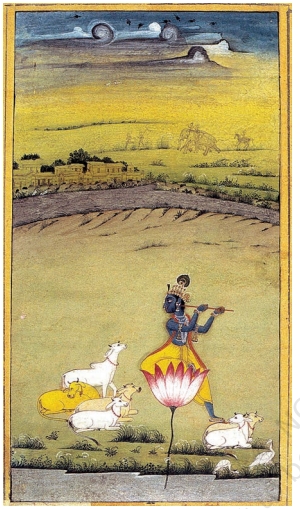
Krishna Playing Flute and Surrounded by Cows - A mesmerizing depiction from the Bikaner School of Painting, showing Lord Krishna playing his flute, surrounded by cows, symbolizing connection to nature and divine joy. Highlights the school's proficiency in narrative and devotional art. - Ibrahim: Known for his unique vision, often characterized by a misty, dreamlike quality and figures that were dainty yet heavily modeled.
- Nathu, Sahibdin, and Isa: These artists were also influential, ensuring the continuity and diversification of the Bikaner style across different themes and subjects.
Unique Studio Practices and Rich Documentation in Bikaner
The organized functioning of the Bikaner art workshops, combined with an unparalleled level of record-keeping, provides invaluable insights into the production of Rajput miniature art.
The 'Mandis' and Organization of Art Production
The royal art studios in Bikaner, known locally as Mandis, were structured institutions overseen by the most skilled master painters, ensuring a regulated and high-quality output.
- (i) These studios were expertly managed by master artists, including Ruknuddin, Ibrahim, and Nathu, who supervised the entire process of miniature creation.
- (ii) Key activities meticulously conducted within these Mandis encompassed the creation of new miniature paintings, catering to various courtly and devotional commissions.
- (iii) The preservation of older works was also a core function, involving careful repair (marammat) and precise copying (nakals) of established masterpieces.
- (iv) The final, crucial stage of refinement by the master artists was termed gudarayi or lifting, where essential finishing touches were applied to perfect the artwork.
Artist Portraits and Exquisite Archival Documentation
The Bikaner School is globally recognized for its unique tradition of artist documentation, which has proven vital for art historians in attributing and dating the paintings with accuracy.
- (a) The inclusion of portraits of the artists themselves, referred to as Ustas or Ustad, is a remarkable feature, often inscribed with details of their ancestry and lineage.
- (b) An even more significant feature is the exquisite documentation found in inscriptions written in both Marwari and Persian languages.
- (c) These comprehensive inscriptions provided essential details, including the names of the artists, the precise dates and locations of production, and the specific occasions for which the artworks were commissioned.
Significance and Lasting Legacy of the Bikaner Miniature School
The Bikaner School holds a distinguished place in the study of Indian art history due to its unique stylistic synthesis and the extraordinary richness of its preserved records, offering a comprehensive view of artistic life.
Archival Richness and Distinctive Blended Style
The enduring significance of the Bikaner School stems from its innovative blend of artistic influences and its meticulous archival practices, which are rarely matched in other regional art traditions.
- (i) The school stands out for its archival richness, with its extensive, documented records of artists and commissions providing a vital resource for scholars.
- (ii) Its distinctive style, successfully blending Mughal elegance with local tradition, ensures its recognition as a major and unique contributor to the development of Rajput miniature painting.
Key Art Examples and Thematic Scope in Bikaner Paintings
The thematic range of Bikaner paintings showcases the technical mastery and devotional interests patronized by the Bikaner court, often focusing on Hindu mythology and poetic themes.
- (a) Classic examples of its art include illustrations for Baramasa (depicting the twelve months), Ragamala (visualizing musical modes), and the deeply emotional Rasikapriya paintings.
- (b) These examples collectively showcase the exceptional mastery and sophistication achieved by the artists operating within the Bikaner studios (Mandis).
⚡ Quick Revision Capsule: Bikaner School of Painting
Essential overview of key figures, studio methods, and famous literary works in Bikaner miniature painting.
| Key Aspect | Details & Terminology | Historical Significance |
|---|---|---|
| Founder & Origin | Established by Rao Bika Rathore in | Laid the groundwork for regional art patronage in Rajasthan. |
| Key Patrons | Maharaja Anup Singh () | Founded the royal library and commissioned major illustrated manuscripts. |
| Master Artists | Ustad Ali Raza, Ruknuddin, Ibrahim, Nathu, Sahibdin, Isa | Blended Mughal precision, Deccani styles, and local Rajasthani charm. |
| Studio Terms | Mandis (studios), marammat (repair), nakals (copies), gudarayi (finishing touch) | Demonstrates structured art production and restoration methods. |
| Famous Works | Ramayana, Rasikapriya, Durga Satpsati, Baramasa, Ragamala | Highlights rich narrative storytelling and Hindu devotional themes. |
📝 Summary
The Bikaner School of Painting is crucial for students of Indian art, as it exemplifies a unique historical development where Mughal courtly refinement seamlessly merged with Rajput artistic traditions. Key figures like Ruknuddin and the well-documented Mandis and Ustas provide unparalleled insight into historical studio practices and artistic patronage during the . The school's archival richness, distinctive style, and famous works like Rasikapriya make it a high-yield topic for all major competitive and academic examinations focusing on Indian Art and Culture.
🚀 Quick Revision Points
Essential facts to review before examinations:
- (i) Founded after by Rao Bika Rathore, combining soft colors and refined lines.
- (ii) Maharaja Anup Singh boosted art production and built a famous royal library.
- (iii) Mandis managed painting work including touch-ups called gudarayi.
- (iv) Written notes on paintings in Marwari and Persian recorded artist names, lineage, and exact dates.
- 💡 Exam Tip: Pay special attention to studio terminology like Mandis, marammat, nakals, and gudarayi, as well as artist attribution methods (Ustas notes), as these frequently appear in competitive examinations.
❓ Frequently Asked Questions (FAQ)
Q1: What makes the Bikaner School different from other Rajasthani schools?
A1: It features a softer, subdued color palette and stronger Mughal elegance due to early Mughal artists working directly in the court.Q2: What were 'Mandis' in Bikaner painting culture?
A2: Mandis were organized royal art studios led by master painters that created new art, made copies (nakals), and performed repairs (marammat).Q3: Why are Bikaner paintings so valuable for art historians?
A3: They carry detailed inscriptions in Marwari and Persian giving artist names, lineage (Ustas), dates, and exact occasions, making attribution easy.