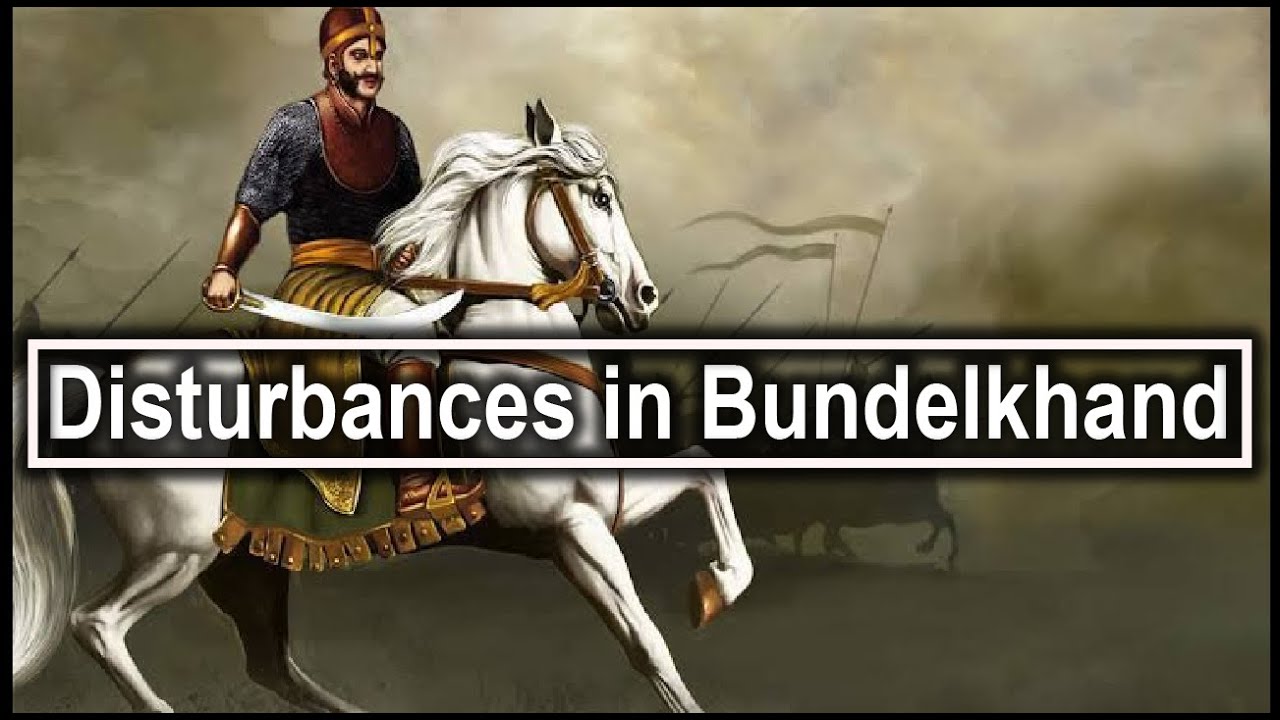
The Bundelkhand disturbances () represent a significant chapter in the history of early colonial resistance in India, following right after the Second Anglo-Maratha War. This period saw determined resistance from Bundela chieftains and key military leaders, such as Lakshaman Dawa, Darya Singh, and Gopal Singh. Their actions directly challenged the Company's efforts to establish firm control over newly acquired regions. These continuous uprisings forced the colonial government to change its approach and introduce new administrative methods like Ikarnamahs—written contracts created to secure the loyalty of local leaders—making this topic essential for history and administrative exams.
🎯 In this chapter, you will understand:
- How the annexation of Bundelkhand caused early anti-colonial uprisings.
- The key roles played by Lakshaman Dawa, Darya Singh, and Gopal Singh.
- The military and strategic importance of Ajaygarh and Kalanjar forts.
- How the British used Ikarnamahs to stabilize and control the region.
💡 Why this topic matters: It highlights how local Indian rulers resisted British rule right after the Maratha powers declined, showing the transition from armed conflict to formal administrative contracts.
🧠 Core Idea: Continuous military opposition from local fortress leaders forced the British to combine military action with political agreements (Ikarnamahs) to control Central India.
Disturbances in Bundelkhand (1808–1812): Persistent Resistance and Challenges to British Consolidation
The takeover of the Bundelkhand region by British forces resulted from the Second Anglo-Maratha War (), which immediately sparked strong resistance from local Bundela chiefs. The shift in authority from Maratha influence to East India Company control was far from peaceful, as traditional leaders viewed the new rulers as a direct threat to their independence.
- (i) Following military conflict, the territory was attached to the administrative control of the Presidency of Bengal, yet local rulers firmly resisted the new administration.
- (ii) This resistance was well-organized, supported by nearly 150 forts managed by local rulers that served as defensive centers against British forces, making military suppression difficult and costly.
- (iii) An early prominent leader was Lakshaman Dawa, the killadar (fort commander) of Ajaygarh fort. He originally accepted a temporary working agreement but refused to hand over the fort when the agreed timeframe expired, demonstrating clear defiance against the new regime.
Major Resisting Figures and Their Profile in the Bundelkhand Uprising (1808–1812)
The Bundelkhand uprisings were led by courageous local leaders and military commanders. Their initial success in resisting East India Company forces exposed early weaknesses in British territorial expansion across Central India.

Resistance Led by Lakshaman Dawa, the Killadar of Ajaygarh
Lakshaman Dawa was among the first prominent leaders to openly oppose British rule. His refusal to hand over the strategic Ajaygarh fort signaled widespread regional opposition.
- (i) Despite early negotiations, Lakshaman Dawa held his ground and refused to yield Ajaygarh fort even after his temporary agreement with the authorities ended.
- (ii) After a prolonged standoff, British forces overcame the defense in . Dawa surrendered and was sent as a state prisoner to Calcutta.
The Significant Revolt Led by Darya Singh of Kalanjar Fort
The uprising continued under Darya Singh, the determined commander of the strategic Kalanjar fort, who launched a major new phase of resistance that further delayed British control.
- (a) Holding the strong defenses of Kalanjar fort, Darya Singh posed a severe threat to Company troops, showing that local leaders still held significant military strength.
- (b) British military forces eventually suppressed his revolt in , ending major organized resistance from key fort commanders in the region.
The Elusive Defiance by Gopal Singh, the Military Adventurer
Another major figure was Gopal Singh, a skilled military leader who fought both against British expansion and against his own uncle, who had aligned himself with the British authorities.
- (i) Gopal Singh carried out guerrilla warfare tactics, frustrating British efforts to secure the countryside.
- (ii) Using mobile operations and local knowledge, he avoided capture for nearly four years, becoming one of the most persistent threats among the Bundela rebels.
British Administrative Strategy: Introduction of Ikarnamahs
Continued disturbances showed the British administration that military force alone could not bring lasting peace. This realized need led to a shift toward political agreements to stabilize the area.
- (i) Administrative Strategy: To establish order, the British introduced Ikarnamahs—written contractual agreements signed with local hereditary chieftains.
- (ii) Purpose: These contracts bound local chiefs to respect British sovereignty while granting them controlled local authority over their lands, effectively turning former opponents into contractual allies.
⚡ Quick Revision Capsule: Key Figures and Events (1808–1812)
A structured breakdown of main leaders, locations, and political outcomes during the early resistance in Bundelkhand:
| Leader / Concept | Key Center / Role | Outcome & Historical Impact |
|---|---|---|
| Lakshaman Dawa | Killadar of Ajaygarh Fort | Refused to yield fort after temporary agreement expired; surrendered in and sent to Calcutta. |
| Darya Singh | Commander of Kalanjar Fort | Led strong resistance against British troops until suppressed in . |
| Gopal Singh | Guerrilla leader & military adventurer | Evaded British capture for nearly four years using mobile tactics; opposed his pro-British uncle. |
| Bundela Forts | ~150 regional strongholds | Served as defense bases for local chiefs, making colonial military conquest lengthy and expensive. |
| Ikarnamahs | Administrative policy contracts | Bound traditional rulers to British authority while allowing limited autonomy, stabilizing the region. |
📝 Summary
The Bundelkhand uprisings () were a clear example of local opposition to early British colonial expansion in Central India. Prominent leaders such as Lakshaman Dawa, Darya Singh, and Gopal Singh represented regional defiance that delayed full East India Company control. Though British forces eventually suppressed these armed revolts, the struggle forced the colonial administration to adopt political agreements called Ikarnamahs. By granting controlled rights to traditional rulers in exchange for loyalty, the British established a framework for governance that remains an important subject for civil service and history exams.
🚀 Quick Revision Points
Essential facts to review before examinations:
- (i) The annexation of Bundelkhand occurred after the Second Anglo-Maratha War ().
- (ii) Approximately 150 local forts provided strong defensive bases for resisting Bundela leaders.
- (iii) Lakshaman Dawa defended Ajaygarh fort until surrendering in .
- (iv) Darya Singh held Kalanjar fort until , while Gopal Singh conducted guerrilla warfare for nearly four years.
- (v) The political solution introduced by the British was the system of Ikarnamahs (contractual loyalty deeds).
- 💡 Exam Tip: Focus on the transition from pure military action to administrative settlement via Ikarnamahs. Questions often ask how local resistance shaped early British administrative policy in Central India.
❓ Frequently Asked Questions (FAQ)
Q1: What caused the Bundelkhand disturbances between 1808 and 1812?
A1: The primary cause was the annexation of Bundelkhand by the British after the Second Anglo-Maratha War, which local rulers saw as a threat to their traditional power and rights.Q2: Who were the main leaders of the Bundelkhand resistance?
A2: The primary figures were Lakshaman Dawa (killadar of Ajaygarh), Darya Singh (leader at Kalanjar), and Gopal Singh (a guerrilla leader who evaded capture for years).Q3: What were Ikarnamahs and why were they introduced?
A3: Ikarnamahs were formal agreements between the British government and local chieftains. They were created to end continuous warfare by offering rulers limited local control in exchange for recognizing British supremacy.