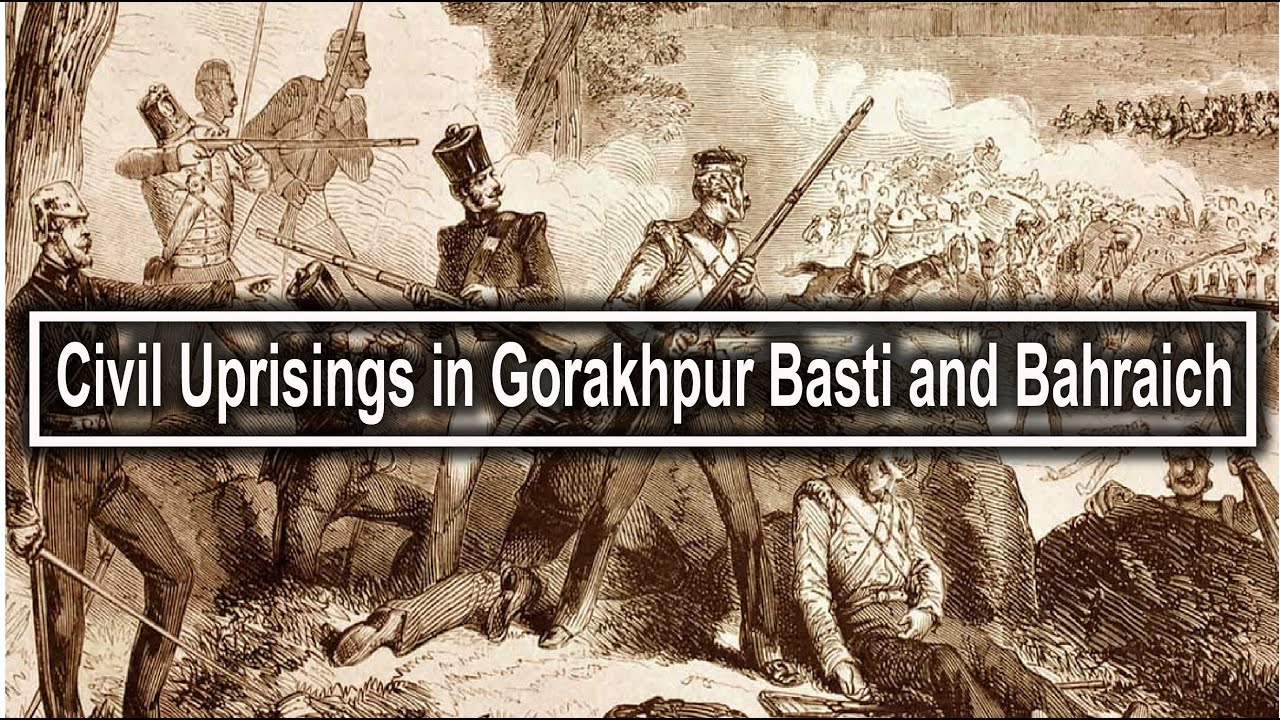
The Civil Uprisings in Gorakhpur, Basti, and Bahraich in represent a key turning point in the history of Awadh. They were a direct reaction against harsh revenue farming policies enforced under growing British influence. Led by local zamindars and local peasants, this uprising exposed the oppressive methods of Major Alexander Hannay, who acted as an izaradar (revenue farmer). This event showed the clear conflict between traditional local farming setups and early colonial economic experiments, making it an essential topic for students studying history and preparing for competitive exams.
🎯 In this chapter, you will understand:
- The economic pressures on the British East India Company that led to harsh tax policies in Awadh.
- How Major Alexander Hannay operated as an izaradar and created widespread financial distress.
- The guerrilla warfare tactics used by local zamindars and villagers during the revolt.
- The administrative outcome of the revolt, including Hannay's dismissal and changes to revenue collection.
💡 Why this topic matters: It marks one of the earliest organized armed resistance movements by Indian landholders and farmers against early East India Company tax exploitation.
🧠 Core Idea: Pushing agrarian communities past their financial limit through aggressive tax collection triggers unified local resistance that can overturn colonial arrangements.
📌 Major Alexander Hannay’s Revenue Farming and the Civil Uprisings in Gorakhpur, Basti, and Bahraich (1781): A Study of Causes and Consequences
The uprisings of grew directly out of damaging economic measures introduced by the British East India Company in the region of Awadh.
The main setting of the rebellion was the constant pressure on the Company, led by Governor-General Warren Hastings, to raise cash for costly wars across India. This created extreme tax demands on local communities.
- (i) The main goal was to increase money flow to support expensive military actions, especially against the Marathas and the Kingdom of Mysore.
- (ii) To collect this money quickly, Warren Hastings set up a new system using English officers as direct izaradars (revenue farmers), stepping around traditional collection paths.
- (iii) This change disturbed the local social and economic balance by handing vast tax collection powers to outside figures.
📌 Warren Hastings’ Experimental Revenue System and Major Hannay’s Appointment (1778)
To test how much tax could be extracted from Awadh, the Company launched a heavy revenue experiment in , with Major Alexander Hannay leading the effort in the northern districts.

Major Hannay’s Appointment and the Scope of Revenue Extraction
Selecting Major Alexander Hannay in was a strategic decision by the Company because of his local experience, though his collection methods quickly caused hardship.
- (i) Using his knowledge of the region and local administration, Major Alexander Hannay was officially named an izaradar responsible for gathering large sums of tax money.
- (ii) Hannay obtained the izara contracts for Gorakhpur and Bahraich, promising to pay an enormous annual sum of 22 lakh rupees to the Company.
- (iii) This contract acted as a hidden test by Company officials to see how much money could be drawn from the local land and workers.
The Escalation of Oppressive Demands and Resulting Socio-Economic Panic
The high payment targets forced Hannay to demand excessive revenue collections, driving a stable region into financial trouble and anxiety.
- (a) Hannay’s effort to hit his target led to tax demands that went far beyond what the farmland and cultivators could realistically produce.
- (b) This heavy financial load broke down the farming economy, which had earlier been fairly stable under the ruler (Nawab) of Awadh.
- (c) Growing debt and poverty among both landholders (zamindars) and farmworkers (peasants) set the stage for open rebellion against Company orders.
📌 The Outbreak and Consequence of the Civil Uprising (1781)
Anger over unbearable tax demands reached a boiling point in , breaking out into a sudden armed revolt that challenged British authority in northern Awadh.
The Fierce Reaction: Zamindari Guerrilla Warfare Against Hannay's Subordinates
Local leaders and communities stood together, shutting down the Company's collection system within weeks.
- (i) In , zamindars and peasants joined in an open revolt, refusing to pay the inflated tax demands.
- (ii) Local zamindari guerrilla forces moved quickly across districts, killing or trapping almost all of Major Hannay’s field officers and collectors.
- (iii) This swift movement proved how deep the community's anger was against European tax collectors and their agents.
Immediate Consequences: Hannay's Dismissal and Policy Reconsideration
Although British forces eventually put down the uprising, the event exposed major flaws in the Company’s revenue farming policy.
- (a) The strength of the rebellion forced the Company to accept that the experiment failed, leading directly to the removal of Major Hannay from his post.
- (b) His collection contracts (izaras) were canceled, stopping the most aggressive forms of tax extraction for a time.
- (c) The entire tax collection framework was reviewed, reducing the direct involvement of European revenue collectors in Awadh.
⚡ Quick Revision Capsule: Civil Uprisings in Gorakhpur, Basti, and Bahraich (1781)
Key details of the events, key figures, and historical results for quick review:
| Aspect | Details & Key Terms | Historical Impact |
|---|---|---|
| Timeframe & Location | in Gorakhpur, Basti, and Bahraich (Awadh) | Showed early regional resistance against British tax policies in northern India. |
| Key Key Figures | Warren Hastings (Governor-General) and Major Alexander Hannay (izaradar) | Exposed the heavy financial targets placed on local populations by European collectors. |
| Revenue System | Izara system (revenue farming) with a target of 22 lakh rupees | Disrupted traditional farming life and pushed landholders into debt. |
| Resistance Style | Guerrilla action led by local zamindars and peasants | Targeted Hannay's field staff and froze tax collection. |
| Major Outcome | Dismissal of Major Hannay and revocation of his izaras | Forced the East India Company to scale back using European revenue farmers in Awadh. |
📌 Significance of the Gorakhpur, Basti, and Bahraich Uprisings for Colonial Resistance and Students
The Civil Uprisings of 1781 remain significant as early examples of organized resistance by zamindars and peasants against British tax policies. The events in Gorakhpur, Basti, and Bahraich highlighted the problems with early colonial tax plans in Awadh and pointed toward larger revolts in later years. Understanding this clash between traditional farming systems and early British rule helps students build a strong foundation in modern Indian history.
📝 Summary
In , high tax demands driven by Warren Hastings and executed by Major Alexander Hannay caused widespread anger in Awadh. The local zamindars and peasants formed a unified front using guerrilla methods to stop revenue operations. The movement succeeded in forcing the Company to remove Hannay and rethink its reliance on European tax contractors in the region.
🚀 Quick Revision Points
Essential facts to review before examinations:
- (i) The revolt was triggered by high tax targets under the izara system in .
- (ii) Major Alexander Hannay promised 22 lakh rupees annually, overstretching the local farming economy.
- (iii) Local zamindars and peasants teamed up using guerrilla warfare against collection agents.
- (iv) The primary outcome was Hannay's removal and a pause in aggressive European tax collection in Awadh.
- 💡 Exam Tip: Focus on how the economic demands of the Anglo-Maratha and Anglo-Mysore wars indirectly triggered civil revolts in Awadh through revenue farming.
❓ Frequently Asked Questions (FAQ)
Q1: Why did Warren Hastings introduce European izaradars in Awadh?
A1: Hastings needed to collect money quickly to fund military actions against the Marathas and Mysore, leading him to place English officers directly in charge of revenue collection.Q2: What was Major Alexander Hannay's role in the 1781 events?
A2: Hannay acted as an izaradar (revenue farmer) for Gorakhpur and Bahraich, enforcing extreme tax demands that triggered the armed civil uprising.Q3: What were the main consequences of the uprising?
A3: The revolt forced the East India Company to dismiss Hannay, cancel his revenue contracts, and re-evaluate its revenue collection strategies in Awadh.