The Third Anglo-Maratha War () represents a pivotal moment in South Asian history, definitively marking the end of the once formidable Maratha power and solidifying the firm establishment of British paramountcy in India. This conclusive conflict, which began amidst tensions concerning the mercenary group known as the Pindaris and the controversial Treaty of Bassein, saw the last coordinated efforts of Bajirao II and other Maratha chiefs to challenge the growing influence of the British East India Company, ultimately resulting in their crushing defeat. This critical historical period is highly important for students preparing for UPSC, State PSC, and history exams, offering profound insights into the political collapse of the great Maratha Confederacy and the irreversible ascendancy of British control over the subcontinent.
🎯 In this chapter, you will understand:
- The primary causes and background factors leading to the Third Anglo-Maratha War ().
- The military campaigns, key battles, and internal disunity within the Maratha Confederacy.
- The series of peace treaties signed with individual Maratha chiefs and their terms.
- The final political dissolution of the office of Peshwa and the rise of British paramountcy.
💡 Why this topic matters: It explains the decisive transition of power in India from indigenous Maratha rule to total British political and military supremacy.
🧠 Core Idea: Strategic division, internal weaknesses, and British military superiority led to the final collapse of the Maratha states.
📌 The Third Anglo-Maratha War: Background, Decisive Course, and Result ()
The background of the Third Anglo-Maratha War was steeped in escalating British expansionism and the fractured, yet determined, resistance of the Maratha states. The events leading up to the final confrontation involved a calculated British effort to eliminate any remaining challenge to their authority, capitalizing on existing Maratha weaknesses.
Key background causes and developments:
- (i) The aggressive imperialist policies pursued by Governor-General Lord Hastings aimed explicitly at imposing uncontested British paramountcy across India, coinciding with commercial shifts following the Charter Act of 1813, which compelled the Company to actively seek new inland territories and markets after losing its trade monopoly.
- (ii) The issue of the Pindaris, who were essentially unemployed irregular Maratha mercenaries, provided the immediate pretext for war, as their widespread raids into Company lands led the British to accuse the Marathas of harboring and supporting them.
- (iii) The British campaign successfully dismantled the core leadership of the Pindaris, forcing key leaders like Amir Khan and Karim Khan to surrender, while the notable Pindari chief, Chitu Khan, fled into the dense jungles, effectively neutralizing this threat.
- (iv) The lingering resentment caused by the humiliating Treaty of Bassein (), signed by the Peshwa after the Second Anglo-Maratha War, continued to anger other powerful Maratha chiefs who viewed the subsidiary alliance as a catastrophic surrender of their independence.
- (v) Lord Hastings’ sustained military campaigns aimed at eliminating the Pindaris were perceived by the Maratha aristocracy as a direct threat to their remaining internal sovereignty, pushing the disparate Maratha chiefs toward a final attempt to resist.
- (vi) This rising tide of resentment culminated when Bajirao II, the Peshwa, made a final attempt in to unite the various Maratha chiefs into open resistance against the growing power of the British.
📌 Course of the Third Anglo-Maratha War: Battles and Maratha Disunity ()
The war commenced with several brave, yet uncoordinated, Maratha offensives that tragically exposed deep-seated disunity and a critical lack of administrative strength required to defeat the organized British forces.

The Initial Maratha Offensives and Confrontations
Driven by a final surge of desperation, major Maratha leaders initiated attacks on British strongholds, hoping to overturn the subsidiary alliances and reassert their autonomy.
- (i) The Peshwa, Bajirao II, made the initial aggressive move by attacking the British Residency located at Poona, signaling the formal beginning of hostilities and challenging the terms of the subsidiary alliance system.
- (ii) Following suit, Appa Sahib of Nagpur, the ruler of the Bhonsle dominion, mounted an assault on the British residency situated at Nagpur, demonstrating a shared but fragmented desire among the chiefs to throw off British control.
- (iii) Concurrently, the Holkars of Indore prepared their forces for war, but the overall Maratha effort was fatally undermined by a lack of unified command, poor coordination, and weakening administrative capacity.
The Deep Internal Weakness of the Maratha Confederacy
Beyond the lack of military coordination, fundamental internal weaknesses severely eroded the Maratha capacity to wage a successful war against a modernized power like the East India Company.
- (a) The critical situation within the Holkar state arose following the death of Jaswantrao Holkar, after which his successor, Tulsi Bai, proved ineffective due to the influence of corrupt advisors surrounding her.
- (b) Simultaneously, the regional powers of the Bhonsles at Nagpur and the Sindhias at Gwalior experienced political instability, rendering them unable to contribute decisively to the collective war effort.
- (c) These internal divisions provided the British with a clear strategic advantage, enabling them to prevent the Peshwa from regaining effective control or military authority over the Maratha confederacy.
📌 The Decisive Result: Collapse of Maratha Sovereignty ()
The military campaign resulted in swift British victories, leading to the ultimate collapse of the Maratha Confederacy and the final end of their independent sovereignty.
Major Military Defeats and Crushing British Victories
Key battles quickly sealed the fate of the Maratha states, as British forces demonstrated superior military discipline and strategy.
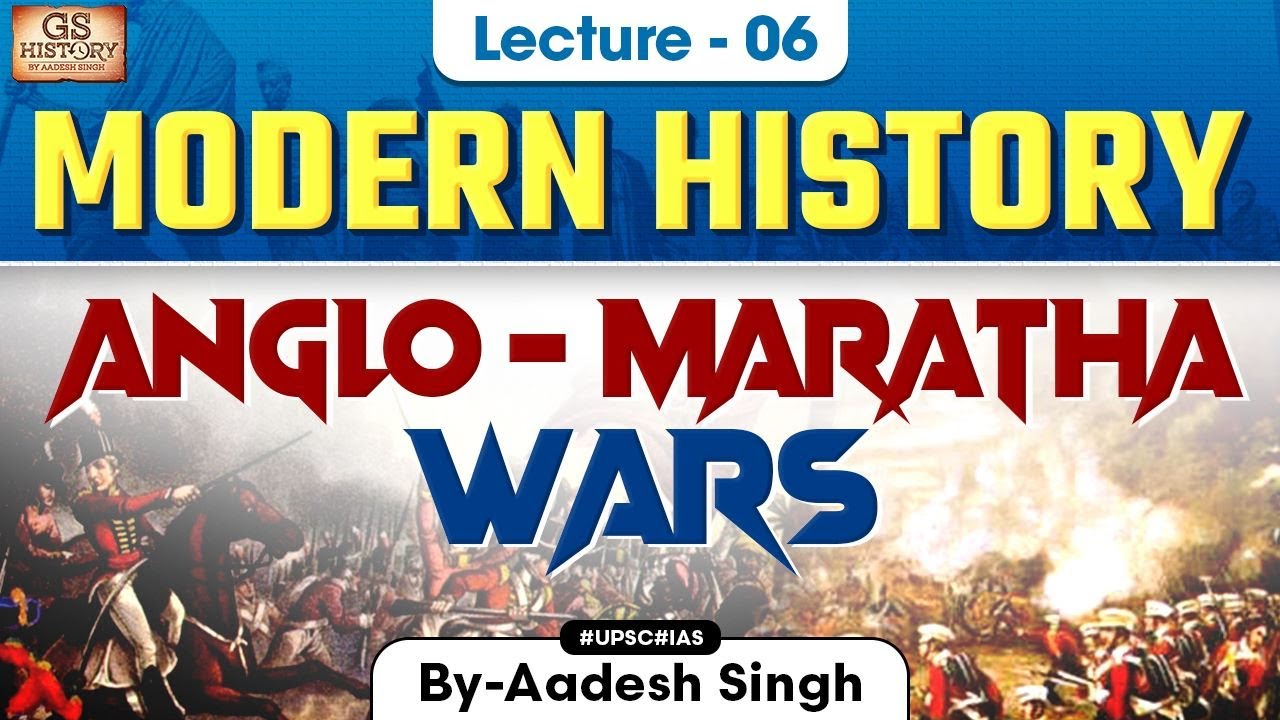
British forces engaging Maratha troops during the final stages of the campaign. - (i) The military forces of the Peshwa were decisively defeated at the Battle of Khirki, forcing his retreat and diminishing his authority.
- (ii) The army of the Bhonsle, led by Appa Sahib, was crushed by British forces during the Battle of Sitabuldi, leading to the subjugation of the Nagpur state.
- (iii) The forces of the Holkar state suffered a crippling loss at the Battle of Mahidpur, bringing another independent Maratha power under British control.
Subjugation Enforced through Important Treaties Signed
The final surrender and settlement were formalized through a series of treaties that permanently dismantled the Maratha political structure:
- (i) In , the Treaty of Poona was signed with the Peshwa, severely curtailing his power even before the main military defeats.
- (ii) In , the Treaty of Gwalior was imposed upon Sindhia, forcing him to assist the British against the Pindaris and reducing his military autonomy.
- (iii) In , the Treaty of Mandasor was concluded with Holkar, confirming his defeat and placing his state under British control.
The Final Political Outcome: Dissolution of the Peshwaship
The ultimate consequence of the war was the complete political reorganization of the Deccan, eliminating the central Maratha leadership forever.
- (a) In , having exhausted his forces, the Peshwa, Bajirao II, surrendered to the British forces.
- (b) Following this surrender, the Maratha Confederacy was permanently dissolved, and the historic political office of the Peshwaship was abolished entirely.
- (c) Bajirao II was exiled and resettled at Bithur near Kanpur as a British pensioner, stripped of political and military power.
- (d) As a symbolic gesture, Pratap Singh, a direct descendant of Shivaji, was installed as the limited ruler of the small kingdom of Satara.
⚡ Quick Revision Capsule: Third Anglo-Maratha War ()
A quick summary of key battles, signatories, and treaty outcomes during the conflict:
| Maratha Faction | Key Battle / Event | Treaty & Outcome |
|---|---|---|
| Peshwa (Bajirao II) | Battle of Khirki () | Treaty of Poona (); surrendered in , office abolished, exiled to Bithur. |
| Bhonsle (Appa Sahib) | Battle of Sitabuldi () | State subjugated under British control; subsidiary treaty terms imposed. |
| Holkar (Indore) | Battle of Mahidpur () | Treaty of Mandasor (); accepted subsidiary alliance system. |
| Sindhia (Gwalior) | Compelled neutrality | Treaty of Gwalior (); forced to assist British against Pindaris. |
| Satara Kingdom | Restoration of Shivaji's lineage | Pratap Singh installed as ruler of small, dependent Satara state. |
📝 Summary
The Third Anglo-Maratha War () was the final and decisive conflict between the British East India Company and the Maratha Empire. Triggered by British campaigns against the Pindaris and long-standing resentment over the Treaty of Bassein, the war resulted in total victory for the British. Key battles at Khirki, Sitabuldi, and Mahidpur broke Maratha resistance. Through treaties like Poona, Gwalior, and Mandasor, the British dissolved the Maratha Confederacy, abolished the office of Peshwa, and established supreme dominance across India.
🚀 Quick Revision Points
Essential facts to review before examinations:
- (i) Immediate Cause: British military campaign against the Pindaris under Governor-General Lord Hastings.
- (ii) Key Battles: Battle of Khirki (Peshwa), Battle of Sitabuldi (Bhonsle), and Battle of Mahidpur (Holkar).
- (iii) Major Treaties: Treaty of Poona (), Treaty of Gwalior (), and Treaty of Mandasor ().
- (iv) Major Consequence: End of the Peshwaship, exile of Bajirao II to Bithur, and total establishment of British paramountcy.
- 💡 Exam Tip: Questions frequently test matching treaties with Maratha chiefs (Poona = Peshwa, Gwalior = Sindhia, Mandasor = Holkar) and identifying the Governor-General during this war (Lord Hastings).
❓ Frequently Asked Questions (FAQ)
Q1: What was the primary immediate cause of the Third Anglo-Maratha War?
A1: The immediate cause was the British campaign led by Lord Hastings to suppress the Pindaris, which Maratha chiefs viewed as an encroachment on their territorial sovereignty.Q2: What happened to the Peshwa after the war ended in 1818?
A2: Bajirao II surrendered in , the office of Peshwa was permanently abolished, and he was sent to Bithur near Kanpur as a British pensioner.Q3: What was the significance of the outcome of this war for British rule in India?
A3: The war completely dissolved the Maratha Confederacy and marked the final establishment of unchallenged British paramountcy over almost the entire Indian subcontinent.
Conclusion: The Third Anglo-Maratha War and the Consolidation of British Dominance
The Third Anglo-Maratha War () represents a watershed event, definitively signaling the irreparable end of Maratha power and fundamentally confirming the unchallenged establishment of British paramountcy across India. With the total defeat and eventual surrender of Bajirao II and the formal abolition of the central Peshwaship, the once-powerful Maratha Confederacy dissolved permanently into history. This final war is critically important for students preparing for major examinations as it clearly illustrates how a confluence of unequal treaties, decisive battles (like Khirki and Mahidpur), and fatal internal weaknesses within the indigenous power structure contributed directly to the comprehensive and irreversible consolidation of British rule in India.