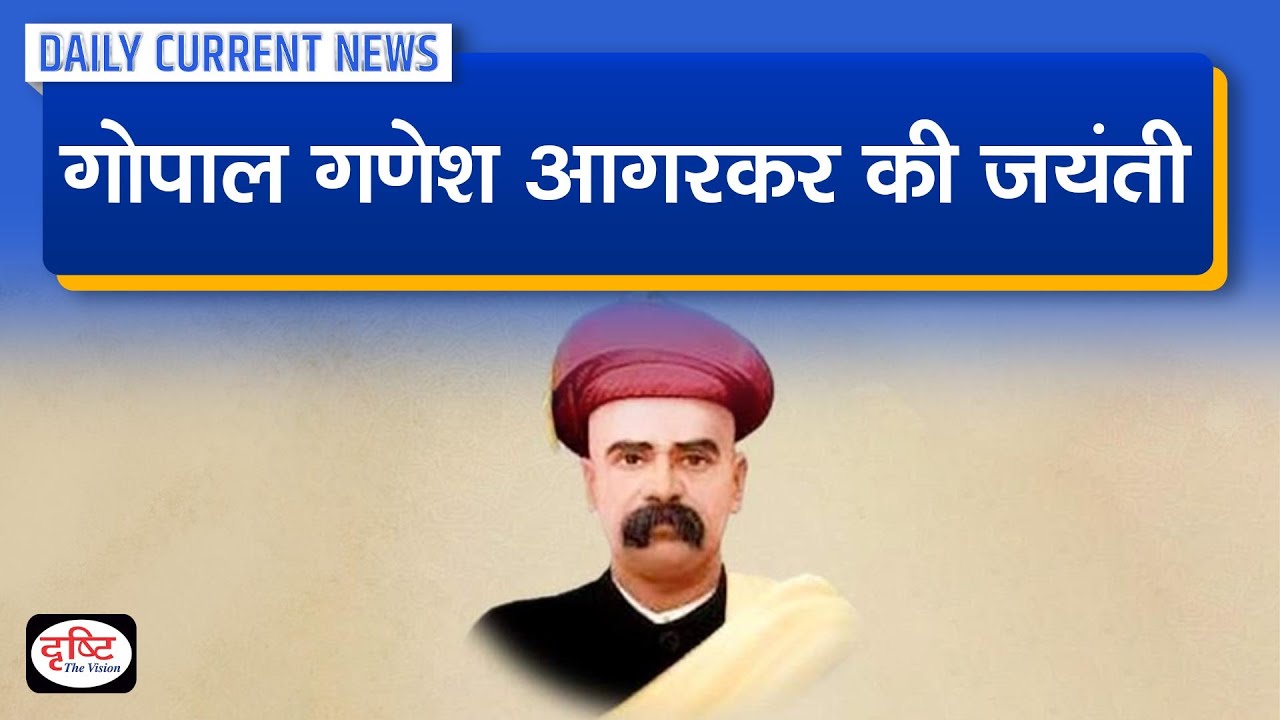
A deep dive into the life of Gopal Ganesh Agarkar, the legendary social reformer and educationist from Maharashtra. This study of his rationalist philosophy and contributions to the Deccan Education Society is essential for students preparing for history and social science examinations, highlighting his journey of intellectual revolution.
🎯 In this chapter, you will understand:
- The life and vision of Gopal Ganesh Agarkar.
- His core philosophy of rationalism and social equality.
- His immense contribution to education in Maharashtra.
- The power of his journalism in driving social change.
💡 Why this topic matters: It helps us appreciate how one individual's commitment to logic and education can challenge deep-rooted social evils and shape the future of a nation.
🧠 Core Idea: Agarkar believed that human reason should be the guide for life, and education was the necessary tool to build a fair and free society.
Gopal Ganesh Agarkar: The Architect of Rationalism and Educational Reform in Maharashtra (1856–1895)
The story of Gopal Ganesh Agarkar begins in the mid-, a period marked by a clash between traditional orthodoxy and the rising tide of modern education. Agarkar stood at the forefront of this transition, carving a path for social justice through his relentless pursuit of truth and scientific inquiry.
- (i) From his early years starting in , Agarkar displayed an unmatched aptitude for critical thinking and academic excellence.
- (ii) His alliance with Lokmanya Tilak and Vishnushastri Chiplunkar became the cornerstone of a movement designed to liberate the Indian mind from colonial and internal intellectual shackles.
- (iii) He is celebrated today as a rationalist icon who prioritized the well-being of society over the comfort of established norms.
The Biographical Landscape and Revolutionary Social Reform Contributions
Agarkar’s life was a testament to the idea that human intellect should be the ultimate judge of morality and social law, rather than ancient scriptures.

The Philosophy of Rationalism and Social Equality
In a society bound by blind faith, Agarkar introduced the revolutionary concept of individual liberty. He argued that every social custom must be tested on the altar of reason, and if found wanting, it must be discarded regardless of its . This rationalist approach allowed him to speak fearlessly against social evils.
- (i) He emerged as a bold critic of blind faith and championed the cause of human intellect as the primary tool for social progress.
- (ii) Advocated for social equality by questioning oppressive practices, specifically focusing on the rights of the marginalized.
- (iii) Remembered as a reformer who prioritized reason over ritual, urging his followers to live a life guided by logical deduction and moral integrity.
The Institutional Legacy: Pioneering Modern Educational Progress
Agarkar recognized that without modern learning, the masses could never achieve true independence or social mobility.
Founding of the Deccan Education Society and Fergusson College
Agarkar’s educational journey was not merely about teaching, but about institutional building. He sought to create a nationalist education system that was affordable and grounded in scientific principles.
- (i) Co-founded the New English School in Pune to provide high-quality modern learning to the youth.
- (ii) Played a central role in the establishment of the Deccan Education Society in , a landmark event in the history of Indian education.
- (iii) Helped found Fergusson College () and later served as its principal, where he shaped the minds of a generation of freedom fighters and social thinkers.
⚡ Quick Revision Capsule: Agarkar's Contributions
A brief look at the key achievements of Gopal Ganesh Agarkar.
| Contribution | Year/Context | Impact |
|---|---|---|
| New English School | Pune | Modern education access |
| Deccan Education Society | Educational foundation | |
| Fergusson College | Higher learning pillar | |
| Kesari | Nationalist Journalism | |
| Sudharak | Social Reform | Social Awareness |
📝 Summary
Gopal Ganesh Agarkar stands out as a rare figure who combined intellectual brilliance with social courage. As an educationist, he laid the foundation for institutions like Fergusson College; as a journalist, he gave voice to reform through Sudharak; and as a social thinker, he reminded India that true progress comes from reason, equality, and education. For students, his life serves as a definitive case study in rationalist reform and social history. His legacy remains vital in discussions of social reform and educational enlightenment in India.
🚀 Quick Revision Points
- (i) Agarkar was a strong rationalist who believed in scientific reasoning.
- (ii) He co-founded the Deccan Education Society to promote education.
- (iii) His periodical Sudharak was dedicated to social reform.
- (iv) He advocated for social issues like female education as per historical records.
- 💡 Exam Tip: Remember to link Agarkar's work in both education (DES/Fergusson) and journalism (Kesari/Sudharak) as two sides of the same coin: his quest for social progress.
❓ Frequently Asked Questions (FAQ)
Q1: Why did Agarkar separate from Tilak?
A1: Agarkar believed that social reform must happen before or alongside political independence, while Tilak initially felt political independence was the priority.Q2: What is the meaning of Rationalism in Agarkar's context?
A2: It means testing social customs using logic and reason instead of following them blindly.Q3: What was the purpose of the journal Sudharak?
A3: It was a periodical founded by Agarkar to openly discuss and promote social reform and remove superstition.