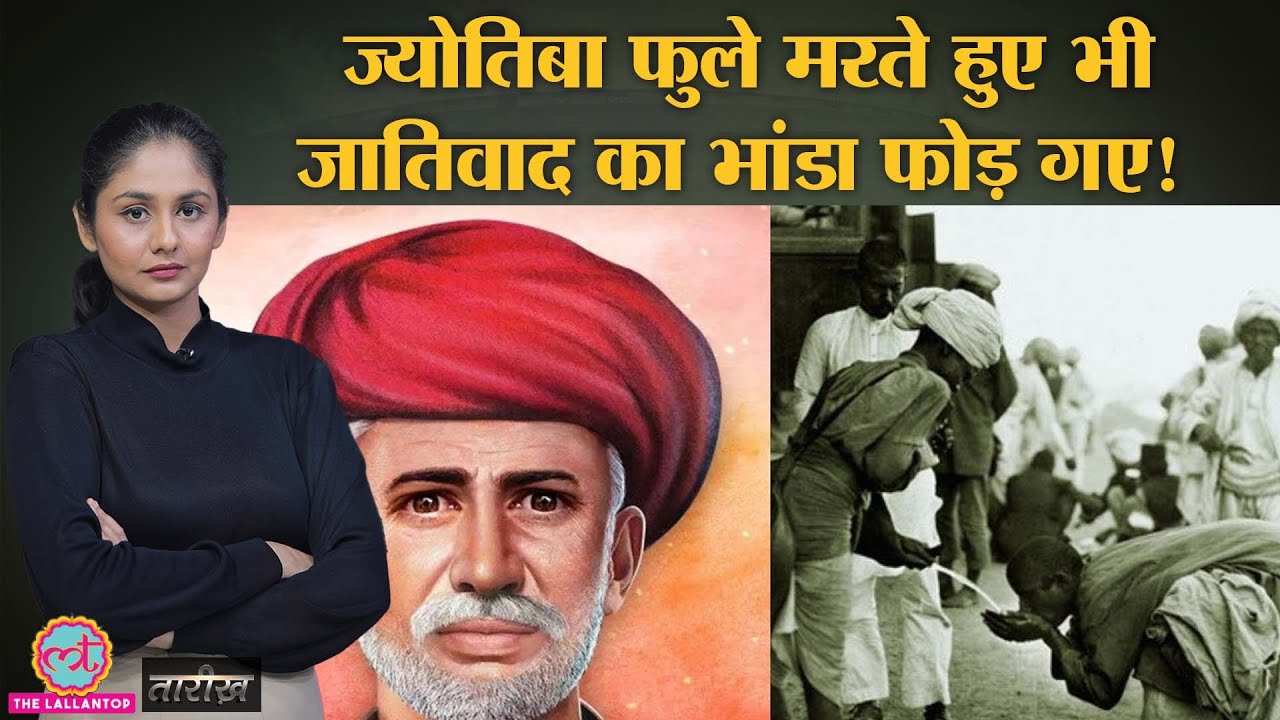
The life and legacy of Jyotiba Phule (), the pioneer of social justice in India, remains an essential study of the founder of the Satyashodhak Samaj (). By addressing Brahminical domination and gender discrimination, Phule crafted a path for women’s education and lower caste empowerment that is indispensable for students preparing for UPSC and history exams.
🎯 In this chapter, you will understand:
- The early life and anti-caste foundations built by Jyotiba Phule.
- The establishment, leadership, and core aims of the Satyashodhak Samaj.
- Major literary works including Gulamgiri and Sarvajanik Satyadharma.
- Pioneering steps taken for female literacy, widow remarriage, and social dignity.
💡 Why this topic matters: Jyotiba Phule laid the foundational brick for modern anti-caste movements and female literacy in India, making his life and works a critical topic for competitive examinations.
🧠 Core Idea: Social justice requires dismantling structural caste inequality through direct education, spiritual freedom without priestly intermediaries, and total gender equality.
Jyotiba Phule (1827–1890): Social Reforms, Satyashodhak Samaj, and Women’s Empowerment
A profound narrative of resistance began with the humble background and early life of Jyotiba Phule, setting the stage for India's anti-caste revolution.
Background and Early Life
Born into the Mali caste in Satara, Maharashtra in , Jyotirao Govindrao Phule experienced the sting of social exclusion firsthand. His personal journey from a marginalized community to a revolutionary thinker allowed him to visualize a society built on the pillars of absolute equality and reform.
- (i) He organized systematic movements to dismantle Brahminical supremacy and the structural roots of upper-caste domination.
- (ii) By mobilizing the oppressed, he became a champion of social justice for those long silenced by tradition.
- (iii) He successfully built the intellectual and moral foundation for modern anti-caste movements in India.
Satyashodhak Samaj (1873): The Rise of the Truth Seekers’ Society
In , Jyotiba Phule took the monumental step of founding the Satyashodhak Samaj, a society dedicated to the pursuit of truth and the democratization of a fractured social order.

Inclusivity in Leadership and Membership
The strength of the Satyashodhak Samaj lay in its grassroots reach, ensuring that leadership was never concentrated in the hands of a few, but shared among the many backward classes who sought a voice.
- (i) Membership was drawn from diverse marginalized groups including the Mali, Teli, Kunbi, Sari, and Dhangar communities.
- (ii) This collective leadership model ensured that the grievances of all backward classes were addressed with equal weight.
- (iii) The primary operational focus remained on social service and the widespread dissemination of education.
Foundational Aims and Reformist Objectives
Phule’s vision was clear: to create a parallel social system that did not rely on the intermediaries of the priesthood, focusing instead on social equality and human dignity.
- (a) The foremost goal was to promote education among women and lower castes as a tool for liberation.
- (b) The movement sought to directly challenge Brahminical hegemony and the ritual supremacy that governed daily life.
- (c) Members were encouraged to spread the values of truth-seeking, bypassing traditional religious constraints.
Literary and Ideological Contributions to Modern Thought
Beyond activism, Phule’s writings served as the revolutionary fuel for the fire of reform, meticulously attacking the logic of the caste system.
Notable Works and Philosophical Texts
The literary output of Phule provided a new cultural identity for the oppressed, replacing myths of subjugation with stories of historical pride and social justice.
Analysis of Gulamgiri and Other Texts
Phule authored powerful books that critiqued existing social hierarchies and inspired ideological reform across India.
- (a) Gulamgiri (Slavery) – A seminal work published in that criticized caste-based slavery and inspired generations of reformers to seek freedom.
- (b) Sarvajanik Satyadharma – This text promoted a universal religion rooted in truth and the rejection of sectarianism.
- (c) He introduced the symbol of Raja Bali as a heroic alternative to Brahminical cultural symbols, reclaiming historical narratives for the lower castes.
Ideological Position and Socio-Economic Critique
Phule’s ideology was not merely religious; it was a total critique of socio-economic inequalities that kept the masses in a state of perpetual poverty and ignorance.
The book Gulamgiri dedicated its cause to the anti-slavery movement. - (i) He advocated for the complete abolition of the caste system as the only way to achieve national progress.
- (ii) There was a strong, vocal opposition to Sanskritic Hinduism and the ritualistic practices that enforced social stratification.
- (iii) He remained firm in his belief that social justice must be the non-negotiable foundation of any meaningful reform.
Pioneering Women’s Rights and Educational Infrastructure
In partnership with his wife, Savitribai Phule, Jyotiba Phule shattered social barriers of the 19th century by prioritizing female literacy and self-reliance.
The Revolution of Women’s Education
The Phules recognized that education was the ultimate weapon against patriarchy and casteism, leading them to open doors that had been locked for centuries.
- (i) Together with Savitribai Phule, he established the first girls’ school at Bhide Wada in Poona, a radical act for that era.
- (ii) They actively encouraged female literacy to foster a sense of self-reliance among women.
- (iii) This initiative inspired an entire generation of later reformers who took up the cause of women’s education in India.
Widow Remarriage and Essential Social Support
Phule’s empathy extended to the most vulnerable members of society, particularly widows who were often ostracized by orthodox traditions.
- (i) He stood firmly in support of widow remarriage, even in the face of violent orthodox opposition.
- (ii) In , he established a widow shelter home to provide safety and dignity to women in distress.
- (iii) His life’s work was dedicated to ensuring basic human rights for marginalized women who had no other recourse.
Recognition, the Title of Mahatma, and Lasting Legacy
The impact of his work was so profound that the public bestowed upon him a title that reflected his great spirit and his role as a revolutionary reformer.
- (i) He was honored with the title Mahatma in by social activist Vithalrao Krishnaji Vandekar in recognition of his tireless social reform work.
- (ii) Today, he is remembered as the pioneer of the anti-caste movement in modern Indian history.
- (iii) His early efforts successfully paved the way for future Dalit-Bahujan empowerment and the contemporary women’s rights movement.
⚡ Quick Revision Capsule: Key Milestones of Mahatma Jyotiba Phule
Review the essential timeline, publications, and organizations associated with Jyotiba Phule for quick examination preparation:
| Year / Event | Key Contribution / Key Term | Impact & Significance |
|---|---|---|
| Birth in Satara, Maharashtra | Born into the Mali community; experienced caste discrimination early in life. | |
| First Girls' School in Poona | Founded alongside Savitribai Phule to break barriers in female literacy. | |
| Shelter for Widows | Created a safe space for pregnant widows and vulnerable women to restore dignity. | |
| Satyashodhak Samaj & Gulamgiri | Established the Truth Seekers' Society and published his landmark critique on caste slavery. | |
| Bestowal of Title Mahatma | Publicly recognized as a great soul for his lifelong service to social equality. |
📝 Summary
The life of Jyotiba Phule () serves as a clear blueprint for social justice. Through the Satyashodhak Samaj (), his critique of Brahminical domination in Gulamgiri, and his radical push for women’s education and widow remarriage, he became a revolutionary reformer whose work remains a cornerstone for students of Indian history.
🚀 Quick Revision Points
Essential facts to review before examinations:
- (i) Founded Satyashodhak Samaj in to secure social rights for lower castes.
- (ii) Authored Gulamgiri (Slavery) and Sarvajanik Satyadharma to promote truth and equality.
- (iii) Set up the first school for girls in Poona with his wife Savitribai Phule.
- (iv) Popularized Raja Bali as an egalitarian cultural symbol for lower-caste pride.
- 💡 Exam Tip: Focus on the correlation between Phule's literary works (Gulamgiri), social organizations (Satyashodhak Samaj), and their direct influence on later reformers like Dr. B.R. Ambedkar.
❓ Frequently Asked Questions (FAQ)
Q1: When was the Satyashodhak Samaj established and by whom?
A1: It was established in by Jyotiba Phule in Maharashtra to promote social equality and education for marginalized groups.Q2: What is the main theme of the book Gulamgiri?
A2: Written in , Gulamgiri (Slavery) directly critiques the caste system and Brahminical hegemony, comparing the oppression of lower castes in India to racial slavery in America.Q3: Who collaborated with Jyotiba Phule in establishing schools for girls?
A3: His wife, Savitribai Phule, collaborated closely with him and became one of India's first female teachers, pioneering women's education.