Embark on a detailed exploration of Eastern Indian Temples and Sculpture and the unique architectural forms in The Hills, essential knowledge for students preparing for comprehensive cultural studies. This fascinating regional diversity, spanning the Pala and Sena styles to the distinct Odisha Nagara orders, and the blend of Gandhara and Gupta idioms in Kashmir, provides crucial insights into India's rich architectural history, particularly from the onwards.
🎯 In this chapter, you will understand:
- The distinct artistic evolutionary paths across Bengal, Assam, Bihar, and Odisha.
- The three distinct architectural orders of Odisha's Nagara temple design.
- How terracotta emerged as a vital medium in Eastern Indian temple arts.
- The fusion of classical stone Nagara styles with indigenous wooden architecture in the Himalayan foothills.
💡 Why this topic matters: Regional temple architecture showcases how classical Indian design principles adapted seamlessly to local geography, available building materials, and distinct regional patron dynasties.
🧠 Core Idea: While Eastern India refined stone sculpting and terracotta craft into monumental Nagara orders, hill kingdoms blended classical plains traditions with native wooden construction suited for mountainous climates.
🏛️ Regional Diversity: Eastern Indian Temples and Sculpture and the Architecture of The Hills (Post-Gupta Period to 17th Century)
A story of resilience and regional innovation defines the temple architecture and sculptural traditions of Eastern India and the Himalayan foothills.
The vast Eastern Indian belt, covering the North-East, Bengal, Bihar, and Odisha, developed distinct artistic schools under various ruling dynasties, while the challenging terrain of the Hills fostered a unique synthesis of indigenous wooden structures and pan-Indian stone temple styles.
- (i) The evolution in the North-East and Bengal is complex, often hampered by renovation, leading to the preservation of mainly later brick or concrete temples.
- (ii) The powerful Pala and Sena styles dominated the sculptural output of Bengal and Bihar between the and .
- (iii) Odisha perfected the Nagara style, creating three distinct orders, exemplified by the magnificent temples of Bhubaneswar, Puri, and Konark.
🧱 North-East and Bengal: Architectural Challenges and Terracotta Traditions
The history of architecture in the North-East and Bengal is marked by the predominance of perishable materials, leading to scarcity of early stone structures, with terracotta emerging as a vital medium for artistic expression.
The Historical Gaps in North-East and Bengal Architecture
The study of temple architecture in the North-East and Bengal is inherently challenging due to extensive renovations over centuries, which have often obscured or replaced the original structures. Consequently, only later period structures, frequently built using materials like brick or concrete, remain visible today at many ancient sites, making the tracing of earlier forms difficult for students of architectural history.
- (i) In Bengal, before the , terracotta was the primary material used for temple construction and for moulding intricate plaques that depicted both Buddhist and Hindu deities.
- (ii) Numerous ancient sculptures, however, have been recovered across Assam and Bengal, providing undeniable evidence of the emergence of important and highly sophisticated regional schools of art in these areas.
Assam: From Gupta Influence to the Ahom Regional Style
Assam's early art shows clear absorption of pan-Indian influences, particularly the Gupta idiom, which later blended with local traditions and external migrations to forge a unique regional identity, vital for understanding Eastern Indian temple evolution.
- (a) Early evidence includes a sculpted door frame at DaParvatia near Tezpur, clearly reflecting the refined aesthetics of the Gupta idiom, an influence also seen in sculptures from the Rangagora Tea Estate.
- (b) This post-Gupta style continued to thrive and evolve in Assam, persisting well into the before new influences took hold.
- (c) Between the and , the migration of the Tais from Upper Burma strongly influenced the development of a distinct regional style. The resultant Ahom style, a blend of Pala and indigenous traditions, flourished notably around Guwahati.
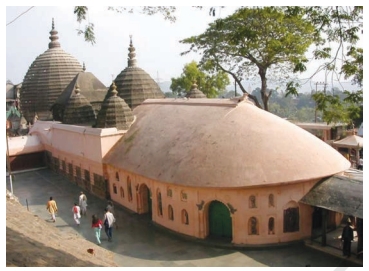
Sibsagar Temple, Assam - A historic temple complex with intricate sculptures and impressive architecture, located in the heart of Assam. - (d) The Kamakhya Temple in Assam, dedicated to Goddess Kamakhya, stands as a prime example of Shakti Peeths, having been constructed during the in the evolved regional architectural style.
🎨 Bengal and Bihar: Pala, Sena Dynasties, and the Terracotta Revival
This region was the heartland of two major imperial art styles—Pala and Sena—known for their sophisticated stone sculptures, and later witnessed a remarkable revival of terracotta architecture under the Mughals.
The Pala and Sena Sculptural Styles and Nagara Awareness
The rich cultural patronage in Bengal and Bihar led to the flourishing of two sequential, influential schools of sculpture, followed by an exploration of Nagara temple subtypes, even utilizing the local black basalt and chlorite stone for construction.
- (i) The esteemed Pala style of sculpture dominated the artistic landscape between the and , drawing its name from the powerful ruling dynasty.
- (ii) This was succeeded by the distinctive Sena style, which was prevalent from the to the .
- (iii) The Siddheshvara Temple in Assam is an architectural precursor, showing the influence of the early Pala style, sharing features like a tall curving shikhara with contemporaneous Odisha temples.
- (iv) The region displayed an understanding of Nagara subtypes, with numerous temples showcasing this knowledge constructed between the and around Telkupi in Purulia District, though many are now tragically submerged due to dam projects.
Terracotta Architecture and the Mughal Influence
A later and highly characteristic phase of Bengal architecture involves the widespread use of terracotta, a tradition that saw a significant flourishing during the Mughal period, integrating various local and external design elements.
- (a) The early Bengal Sultanate architecture borrowed heavily from local temple forms, specifically incorporating the region’s distinctive black basalt and chlorite stone pillars, alongside the use of arched niches.
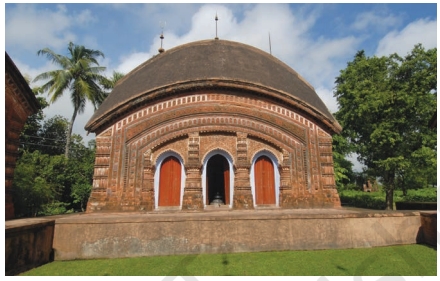
Terracotta Temple, Vishnupur - Known for its unique terracotta architecture, this 17th-century temple in West Bengal is a testament to Bengal’s rich architectural heritage. - (b) Terracotta temples, particularly concentrated around areas like Vishnupur, Bankura, Burdwan, and Birbhum, constructed during the Mughal period, represent a synthesized style. They harmoniously combine local Bengali construction techniques, remnants of Pala forms, and distinctive elements of Islamic architecture, such as arches and domes.
🛕 Odisha: Nagara Style, Rekhapida, Pidhadeul, and Khakra Orders
Odisha is celebrated for fully developing the Nagara style into three unique and defined architectural orders, leaving a legacy of monumental temple complexes, most notably at Bhubaneswar, Puri, and Konark.
Distinct Architectural Orders and Temple Structure in Odisha
The Odisha temple style is systematically classified into three signature architectural orders, making it a critical study point for understanding classical Indian temple forms: the rekhapida (or rekha deul), the pidhadeul, and the unique khakra order. These majestic temples are primarily situated in the ancient region of Kalinga (modern Puri District).
- (i) Major sites include Bhubaneswar (ancient Tribhuvanesvara), Puri, and Konark, showcasing the evolution of the style.
- (ii) The main shrine, or deul (the equivalent of the shikhara), is typically vertical but is distinguished by its sharp inward curve at the very top. These towering structures are always preceded by one or more halls known as mandapas or jagamohana.
- (iii) The temple’s ground plan consistently adheres to a square shape, which seamlessly transitions into a circular crowning spire, or mastaka.
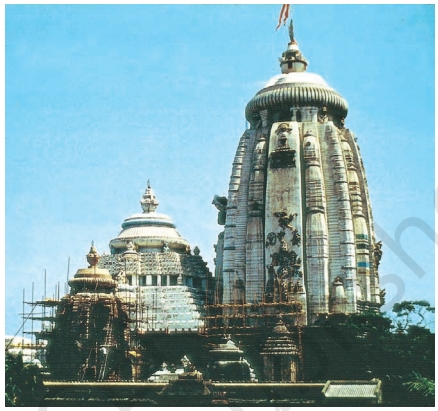
Jagannath Temple, Puri - A revered Hindu temple dedicated to Lord Jagannath, part of the Char Dham pilgrimage, and a hub for annual Rath Yatra celebrations.
Konark Sun Temple: Magnificence and Chariot Carvings
The Sun Temple at Konark, built around , stands as a crowning achievement of Odisha temple architecture, designed as a colossal chariot and renowned globally for its detailed, narrative carvings.
- (a) The structure's colossal shikhara, which once soared to approximately 70 meters, unfortunately collapsed in the , leaving the remaining structures to convey its original grandeur.
- (b) The temple's defining feature is its conceptualization as the Sun god’s chariot, manifested through extensive and intricate carvings, including twelve pairs of enormous wheels carved into the base, symbolically representing time.
- (c) Sculptures depicting seven horses are strategically placed at the entrance staircase, appearing to drive the chariot, and a massive green stone sculpture of Surya (the Sun god) is prominently carved onto the southern wall.
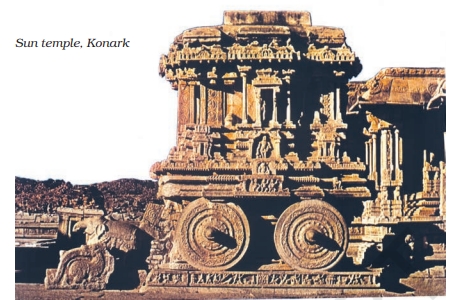
Sun Temple, Konark - A renowned temple dedicated to the Sun God, famous for its detailed carvings, symbolizing the chariot of the Sun God.
🏔️ The Hills Architecture: Blending Gandhara, Gupta, and Indigenous Traditions
The hill regions of Kumaon, Garhwal, Himachal, and Kashmir developed a distinct architectural synthesis, merging external classical influences from the plains and Gandhara with their own strong, local tradition of wooden construction and pitched roofs.
External Influences and Cultural Exchange in the Hills
The strategic location and movement of religious figures ensured that the Hills became a vibrant crucible for cultural amalgamation, combining various architectural and sculptural traditions from diverse geographical areas.
- (i) Kashmir, due to its proximity to major Gandhara sites like Taxila and Peshawar, received a strong Gandhara influence by the .
- (ii) This influence progressively merged with Gupta and post-Gupta traditions that were continuously imported from vital religious centers in the plains, such as Sarnath, Mathura, and even distant centers in Gujarat and Bengal.
- (iii) The constant travel of Brahmin pundits and Buddhist monks between Kashmir, Garhwal, Kumaon, and major centers like Banaras, Nalanda, and Kanchipuram facilitated the intermingling and widespread diffusion of both Buddhist and Hindu traditions throughout the hilly regions.
Blended Architectural Style and Indigenous Wooden Structures
The architecture of the Hills is characterised by the creative combination of the stone shikhara of the Nagara style with the older, practical wooden construction suited to the mountainous climate.
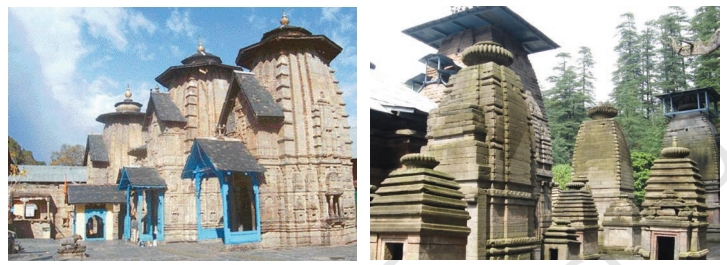
Temple Complexes in Hills - Ancient temples built on hilltops, reflecting the harmony between nature and architecture in Indian temple construction. - (a) The hills possess their own deep-rooted tradition of wooden buildings, often featuring distinctive pitched roofs to manage snowfall.
- (b) In many hill temples, the core shrine—the main garbhagriha and shikhara—is constructed in the rekha-prasada or latina style (stone Nagara forms), while the mandapa (assembly hall) retains the older, practical form of wooden architecture.
- (c) Occasionally, the entire temple structure adopts a pagoda shape, demonstrating a further evolution of local and external influences.
Kashmir: Karkota Period and the Pandrethan Temple
The Karkota period in Kashmir represents a peak in architectural innovation. The Pandrethan Temple is a classic illustration of blending stone Nagara elements with the practical necessities of the Kashmiri climate, particularly the use of a water tank and a sloped roof.
- (i) Built between the and , Pandrethan is one of the most significant temples of the period.
- (ii) Following the local tradition of shrines associated with a water body, this temple is uniquely built on a plinth situated in the middle of a tank.
- (iii) Although Kashmir saw both Hindu and Buddhist followers, this temple is a Hindu shrine, likely dedicated to Shiva, reflecting the region's overall religious syncretism.
- (iv) Its architecture is firmly rooted in the ancient Kashmiri tradition of wooden buildings; hence, its roof is peaked and slowly slants outward to cope with the heavy, snowy conditions.
- (v) Moving away from the heavily carved aesthetic of the post-Gupta period, the temple is only moderately embellished, featuring a single row of elephants at the base and a decorated doorway as its principal ornamentation.
Chamba Sculpture, Metal Tradition, and Meruvarman's Legacy
Sculptures found at Chamba provide valuable insight into the amalgamation of local traditions with the post-Gupta style, notably exhibiting the influence of Kashmir's remarkable metal sculpture tradition, as exemplified by the Laksna-Devi Mandir.
- (a) The images of Mahishasuramardini and Narasimha at the Laksna-Devi Mandir clearly showcase the strong influence of the post-Gupta tradition.
- (b) Both these images distinctly reflect the aesthetics and craftsmanship of the metal sculpture tradition of Kashmir.
- (c) The characteristic yellow color of these metal images is likely due to the use of an alloy of zinc and copper, which was a popular medium for image making in Kashmir.
- (d) An inscription on this temple confirms its construction during the reign of Meruvarman, who lived in the , providing a precise historical marker.
Kumaon: Classic Nagara Architecture Examples
The temples in the Kumaon region offer significant examples of the Nagara architectural style adapted to the mountainous landscape, confirming the style's penetration deep into the Himalayan foothills.
- Jageshwar Temples: Located near Almora, these temples, along with those at Champavat near Pithoragarh, are considered classic and well-preserved examples of nagara architecture within the region.
📑 Conclusion: Importance of Regional Temple Styles and Sculptural Art for Students
The study of Eastern Indian Temples and Sculpture and the unique architecture of The Hills is fundamentally important for students, as it demonstrates the incredible regionalization of the Nagara style across the subcontinent. From the terracotta mastery in Bengal and the Pala-Sena sculptural traditions to the grand rekhapida and pidhadeul orders of Odisha, and the blending of Gandhara and Gupta idioms with local wooden architecture in Kashmir, this content highlights the diverse ways classical Indian art adapted to local geography and patronage from the to the .
⚡ Quick Revision Capsule: Eastern Indian and Hill Temple Styles
A concise summary of key regional architectural styles, materials, and iconic site examples across Eastern and Northern India.
| Region | Primary Materials & Styles | Key Features & Example Sites |
|---|---|---|
| Assam & North-East | Stone carvings; later brick & mortar (Ahom style) | Gupta influence at DaParvatia; 17th-century Kamakhya Temple in Guwahati. |
| Bengal & Bihar | Black basalt, chlorite stone, and terracotta | Pala-Sena sculptures; Vishnupur terracotta temples with curved hut roofs, arches, and domes. |
| Odisha (Kalinga) | Sandstone & Laterite stone; Rekhapida, Pidhadeul, and Khakra orders | Square plans transitioning to circular spires (mastaka); Puri Jagannath Temple, Konark Sun Temple. |
| Kashmir & Hills | Stone, timber/wood, zinc-copper metal alloy | Sloped/peaked wooden roofs, water-tank plinths (Pandrethan Temple), and Chamba metal sculptures. |
| Kumaon & Garhwal | Stone rekha-prasada with wooden assembly halls | Classic Nagara adaptations surrounded by pine forests at Jageshwar (Almora) and Champavat. |
📝 Summary
Between the and , Eastern and Himalayan India birthed diverse architectural movements. In Eastern India, Bengal relied heavily on durable terracotta plaques and black basalt under Pala and Sena rule, eventually blending local bamboo hut motifs with Islamic arches. Odisha perfected the Nagara form into distinct vertical towers (deul) and hall structures (jagamohana). Meanwhile, the Himalayan region harmonized Gandhara, Gupta, and local woodworking styles into iconic sloped-roof stone and wood temples.
🚀 Quick Revision Points
Essential facts to review before examinations:
- (i) The Pala and Sena dynasties () dominated sculpture in Bengal and Bihar using fine black basalt.
- (ii) Odishan temples follow three distinct orders: rekhapida (tall curved tower), pidhadeul (pyramidal roof hall), and khakra (barrel-vaulted shrine).
- (iii) The Konark Sun Temple () is built in the shape of a massive chariot with 12 pairs of carved stone wheels and 7 horses.
- (iv) Kashmiri temples like Pandrethan feature peaked roofs designed for snow and are surrounded by water bodies, influenced by earlier Gandhara art.
- 💡 Exam Tip: When answering questions on regional temple architecture, always emphasize how natural resources (clay in Bengal, timber in the Hills, sandstone in Odisha) directly shaped local construction methods.
❓ Frequently Asked Questions (FAQ)
Q1: Why is terracotta so widely used in traditional Bengal temple architecture?
A1: Alluvial soil in Bengal made clay abundant, while good quality building stone was extremely scarce. Craftspeople turned terracotta into a primary artistic medium for wall panels and complex reliefs.Q2: What are the three main orders of Nagara architecture in Odisha?
A2: The three main orders are Rekhapida (curvilinear main shrine), Pidhadeul (pyramidal assembly hall or jagamohana), and Khakra (rectangular shrine with a barrel-vaulted roof).Q3: How did climate influence temple design in the Himalayan region?
A3: Mountainous climates with heavy snowfall led architects to build steep, peaked wooden or sloped roofs over stone sanctums to prevent snow accumulation, as seen in Pandrethan Temple and regional hill pagodas.