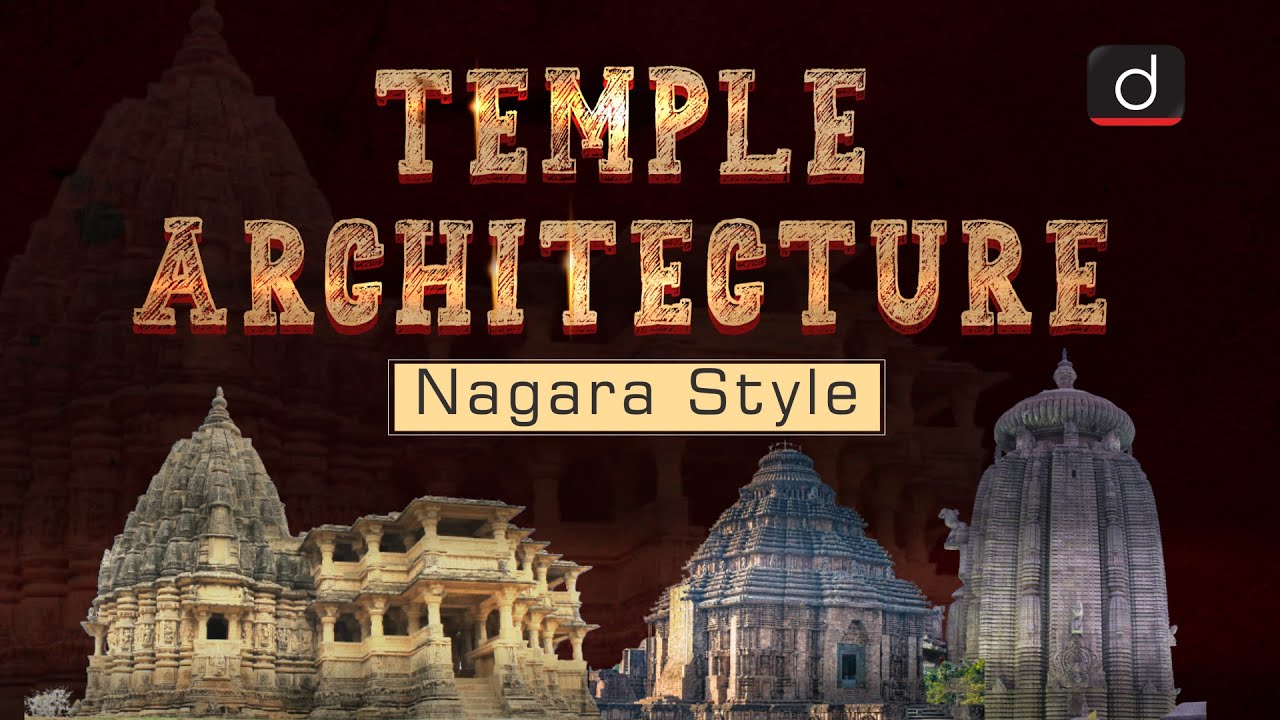
The architectural evolution and sculptural heritage of North-Western Indian temples, spanning Gujarat, Rajasthan, and parts of Western Madhya Pradesh, offer a rich study for students preparing for exams. These monuments, characterized by diverse construction materials like sandstone, basalt, and soft white marble, showcase a distinct blend of post-Gupta artistic traditions, exemplified by sites like Samlaji and the majestic Sun Temple at Modhera, built by Raja Bhimdev I in .
🎯 In this chapter, you will understand:
- The geographic reach and material diversity in North-Western Indian temple design.
- The unique role of grey schist sculptures at Samlaji in early medieval art.
- The architectural grandeur, stepped tank design, and astronomical planning of the Sun Temple at Modhera.
- The influence of local woodcarving traditions on medieval stone architecture.
💡 Why this topic matters: It highlights the transition from classical post-Gupta conventions to elaborate regional styles under the Solanki dynasty and Jain patronage across Western India.
🧠 Core Idea: Master sculptors in Gujarat and Rajasthan utilized regional stones—from sandstone and basalt to pristine marble—to create lasting architectural marvels carefully aligned with rituals and nature.
Architectural Heritage and Distinctive Styles of North-Western Indian Temples (10th–12th Century)
Temple architecture flourished across North-Western India, reflecting the region's lasting artistic skills, local stonemasonry, and diverse natural resources.
- (i) The region spans Gujarat and Rajasthan, stretching into the western parts of Madhya Pradesh, presenting an extensive collection of historic art sites.
- (ii) Builders chose a wide variety of stones, which shaped the strength, visual tone, and fine detail of their decorative carvings.
- (iii) Studying these distinct building methods is essential for students learning how regional styles developed within classical Indian architecture and sculpture.
Diverse Construction Materials and Regional Stone Usage in Temple Building
The choice of stone defines the personality of North-Western temples, showing how artisans utilized local resources and royal support over the centuries.
Prevalence of Sandstone and Basalt in Temple Construction
Masons relied heavily on readily available stone, while also sourcing special materials for delicate statues and sacred icons.
- (i) Sandstone: This was the most common material for temple construction across Gujarat and Rajasthan, perfect for deep, intricate carvings.
- (ii) Grey to black basalt: Sculptures from the tenth to twelfth centuries sometimes used this darker, harder stone to create a bold contrast with the lighter walls.
Exquisite Soft White Marble in Jain Temple Architecture
A clear shift in building materials occurred under Jain patrons, who favored luminous, smooth stone for their sacred spaces.
- (a) Soft white marble: This high-quality stone was used extensively in Jain temples from the tenth to twelfth centuries.
- (b) Famous marble structures stand on Mount Abu, showing a highly detailed style of Indian temple art.
- (c) A later landmark is the marble temple at Ranakpur, built in the fifteenth century, which represents advanced medieval architecture.
Samlaji: A Crucible of Post-Gupta Artistic Styles in Gujarat
The ancient site of Samlaji in Gujarat helps us trace regional artistic evolution, showing how early sculptural idioms blended into post-Gupta artwork.
Distinctive Grey Schist Sculptures and Chronological Debates
Artifacts found at Samlaji reveal an active regional art school during the early medieval period, known for its choice of distinct stone.
- (i) A large number of statues made from grey schist were unearthed here, giving the local sculptures a unique texture.
- (ii) Art historians date these grey schist figures between the sixth and eighth centuries CE based on their artistic conventions.
- (iii) While royal patronage details remain under debate, their timing is clear through their refined art-historical style.
The Grand Sun Temple at Modhera: A Solanki Dynasty Masterpiece
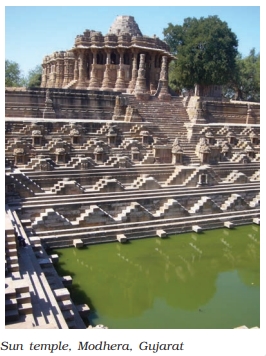
The Sun Temple at Modhera is a prime highlight of Western Indian temple architecture. Built by Raja Bhimdev I of the Solanki Dynasty in , it seamlessly combines worship spaces with stepped water management.
The Architectural Marvel of the Surya Kund (Temple Tank)
Following the tradition of building sacred architecture near water, this complex features a grand stepped tank designed with great structural skill.
- (i) The complex leads with the grand Surya Kund, a huge rectangular stepped tank linking sacred rituals with natural elements, a design common in early Indian temples.
- (ii) This temple tank is among the finest in India, covering one hundred square meters with neatly built steps leading down to the water.
- (iii) The steps of the Surya Kund hold 108 miniature shrines, adding visual beauty and showcasing the architectural brilliance of the Solanki era.
The Sabha Mandapa and Influence of Gujarat’s Woodcarving Art
The layout and assembly halls reflect regional building techniques across Western and Central India, inspired by local artisan traditions.
- (a) Visitors enter the main structure through a grand decorative arch-torana leading into the Sabha Mandapa (assembly hall).
- (b) Common to temples in western and central India, the Sabha Mandapa stays open on all sides for open air and community gatherings.
- (c) Detailed stone reliefs across the building strongly reflect the famous woodcarving tradition of Gujarat, recreating fine wooden patterns in solid stone.
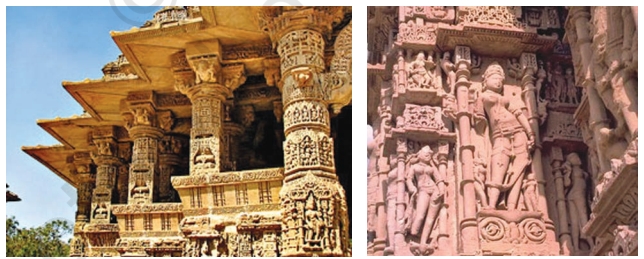
Modhera Sun Temple - A magnificent temple dedicated to the Sun God, known for its architectural brilliance and its complex Surya Kund (step well) that reflects ancient Indian water management and design prowess. Precision of Solar Orientation in the Central Shrine
The layout shows advanced knowledge of astronomy and accurate structural alignment with the sun.
- (i) The main central shrine faces east, directly connecting the physical shrine with the Sun God.
- (ii) Demonstrating thoughtful design, the inner sanctum walls were left plain and uncarved.
- (iii) This design allows sunlight during the biannual equinoxes to shine directly into the inner shrine, proving the builders' expertise in solar alignment.
⚡ Quick Revision Capsule: North-Western Indian Temples
A quick glance at key architectural sites, construction materials, historical dates, and signature features across Gujarat and Rajasthan.
| Site / Region | Period & Patronage | Primary Material & Key Features |
|---|---|---|
| Samlaji (Gujarat) | Crafted using grey schist; key site for post-Gupta regional sculptural traditions. | |
| Sun Temple, Modhera | (Raja Bhimdev I, Solanki Dynasty) | Built with sandstone; features Surya Kund with 108 shrines, open Sabha Mandapa, and equinox alignment. |
| Mount Abu (Rajasthan) | (Jain Patrons) | Constructed with soft white marble; famous for delicate roof carvings and intricate detail. |
| Ranakpur Temple | Carved from luminous marble; landmark of advanced medieval Jain architecture. | |
| General Regional Style | Varied stone usage (sandstone, basalt); stone carvings inspired by Gujarat Woodcarving Traditions. |
📝 Summary
The study of North-Western Indian temple architecture provides essential insights into regional art history, showcasing the successful fusion of local materials and highly sophisticated architectural planning, especially visible in the Solanki Dynasty's contribution at Modhera. The sites like Samlaji and the Sun Temple at Modhera, built in , are indispensable for students preparing for comprehensive examinations, as they illuminate the transition from post-Gupta styles to the distinct and ornate medieval Indian temple styles of Gujarat and Rajasthan, marked by the innovative use of the Surya Kund and lavish sculptural detail.
🚀 Quick Revision Points
Essential facts to review before examinations:
- (i) Sandstone was the primary building material in Gujarat and Rajasthan, complemented by dark basalt accents.
- (ii) Soft white marble was favored by Jain patrons, best seen at Mount Abu and Ranakpur.
- (iii) The Surya Kund at Modhera contains 108 miniature shrines around a 100 sq. meter stepped tank.
- (iv) The inner sanctum of Modhera was designed plain so rays during the equinoxes could directly illuminate the central shrine.
- 💡 Exam Tip: Remember that the elaborate stone carvings of the Sabha Mandapa at Modhera were directly derived from the traditional woodcarving art of Gujarat!
❓ Frequently Asked Questions (FAQ)
Q1: Who built the Sun Temple at Modhera and when?
A1: It was built in by Raja Bhimdev I of the Solanki Dynasty.Q2: What is the significance of the grey schist sculptures at Samlaji?
A2: They represent a vital transitional regional art school active between the , bridging post-Gupta styles with medieval Western Indian art.Q3: How does the Modhera Sun Temple demonstrate solar alignment?
A3: Its central shrine faces east with uncarved interior walls, allowing direct sunlight to light up the sanctuary during the biannual equinoxes.