The Kangra School of Painting represents the zenith of Pahari Miniature Art, flourishing primarily under the patronage of Raja Sansar Chand (). This tradition is renowned for its lyrical beauty, delicate brushwork, and vivid portrayal of mythological and literary themes, especially the divine love of Krishna. Mastering the characteristics, centers, and prominent artists of this style is crucial for students preparing for art and culture sections of competitive examinations.
🎯 In this chapter, you will understand:
- The patronage of Raja Sansar Chand and the origin of the Kangra style.
- Key artistic centers along the Beas River and core aesthetic features.
- Major themes including the Bhagvata Purana, Ashta Nayikas, and Baramasa.
- Prominent artists, descendants of Nainsukh, and factors behind the school's decline.
💡 Why this topic matters: Understanding Kangra miniatures is essential for competitive examinations as it highlights the blending of royal patronage, devotional movement, and Indian artistic heritage during the 18th century.
🧠 Core Idea: The Kangra style brought unparalleled grace, delicate lines, bright colors, and lyrical poetry to miniature painting, focusing on divine narratives and human emotions.
The Evolution and Lyrical Splendor of the Kangra School of Painting (1775–1823)
The Kangra School emerged as a refined successor to the Guler style, achieving its most glorious phase through powerful royal support and the influx of master artisans.
- The genesis and remarkable growth of the Kangra style were intrinsically linked to the cultural vision of its rulers, creating a golden age for miniature painting in the Himalayan foothills.
- (i) The style's peak coincided with the rule of Raja Sansar Chand, who demonstrated an unmatched zeal for art from the moment he ascended the throne.
- (ii) The young king took the reins of the kingdom at just , succeeding his grandfather, Ghamand Chand, who had already initiated the revival and restoration of the kingdom's prestige.
- (iii) Key artistic talent, including the celebrated painter Manaku and his lineage, migrated from Guler and found a secure and flourishing environment in Sansar Chand's royal studio or atelier.
Historical Context: The Katoch Dynasty and the Restoration of Art Patronage
The rise of the Kangra School was set against a backdrop of regional political shifts, moving from Mughal dominance back to indigenous control under the Katoch dynasty.
Dynastic Rule and the Period of Mughal Influence
The ancient kingdom of Kangra, governed by the powerful Katoch dynasty for centuries, experienced a temporary setback when the region fell to the Mughal conquest under Jahangir during the , momentarily interrupting the continuous local tradition of art.
- (i) Following the gradual weakening and ultimate decline of the vast Mughal power in the , the Katoch rulers seized the opportunity to reclaim their ancestral lands.
- (ii) Ghamand Chand successfully led the movement to recover lost territories, subsequently establishing the strategically important location of Tira Sujanpur as the new and enduring capital of the revitalized kingdom.
- (iii) Crucially, under Ghamand Chand's reign, cultural infrastructure, including the maintenance of important monuments and the establishment of an active court atelier of talented artists, was fully supported and sustained, setting the stage for his grandson.
Key Artistic Centers under Raja Sansar Chand's Rule
The core of Kangra painting activity was concentrated in key centers along the Beas River valley, forming a vibrant regional network of artistic production under the Raja's protective umbrella.
- (a) The primary nucleus of this flourishing artistic activity was the capital, Tira Sujanpur, which became the undisputed central hub for the creation of the finest Kangra miniatures during Sansar Chand's tenure.
- (b) Other equally significant centers that actively contributed to the school's output included Alampur and Nadaun; all were strategically situated along the fertile and picturesque banks of the Beas River.
- (c) Interestingly, the main city of Kangra itself saw limited artistic production, largely because it remained outside the direct control of the Katoch rulers, first under Mughal and later under Sikh authority.
Defining Characteristics and Profound Themes of the Kangra Style
The Kangra style is immediately recognizable for its distinctive aesthetic, marked by unparalleled delicacy and a deep emotional resonance, drawing inspiration from classical Indian literature and mythology.
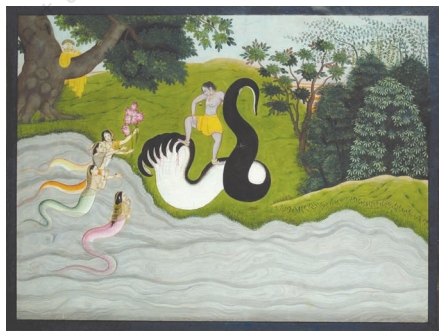
Aesthetic Qualities and Detailed Painting Technique
The essence of a Kangra painting lies in its deeply poetic and lyrical quality, offering viewers a sense of serene beauty and exceptional grace achieved through its incredibly delicate execution.
- (i) A hallmark of the style is the remarkable delicacy of the line, often compared to a flowing hair, combined with the brilliance of the colors used, creating paintings that glow with a luminous quality.
- (ii) Artists paid extraordinary attention to minute decorative details, particularly in the rendering of textiles, jewelry, and nature, often featuring detailed floral borders.
- (iii) The characteristic female facial profile is a key identifier, typically featuring a noticeably straight nose that aligns seamlessly with the contour of the forehead, conveying an idealized grace.
Popular Mythological and Literary Themes
The thematic heart of the Kangra School centered on the eternal narratives of love, devotion (Bhakti), and the playful exploits of divine figures, providing fertile ground for emotional expression.
- (a) Devotional Epics: Core subject matter included major mythological and literary works such as the Bhagvata Purana (focusing on Krishna), Gita Govinda (celebrating Radha and Krishna's love), and the romantic tragedy of Nala Damayanti.
- (b) Musical and Seasonal Cycles: Popular pictorial series like Ragamala (visualizing musical modes) and Baramasa (depicting moods of love across the ) were frequently illustrated with great sensitivity.
Courtly Life and Royal Portraiture
Beyond divine themes, the paintings also provided a rich, documentary-like record of the lifestyle, military activities, and cultural pursuits of Raja Sansar Chand and his influential court.
- Listening to Music and Festivals: The series included intimate depictions of the Raja attending private concerts, watching professional dancers, or presiding over grand, vibrant festivals.
- Military and Sporting Pursuits: The ruler's martial prowess and physical skills were showcased in dynamic scenes depicting activities like practicing tent pegging, engaging in archery, and directing military drills.
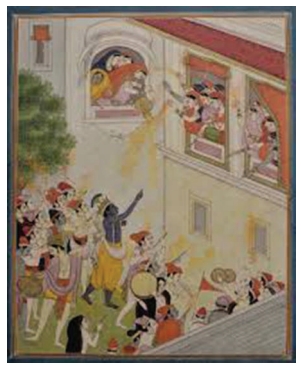
Krishna Playing Holi with Gopis - A lively scene of Krishna celebrating Holi with the Gopis, capturing the festive spirit and his divine playfulness.
Master Artists, Signature Works, and the Decline of the School
The brilliance of Kangra art was driven by highly skilled individuals, many of whom belonged to a celebrated artistic lineage, though the school eventually faced decline due to political instability.
Prominent Artists and the Artistic Lineage
The atelier of Raja Sansar Chand was staffed by several highly capable artists who solidified the school's unique aesthetic, often inheriting their mastery from their predecessors.
- (i) Key painters associated with this flourishing period include Fattu, Purkhu, and Khushala, whose individual contributions were pivotal to the school's collective excellence.
- (ii) Significantly, a large number of these talented artists were direct descendants of Nainsukh, a towering figure and master artist who had previously been the leading light of the Guler School, establishing a strong artistic continuity.
Pinnacle Achievements: The Bhagvata Purana Series
The Bhagvata Purana series, executed between , stands today as the undisputed masterpiece and the artistic pinnacle of the entire Kangra style of painting.
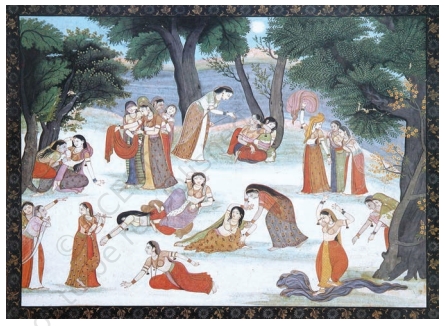
Enacting Krishna's Deeds - Bhagwat Purana - A vibrant portrayal of scenes reenacting Krishna's divine exploits from the Bhagwat Purana. - (a) The series is lauded for its sense of effortless naturalism, successfully capturing the physical forms and emotional states of its subjects with great skill.
- (b) It is also celebrated for the vivid portrayal of dramatic scenes from the epic, bringing key narratives to life with energy and emotional depth.
- (c) The Rasa Panchdhyayi, an episode detailing the intense, selfless devotion of the gopis (milkmaids) to Krishna, remains a critical and frequently explored theme within the works of this remarkable period.
Decline After the Gurkha Siege
The sustained quality and prolific output of the Kangra School were severely impacted by the onset of regional conflicts, marking a distinct downturn in the caliber of subsequent works.
- (i) A major blow to the kingdom and its art occurred after with the devastating Gurkha siege of the strategically important Kangra fort.
- (ii) Although Raja Sansar Chand attempted to maintain his respected royal atelier even through these difficult times, the paintings produced in the period immediately succeeding were generally recognized as less remarkable in their technical execution and overall artistic quality.
Expansion of Influence and Iconic Depictions (Nayika and Baramasa)
The Kangra style not only set a regional benchmark for artistic excellence but also explored deep psychological and literary themes, profoundly influencing surrounding artistic schools.
Geographical Expansion and Influence on Book Illumination
The highly successful and established aesthetic of the Kangra style radiated outwards from the Pahari region, successfully influencing the artistic outputs of neighboring geographical areas.
- (i) The influence of the style spread widely, impacting regions located as far east as Garhwal and extending to the western frontier in Kashmir.
- (ii) This influence notably led to the specialized development of sophisticated book illumination in Kashmir during the period spanning , showcasing the broad appeal and adaptability of the Kangra aesthetic.
Depictions of the Ashta Nayikas (Eight Heroines)
A highly prominent and emotionally resonant theme in Pahari paintings, the Ashta Nayikas focus intensely on depicting the various emotive states and psychological conditions experienced by women in love, according to classical Indian aesthetics.
Nayika Classification and Specific Examples
- (i) Utka: Represents the heroine who is waiting and anticipating the much-awaited arrival of her beloved.
- (ii) Vasaksajja: Portrays the heroine diligently preparing and decorating a special flower-adorned bed in eager anticipation of her lover's coming.
- (iii) Kalahantarita: Illustrates the tragic situation of the heroine who has angrily resisted her beloved's advances but immediately regrets the separation and repents her hasty actions later.
- (iv) The Abhisarika Nayika, the heroine who braves all obstacles and dangers, such as a storm or dark night, specifically to meet her beloved, remained a particularly favorite depiction among the Kangra artists.
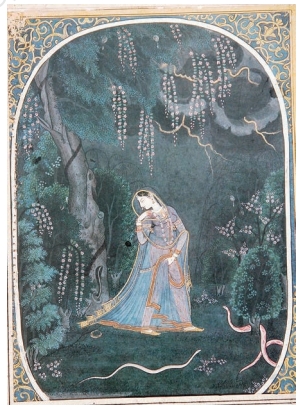
Abhisarika Nayika - A graceful painting of the Abhisarika Nayika, representing the heroine’s perilous journey through a stormy night to meet her lover, a classic theme in Indian miniature art. Baramasa Paintings: The Seasonal Cycle of Love
The Baramasa (Twelve Months) genre, another staple of Kangra art, translated the poetry of the changing seasons into visual narratives of separation and union, detailing the human heart's response to the environment.
- (i) This artistic category consists of a series of twelve individual folios, each dedicated to illustrating the distinct themes of love and courtship as they unfold across each month of the year.
- (ii) The primary textual inspiration for these sensitive and evocative depictions was the celebrated Kavipriya, a poetic work authored by the famed poet Keshav Das, which inspired illustrations of even challenging periods like the extremely hot month of Jyeshtha ().
⚡ Quick Revision Capsule: Kangra School of Painting Key Facts
A structured quick review of essential parameters regarding the Kangra School of Pahari Miniature Painting:
| Parameter | Details & Key Concepts | Historical Context / Significance |
|---|---|---|
| Primary Patron | Raja Sansar Chand () | Katoch dynasty ruler who turned Tira Sujanpur into an artistic capital. |
| Key Centers | Tira Sujanpur, Alampur, and Nadaun | Flourished along the Beas River valley; Kangra city itself had limited art production. |
| Visual Style | Lyrical lines, luminous colors, idealized facial profile with straight nose | Evolved as a refined successor to the Guler style. |
| Major Themes | Bhagvata Purana, Gita Govinda, Ashta Nayikas, Baramasa | Centered on devotional love (Bhakti), romantic literature, and seasonal cycles. |
| Key Artists | Fattu, Purkhu, Khushala (descendants of Nainsukh) | Maintained artistic continuity from Guler to Kangra court ateliers. |
📝 Summary
The Kangra School of Painting stands as a defining moment in Indian Miniature Art, celebrated globally for its unmatched lyrical quality and sophisticated use of line and color. Flourishing under the critical patronage of Raja Sansar Chand from , its focus on devotional themes like the Bhagvata Purana and the sensitive portrayal of Ashta Nayikas provides crucial insights into Pahari culture and aesthetics. For students, a deep understanding of the Kangra style's characteristics, its centers like Tira Sujanpur, and key artists ensures comprehensive preparation for competitive examinations focusing on Art and Culture.
🚀 Quick Revision Points
Essential facts to review before examinations:
- (i) Golden period was during the reign of Raja Sansar Chand ().
- (ii) Evolved from the Guler style via migrating artists, particularly the descendants of Nainsukh.
- (iii) Key centers were Tira Sujanpur, Alampur, and Nadaun along the Beas River.
- (iv) Signature artwork is the Bhagvata Purana series ().
- 💡 Exam Tip: Remember that the main city of Kangra had minimal artistic output due to Mughal and Sikh control; Tira Sujanpur was the real heart of Kangra painting!
❓ Frequently Asked Questions (FAQ)
Q1: Who was the greatest patron of the Kangra School of Painting?
A1: Raja Sansar Chand () of the Katoch dynasty was the most prominent patron under whose rule the Kangra School reached its golden age.Q2: What are the main features of Kangra female figures?
A2: Female figures in Kangra art feature delicate facial profiles with a distinctly straight nose aligning smoothly with the forehead, along with graceful poses and intricate garments.Q3: What text inspired the Baramasa paintings in Kangra style?
A3: The Baramasa paintings were largely inspired by the poetic work Kavipriya written by the renowned poet Keshav Das.