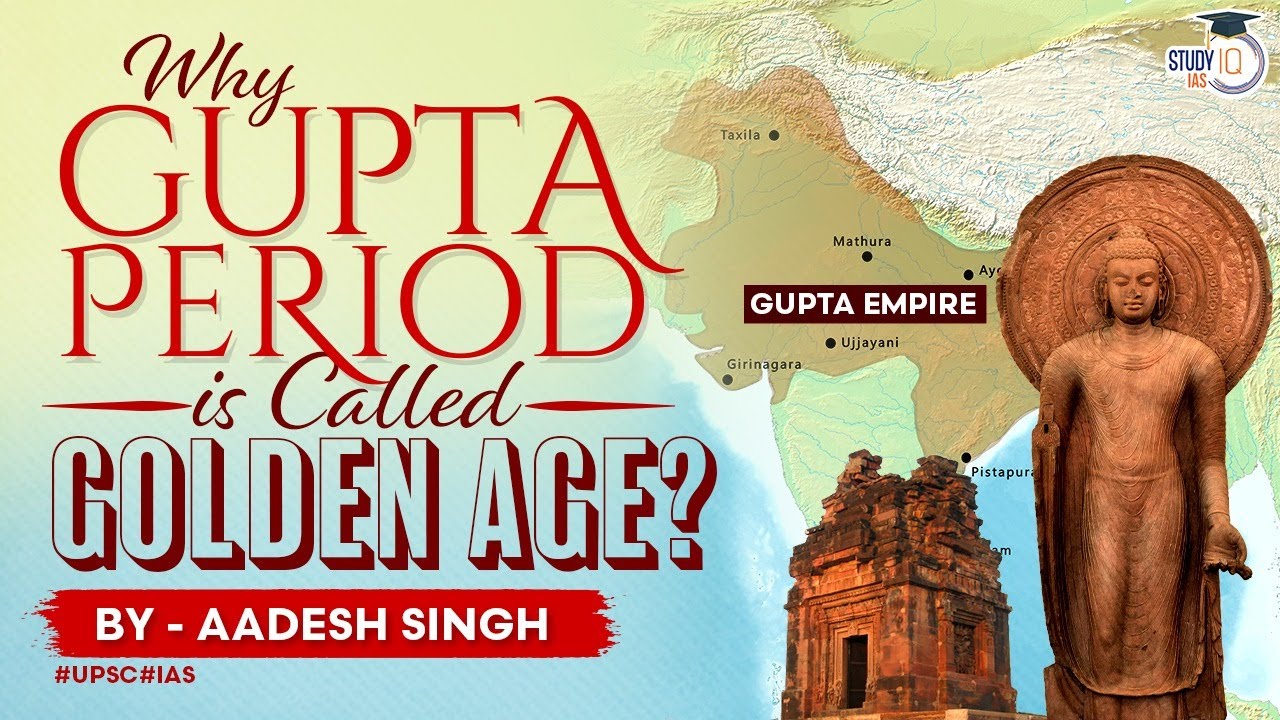
The Gupta period, spanning the 4th to 6th centuries AD, is universally acclaimed as the Golden Age of Art and Literature in ancient India, marking a zenith in cultural and intellectual achievements. This era saw the final compilation of foundational religious texts, the rise of Puranic literature, and the unparalleled contribution of literary giants like Kalidasa, whose works remain a cornerstone of Sanskrit drama. Understanding the profound literary, artistic, and architectural advancements of the Gupta Empire is crucial for students preparing for history and culture sections of competitive examinations, as it highlights the classical roots of Indian civilization. The era heralded an unprecedented flourishing of creative and scholarly pursuits, establishing a legacy often cited as the pinnacle of classical Indian culture.
In this chapter, you will understand:
- The structural evolution of sacred epics and the accessibility of Puranic texts.
- The classical brilliance of Sanskrit drama led by Kalidasa and other playwrights.
- The rise of the southern Bhakti devotional movement through the Alvars and Nayanars.
- The foundations of Nagara and Dravida temple architectures, Buddhist arts, and imperial numismatics.
Why this topic matters: This epoch establishes the definitive classical template for Indian civilization. Mastery of Gupta arts, legal texts, and architectures provides students with necessary insights for clearing advanced historical and competitive exam evaluation parameters.
Core Idea: The Gupta dominion combined massive wealth with deep royal patronage, driving a tremendous renaissance in Sanskrit literature, legal codification, and religious art. It saw oral epics take physical written forms while establishing structural stone temples across northern and southern India. This era smoothly connected complex theology to everyday human devotion.
The Gupta Period: Golden Age of Indian Art, Literature, and Architecture (4th to 6th Century AD)
This period witnessed a voluminous output of both religious and secular literature, which profoundly shaped subsequent cultural norms. The spiritual bedrock of Hindu tradition was solidified with the culmination of centuries of oral storytelling into written epics, establishing an institutional blueprint for storytelling and societal values.
The Flourishing of Sacred and Secular Literature
The Gupta era was characterized by significant literary production, ranging from popular religious texts meant for the common populace to sophisticated works of drama and poetry in classical Sanskrit.
- (i) The two great foundational epics, the Ramayana and the Mahabharata, achieved their final, standardized form in the fourth century, articulating timeless moral and philosophical principles.
- (ii) These narratives powerfully encapsulate the enduring concept of the victory of good over evil, prominently featuring the divine figures of Rama and Krishna, revered as key incarnations of the deity Vishnu.
The Rise of Puranic Literature and Simplified Worship
The compilation of the voluminous Puranic literature commenced in the Gupta period, serving as a pivotal shift in religious practice towards more accessible forms of devotion for the common citizen. These texts are rich with mythological stories about the principal Hindu gods and systematically detail the prescribed methods of propitiation through rituals like fasts and pilgrimages.
- (i) Key Puranas that were either composed or received significant redaction during this era include the Vishnu Purana, the Vayu Purana, and the Matsya Purana, which focus primarily on Vishnu and his various forms.
- (ii) The growing importance of Shiva worship led to the composition of the Shiv Purana, while specific incarnations were glorified in texts like the Varaha Purana, Vamana Purana, and Narasimha Purana.
- (iii) The fundamental purpose of these literary works was to facilitate worship by the common man, making complex theology understandable and devotional practice widespread.
Smritis: Law Books and Codification of Social Regulations
Alongside religious texts, the need for codification of social and economic rules led to the compilation of several Smritis, essentially ancient law books. These texts provide invaluable primary source material for historians to reconstruct the legal and socio-economic life of the time.
- (a) One particularly significant legal treatise is the Narada Smriti, which sheds considerable light on the general social and economic rules and regulations that governed the lives of people during the Gupta dominion.
Sanskrit Literature and the Genius of Kalidasa
The literary language of the Gupta courts was classical Sanskrit, reaching its highest refinement. The most luminous figure of this literary golden age was the legendary poet and dramatist Kalidasa, who graced the court of Chandragupta II in the fifth century AD, establishing an unmatched standard for poetry and drama.
- (i) The global appeal of Kalidasa's works is evident in their translation into numerous European languages, marking him as one of India’s foremost literary ambassadors.
- (ii) His masterpieces, which explore themes of love, nature, and mythology, include the lyrical poems Meghadutam and Ritusamhara, and the acclaimed dramas Abhijnanashakuntalam and Raghuvamsha, along with the epic poem Kumarasambhava.
- (iii) A fascinating socio-linguistic detail in his plays is the custom where characters of higher caste or status converse in the sophisticated Sanskrit language, while lower caste characters and female characters typically speak in Prakrit, reflecting the hierarchical language use of the time.
Other Renowned Dramatists and Playwrights
The flourishing of Sanskrit drama was not confined to Kalidasa; several other playwrights enriched the literary landscape with powerful and engaging theatrical works, showcasing a high degree of dramatic sophistication.
- (i) Shudraka: Renowned as the author of Mrichchhkatikam (The Little Clay Cart), a remarkable drama that provides a vivid and realistic portrayal of urban life and social dynamics.
- (ii) Vishakhadatta: Credited with the creation of Mudrarakshasa, a political drama that delves into the intrigues and maneuverings involved in the ascent of the Mauryan Empire.
Post-Gupta Literary Giants: Harsha and Banabhatta
Even after the decline of the Guptas, the literary tradition, primarily Sanskrit, continued its momentum into the seventh century under the patronage of powerful rulers like Harsha. This structural narrative legacy bridged ancient imperial styles with emerging medieval regional settings.

- (i) The post-Gupta phase preserved classical meters while pushing the boundaries of royal biographical literature.
Banabhatta: The Court Poet and Chronicler
Banabhatta, who served as the court poet of the powerful monarch Harsha, set a new standard for biographical literature and ornate prose with his groundbreaking works.
- (i) His seminal work, the Harshacarita, is an elaborate and ornate biography of Harsha himself, establishing a template for future historical and royal chronicles.
- (ii) He is also the author of Kadambari, which remains one of the earliest and most celebrated novels in Sanskrit literature.
Harsha's Literary Monarchy and Theatrical Contributions
Remarkably, Harsha was not merely a patron of letters but a competent writer in his own right, truly embodying the title of a literary monarch by composing elegant plays.
- (a) He is traditionally credited with writing three major Sanskrit plays: Priyadarshika, Nagananda, and Ratnavali, highlighting his versatile literary talents.
Bhakti Literature and Devotional Movement in South India
Concurrently, in the southern parts of the subcontinent, a powerful devotional movement gained prominence, manifesting in a rich body of Bhakti literature composed by the Alvars and Nayanars. This deep shift transitioned localized musical performance into permanent written sacred scripture.
- (i) Regional frameworks broke open rigid theological systems through deep emotional connection.
The Alvars and Nayanars: Devotional Saints
Between AD 550 and 750, the region of Tamil Nadu witnessed the passionate development of Bhakti literature, characterized by intense, personal devotional songs dedicated to Vishnu and Shiva.
The emotional hymn compositions of the Alvars and Nayanars created the foundation for South India's historic Bhakti devotional movement. - (i) Devotional songs celebrating Vishnu were composed by the Vaishnava Saints, known as the Alvars.
- (ii) Similarly, the Saiva Saints, called the Nayanars, poured their devotion into hymns dedicated to Shiva.
- (iii) The movement was notably inclusive, featuring a famous Alvar saint who was a woman named Andal, demonstrating the acceptance of diverse voices in the devotional sphere.
- (iv) These sacred compositions were meticulously compiled: the songs of the Alvars were collected into the revered Nalayira Prabandham, and the Saivite hymns were preserved in the compilation known as Devarama.
Quick Revision Capsule: Art, Architecture, and Lit Pieces
Review the essential creators, structural architectural variations, and foundational texts of the Gupta and classical era:
| Creator / Dynamic Subject | Core Strategy Mechanism & Medium | Core Target Objective & Historical Value |
|---|---|---|
| Kalidasa | Classical Sanskrit Drama (Abhijnanashakuntalam) | Graced court of Chandragupta II; globally translated legacy. |
| Samudragupta | Lyrist Type Coins & Ashvamedha Coinage | Metallic display of imperial power and musical cultivation. |
| Ajanta Caves | Vibrant Rock-cut Fresco Paintings | Visual narration of Jataka stories lasting over 1400 years. |
| Nagara Architecture | Structural Brick and Stone Shrines (Bhitargaon) | First identifiable structural temple layout in North India. |
| Alvars & Nayanars | Devotional Tamil Hymns (Nalayira Prabandham) | Pioneered the inclusive Bhakti movement in Tamil Nadu. |
Summary
The period from the Gupta Empire onwards represents a monumental phase in Indian cultural history, rightfully earning the title of the Golden Age of Art and Literature. The finalization of the great epics, the proliferation of Puranic texts, the legal insights from the Narada Smriti, and the poetic genius of Kalidasa solidified the foundations of classical Indian thought and aesthetics. Furthermore, the development of the Nagara and Dravida styles of Temple Architecture permanently altered the religious landscape. This entire epoch, rich with immortal works like Abhijnanashakuntalam and the vibrant Ajanta cave paintings, is indispensable for students seeking a deep understanding of India's classical past, as it offers the definitive classical template for subsequent political, artistic, and literary expressions.
Core Rapid Revision Checkpoints
Ensure you memorize these essential facts before entering the evaluation hall:
- (i) The Ramayana and Mahabharata reached standard written status by the 4th century AD.
- (ii) In Kalidasa's plays, higher castes use Sanskrit, whereas women and lower castes use Prakrit.
- (iii) early Nagara Style prototypes are visibly preserved in Bhitargaon and Deogarh.
- (iv) Monolithic rock-cut wonders like the Seven Rathas at Mahabalipuram were pioneered by the Pallavas.
- Exam Tip: Pay precise attention to coin classifications. When answering analysis questions, match the Lyrist Type Coins specifically to Samudragupta to secure technical accuracy markers. Do not mix Chalukyan sites like Aihole with northern Gupta brick locations.
Frequently Asked Questions (FAQ)
Q1: What major socio-linguistic dynamic is highlighted in Gupta dramatic literature?
A1: In major dramatic compositions, characters of higher social status speak strictly in classical Sanskrit, while lower-status characters and female individuals communicate in Prakrit, reflecting real socio-cultural divisions.Q2: How did the introduction of Puranic literature change ancient religious practices?
A2: Puranic compilations simplified complex theological structures into easy mythological stories, helping the common citizen participate via accessible rituals like fasts and local pilgrimages.Q3: Which major peninsular ruling dynasties initiated the Dravida architectural school?
A3: The Pallava rulers (with monuments like the Seven Rathas at Mahabalipuram) and the Chalukyas of Vatapi (building the Virupaksha Temple at Pattadakal) laid the core pillars of the Dravida style.