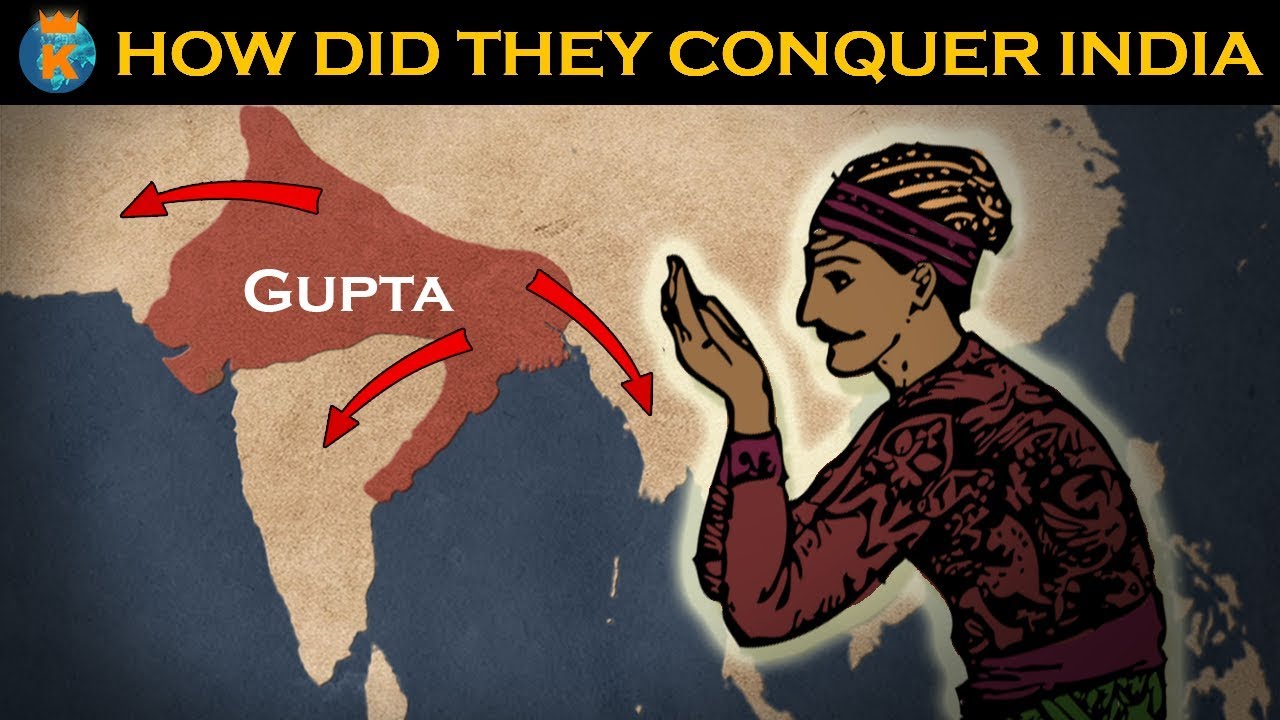
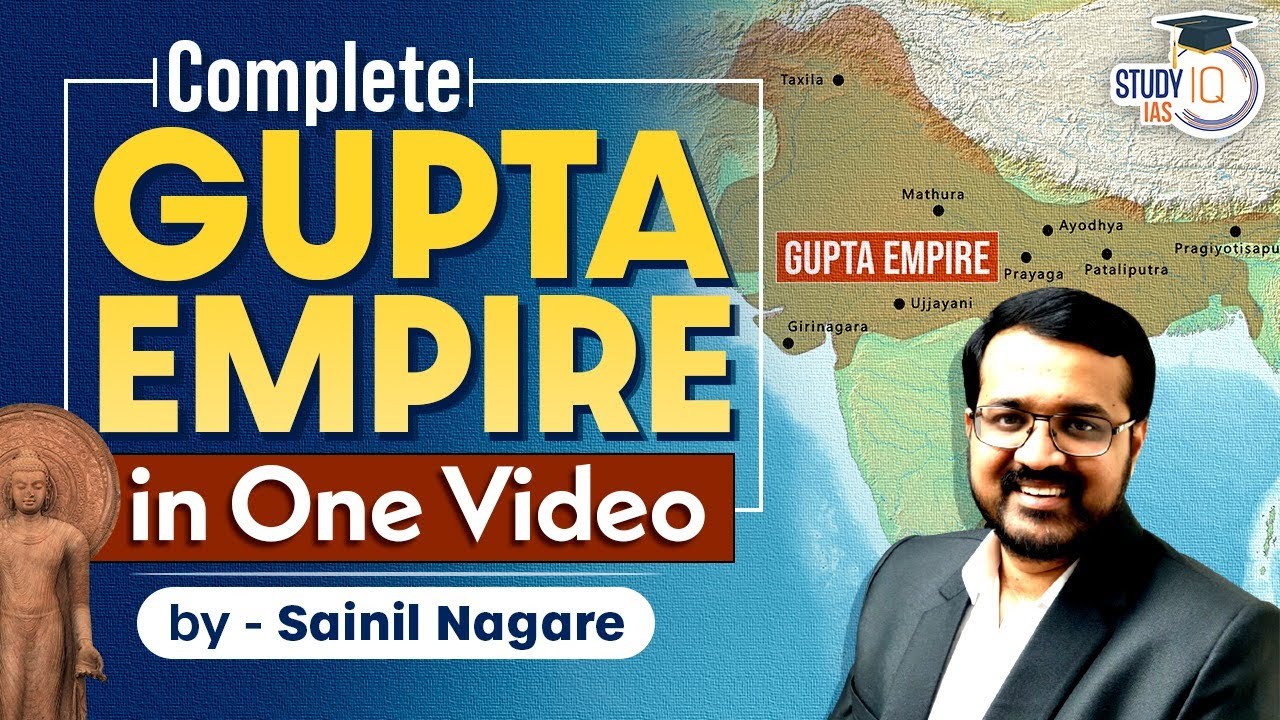
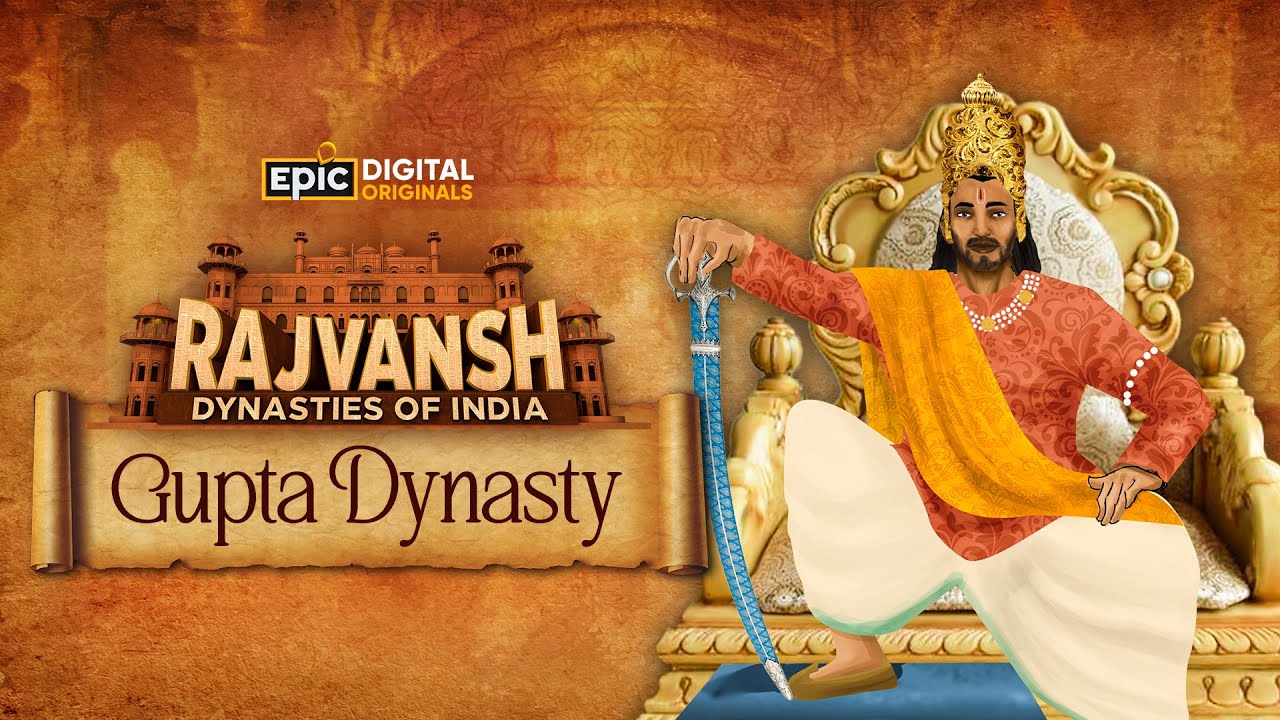
Embark on a captivating journey through the annals of Ancient Indian History, exploring the rise of the majestic Gupta Dynasty and the foundational reigns of Sri Gupta, Chandra Gupta I, and the legendary Samudra Gupta. This period, known as the 'Golden Age of India,' is critical for UPSC and other competitive exam preparation, offering deep insights into India’s political consolidation and cultural efflorescence under these powerful rulers. The lineage established a massive footprint across the northern heartlands, eventually rewriting the administrative and artistic frameworks of the entire subcontinent.
In this chapter, you will understand:
- The modest origins and feudatory beginnings of early rulers like Sri Gupta and Ghatotkacha.
- How Chandra Gupta I secured independence and launched the official Gupta Era in 320 AD.
- The profound geopolitical impact of the Lichchhavi matrimonial alliance and its depiction on gold numismatics.
- The sweeping pan-Indian military campaigns, diplomatic strategies, and artistic legacy of Samudra Gupta.
Why this topic matters: Understanding the transition from decentralized regional kingdoms to a grand centralized empire provides basic analytical frameworks essential for answering high-scoring historical questions in civil services examinations.
Core Idea: The early Guptas transformed a small regional fiefdom in Magadha into a sovereign imperial power through brilliant marital diplomacy and aggressive military conquests. Rulers like Chandra Gupta I gave the dynasty its sovereign base, while Samudra Gupta extended its authority across the far corners of northern and southern India. This dual strategy of direct rule and tributary networks anchored centuries of stable civilizational progress.
The Foundational Rulers of the Gupta Empire (275–320 AD)
The story of the Gupta Empire begins with modest origins, tracing the lineage of the early rulers who paved the way for future imperial greatness. The earliest known rulers of the dynasty, whose records are partially preserved through various inscriptions, initially held a subordinate or regional position before ascending to supreme power across North India.
Early Gupta Kings and the Feudatory Period
The first two acknowledged rulers, Gupta and Ghatotkacha, were often styled as Maharajas, suggesting they governed as vassals or regional chieftains before the dynastic ascent to true imperial status.
Maharaja Gupta: The Pioneering Prince
The historian Vincent Smith meticulously places the reign of this early ruler, Maharaja Gupta, in the final quarter of the 3rd century AD, specifically between 275 and 300 AD, marking a crucial foundational era for the dynasty. His significant status, even as a feudatory, is attested not only by Samudragupta’s inscription but also by the Poona Plates of the Vakataka queen, Prabhavatigupta, underscoring his dynastic relevance.
- (i) The narrative often begins with Sri Gupta, whose existence is supported by the accounts of the Chinese traveler Itsing, though the details of his immediate successors remain shrouded in historical ambiguity.
- (ii) Historical consensus suggests that Sri Gupta’s descendants diligently accumulated influence, gradually transforming their regional status into a burgeoning political force across Magadha and its adjacent territories.
- (iii) The title Maharaja conferred upon him in the Allahabad Pillar Inscription is key, as it generally denoted a subordinate ruler during this time, contrasting sharply with the later imperial title of Maharajadhiraja.
Maharaja Ghatotkacha: Successor to Gupta
Following Maharaja Gupta, the historical account mentions his son, Maharaja Ghatotkacha, also referenced in the pivotal Allahabad Pillar Inscription. This ruler continued the tradition of bearing the Maharaja title, indicating the family’s continuation in a position of regional strength rather than outright imperial sovereignty.
- (a) Early scholarly attempts by figures like Bloch to link him with a Ghatotkacha Gupta on a seal from Vaishali were eventually dismissed due to the specific and consistent use of the name Ghatotkacha alone in authoritative inscriptions.
- (b) The lack of the imperial title confirms that the Gupta Empire was still in its preparatory phase, with power awaiting consolidation by the next generation of rulers.
Chandra Gupta I: The First Independent Sovereign (320 A.D.)
The true dawn of the imperial era arrived with Chandra Gupta I, son of Ghatotkacha, who successfully transformed the family's regional status into a dominant North Indian empire. His political calculations fundamentally shifted the administrative geography of ancient India.

- Territorial Development and Sovereign Strategy
The Ascension and the Gupta Era
Chandra Gupta I distinguished himself as the first independent sovereign of the dynasty. His accession to the throne in 320 A.D. was so momentous that it formally commenced the Gupta Era, a calendar system that became the hallmark of the imperial age and is a key date for historical studies.
- (i) Mirroring the political strategy of ancient rulers like Bimbisara, Chandra Gupta I astutely fortified his political and territorial standing through a powerful matrimonial alliance.
- (ii) This strategic union involved marriage to the renowned Lichchhavi princess, Kumaradevi, linking the emerging Gupta power with the prestigious and influential Lichchhavis of Vaisali or Nepal.
- (iii) This marriage alliance is considered the cornerstone event that effectively laid the foundation for what is often termed the Second Magadhan Empire, dramatically increasing the legitimacy and resources of the Guptas.
The Lichchhavi Alliance and Coinage Significance
The monumental political achievement of the Lichchhavi alliance was so profound that Chandra Gupta I chose to immortalize it on a unique series of gold coins, serving both as currency and as a potent political statement.
- (i) The Obverse of these distinctive coins features the majestic depictions of Chandra Gupta I and his queen, the Lichchhavi princess Kumaradevi, signifying their joint political stature.
- (ii) The Reverse of the coin bears the image of Goddess Lakshmi, a symbol of fortune and prosperity, accompanied by the inscription "Lichchhavayah," which scholars interpret as an acknowledgement that the Guptas' new success stemmed from their connection to the Lichchhavis.
- (iii) The political implication of this union remains a subject of debate: Vincent Smith suggested that Chandra Gupta I acquired Pataliputra by inheriting the Lichchhavi power, while Allan argued that Pataliputra was already under Gupta control since the time of Sri Gupta.
Territorial Extent of Chandra Gupta I’s Rule
According to the crucial evidence from Samudra Gupta’s inscriptions and corroborating Puranic texts, Chandra Gupta I’s empire, while significant, was initially constrained primarily to the heartland of Magadha and its immediate vicinity, showcasing the genesis of imperial power. The Puranic verse: "Anu-Ganga-Prayagamcha Saketam Magadhashstatha Etan janapadan sarvsn bhokshyante Guptavamsajah" provides a clear, concise picture of the core Gupta dominions during his time.
- (i) Prayaga (Modern Allahabad) was a key western boundary of the core empire.
- (ii) Saketa (Modern Oudh) defined the northern extent of the directly controlled region.
- (iii) Magadha (Modern South Bihar) served as the dynastic and administrative heartland.
- (iv) Interestingly, Vaisali (North Bihar) is conspicuously absent from this list, suggesting it may not have been under direct Gupta control at this initial stage and only appears firmly under their dominion during the reign of Chandra Gupta II.
- (v) The acquisition of Prayaga likely involved the defeat of local kings, such as Maharaja Gautamiputra Sri Sivamagha and Rajan Vasishthiputra Bhimasena, whose presence is recorded in inscriptions found at Bhita.
The Succession of Samudra Gupta and the Warrior Emperor
Chandra Gupta I’s strategic selection of his successor, Samudra Gupta, marked another turning point, ushering in the reign of arguably the greatest Gupta Emperor and transforming the empire's scale to a subcontinent-spanning entity.
- Imperial Operations and Military Inscriptions
Samudra Gupta: Chosen for Kingly Virtues
In a powerful demonstration of foresight, Chandra Gupta I made the crucial decision to nominate his son, Samudra Gupta, as the next ruler in a formal assembly attended by councilors (Sabhyas) and royal princes. This choice was based on Samudra Gupta’s visibly demonstrated leadership qualities and inherently regal virtues.

Numismatic artifact proving the musical expertise and peaceful artistic pursuits of the warrior king - (a) The Riddhapur inscription refers to Samudra Gupta as "Hatpadaparigrihita," emphatically stating that he was specifically chosen for the throne from amongst all his brothers, a key detail confirming the deliberate succession plan.
- (b) Samudra Gupta, the fourth in the Gupta lineage, is celebrated as the most formidable of the Gupta emperors, a reputation founded on his unparalleled military genius and administrative acumen.
The Allahabad Prasasti: A Testament to Conquest
To eternally memorialize the colossal military and diplomatic achievements of Samudra Gupta, his gifted court poet, Harishena, composed a detailed panegyric inscription, known as the Allahabad Prasasti. This masterpiece was engraved on an already existing Ashokan Pillar, using the elegant Gupta Brahmi script and blending classical Sanskrit prose with refined poetry.
- (i) The original Ashokan Pillar was erected in Kaushambi and later relocated, eventually finding its place in the Allahabad Fort by the Mughal Emperor Akbar, highlighting its enduring significance across millennia.
- (ii) This Prasasti, dated between 365-370 A.D., provides a structured account of the Emperor’s campaigns, categorized into four distinct and strategic phases, completed towards the latter part of his victorious reign.
Structure and Phases of the Conquests
The Allahabad Inscription meticulously documents the comprehensive scope of Samudra Gupta’s martial enterprise, delineating the diverse nature of his conquests and political strategies across the Indian subcontinent.
- (i) First Phase (Aryavarta): The inscription records the annexationist conquests against nine named kings and several unnamed rulers located in the vital Gangetic plain.
- (ii) Second Phase (Dakshinapatha): This details the impressive victories over 12 kings of South India, where he followed a policy of capture, liberation, and reinstatement.
- (iii) Third Phase (Atavika): This covered the defeats and subjugation of the various forest tribes (Atavika Kingdoms) and local chieftains, consolidating power over central and undeveloped regions.
- (iv) Fourth Phase (Frontier & Gana-Sanghas): This describes the diplomatic submission of rulers from the frontier kingdoms and the Gana-Sanghas (republics), who offered tribute and personal service.
The Annexation of Aryavarta: The Northern Heartland
Adopting an aggressive military policy from the outset of his reign, Samudra Gupta prioritized the expansion and consolidation of his empire across Aryavarta, the Aryan heartland, achieving unparalleled military success and territorial expansion.
- (a) The campaign against the kingdoms to the west of Magadha was swift and decisive, resulting in the defeat and direct annexation of the territories of nine kings, including Achyuta, Ganapati Naga (ruler of Padmavati), Nagasena, and Rudradeva.
- (b) The Prasasti’s use of the term "forcibly rooted up" (Sarvarajochchhetta) highlights the severity of the treatment meted out to the defeated northern rulers, whose kingdoms were permanently absorbed into the expanding Gupta Empire.
- (c) The focus here was on direct rule, transforming the Gupta Empire's core territory into a powerful, unified administrative unit.
The Strategic Southern Campaign: Dakshinapatha
The conquest of South India was a logistical and military triumph, demonstrating Samudra Gupta’s capacity for grand strategy and controlled aggression. Recognizing the vast distance, he formulated a distinct policy of conquest for the southern lands.
- (i) The campaign was guided by the pragmatic three-fold principle: Grahana (Capturing the King), Moksha (Liberating the King), and Anugraha (Reinstating the Ruler), a policy ensuring political stability over logistical strain.
- (ii) The southern campaign, completed around 350 A.D., involved defeating 12 kings of Dakshinapatha, including Mahendra of Kosala, Vyaghra-raja of Mahakantara, and most notably, Vishnugopa of Kanchi.
- (iii) Samudra Gupta followed a complex route, marching through the Chota Nagpur Plateau, sweeping down the eastern coast (conquering Pishtapura, Vengi, and Kanchipuram), and finally returning north via the western Deccan.
- (iv) The impact of this campaign was profound: unlike the north, the southern kingdoms were not annexed but were required to pay tribute in gold and wealth, acknowledging Gupta suzerainty while retaining local autonomy.
The Subjugation of Frontier Kingdoms and Tribal States
The military success of Samudra Gupta instilled fear and respect in the surrounding buffer states, the Pratyanta nrupatis (frontier kings), and the various tribal states, leading to their voluntary submission and the expansion of the Gupta sphere of influence.
- Eastern and Northern Pratyantas: Important kingdoms like Samatata (Eastern Bengal), Davaka, and Kamarupa (Assam) submitted, alongside northern states like Nepal and Kartripura (Kumaun/Garhwal).
- Western Tribal States: Influential tribal republics (Gana-Sanghas) on the fringes of Aryavarta also paid homage, including the powerful Malavas (Eastern Rajasthan), Yaudheyas (Sutlej region), Madrakas (Sialkot), and Abhiras (Lower Indus).
- Foreign Relations: Distant foreign powers, notably the remnants of the Kushan dynasty (Daivaputra-Shahi-Shahanushahi) and the Saka Murundas, sought to secure peace by offering personal service, gifts, and begging for seals marked with the Garuda sign to allow them to rule their respective provinces.
The Revival of the Aswamedha Sacrifice
After six centuries, Samudra Gupta celebrated his pan-Indian dominance and proclaimed his status as a Chakravartin (universal ruler) by reviving and performing the ancient Vedic rite of the Aswamedha (the horse sacrifice) with immense splendour, a monumental religious and political act.
- (i) The ceremony was marked by unprecedented generosity, including the gifting of 100,000 cows and the distribution of millions of gold and silver coins, a small number of which survive and reveal the Emperor's Vaishnavite leanings.
- (ii) The title Asva-medhaparakrama (Whose might was demonstrated by the horse sacrifice) was inscribed on special coins, which also depicted the Garuda of Vishnu and the umbrella insignia of the Samrat.
The Emperor: A Patron of Arts and a Polymath
Beyond his formidable military and administrative genius, Samudra Gupta was a highly cultivated individual, excelling as a patron of arts, literature, and music, reinforcing the image of the complete warrior-king.
- (a) He was proficient in both music and poetry, a fact physically evidenced by rare coins that depict him seated on a couch, elegantly playing the veena, an Indian lute.
- (b) He was a great patron of the arts, cultivating learned individuals such as the renowned Buddhist scholar Vasubandhu, demonstrating a keen intellect and polished wisdom alongside his martial prowess.
- (c) The historian Vincent Smith’s comparison of him to the “Napoleon of Ancient India” is generally dismissed as unjust because Samudra Gupta exhibited greater strategic wisdom, avoiding overextension and successfully consolidating his empire, unlike the later European conqueror.
Quick Revision Capsule: Early Gupta Sovereigns
Review the primary rulers, administrative achievements, and strategic territorial milestones of the early imperial era:
| Ruler Name | Imperial Title & Governance Type | Core Political Milestone |
|---|---|---|
| Sri Gupta | Maharaja (Regional Vassal Status) | Founded the family line in Magadha; observed by traveler Itsing. |
| Ghatotkacha | Maharaja (Regional Vassal Status) | Maintained regional holdings; verified through the Allahabad Pillar data. |
| Chandra Gupta I | Maharajadhiraja (Independent Sovereign) | Initiated the Gupta Era (320 AD); launched the vital Lichchhavi alliance. |
| Samudra Gupta | Chakravartin / Sarvarajochchhetta (Imperial Overlord) | Executed sweeping campaigns across Aryavarta and Dakshinapatha. |
Summary
The reigns of the early rulers, culminating in the masterful expansion under Samudra Gupta, established the Gupta Dynasty as the foremost power in Ancient India. His astute policies—direct annexation in the north (Aryavarta) and tributary suzerainty in the south (Dakshinapatha)—created a vast and stable empire, fundamentally important for students of history as a case study in effective imperial governance. His cultural contributions and military titles like Apratiratha and Sarvarajochchhetta solidified the Gupta Empire as the 'Golden Age' of Indian civilization, a period of uninterrupted prosperity and political stability.
Key Revision Points
Focus on these central historical checkpoints during final revisions:
- (i) The early rulers bore only the title Maharaja, which points directly to regional, non-sovereign control.
- (ii) The year 320 AD marks the start of the Gupta Era calendar system under Chandra Gupta I.
- (iii) The Allahabad Prasasti composed by poet Harishena remains the vital text detailing imperial expansions.
- (iv) Southern political control centered on tributary status rather than outright physical annexation.
- Exam Tip: Pay special attention to the three-fold formula of the Southern campaign—Grahana, Moksha, and Anugraha. Examiners frequently test these precise technical terms in objective and analytical descriptive papers.
Frequently Asked Questions (FAQ)
Q1: Why is the Lichchhavi alliance considered vital to the early Guptas?
A1: The matrimonial connection provided the rising dynasty with elite political legitimacy, vast spatial resources, and helped build what historians call the Second Magadhan Empire.Q2: How did Samudra Gupta's policy differ between Northern and Southern states?
A2: Northern kingdoms in Aryavarta were forcefully uprooted and directly annexed into the state. In contrast, Southern rulers in Dakshinapatha were liberated and reinstated as tribute-paying vassals.Q3: What makes the Allahabad Prasasti an authentic historical source?
A3: Written by court poet Harishena and engraved directly into a permanent Ashokan Pillar using ancient Brahmi script, it lists explicit names of rulers and specific geographic locations vanquished during the campaigns.