The reign of Chandra Gupta II Vikramaditya, the esteemed successor of Emperor Samudra Gupta, marks a pivotal era in ancient Indian history, often hailed as the Golden Age of the Gupta Empire. This period, commencing around 378 AD, is crucial for students preparing for history and civil service exams, as it details the consolidation of an extensive empire and the complex political events, including the dramatic narrative of the Devichandragupta play, showcasing the emperor’s strategic valor and administrative acumen.
In this chapter, you will understand:
- The dramatic succession mystery involving Rama Gupta and Chandra Gupta II.
- The tactical border consolidation across the Punjab and Indus region.
- The historic campaigns and complete annexation of the Saka Kshatrapa territories.
- The administrative architecture and international trade boom of the Golden Age.
Why this topic matters: This era marks the structural pinnacle of ancient Indian statecraft, economic integration, and cultural expansion, making it an essential core topic for institutional history exams and civil service evaluations.
Core Idea: Emperor Chandra Gupta II secured an unstable throne near 378 AD, eliminated foreign threats along the northwestern frontier, and launched a monumental western campaign that permanently erased Saka power. By securing vital coastal ports and installing a dual-capital framework, he guided the Gupta sovereign sphere to its highest point of global wealth and political stability.
Chandra Gupta II Vikramaditya: Succession Controversy and Strategic Rise (Circa 378 AD)
The officially accepted imperial lineage, rooted in the Gupta inscriptions, narrates the peaceful transfer of power, yet historical literature and records hint at a dramatic and complex path to the throne for the valiant Chandra Gupta II. According to the standard historical account, the title of Chakravartin of Arya-Varta held by Emperor Samudra Gupta was inherited by his son, Chandra Gupta II, born to Queen Datta Devi. This anointed heir subsequently adopted the prestigious title of ‘Vikramaditya’, a moniker signifying ‘the sun of valour’, a fitting title for his future conquests.
The Devichandraguptam Narrative: A Literary Historical Insight into Gupta Succession
The study of historical sources demonstrates that while epigraphic records are primary, literary works can offer crucial, sometimes controversial, details that supplement and challenge accepted histories, as seen in the succession of Samudra Gupta.
The Controversial Plot of Visakhadatta’s Devichandragupta
The Sanskrit play Devichandragupta, penned by the famous dramatist Visakhadatta (potentially a contemporary of Chandra Gupta II), unveils a sequence of events sharply contrasting the inscriptions, detailing a fratricidal struggle for power and the throne’s immediate occupant after Samudra Gupta's demise.
- (i) The play posits that Rama Gupta, the elder son of Samudra Gupta and the brother of Chandra Gupta II, was initially crowned king upon their father’s death.
- (ii) The king, Rama Gupta, displayed cowardice by agreeing to surrender his own lawful wife, Queen Dhruvadevi, to the invading Sakas to appease his terrified subjects and prevent further conflict.
- (iii) This dishonorable act enraged the queen and provided the catalyst for Prince Chandra Gupta II’s intervention, where he cunningly disguised himself as Queen Dhruvadevi to infiltrate the Saka camp.
- (iv) This successful stratagem led to the assassination of the Saka king, turning impending national shame into a glorious victory, a moment which solidified Chandra Gupta’s heroic stature.
- (v) Following the victory, Chandra Gupta II performed a final, drastic maneuver: he murdered his weak brother, Rama Gupta, thereby seizing the kingdom and subsequently marrying the widowed queen, Dhruvadevi.
Literary and Epigraphic Support for the Succession Story
This dramatic literary account is not isolated; its veracity is reinforced by references in other ancient works and, significantly, by confirmations found in epigraphic records and later commentaries, lending substantial weight to the narrative of regicide and remarriage.

- Literary Echoes: The story finds mention in the works of several esteemed ancient poets, including Banabhatta’s Harsacharita, the commentary on it by Sankararya (dating to 1713 AD), and even Abul Hasan Ali’s Majmal-ut-Tawarikh (from 1026 AD), which was based on an earlier Hindu text.
Archaeological and Inscription Validation
Tangible political and legal markers support the reality of this complex transition of power.
- [Gupta Inscription Confirmation: The Gupta inscriptions themselves contain crucial confirming details, validating that Chandra Gupta II did indeed marry Dhruvadevi, his brother’s widow, and that their son, Kumara Gupta, succeeded him, underscoring the political importance of this union.]
- [Sanjan Plate Testimony: The Sanjan plates of Amoghavarsa I (from 871 AD) carry a powerful, explicit inscription stating that a donor of the Gupta lineage killed his brother to seize both kingdom and wife.]
- [Archaeological Evidence: Further supporting evidence comes from Vaishali, where Dhruvadevi’s seals were found, explicitly identifying her as the crowned queen of Chandra Gupta II.]
- [Legal Standing: Contemporary Hindu legal texts confirmed that remarriage to a brother's widow was socially permissible in that era under specific structural circumstances.]
Initial Challenges and Consolidation of the Gupta Empire (Circa 378 AD)
The ascent of Chandra Gupta II to the throne around circa 378 AD, following the discredited reign of Rama Gupta, required immediate attention to the vast but politically fragmented empire inherited from his father, which was characterized by both loyal core regions and loosely bound frontier states.
- The empire left by Samudra Gupta was more of a federation of autonomous states bound by common interests than a tightly centralized unit.
The Reign of Rama Gupta and Early External Threats
The weakness displayed during the Rama Gupta period emboldened external forces to attempt disintegration and invasion, which Chandra Gupta II decisively confronted.
The strategic northwestern border tracks where Kushana elements sought imperial destabilization. - [Empire’s Structure: The core territories of Hind were firmly integrated, but the border regions in the east, north, and northwest maintained a looser, allied relationship, making them vulnerable points of entry.]
- [Kushana Exploitation: During the short, ignominious rule of Rama Gupta, the Kushana king seized the opportunity to exploit the internal instability of the Gupta realm, posing a significant threat to the northwestern frontiers.]
- [Chandra Gupta II’s Intervention: The future Vikramaditya heroically intervened, demonstrating his military prowess by successfully repelling this major Kushana threat, a victory that preceded his formal claim to the throne.]
Strengthening Northwestern Borders and Control Over Punjab
The military campaigns of Chandra Gupta II were not only defensive but aimed at strategic expansion and fortification of the empire’s borders, particularly in the vital northwestern region, setting the stage for future conquests and demonstrating his ambition to be the sole sovereign.
- [Victory over the Bhalikas: The Mehrauli Iron Pillar inscription, a testament to Chandra Gupta II’s glory, proudly records his decisive victory over the Bhalikas, achieved by the extraordinary feat of crossing the seven mouths of the Sindhu River.]
- [Consolidation of Punjab: This victory effectively strengthened the empire’s northwestern borders and brought solidified control over the critical region of Punjab, integrating it more fully into the Gupta domain.]
- [First Gupta Record in Mathura: Chandra Gupta II holds the distinction of being the first Gupta sovereign whose records, including inscriptions and coins, were discovered in Mathura, highlighting the deep penetration of Gupta authority into central India.]
- [Religious Devotion: His Mathura inscription praised the rule of his father, Samudra Gupta, but also emphasized his own strong devotion to the Bhagavata religion (Vaishnavism), suggesting a personal affinity for the deity Vishnu.]
- [Coinage Trail: The distribution of his silver coins throughout the eastern Punjab, extending as far as the banks of the Chenab, provides numismatic evidence of the geographical extent of his consolidated authority.]
The Mathura Pillar Inscription: An Early Saivite Record
Among the records discovered in the region, a specific stone pillar inscription provides early dating for his reign and a significant detail about the religious diversity and patronage under his rule, despite his personal Vaishnavite faith.
- [Pillar Details: This stone pillar inscription, found in a Mathura garden, consists of seventeen lines, although the crucial section detailing the Gupta era and regnal year is unfortunately damaged, preventing an exact date.]
- [Reign Confirmation: Despite the damage, it confirms that Maharajadhiraja Chandra Gupta II, the worthy son of Samudra Gupta, was firmly ruling from circa 380 AD.]
- [Temple Construction: Significantly, the inscription records the construction of a temple dedicated to Shiva, named Kapilesvara, reinforcing the Saivite affiliation through a carving of a naked Sivagana on the pillar, making it one of the earliest dated records from his reign.]
War Against the Saka Kshatrapas: The Conquest of Malwa and Kathiawar (Circa 401 AD - 409 AD)
Having stabilized the northern frontiers, Chandra Gupta II focused his strategic attention southward, launching a decisive and gradual campaign against the resurgent Saka Kshatrapas in the western territories, a war that culminated in the complete annexation of their dominion. The Emperor strategically secured the region from the Jalandhar Doab to Mathura in the two years immediately following his accession before turning to the southern part of the northwestern frontier where the Kshatrapas had aggressively attempted a political and military revival.
The Definitive Gupta Conquest of Western India
With his own frontiers secured, Chandra Gupta II initiated the campaign to absorb the Kshatrapa domain. While numismatic evidence suggests the main conquest took place around 409 AD, inscriptions indicate that the occupation of Malwa began significantly earlier, around 401 AD, signifying a well-planned, gradual military and administrative absorption.
| Historical Event / Record | Strategic Mechanism & Data Variables | Core Target & Objective Metric |
|---|---|---|
| Kshatrapa Decline Phase | Coinage irregularities between 305 AD and 348 AD; elimination of the Mahakshatrapa title. | Documented by Rapson, proving institutional weakness under pressure from Vakataka and early Gupta forces. |
| Saka Revival Attempt | Sakas under Rudrasena III and Svami Simhasena restored titles around 382–384 AD. | Launched aggressive military pushes to recapture key economic hubs like Ujjain. |
| Udayagiri Inscriptions | Dated 401–402 AD; records dynamic administrative gifts from a local Sanakanika chief. | Confirms early direct military occupation of Malwa under Chandra Gupta II's personal leadership. |
| Virasena Cave Temple Excavation | Constructed by Virasena (Saba), the imperial Minister of Peace and War (Sandhivigrahika). | Establishes deep structural presence, ministerial mobilization, and direct royal campaign patronage in the West. |
| Sanchi Inscription & Coin Circulation | Sanchi stone record dated 412–413 AD matched with expansive silver coin drops. | Proves absolute absorption of Malwa and complete termination of Saka Kshatrapa rule in Kathiawar. |
Summary
The successful campaigns against the Saka Kshatrapas transformed the Gupta Empire into a colossal state, prompting administrative changes, such as the establishment of a second capital, and leading to an era of unprecedented economic prosperity bolstered by control over key trade points. The Chinese traveler Fa Hien recorded the original capital as Pataliputra, but the Emperor’s western conquests necessitated a major administrative adjustment, leading to the creation of a dual capital system, with Ujjain serving as the new, strategically vital center.
Gupta Empire Geographical Zenith
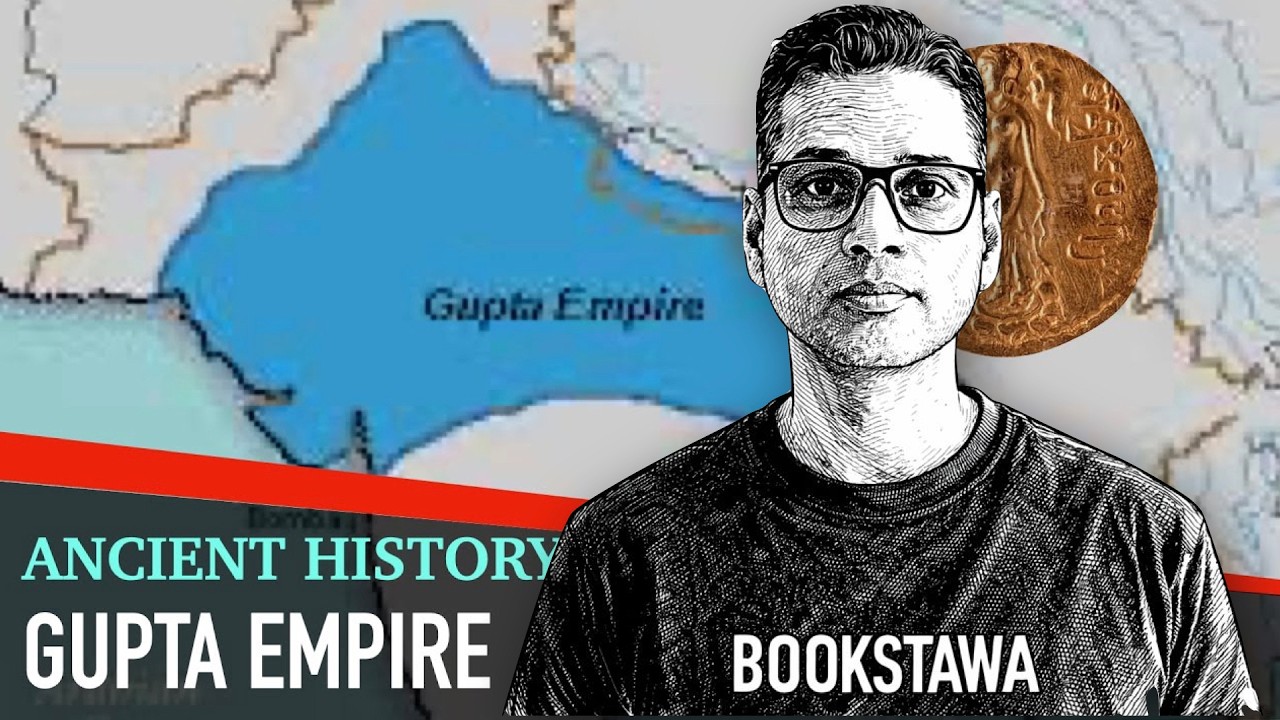
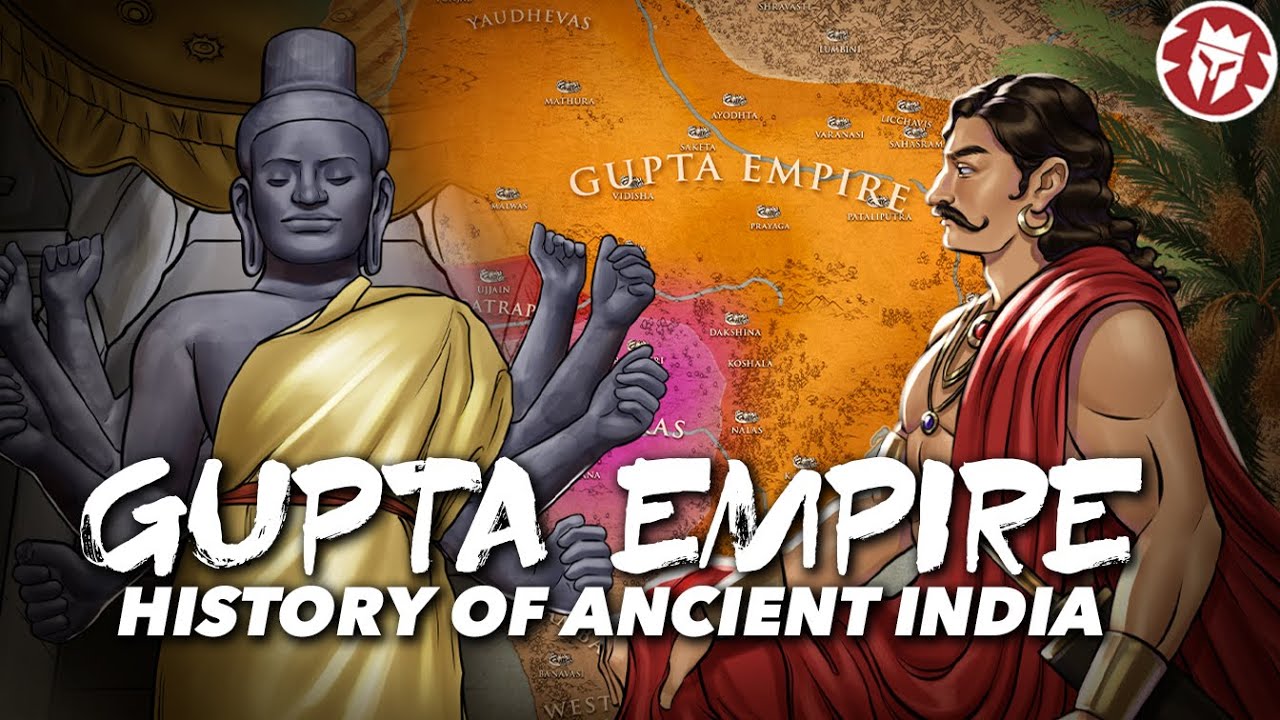
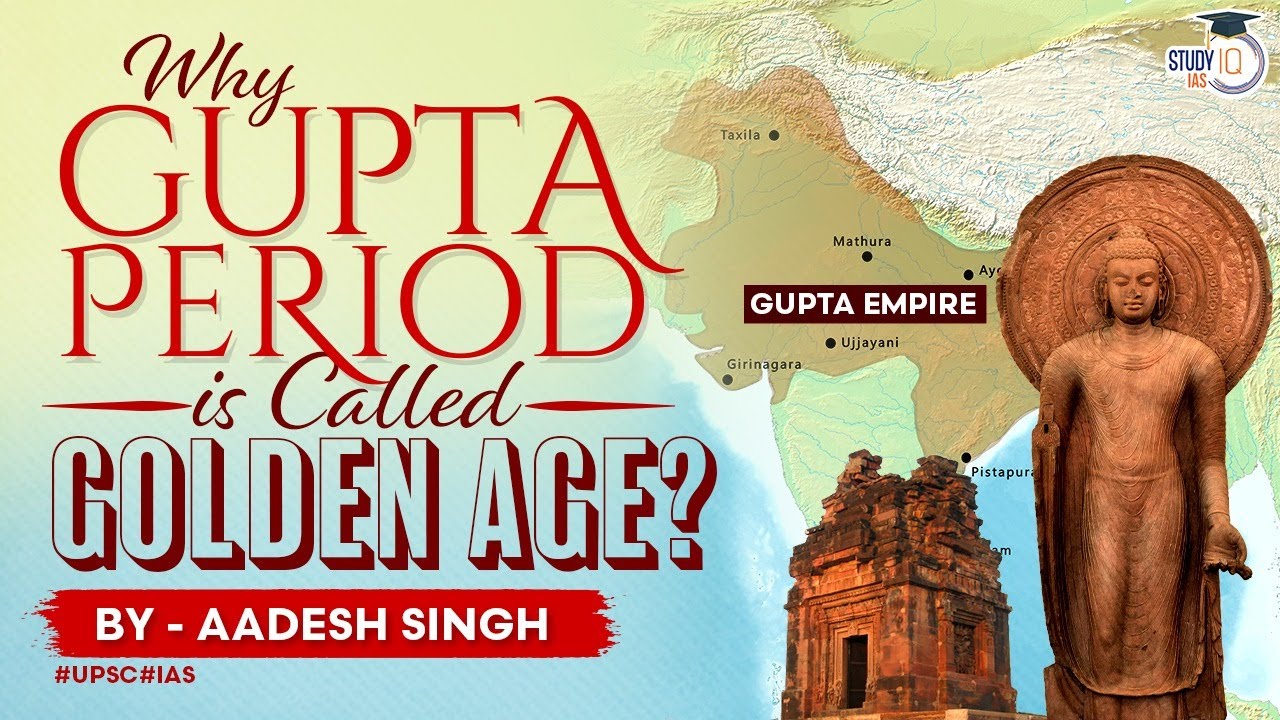
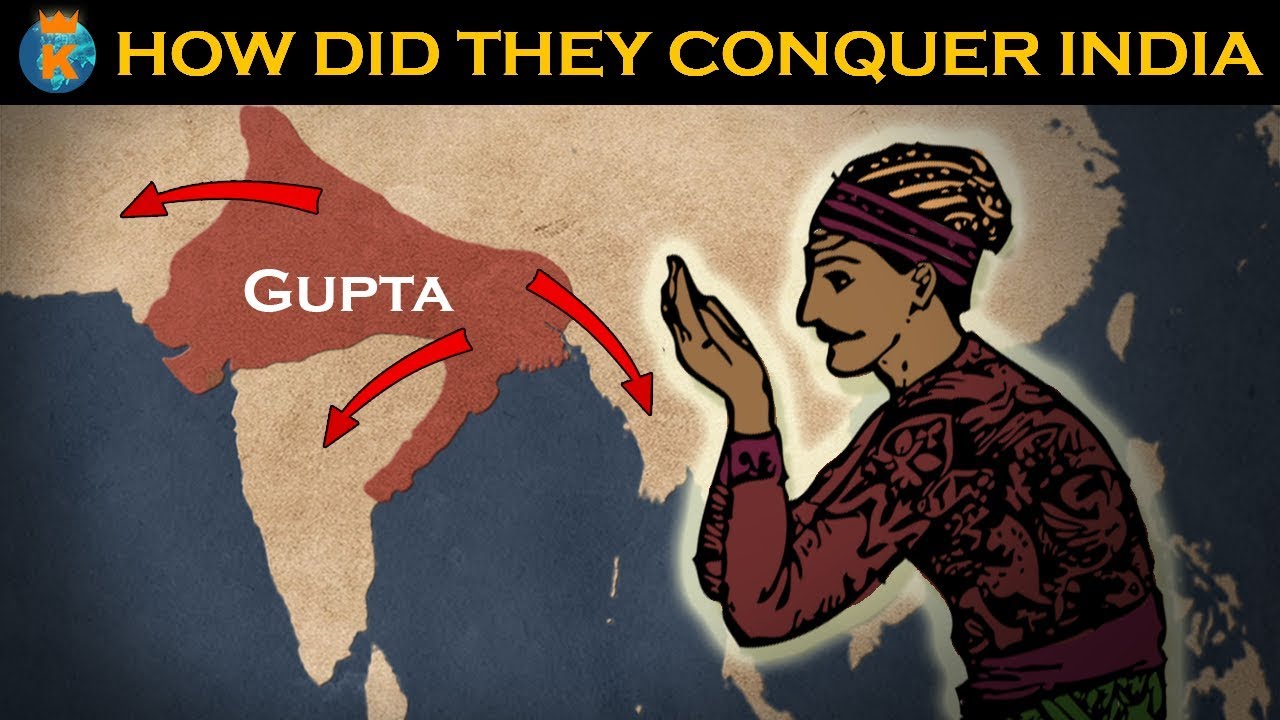
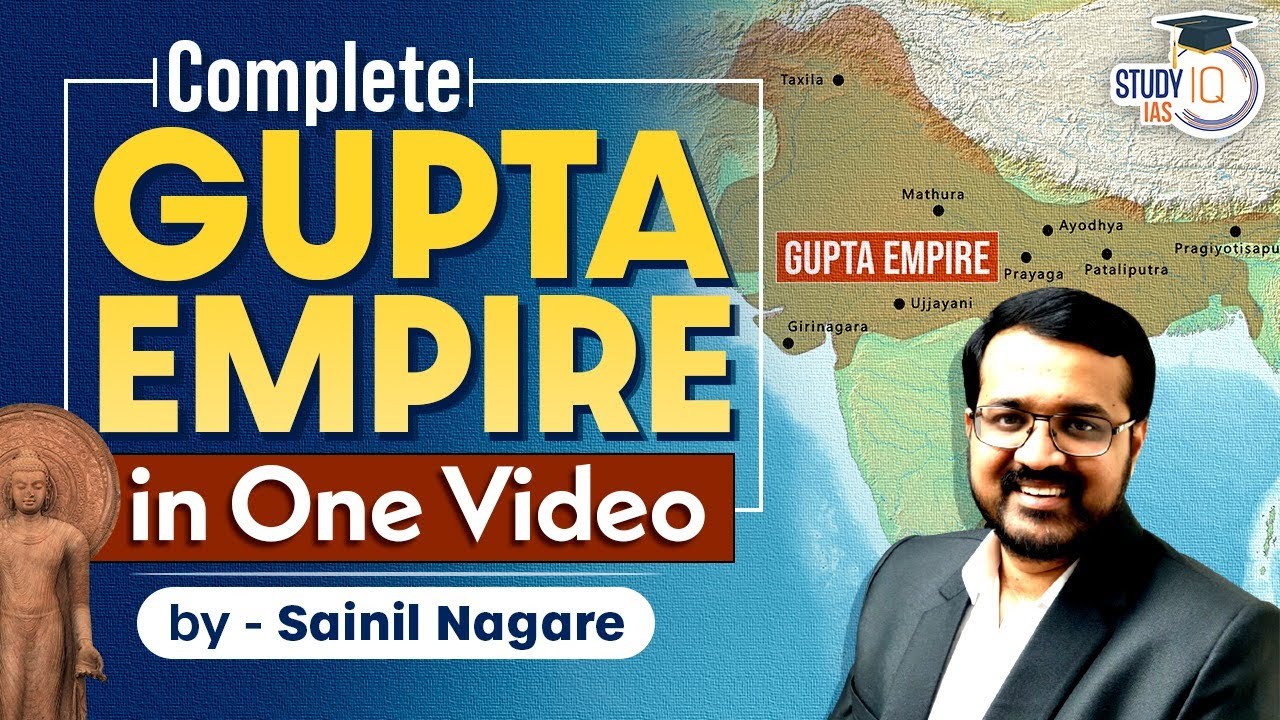
The fully consolidated empire now stretched from the Kathiawar Peninsula in the West to the borders of Eastern Bengal in the East, and from the Himalayas in the North down to the Narmada River in the South.
- (i) Core administrative divisions definitively included Bengal, Bihar, Uttar Pradesh, and Eastern Punjab.
- (ii) Newly conquered strategic centers encompassed the rich landscape of Central India (comprising Malwa, North Gujarat, and Kathiawar).
- (iii) The Mehrauli Iron Pillar inscription powerfully captured the extent of his authority, reflecting Chandra Gupta II’s grand claim as the “sole sovereign of the Earth.”
- (iv) Gupta control over the crucial Kathiawar ports led to an immense boost in European and African trade, turning the region into a major global commercial hub.
- [Exam Tip]: Remember for civil service papers that the annexation of Kathiawar gave the Guptas control over the western maritime routes. This caused a heavy influx of Roman gold in exchange for Indian goods, leading to an extraordinary variety of high-quality gold and silver issues under Chandra Gupta II.
Frequently Asked Questions (FAQ)
Q1: Who was Rama Gupta and why is his reign left out of major court inscriptions?
A1: Rama Gupta was the elder son of Samudra Gupta. According to literary accounts like the Devichandraguptam, his rule was considered shameful due to his cowardice in offering his queen to a Saka invader. Court inscriptions often omitted his name to focus directly on the unbroken, heroic lineage of Chandra Gupta II.Q2: What is the primary historical value of the Mehrauli Iron Pillar in relation to Chandra Gupta II?
A2: The Mehrauli Iron Pillar details the extensive military conquests of a king named 'Chandra', universally identified as Chandra Gupta II. It explicitly states his victories over the Bhalikas after crossing the seven mouths of the Sindhu River, proving firm imperial control over Punjab.Q3: How did the conquest of the Saka Kshatrapas change the economic structure of the Gupta Empire?
A3: Defeating the Sakas allowed the Guptas to annex Malwa and the Kathiawar peninsula. This gave the empire direct ownership of western sea-ports, opening up lucrative shipping trade channels with Europe and Africa, which brought a massive influx of Roman gold into India.