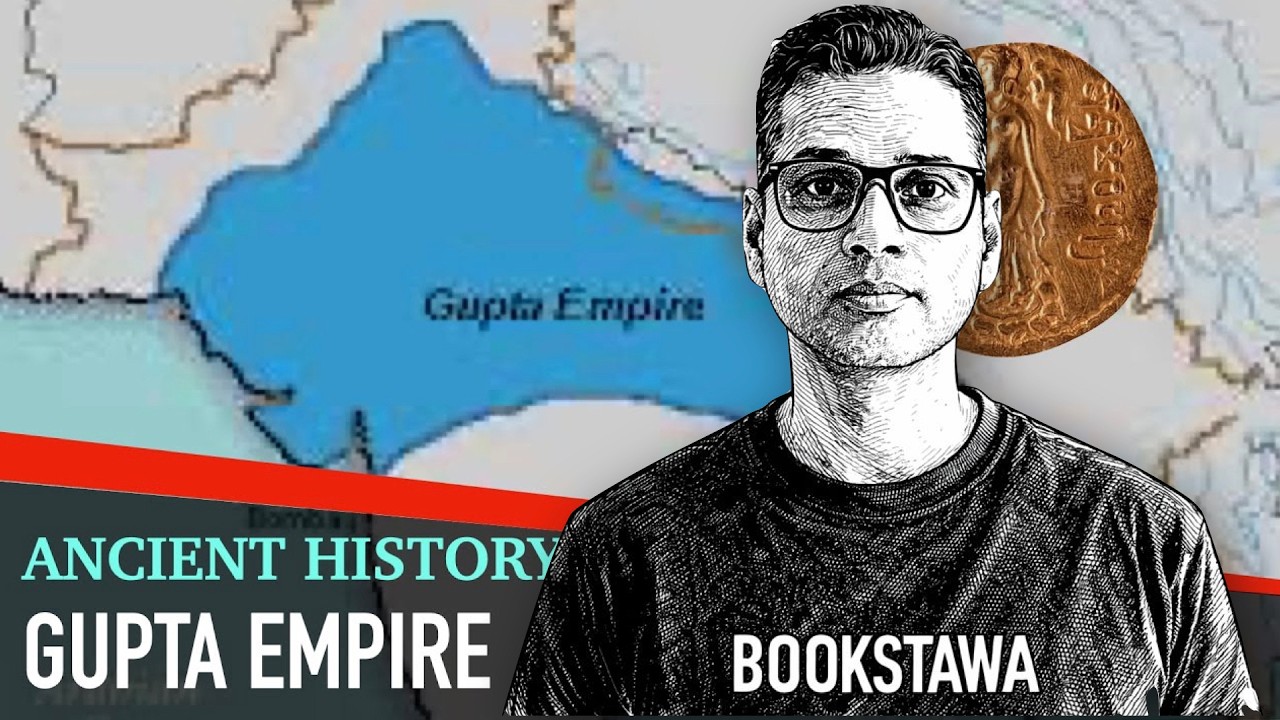
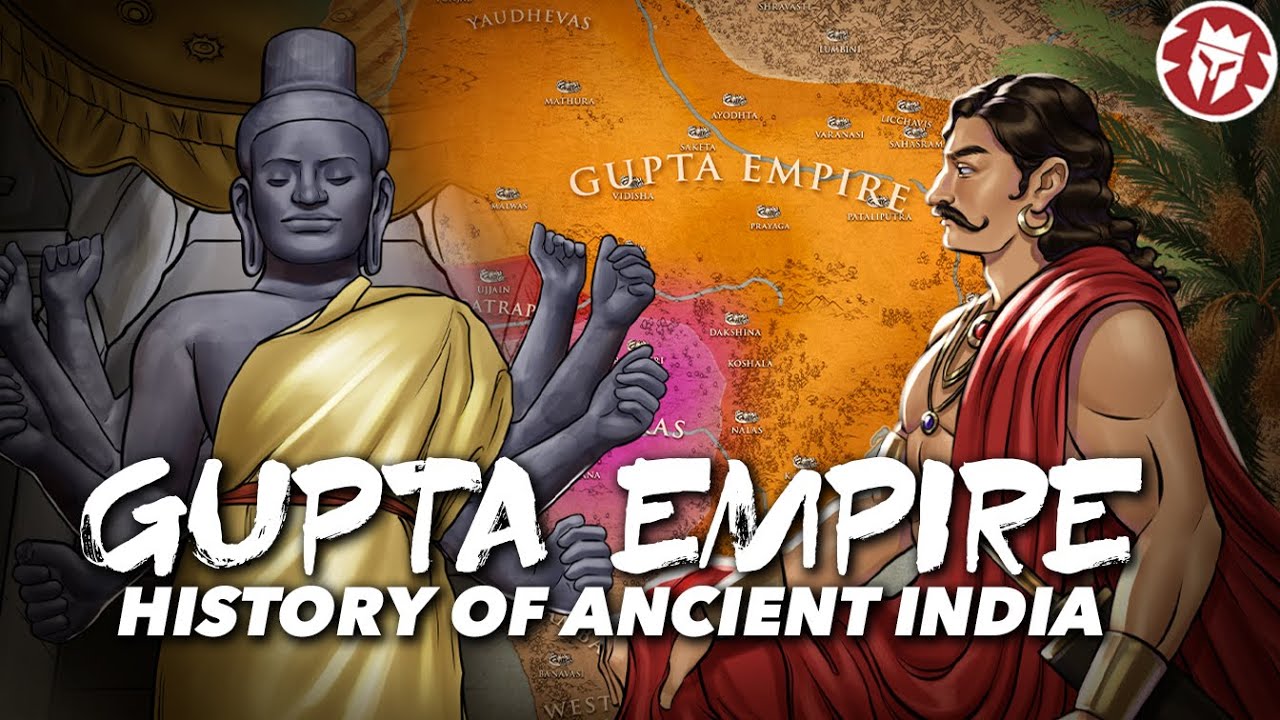
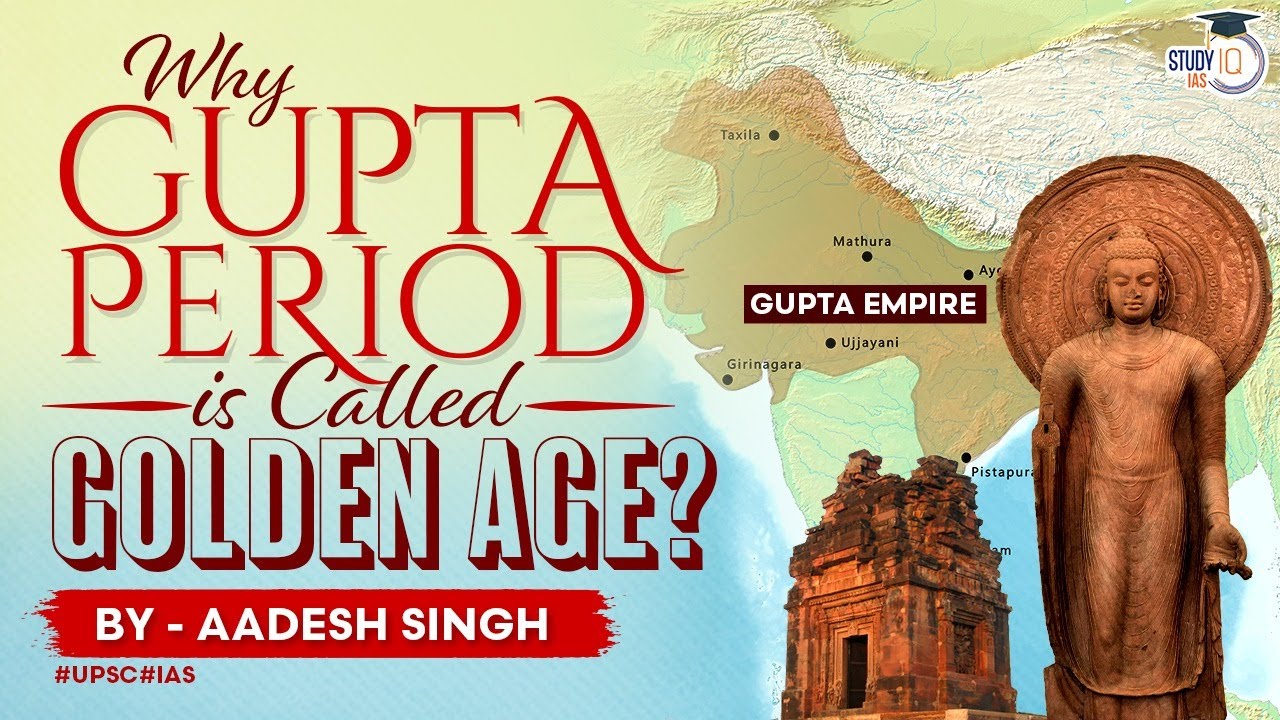
The historical reign of Chandra Gupta II, popularly celebrated in Indian traditions as Vikramaditya, extended from approximately 375 to 415 AD. This critical era represents the undisputed zenith and golden age of the Gupta Empire. It stands out in history for its remarkable milestone achievements, which include massive territorial gains, a highly synchronized and imperial administration, and an extraordinary level of cultural patronage. For students deep in preparation for competitive civil service and history examinations, analyzing this foundational phase provides vital structural clarity. The period unfolds a fascinating study of strategic diplomatic alliances, the immense commercial expansion of local guilds and commerce, and the timeless intellectual contributions made by the legendary Navaratnas, or Nine Gems, who illuminated his royal court.
In this chapter, you will understand:
- The geopolitical dynamics of the strategic marriage alliance with the Vakataka kingdom.
- The administrative architecture, local official hierarchies, and provincial governance frameworks.
- The socio-economic prosperity driven by independent merchant guilds and extensive currency minting.
- The profound intellectual, literary, and scientific contributions of the court's Nine Gems.
Why this topic matters: This historical phase outlines how a powerful ancient Indian monarchy successfully balanced aggressive military campaigns with sophisticated diplomacy. It offers valuable insights into institutional public governance, economic stability, and classical cultural developments regularly evaluated in academic curriculums.
Core Idea: The leadership style of Chandra Gupta II blended military capability with diplomatic foresight. By building a critical marriage alliance with the southern Vakataka state, he secured his frontiers to decisively defeat western invaders. This external security generated a stable environment that permitted domestic administration, internal commerce, global maritime trade, and classical arts to thrive collaboratively.
Chandra Gupta II's Strategic Diplomatic Alliance with the Vakataka Empire for Western Expansion (c. 375-415 AD)
The expansionist goals of the empire required a secure geopolitical framework. The cornerstone of Chandra Gupta II’s successful western expansion was a well-executed strategic alliance with the powerful Vakatakas, securing the southern flank of the Gupta Empire. The astute emperor, rather than engaging in a resource-draining and uncertain war, opted for a masterstroke of peaceful diplomatic approach to neutralize and co-opt the Vakataka kingdom, thereby freeing his forces for the conquest of Western India.
Matrimonial Alliance: Prabhavatigupta and Rudrasena II
The definitive action that cemented this strategic bond was the prestigious marriage of the Gupta princess into the Vakataka royal family, ensuring decades of Vakataka support and Gupta influence.
The Marriage of Prabhavatigupta and its Imperial Impact
In a grand dynastic maneuver, Chandra Gupta II arranged the marriage of his daughter, Prabhavatigupta, to Rudrasena II, the reigning Vakataka ruler. This union immediately transformed the Vakatakas from potential competitors into reliable allies, integral to the Gupta's imperial network.
- (i) The primary motivation behind this diplomatic move was to pre-emptively prevent the Vakatakas from emerging as a hostile or rival power along the Gupta's vital southern frontier.
- (ii) This strategic choice showcased Chandra Gupta II's brilliance as a statesman, valuing political stability and alliance over military conflict where feasible.
- (iii) This pivotal alliance effectively ensured the Vakataka support, both military and political, was directed towards the interests of the Gupta Empire.
- (iv) The political advantage deepened significantly when Prabhavatigupta took on the role of Regent; during her regency, the Gupta influence over the Vakatakas remained exceedingly strong, functioning almost as a controlled territory.
- (v) The strong familial and political relationship, which served as a linchpin of stability in Central India, continued to endure and benefit the Gupta Empire throughout the subsequent reign of Pravarasena II.
Chandra Gupta II's Administrative Efficiency and Imperial Governance (Vikramaditya)
Chandra Gupta II, the first Gupta sovereign to proudly adopt the celebrated title of Vikramaditya, presided over a vast domain, yet maintained an administration so highly efficient that imperial authority permeated even the most remote provinces.

- Centralized imperial mandates were uniformly balanced with distributed local execution authorities.
Royal Titles and Imperial Nomenclature
The emperor’s greatness was reflected in the multiplicity of his exalted titles, which served to project his majesty and prowess across the empire and beyond. Besides Vikramaditya, he was also styled as Simhavikrama, Simhacandra, Sahasanka, and Vikramanka, each title underscoring a different aspect of his imperial power and military courage.
- (i) The title Vikramaditya (Sun of Prowess) became synonymous with his reign, representing the peak of Gupta power and cultural brilliance.
- (ii) Later titles like Maharajadhiraja (King of Kings) and Paramabhagavata (Devotee of Vishnu) further emphasized his supreme political and religious standing.
Provincial Administration and Archaeological Insights
Detailed understanding of Chandra Gupta II’s administrative machinery is significantly enhanced by archaeological discoveries such as the Basarh excavations and the information preserved in the Damodarpur copperplates, which detail the structure of provincial governance.
- (a) Dhruvadevi's Role: Notably, the clay seals unearthed at Basarh confirm that the queen, Dhruvadevi, held a significant charge over a province, highlighting the influence of royal family members in the provincial administration.
- (b) Fleet's Discovery: One particular seal, discovered by the historian Fleet, bore a crucial inscription: “Mahadevi Sri Dhruvasvamini, wife of Maharajadhiraja Sri Chandra Gupta, and mother of Maharaja Sri Govinda Gupta,” confirming the identity and importance of the royal family members involved in the governance structure.
- (c) Workshop Evidence: The discovery of seals belonging to various officers, private individuals, and even one bearing the name of Sri Ghatotkaca Gupta, suggests that a local seal-making workshop, likely run by a potter, existed, demonstrating a sophisticated system of official authentication at the local level.
Hierarchy of Officials and Administrative Divisions
The vast Gupta Empire under Chandra Gupta II was meticulously divided into a system of administrative divisions and subdivisions, demonstrating a high degree of structural organization and bureaucratic efficiency.
- (i) Structured Bureaucracy: References to the staff and subordinate officers clearly indicate a well-structured and hierarchical bureaucracy, essential for managing such an expansive territory.
- (ii) The Parisad's Role: The mention of the Parisad of Udanakupa is noteworthy, proving that the Parisad (Council/Assembly) remained a crucial and enduring part of the Hindu government system, assisting the monarch and provincial heads in administrative and judicial matters.
Growth of Guilds and Commerce: Fueling Gupta Economic Prosperity
Beyond the realm of administration, the reign of Chandra Gupta II was a golden period for economic dynamism, witnessing the robust rise and prosperity of guilds and commercial corporations, a testament to the empire’s stability and wealth.
- The state provided autonomous legal and economic operating room to major professional trading organizations.
The Silk Weavers Guild and the Mandasor Inscription
One of the most remarkable and detailed evidences of this economic vibrancy is beautifully chronicled in the Mandasor inscription, which is dated to 437 and 473 AD, illustrating the mobility and upward social trajectory of commercial groups.
The Mandasor inscription recording the socioeconomic migration and corporate achievements of the silk weavers - (i) Migration for Opportunity: The inscription tells the compelling story of a guild of silk weavers who migrated from a politically unstable and disorderly province to the secure embrace of the Gupta Empire, explicitly seeking better opportunities and stability to practice their specialized craft.
- (ii) Flourishing Prosperity: Under the stable Gupta rule, the craft of silk weaving quickly flourished. The guild's success was so profound that, over the course of a single generation, its members became immensely prosperous.
- (iii) Intellectual Pursuit: The height of their prosperity is highlighted by the fascinating detail that some of the members, now financially secure, took up the advanced study of astronomy as a leisurely and intellectual pursuit, symbolizing a society where wealth transcended mere subsistence.
Economic Stability, Overseas Trade, and Coinage
The unprecedented political stability provided by the Gupta administration was the critical catalyst that facilitated the smooth and expansive functioning of both internal and overseas trade networks, dramatically boosting imperial wealth.
- (a) Prominence of Luxury Goods: The production of luxury goods like silk fabrics, as evidenced by the Mandasor guild, gained massive prominence, contributing substantially to the economy.
- (b) Monetary Wealth: The undeniable economic prosperity of the age is vividly evident from the extensive use and minting of a vast array of gold and silver coins issued during Chandra Gupta II's reign, a hallmark of a robust and confident economy.
Quick Revision Capsule: Reign Profile of Chandra Gupta II
Summary introductory capsule outlining core imperial dimensions and institutional elements:
| Imperial Dimension | Strategic Mechanism & Data Variable | Core Target Objective & Metric |
|---|---|---|
| Geopolitical Diplomacy | Dynastic alliance through the marriage of Prabhavatigupta to King Rudrasena II. | Neutralize southern rivalries and guarantee military backup for western advances. |
| Imperial Titles | Adoption of phrases like Vikramaditya, Simhavikrama, and Paramabhagavata. | Project ultimate secular majesty and project strong public religious legitimacy. |
| Administrative Proof | Official clay sealings recovered from the Basarh excavations and copperplate acts. | Validate highly systematic provincial division boundaries and family rule tracking. |
| Economic System | Autonomous operations of merchant bodies as recorded on the Mandasor inscription. | Encourage luxury commodity generation, regional workforce migration, and trade growth. |
| Intellectual Center | Patronage and maintenance of the legendary Navaratnas (Nine Gems) assembly. | Establish the imperial court as a classical renaissance capital for regional scholarship. |
Summary
The historical tenure of Chandra Gupta II represents a defining era that permanently elevated the Gupta Empire into its classical Golden Age status. By strategically coordinating domestic administrative reforms, deep regional alliances, and proactive infrastructure backing for external commerce, the regime crafted a wealthy society. The prolonged domestic peace facilitated groundbreaking systemic progressions across fine literature, computational mathematics, and astronomical sciences. For modern students looking to master ancient governance patterns, this reign offers an essential case study demonstrating how administrative efficiency and sustained economic freedom naturally support enduring cultural renaisons.
Quick Revision Checkpoints
Essential structural summaries for rapid examination review and concept checks:
- (i) The Vakataka matrimonial tie stood as the primary geopolitical anchor enabling secure focus on the western Kshatrapa territories.
- (ii) Basarh clay records confirm major regional administrative responsibilities held directly by Queen Dhruvadevi.
- (iii) The Mandasor text shows clear proof of internal corporate social mobility, tracing silk weavers who transformed into amateur astronomers.
- (iv) Numismatic records indicate massive, high-purity gold and silver issues holding varied imperial titles like Simhavikrama.
- Exam Tip: Pay close attention to the intersection of epigraphic records like the Mandasor inscription and archaeological findings from Basarh. Examiners frequently test how these distinct sources corroborate the socio-economic fluidities and administrative frameworks of the Vikramaditya period.
Frequently Asked Questions (FAQ)
Q1: Why was the geopolitical alliance with the Vakataka kingdom considered a strategic masterstroke?
A1: Instead of launching a risky, high-cost military operation against a powerful neighbor, Chandra Gupta II utilized a matrimonial strategy by marrying his daughter Prabhavatigupta to Rudrasena II. This secured the empire's southern boundary and allowed him to direct full military focus toward conquering the wealthy Shaka satrapies in Western India.Q2: What do the Basarh excavations reveal about the role of women in Gupta administration?
A2: The clay seals discovered at Basarh show that Queen Dhruvadevi exercised substantial personal administrative authority over an entire province. This provides solid archival evidence that royal women were actively integrated into high-level provincial governance rather than restricted to symbolic court roles.Q3: Who were the Navaratnas and how did they elevate the prestige of Vikramaditya’s court?
A3: The Navaratnas or Nine Gems were a select group of elite scholars, writers, and scientists brought together under royal patronage. Featuring figures like the great dramatist Kalidasa and the mathematical astronomer Varahamihira, their foundational breakthroughs transformed the court into a celebrated hub of creative and scientific excellence.