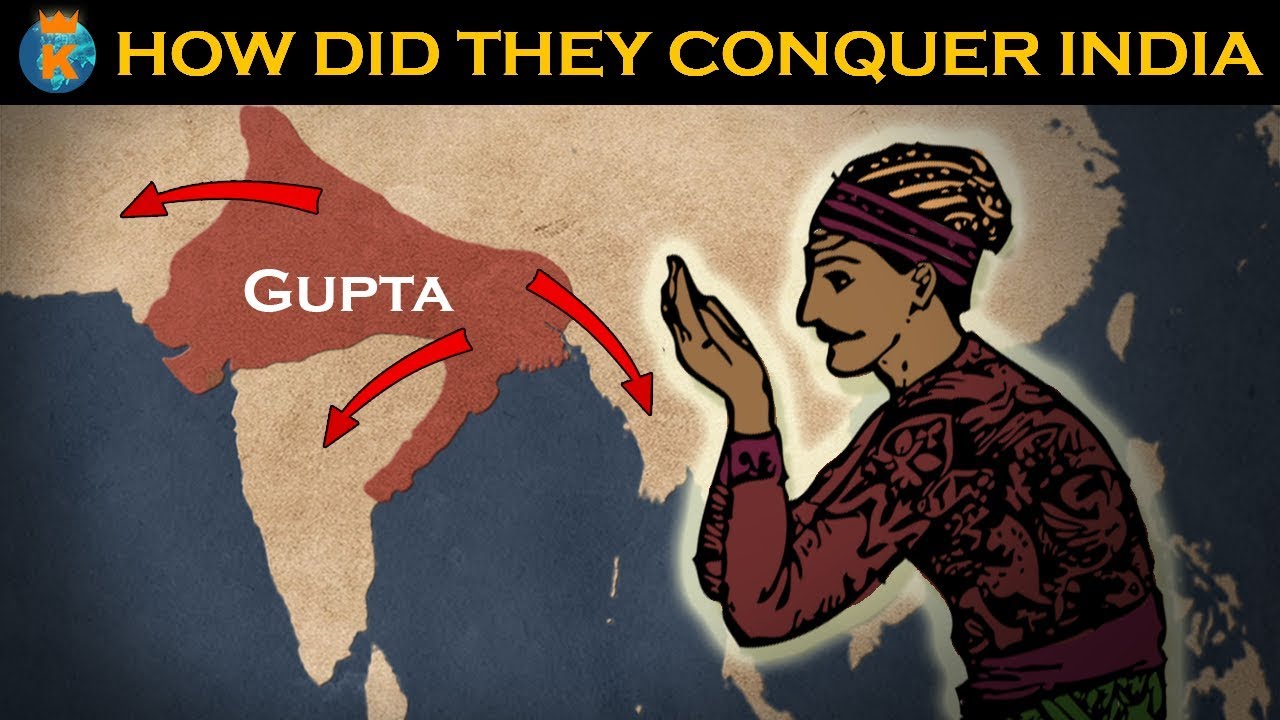
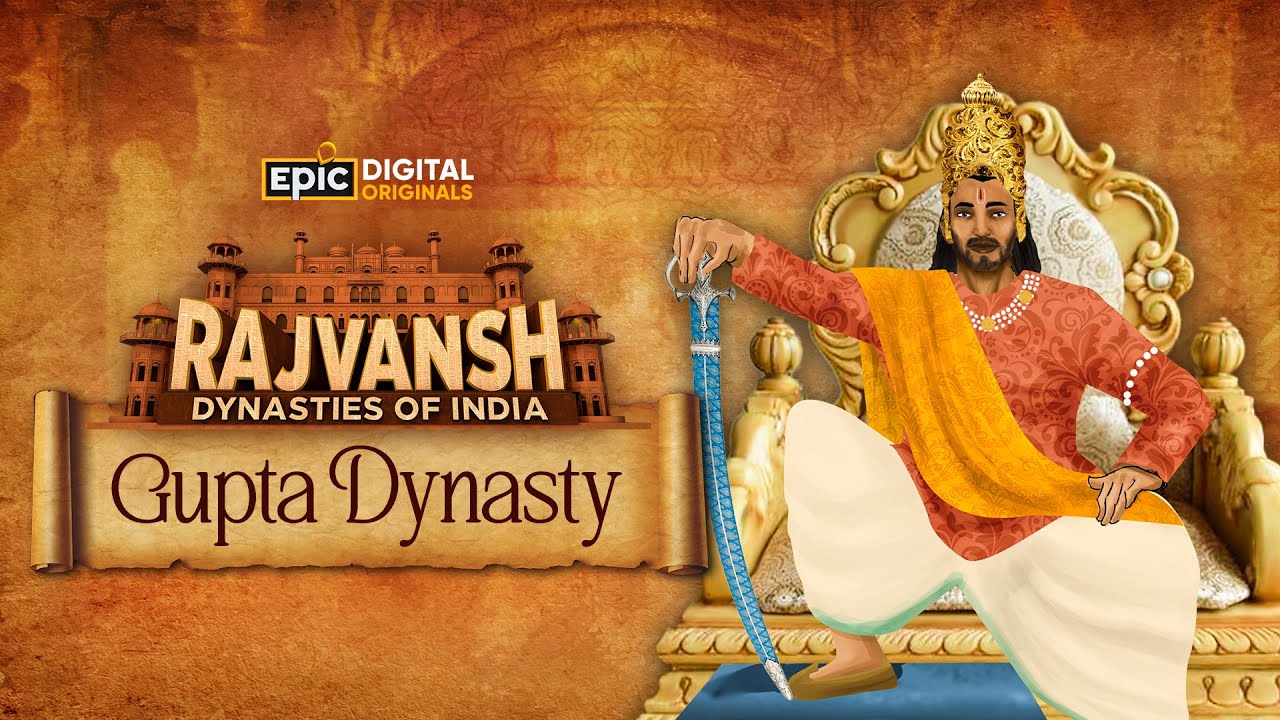
The final decline of the Gupta Empire, once hailed as India’s Golden Age, was a complex process driven by economic decline, relentless Huna invasions, and the subsequent weakening of central authority, making this period crucial study material for students preparing for historical examinations on ancient Indian history and the fall of major dynasties.
In this chapter, you will understand:
- The fiscal strains caused by the Huna wars and currency debasement.
- The political contraction to the eastern provinces after Skanda Gupta.
- The breakdown of central authority and foreign territorial breakthroughs.
- The cultural, scientific, and political legacy left behind by this classical era.
Why this topic matters: Analyzing the structural collapse of the Gupta state offers vital insights into how fiscal distress, currency debasement, and relentless border incursions can dismantle a highly centralized classical superpower, a recurring theme in major history examinations.
Core Idea: After the death of Skanda Gupta around A.D. 467, severe war expenses led to a drastic reduction in coin purity. This financial breakdown, combined with volatile succession disputes and direct Huna invasions led by leaders like Toramana, permanently fractured the centralized administration. Though smaller rulers attempted containment, the dream of a unified pan-Indian classical empire dissolved, leaving behind a profound cultural template for future generations.
Causes and Consequences of the Gupta Empire's Economic and Political Decline after A.D. 467
The persistent burden of warfare, particularly against the Hunas, severely strained the imperial treasury and triggered a massive economic collapse. The constant need to fund defensive and offensive military campaigns against external aggressors depleted the Gupta reserves, forcing the state to take drastic and damaging fiscal measures to maintain its operations.
The Post-Skanda Gupta Period: A Brief Struggle for Survival in the Eastern Provinces (c. A.D. 467 onwards)
Following the demise of the last powerful ruler, Skanda Gupta, the once-vast Gupta Empire continued to exist in name, but its influence and territorial control were drastically reduced to a mere shadow of its former glory.
- (i) A direct sign of this fiscal distress was the significant reduction in the intrinsic value of the currency, where the gold content in coins reduced substantially from 108 grains to a mere 73 grains, indicating the empire's financial hardship.
- (ii) This initial weakening was followed by a further debasement of currency, a clear and alarming sign of the accelerating financial decline and the inability of the central administration to sustain its previous economic stability.
- (iii) The passing of the mighty emperor Skanda Gupta around A.D. 467 is widely regarded as the pivotal event, marking the formal beginning of the empire’s terminal collapse from its grand imperial structure.
Territorial Retrenchment and the Ascent of Pura Gupta
In the wake of sustained pressure and internal fragmentation, the imperial authority was compelled to retract its boundaries, consolidating power in the relatively secure eastern heartlands, though this offered only a temporary respite against the tide of history.
- (i) The Guptas rulers were effectively confined to governing only the eastern provinces of their former empire, with the historical region of Magadha serving as their undisputed core and last bastion of power.
- (ii) Pura Gupta, recognized as Skanda Gupta’s brother, managed to ascend the fragmented throne, but his rule was characteristically short and marked by instability, symptomatic of the overall imperial malaise.
Restoration Attempt by Pura Gupta: The Partial Revival of Coinage Purity
Despite the brevity of his reign, Pura Gupta attempted to address the foundational issue of the discredited currency, recognizing that economic trust was paramount for imperial legitimacy, though the scale of the crisis allowed for only a limited achievement.
- (a) His only significant achievement during this turbulent period was his commendable attempt to restore the purity of the prestigious Gupta coinage, aiming to rekindle faith in the state's financial backing.
- (b) Unfortunately, due to the magnitude of the economic crisis and the ongoing political instability, this crucial attempt was only partially successful, failing to reverse the broader trend of financial decline.
Final Assaults and Fragmentation: The Huna Breakthrough and Loss of Central Authority (Late 5th Century)
The continuous and relentless military campaigns mounted by the Hunas proved to be the decisive factor, as the weakened central government was fundamentally unable to resist the sustained external pressure, leading to an irreversible collapse of the imperial structure.

Collapse of Administration and Huna Penetration into Northern India
The successive Huna invasions triggered a chain reaction that disintegrated the administrative and military cohesion of the Gupta state, paving the way for foreign dominance in the critical northern plains.
- (i) The most immediate consequence was a rapid decline in the effectiveness of the central authority, leading to regional independence and a massive power vacuum across the subcontinent.
- (ii) The issue of imperial succession became extremely volatile, marked by an uncertain succession of rulers, with evidence from different administrative seals strongly suggesting the presence of multiple, often competing, claimants to the fragmented throne.
- (iii) The strategic defence crumbled, and by the late 5th century, the Hunas achieved a decisive victory, completely breaking through into the fertile northern India and establishing a formidable presence.
- (iv) Specifically, Toramana, a prominent Huna ruler, successfully consolidated his burgeoning power base in the region of Punjab and then launched further, aggressive invasions directly into the remaining Gupta territory.
The Role of Narasimhagupta II and Regional Support
Despite the overwhelming military and administrative collapse, the last known rulers attempted to rally support from the regional powers, highlighting the final, desperate struggle to preserve a semblance of the once-great empire.
- (a) Although Emperor Narasimhagupta II (circa A.D. 495) managed to secure crucial support from loyal regional feudatories and subordinate rulers, these efforts were insufficient against the tide.
- (b) Despite this internal support, the systemic weakening continued unabated, and the Gupta Empire continued to weaken until its final, ultimate dissolution.
Enduring Legacy of the Gupta Golden Age and its Influence on Future Indian Dynasties
The Gupta period holds a permanent and revered place in ancient Indian history, being universally remembered as India’s Golden Age—a time of unprecedented intellectual, cultural, and political flourishing that set benchmarks for millennia to come.
Foundational Achievements That Defined the Gupta Era
The imperial dynasty left behind a profound legacy that extended far beyond its political boundaries, shaping the administrative, cultural, and religious landscape of the subcontinent, a fact of great importance for students of Indian history.
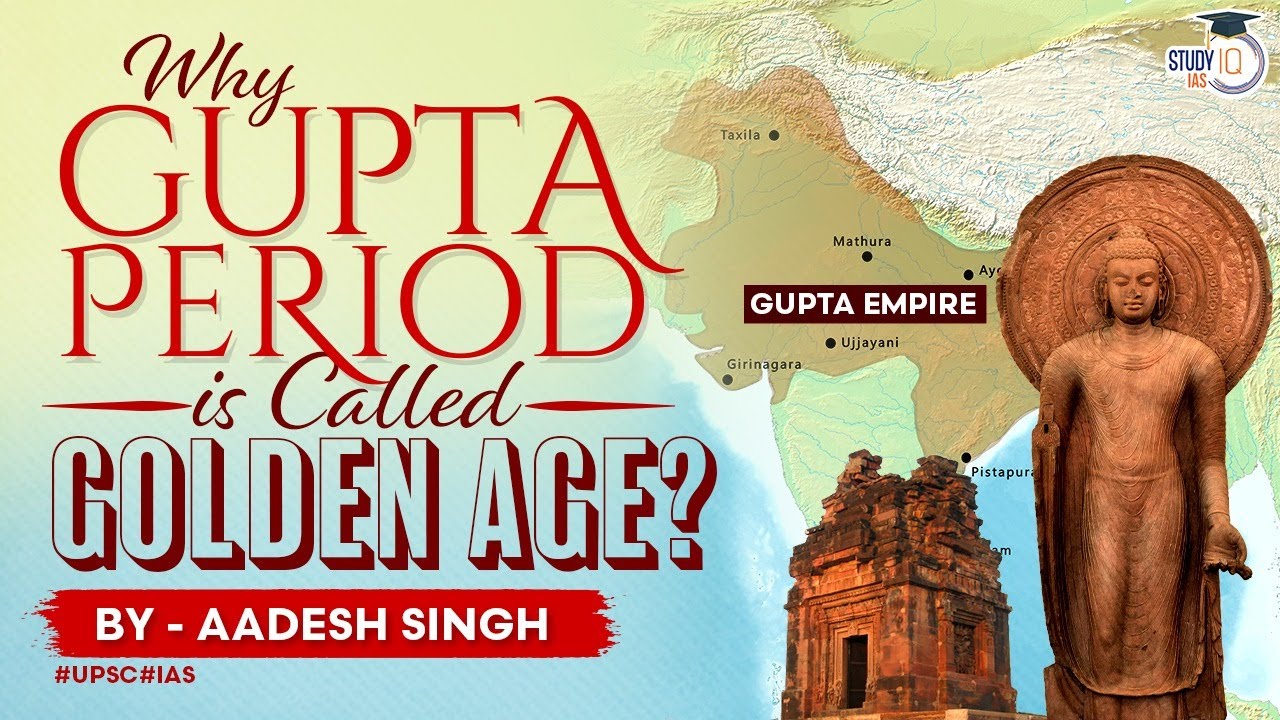
Cultural artifacts demonstrating the intellectual and artistic zenith of the Classical Gupta Age. - (i) Political Unification: The successful creation of a largely unified Indian subcontinent, offering peace and stability under a central governing authority for an extended period.
- (ii) Stable Governance: The establishment of remarkable political stability achieved through the implementation of a highly effective and organized administration system.
- (iii) Economic Prosperity: Significant economic growth fueled by flourishing trade and commerce, both internally and internationally, enriching the population.
- (iv) Religious Syncretism: The pivotal revival of Hinduism (often known as the Puranic revival) was achieved alongside a commendable policy of genuine religious tolerance toward Buddhism and Jainism.
- (v) Intellectual Zenith: Major and foundational scientific, mathematical, and literary achievements, including the works of Aryabhata and Kalidasa, that transformed global knowledge.
Long-Term Historical Impact: The End of the Pan-Indian Empire Dream
Despite the political decline, the highly structured Gupta administration and its foundational cultural advancements served as vital templates, profoundly influencing the structure and policies of numerous future, succeeding dynasties.
- Pan-Indian Vision's End: The ambitious dream of a Pan-Indian Empire—a single, centralized power controlling the subcontinent—effectively ended with the collapse of the Guptas.
- Brief Revival: This vision would only be briefly revived on a smaller scale by the dynamic reign of Harshavardhana in the 7th century, but the Guptas marked the end of the Classical Age structure.
Gupta Decline Quick Revision Capsule
A quick-reference architectural framework detailing the milestones, shifts, and long-term targets of late imperial transition stages:
| Historical Milestone | Strategy Mechanism / Data Variable | Core Target / Objective Metric |
|---|---|---|
| Pre-A.D. 467 Era | High purity gold coin standard at 108 grains | Maintain total pan-Indian fiscal liquidity |
| Post-Skanda Gupta Shift | Coin debasement reducing gold content to 73 grains | Fund defense networks amid drying imperial reserves |
| Pura Gupta Reign | Attempted partial structural restoration of coin purity | Rebuild domestic credit and political legitimacy |
| Late 5th Century | Huna border breakthroughs managed by Toramana | Exploit regional vacuum in fertile Punjab plains |
| Narasimhagupta II Era | Desperate military pooling of regional feudatory links | Contain peripheral fragmentation of remaining strongholds |
Summary
The fall of the Gupta Empire remains an essential lesson in political fragmentation. The heavy economic stress induced by ongoing confrontations with the Hunas forced severe monetary degradation, stripping away fiscal clout. Internal competition for succession split administrative loyalties, leaving the gates open for Toramana to sweep through northern frontiers. Although regional networks tried to maintain ancient administrative structures under rulers like Narasimhagupta II, imperial consolidation gave way to regional decentralization, permanently shifting ancient India's geopolitical landscape.
Late Gupta Key Revision Notes
Focus closely on these chronological metrics and core political transitions:
- (i) Fiscal Crash: Severe drops in currency value from 108 grains down to 73 grains reflect deep structural decay.
- (ii) Geographical Retreat: Post-467 dynamics forced remaining administrators to withdraw primarily into the eastern Magadha core.
- (iii) Foreign Invasions: Huna forces led by Toramana breached defense points in Punjab, establishing a distinct rival core.
- (iv) End of Centralization: The total fall of this system closed the classical era, paving the way for short-lived individual assertions like Harshavardhana's 7th-century kingdom.
- Exam Tip: Whenever long-answer questions focus on the collapse of ancient Indian dynasties, always link fiscal indicators like coin debasement directly to external military pressures like the Huna invasions, highlighting that the economic decline preceded the final geographical breakdown.
Frequently Asked Questions (FAQ)
Q1: What structural indicator provides definitive evidence of the Gupta Empire's late economic crisis?
A1: The primary empirical evidence is the severe debasement of currency, where the intrinsic gold weight within standard imperial coinage plummeted drastically from 108 grains to 73 grains under fiscal duress.Q2: Which foreign group delivered the definitive geopolitical blow to late Gupta provincial holdings?
A2: The Hunas initiated continuous invasions during the late 5th century, culminating in a complete breakthrough into northern India by their leader Toramana, who successfully seized control over the critical Punjab plains.Q3: Did the idea of a centralized pan-Indian empire survive immediately after the final Gupta collapse?
A3: No, the ideal framework of a unified pan-Indian administration effectively shattered. It experienced only a brief, localized restoration under Emperor Harshavardhana in the 7th century, shifting the subcontinent into a highly decentralized state system.