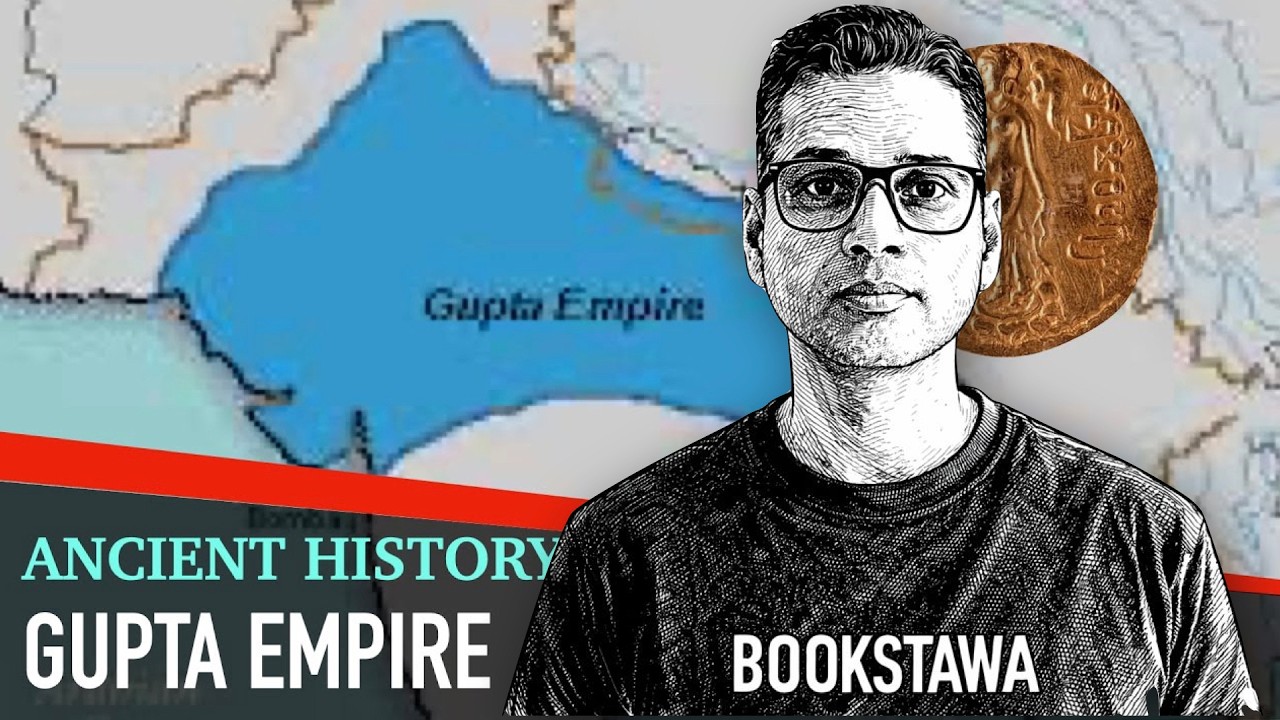
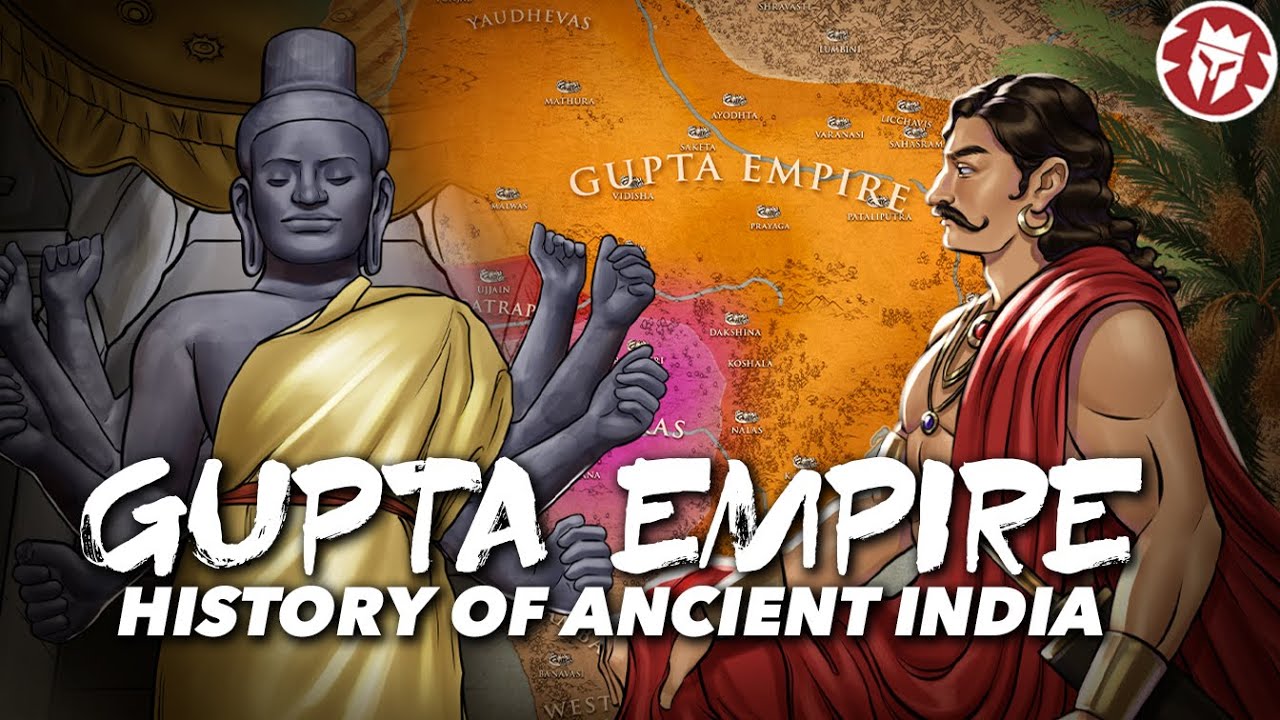
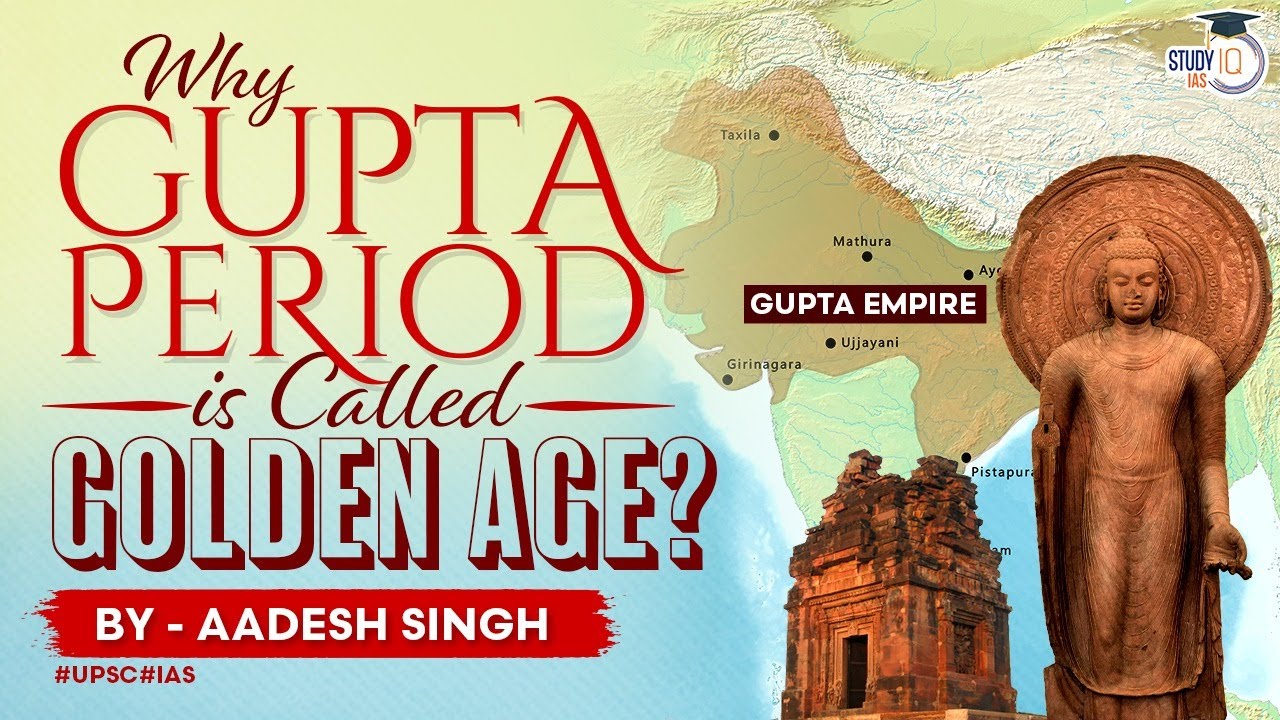
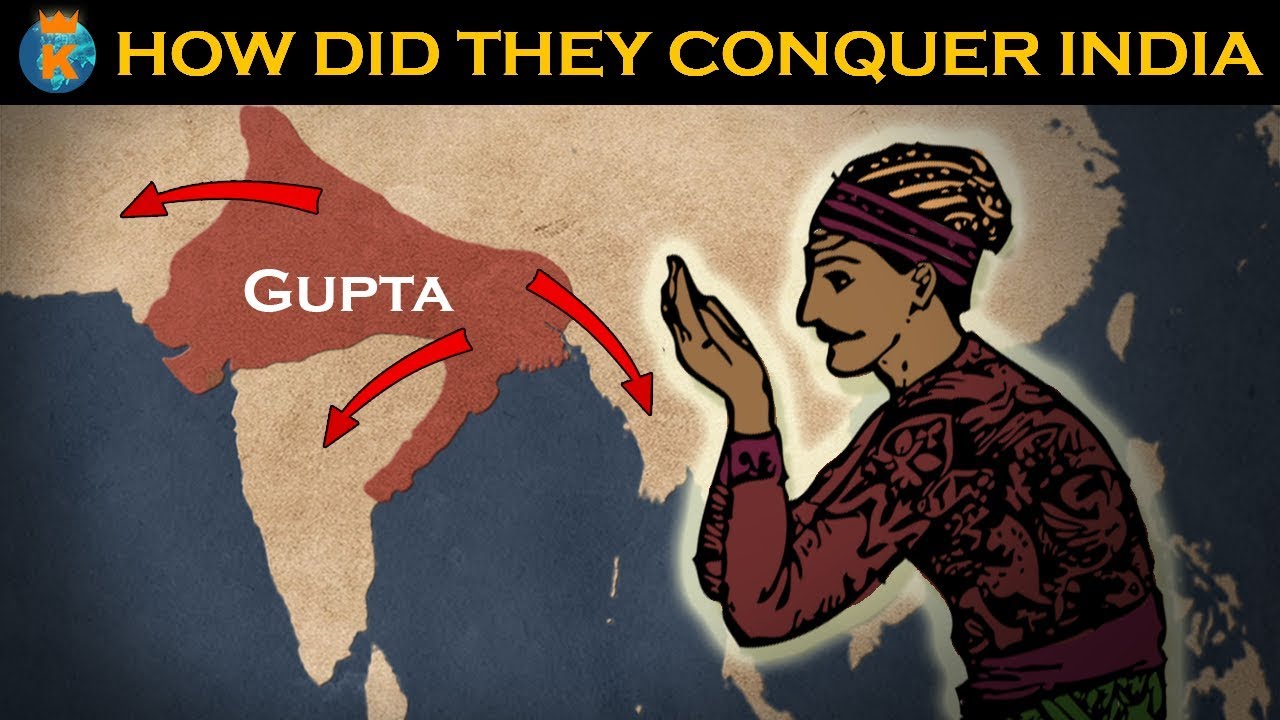
The Gupta Empire, reigning from 320-550 CE, stands as a monumental period in ancient Indian history, often celebrated as India’s Golden Age for its extraordinary advancements in art, science, and philosophy, championed by luminaries like Kalidasa and Aryabhata. This era, founded by Sri Gupta, is crucial for students and exam preparation as it showcases a sophisticated, yet decentralized, administrative framework that successfully governed a vast subcontinent, contrasting sharply with the earlier Mauryan model. The foundation of this celebrated empire led to a period where high culture and detailed administration flourished, requiring a unique system to maintain control over diverse territories. Rather than centralizing all command, the rulers set up a grid of regional autonomy that relied deeply on local loyalties.
In this chapter, you will understand:
- The transition from centralized Mauryan authority to decentralized Gupta governance.
- The roles of imperial kings, the hereditary bureaucracy, and local village administrations.
- Land revenue dynamics, agricultural taxation burdens, and the expansion of the land grant system.
- The legal maturity of the judiciary, military defense mechanisms, and factors leading to the ultimate decline.
Why this topic matters: Analyzing the Gupta administrative structure is vital for scoring well in history examinations. It reveals how ancient states balanced imperial power with regional rule, creating a template for socio-economic shifts like early Indian feudalism.
Core Idea: The Gupta governance model intentionally departed from rigid centralization, shifting power to regional feudatories, district heads (vishayapatis), and urban guilds. While the monarch retained ultimate military and judicial authority, the heavy deployment of tax-exempt land grants diluted centralized control over time. This architectural blend allowed immense wealth and culture to thrive but created internal structural vulnerabilities that accelerated the empire's breakdown under external shocks.
The Decentralized Governance Structure of the Gupta Empire
The Gupta governance introduced a significantly decentralized political structure, a clear departure from the concentrated authority of the preceding Mauryan period, by relying heavily on local rulers and powerful feudatories. This allowed the imperial center to manage sprawling territories without expanding an overwhelming bureaucratic apparatus.
The Supreme Authority and Central Administration of the Gupta Kings
The king remained the pivotal figure, though his power was balanced by a council and a system that facilitated decentralized rule; the kingship was fundamentally hereditary, but not always strictly primogeniture.
- Unlike the Mauryan period, where political authority was consolidated in the hands of the king, the Gupta administration was fundamentally decentralized in nature, allowing for greater regional autonomy.
Kingship and Imperial Titles in the Gupta Era
The Gupta monarch was the ultimate source of power, revered with magnificent titles that reflected his divine and military status, creating a story of a powerful, semi-divine ruler over a prosperous land.
- (i) The kingship was normally hereditary, positioning the monarch as the focus of administration, who was constantly assisted by an inner circle of princes, ministers, and advisors.
- (ii) The titles used, such as Maharajadhiraja (King of Kings), Paramabhattaraka, Chakravarti, and Paramesvara, highlighted the king's unmatched supremacy and profound responsibilities.
- (iii) The king served as the Guardian of the Realm, personally leading military forces when needed, the Defender of the People, and the Chief Administrator, who was responsible for appointing all key officials.
- (iv) A large segment of the empire was managed by feudatories, which were essentially local kings and smaller regional chiefs who pledged allegiance to the imperial Guptas, using titles like raja and maharaja.
Gupta Bureaucracy and Provincial Administrative Divisions
The administrative machinery of the Guptas was notably less elaborate than the Mauryas, characterized by the hereditary nature of many positions, which fostered continuity but also led to the concentration of power in a few families.

- High-level central officers were designated as kumaramatyas, a trusted cadre often assigned to provincial administration or roles like the Mahapratihara (Chief guardian of the royal palace), from which key functionaries like the mantri (Chief Minister) and senapati (Commander-in-Chief) were routinely recruited.
Provincial and Local Administration: The Empire's Structural Backbone
The vast empire was logically sectioned into progressively smaller units, ensuring effective governance from the central court down to the individual village, blending imperial oversight with local self-rule.
- Provinces, variously known as desha, rashtra, or bhukti, were overseen by princes who served as viceroys or by a provincial head called the uparika.
- These provinces were further divided into Districts called pradesha or vishaya, with the regional administration managed by the vishayapati.
- At the grassroots level, Villages were administered by a gramadhyaksha (village headman) with assistance from village elders, while urban centers saw artisans and merchants actively participate through powerful Guilds (Nagarseths) in town administration.
- An exemplary case of official role clubbing due to hereditary trends is Harisena, the composer of the famous Allahabad pillar inscription of Samudragupta, who was both a mahadandanayaka (chief judicial officer) and a mahasandhivigrahika (minister for war and peace).
Economic Policies, Taxation Systems, and Fiscal Revenue
The stability of the Gupta Empire was built upon a strong economic foundation where land revenue formed the primary source of wealth, though the system involved certain burdens on the peasant populace.
- During the Gupta period, land taxes increased considerably compared to earlier times, reflecting the state's need for significant resources to maintain the "Golden Age" administration and military might.
The Land Grant System and the Rise of Feudalism
A defining, transformative feature of Gupta governance was the extensive land grant system, which, while beneficial to the recipients, fundamentally reshaped the socio-economic and administrative structures of the empire.

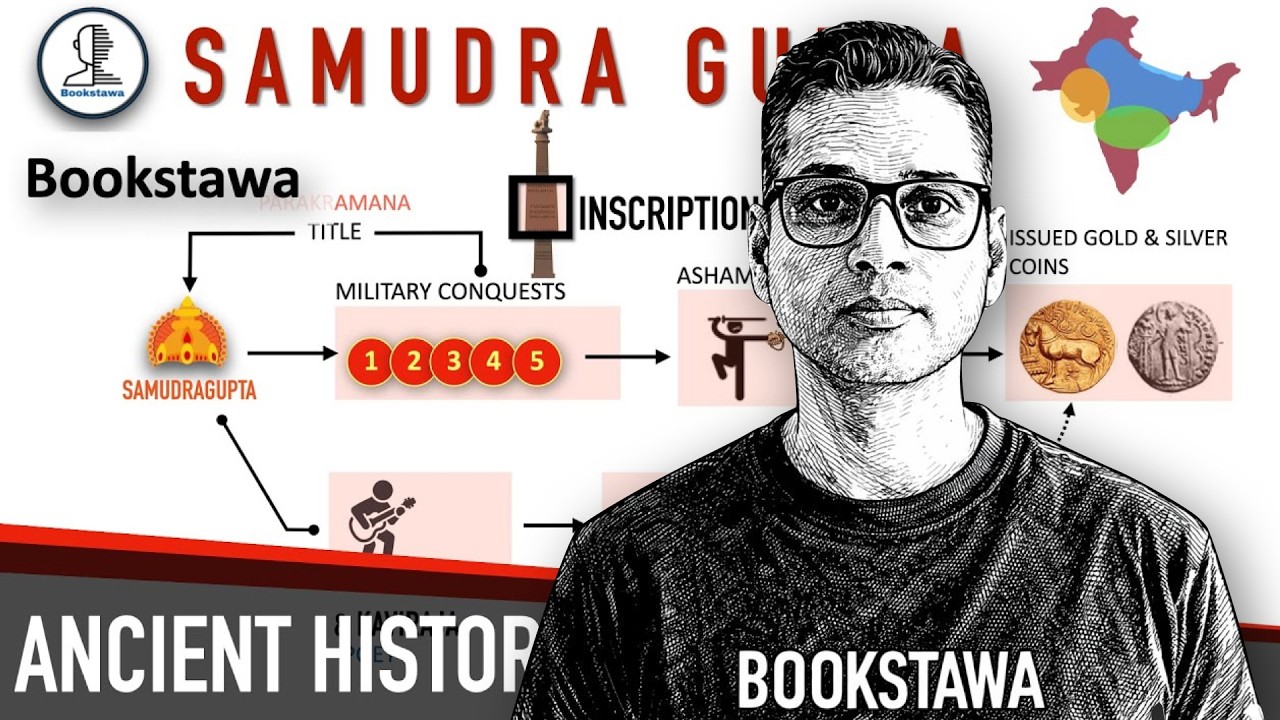
Image of Samudragupta Playing the Veena - Symbol of the Gupta era's patronage of arts and culture. - The principal land tax, known as bali, was a substantial levy that ranged from 1/4th to 1/6th of the total agricultural produce, supplemented by new agricultural taxes including uparikara and udranga.
- Peasants faced multiple demands, not only having to pay taxes but also being forced to meet the financial needs of feudatories, feed the royal army during its transit, and subject themselves to compulsory, unpaid forced labor known as vishti.
- Land was granted, often to Religious figures (like brahmanas) and officials, frequently carrying tax-exempt status and granting the recipient autonomous administrative and judicial rights.
- These landholders gained the right to collect taxes and dispense justice within their granted territories, operating free of direct royal oversight, which minimized the central authority's reach and directly encouraged the rise of feudalism.
Quick Revision Capsule
A structured blueprint summarizing the operational pillars, territorial divisions, and key official tiers of the Gupta administration:
| Administrative Tier / Unit | Primary Governing Authority | Operational Mandate & Scope |
|---|---|---|
| Bhukti (Province) | Managed by an uparika or imperial prince | Provincial administrative zone answering to the central throne |
| Vishaya (District) | Administered by a vishayapati | District level operations executing local fiscal oversight |
| Gram (Village) | Led by a gramadhyaksha and village elders | Grassroots micro-governance focused on agricultural communities |
| Central Bureaucracy | Cadre of elite kumaramatyas | Hereditary top-tier officers managing portfolios like war and palace security |
| Urban Center Administration | Regulated via Merchant Guilds (Nagarseths) | Autonomous municipal and trade frameworks run by local artisans and traders |
Summary
The administrative structure of the Gupta Empire successfully governed a massive territory by integrating a strong centralized throne with deep layers of localized rule. While monarchs took grand descriptions like maharajadhiraja and maintained large standing armies, the daily administration was delegated down to bhuktis, vishayas, and self-governing village blocks. This flexible infrastructure fostered security and unprecedented cultural production, creating India’s Golden Age. However, structural practices like hereditary official postings and expansive tax-exempt land grants diluted the central treasury's power. When external strains like the Huna invasions hit the frontiers, these decentralized nodes broke away, leading to fragmentation and the rise of a highly feudal landscape under later rulers like Harsha.
Quick Revision Points & Notes
Essential takeaways concerning the legal, military, and decline phases of the Gupta state structure:
- (i) Judicial Separation: The Gupta judicial system reached high maturity, clearly separating civil law (property disputes) from criminal law (theft/adultery) for the first time.
- (ii) Military Composition: The army relied on specialized heads like the Pilupati (war elephants), Asvapati (cavalry), and Narapati (infantry), with forces paid directly in cash.
- (iii) The Huna Blows: Relentless raids by Central Asian Hunas under leaders like Toramana and his brutal son Mihirkula completely exhausted state resources despite early resistance by Skandagupta.
- (iv) Fiscal Breakdown: Losing western territories by the late 5th century crippled trade revenues, forcing later rulers to mint coins with drastically reduced gold content.
- Exam Tip: Be sure to contrast the decentralized Gupta framework with the tight centralization of the Mauryan model. Remember critical administrative terms like kumaramatya, uparika, vishayapati, and the impact of vishti (forced labor) for core essay questions.
Frequently Asked Questions (FAQ)
Q1: How did the subsequent administration under Harsha compare to the classic Gupta system?
A1: Harsha ran his empire using a similar framework, but the administrative environment became even more decentralized with a massive surge in the number of feudatories. Instead of paying official functionaries in cash like the classic Guptas did, Harsha compensated his officers and religious figures primarily in land, accelerating the institutional growth of feudalism. Furthermore, domestic security deteriorated; the Chinese traveler Hsuan Tsang was robbed twice during his travels, whereas the earlier traveler Fa-Hien recorded high safety levels during the peak Gupta era.Q2: What did the concentration of multiple official titles in individuals like Harisena signify?
A2: This highlighted the heavily hereditary nature of the Gupta bureaucracy. Because central administrative posts were passed down within the same lineages, powerful portfolios were frequently clubbed together. Harisena simultaneously served as a mahadandanayaka (chief judicial officer) and a mahasandhivigrahika (minister for war and peace), illustrating how elite authority was concentrated inside a select circle of trusted families.Q3: Why did the land grant system eventually undermine the central authority of the empire?
A3: Land grants made to religious bodies and state officials regularly carried complete tax-exempt status along with independent administrative and judicial rights. As these autonomous territories could collect their own levies and execute justice free from central imperial intervention, they turned into self-sustaining local power zones. This progressively shrank the empire's direct revenue base and allowed regional feudatories to declare absolute independence once the center weakened.