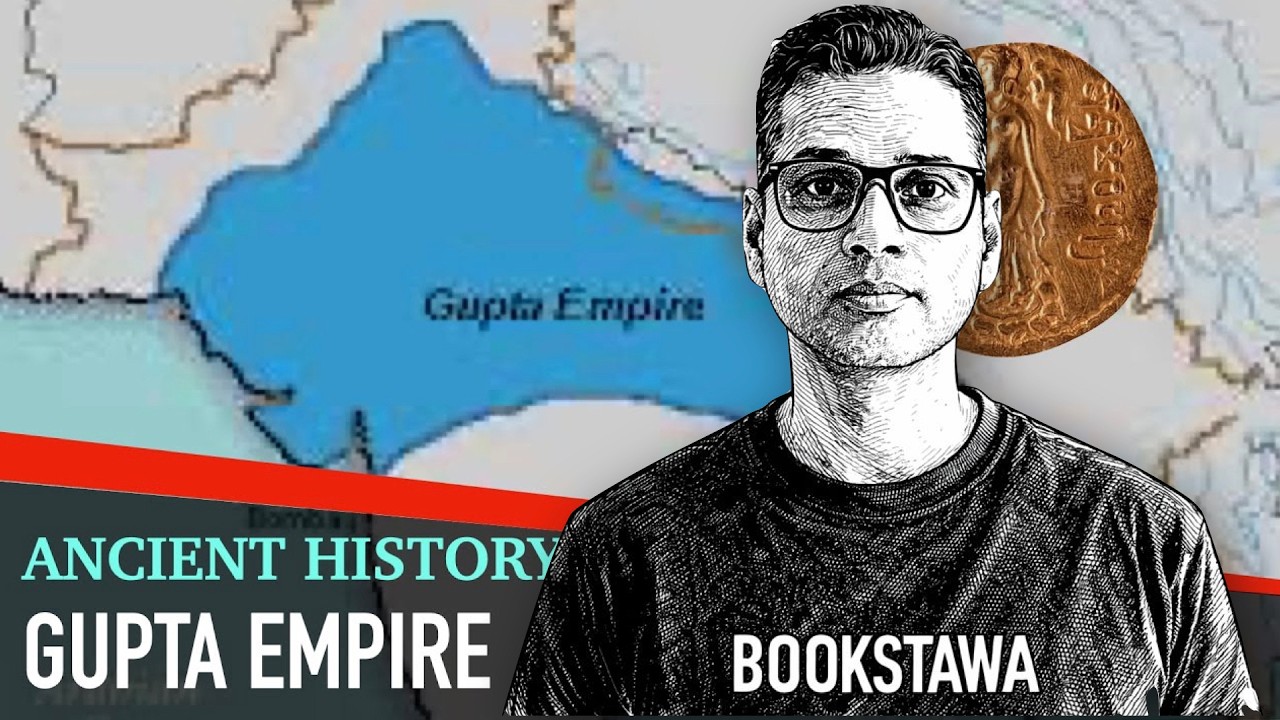
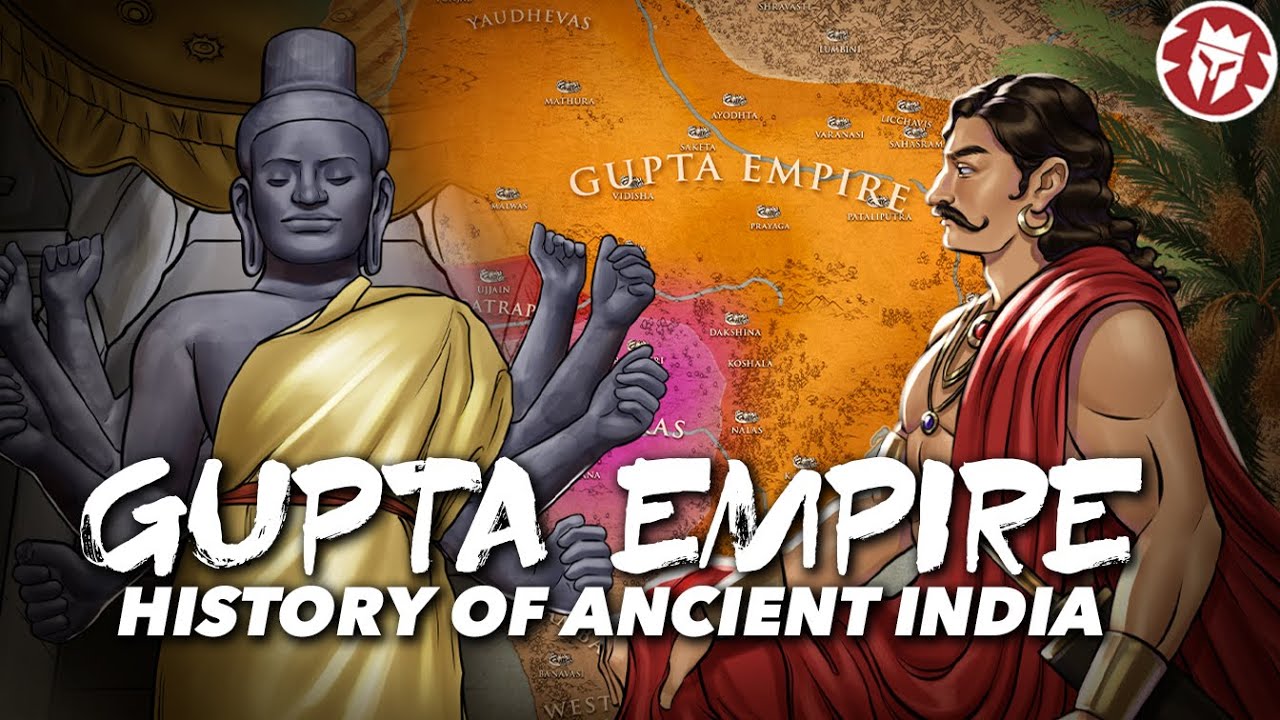
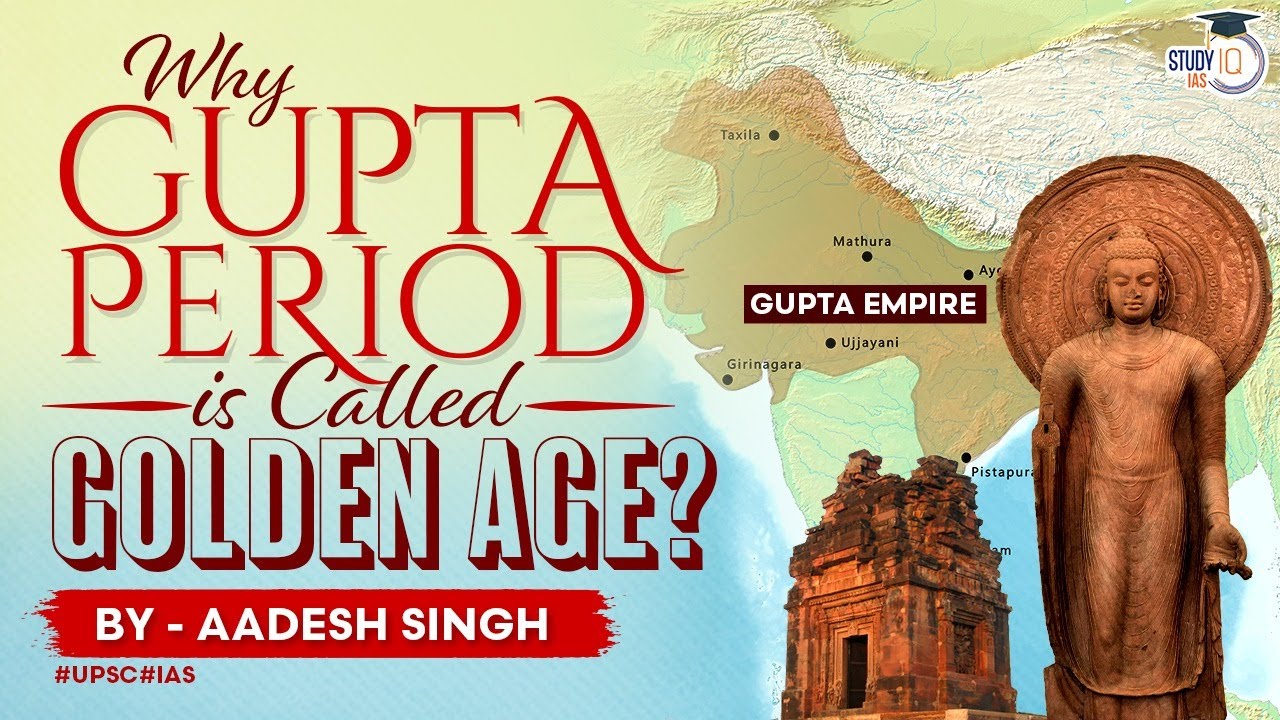
The Gupta dynasty, flourishing remarkably from the year 320 A.D., stands out as a pivotal epoch in ancient Indian history, often universally celebrated by scholars as India's true 'Golden Age.' This historical period witnessed a spectacular resurgence in political unity, cultural growth, and scientific breakthrough across the subcontinent. Intriguingly, it serves as a fascinating historical echo to the earlier Maurya dynasty, given that both empires were famously set in motion by brilliant foundational rulers named Chandragupta. For students preparing rigorously for history and civil service examinations, a thorough, detail-oriented mapping of the structural sources and political lineages of the Imperial Guptas—spanning seamlessly from Chandragupta I to the defensive reigns of Skanda Gupta—remains absolutely crucial to understanding how classical Indian civilization laid down its ultimate foundations.
In this chapter, you will understand:
- The major literary, epigraphic, numismatic, and archaeological sources that build Gupta history.
- The grand lineage and territorial milestones achieved by the early imperial rulers starting in 320 A.D.
- How traveling pilgrims like Fa-Hien documented the day-to-day administrative and social life of classical India.
- The cultural, artistic, and numismatic evolution that produced iconic gold coin variants and regional schools of fine art.
Why this topic matters: Reconstructing the historical framework of the Guptas provides students with a structural understanding of early Indian statecraft, royal diplomacy, and institutional growth, which are frequently tested topics across core academic and competitive history examinations.
Core Idea: By cross-examining deep literary pieces, authoritative stone pillars, royal bureaucratic seals, and highly artistic gold coins, historians can reconstruct a fully cohesive political outline of the Gupta empire. This comprehensive approach balances out individual biases found in dynastic panegyrics or religious stories. It uncovers a stable, thriving empire that successfully repelled foreign challenges while nurturing classical art and legislation.
Tracing the Imperial Gupta Dynasty: Historical Sources and Political Rise (320 A.D. - 550 A.D.)
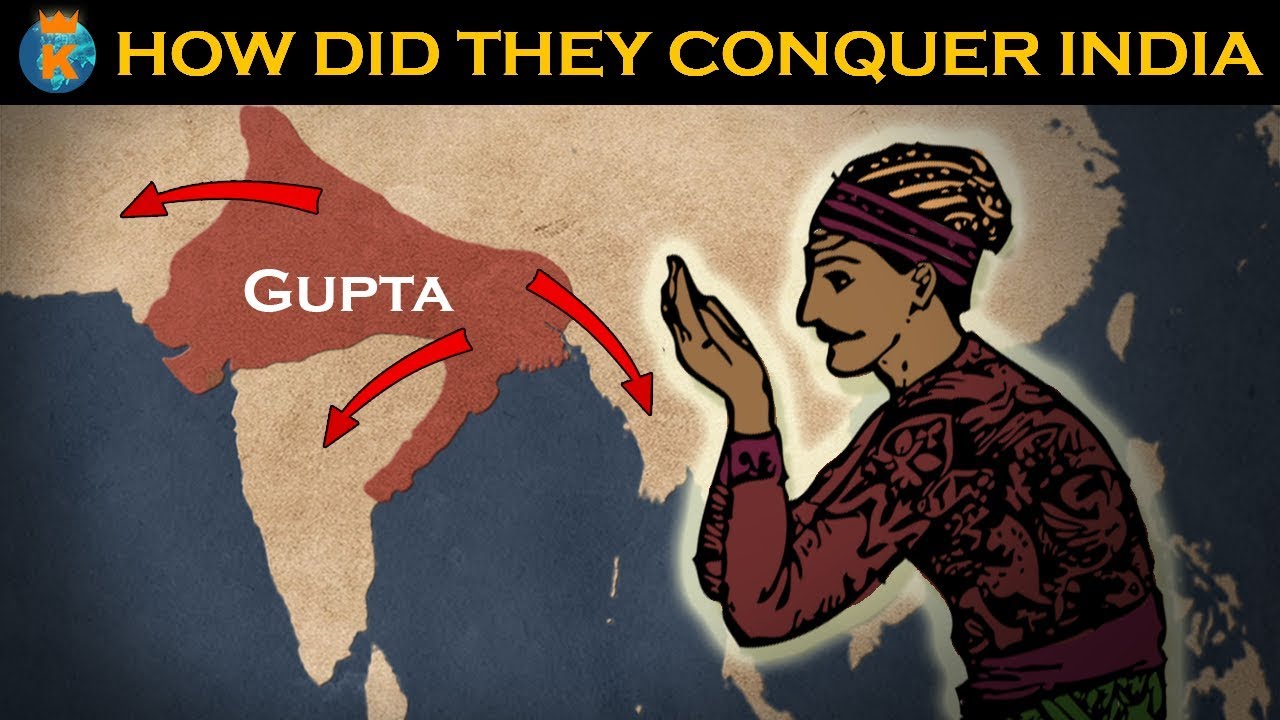
The dawn of the Gupta period, officially beginning with the historic coronation of Chandra Gupta I in 320 A.D., successfully inaugurated a grand phase of security and cultural flowering that mirrors the historical significance of the famous Periclean age in Greece. This sudden rise marked a decisive turning point in the subcontinent's geopolitics, effectively establishing a vast, centralized empire after centuries of highly fragmented local rule following the fall of the Kushanas. The dynasty is credited with a series of massive structural achievements that permanently shaped India's classical identity:
The initial Gupta kings successfully liberated core northern Indian territories from the preceding political control of the mixed Kushana-Sassanian borders, restoring absolute regional political autonomy.
Literary Accounts: Unveiling the Gupta Historical Narrative
Despite the limited practice of formal historical writing in ancient India, a variety of literary and textual sources provide crucial windows into the political, social, and administrative life of the Imperial Gupta era.
Puranas and the Prophetic History of Gupta Rule
The traditional Puranas operate as essential religious-historical texts, often characterized by a distinct, ancient prophetic style rather than a simple factual timeline. Because their narratives frequently stem from deep-seated oral traditions, their lines must be parsed with care, yet they offer vital geographic and political markers:
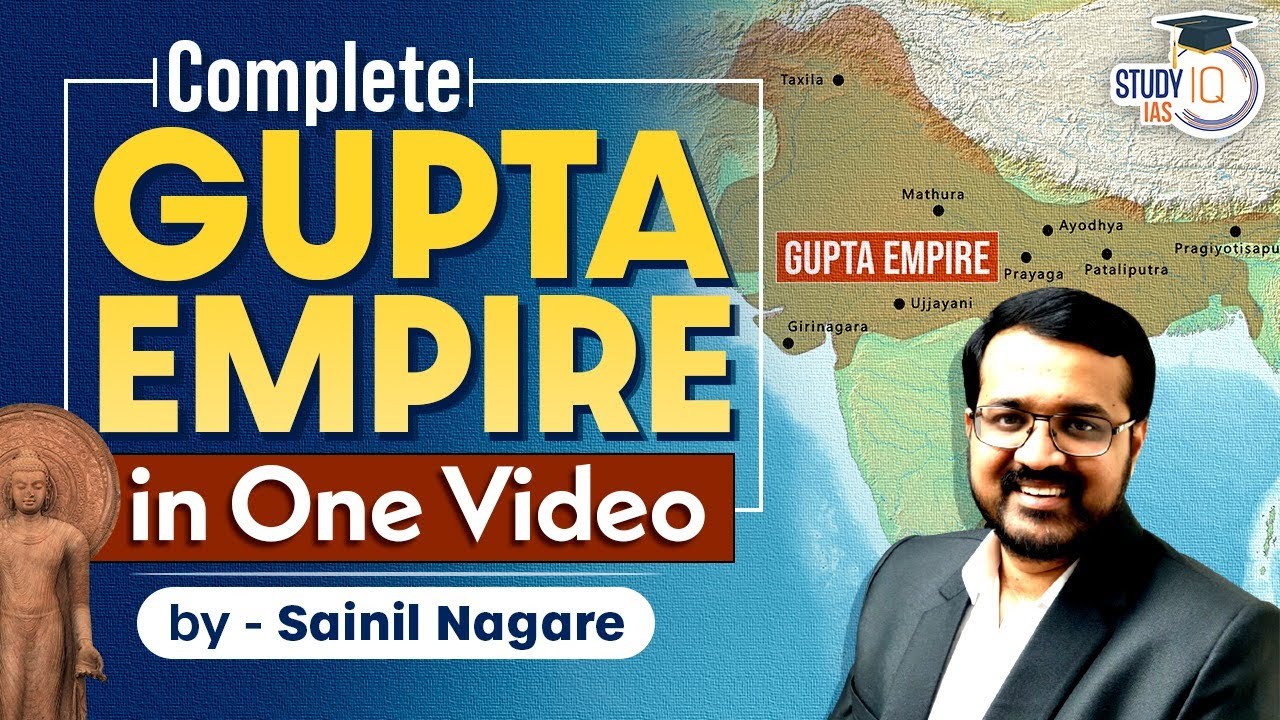
- The Vishnu Purana specifically identifies the early Gupta kings, explicitly detailing their core territorial domain: "The nine Nagas will reign in Padmavati, Kantipuri, and Mathura; and the Guptas of Magadha along the Ganges to Prayaga."
- The highly descriptive Vayu Purana further elaborates on the expanding extent of their imperial control, stating that the Guptas would eventually assume complete authority over the exact regions previously held by the local Nagas.
- Other major puranic collections contributing to this historical mosaic include the Matsya Purana, the ancient Brahmanda Purana, and the widespread Bhagavata Purana, all of which require meticulous comparative cross-checking.
- These texts collectively solidify the geographic footprint of the early dynasty during its crucial transitional expansion years.
Dharmashastras and Administrative Texts: Governance and Law in Gupta India
Two major law codes, known broadly as the Dharmashastras, emerged into clear light during this specific era alongside specialized practical texts on imperial statecraft. Together, they provide profound structural insights into the legal machinery and everyday administrative frameworks of the empire, which are absolutely indispensable for tracking the true nature of Gupta governance.

- The compilation of the Narada Smriti and the detailed Brihaspati Smriti during this period offers a valuable historical record of the social norms, complex civil laws, and formalized judicial hierarchies then in active use.
Kavya-Nataka Literature: Dramatic Accounts of Political Struggles
The dramatic and poetic literature (Kavya-Nataka) of the era, though structurally fictionalized for the entertainment of the royal courts, frequently drew upon real, high-stakes political movements. This provides excellent glimpses into the dynastic struggles and raw court intrigues that marked the initial Gupta ascension.
- The foundational administrative text known as the Kamadaka Nitisara was authored by the scholar Sikhara, who served with distinction as the Prime Minister to the great emperor Chandragupta II. This handbook provided practical guidelines on state management and went so far as to include a cold political justification for the calculated murder of a Saka king by the emperor.
- The classic five-act drama, Kaumudi Mahotsava, details the highly tumultuous political conditions of Magadha right before the rise of the Guptas, shedding light on early internal family rivalries.
- The historically famous play Devichandraguptam narrates the highly controversial and gripping struggle for the imperial throne between the weak elder brother Ramagupta and the eventual hero, Chandragupta II, preserving a key narrative event in Gupta succession records.
- These dramatic retellings highlight the real-world vulnerability and intense internal defense strategies of the royal house.
Foreign Accounts: Traveler's Perspectives on Gupta Society
The independent chronicles written by devout Buddhist pilgrims who traveled long distances to India during and shortly after the main Gupta reign provide invaluable external documentation. They throw light on the social fabric, religious conditions, and overall economic prosperity of the empire without native dynastic bias.
- The Chinese traveler Fa-Hien (also known as Faxian) visited India during the height of the empire under the stable rule of Chandragupta II.
Epigraphic Sources and Copper Plate Grants: Inscriptions of Power and Legacy
Inscriptions, or epigraphic sources, are widely considered by modern historians to be the most indispensable and reliable sources for reconstructing the authentic chronology and political achievements of the Gupta rulers, laying down a clear line of succession.
The monumental Allahabad Pillar Inscription stands as the definitive epigraphic record of Samudragupta's expansive military campaigns. - The primary records written by Fa-Hien explicitly highlight the remarkably stable social, religious, and economic conditions of the country. He traveled easily without passports, noting the immense wealth of Indian towns and the presence of exemplary, state-maintained hospitals and charitable institutions that offered free care.
- Though visiting later in time, the pilgrim I-tsing (Yijing) provided critical retrospective data by recording the historical existence of Maharaja Srigupta, who built a specialized shrine at Mrigasikhava explicitly for use by visiting Chinese pilgrims.
- By physically measuring the old ruins and calculating that the temple was built roughly 500 years before his journey, I-tsing's report beautifully corroborates the long-standing tradition that Srigupta was the authentic founder of the Gupta dynasty.
Quick Revision Capsule: Major Inscriptions & Epigraphic Key Targets
Use this organized tracking capsule to quickly study the most important historical inscriptions that document the imperial actions of the Guptas:
| Inscription Name | Associated Emperor | Core Historical Metric / Objective |
|---|---|---|
| Allahabad Pillar Inscription | Samudragupta | Details phenomenal military conquests across India, earning him the title "Napoleon of India." |
| Eran Stone Inscription (No. 2) | Samudragupta | Elaborates further on his immense imperial power and personal lifestyle achievements as a ruler. |
| Mahrauli Iron Pillar Inscription | Chandragupta II (King Chandra) | Records the defeat of the Vanga countries and victories across the seven mouths of the river Sindhu. |
| Bhitari Pillar Inscription | Skandagupta | Chronicles his fierce fight against the Pushyamitras and his role in blocking the initial Hunas. |
| Junagadh Rock Inscription | Skandagupta | Documents critical state restoration work, specifically detailing the engineering repair of the Sudarshana Lake dam. |
Summary
The history of the Imperial Gupta dynasty is exceptionally well-documented because of a rich combination of complementary sources. The predictive texts of the Puranas and the social diaries of travelers like Fa-Hien provide a clear view of culture and everyday life. Meanwhile, precise epigraphic monuments, like the Allahabad Pillar Inscription, and advanced gold coin mints supply accurate dates and timelines. Together, these pieces show how the dynasty brought peace and unity to the region starting in 320 A.D. They explain why this era is celebrated for defeating the invading Huns, preserving the legendary ideals of Vikramaditya, and establishing the classic model for traditional Indian culture. For any serious student, analyzing these records is the key to understanding India's celebrated Golden Age.
Quick Revision Points & Core Checkpoints
Students must firmly memorize these key analytical rules regarding Gupta historical sources:
- (i) The primary compilation of these key stone epigraphs was gathered systematically by Dr. Fleet inside the authoritative volume titled the "Corpus Inscription Indecorum".
- (ii) The first 16 inscriptions in the 'Corpus' focus entirely on tracing the direct line of the early imperial rulers down to the death of Skandagupta.
- (iii) Later entries, like those covering Buddhagupta (484 A.D.) and Bhanu Gupta (510 A.D.), document the subsequent fragmentation and political decline of the central line.
- (iv) Donative copper plates or Tamrapatras provide deep insights into land grants made to temples, but they are more vulnerable to forgery and discrepancies in dates compared to solid stone pillars.
- Exam Tip: Always look closely at the different types of gold coins issued by Samudragupta, such as the Tiger and the Lyrist types. These coins are excellent primary evidence because they prove both his successful expansion to the south and his personal talent as a musician.
Frequently Asked Questions (FAQ)
Q1: Why are copper plate grants considered less reliable than stone inscriptions for establishing history?
A1: Copper plate records, or Tamrapatras, were portable documents given directly to individuals as proof of land ownership. Because they carried immense economic value, they were sometimes vulnerable to historical forgery by family lines seeking to fake titles to land. They also contain occasional internal inconsistencies in dates compared to permanent public stone pillars.Q2: Who pioneered the structural study of Imperial Gupta coins, and what did it reveal?
A2: The study of Gupta coinage was formally organized by scholar Allan in his landmark "Catalogue of the Coins of the Gupta Dynasties" published in 1914. His research proved that emperors like Samudragupta and Chandragupta II issued multiple distinct types of gold coins featuring complex Sanskrit legends, which served as dynamic public declarations of their military and artistic achievements.Q3: What unique administrative insights are derived from the Vaisali seals?
A3: The discovery of large numbers of official administrative seals at Vaisali has allowed historians to map out the exact hierarchy of local and provincial bureaucracy. For instance, the personal seal of Queen Mahadevi Dhruvaswamini reveals that her son, Prince Govind Gupta, was serving directly on the ground as the local Governor of the province.