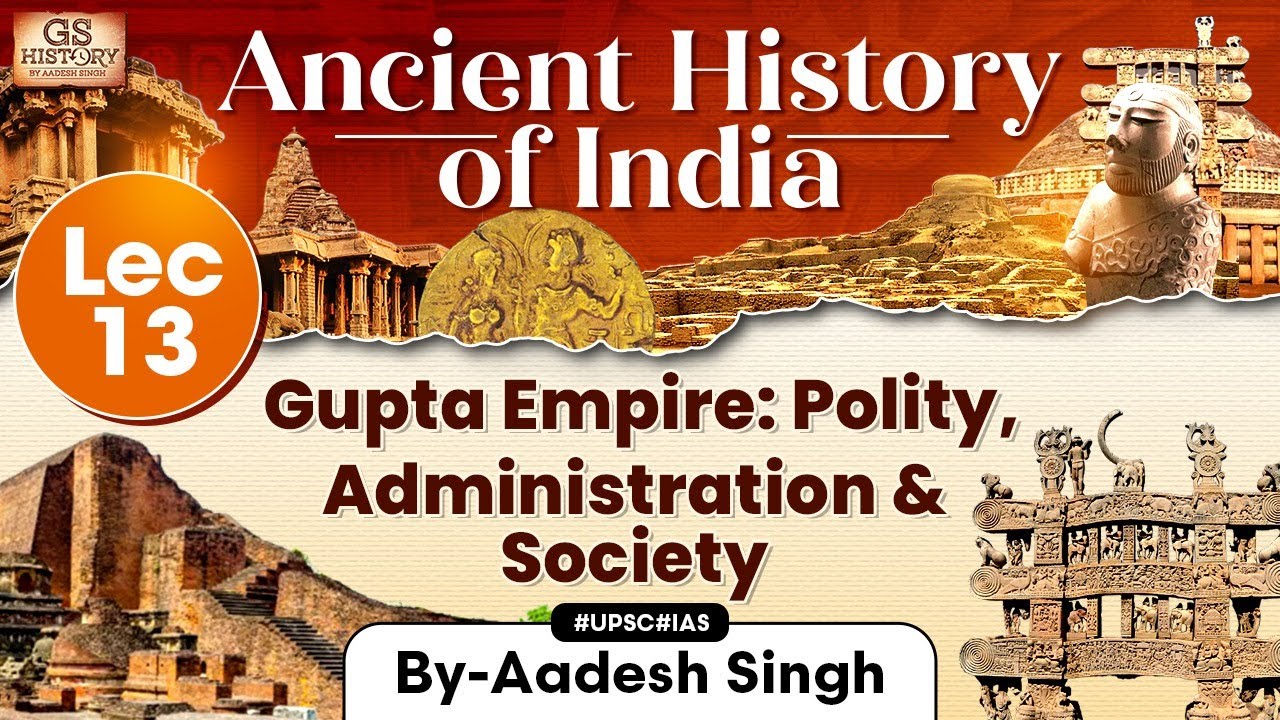
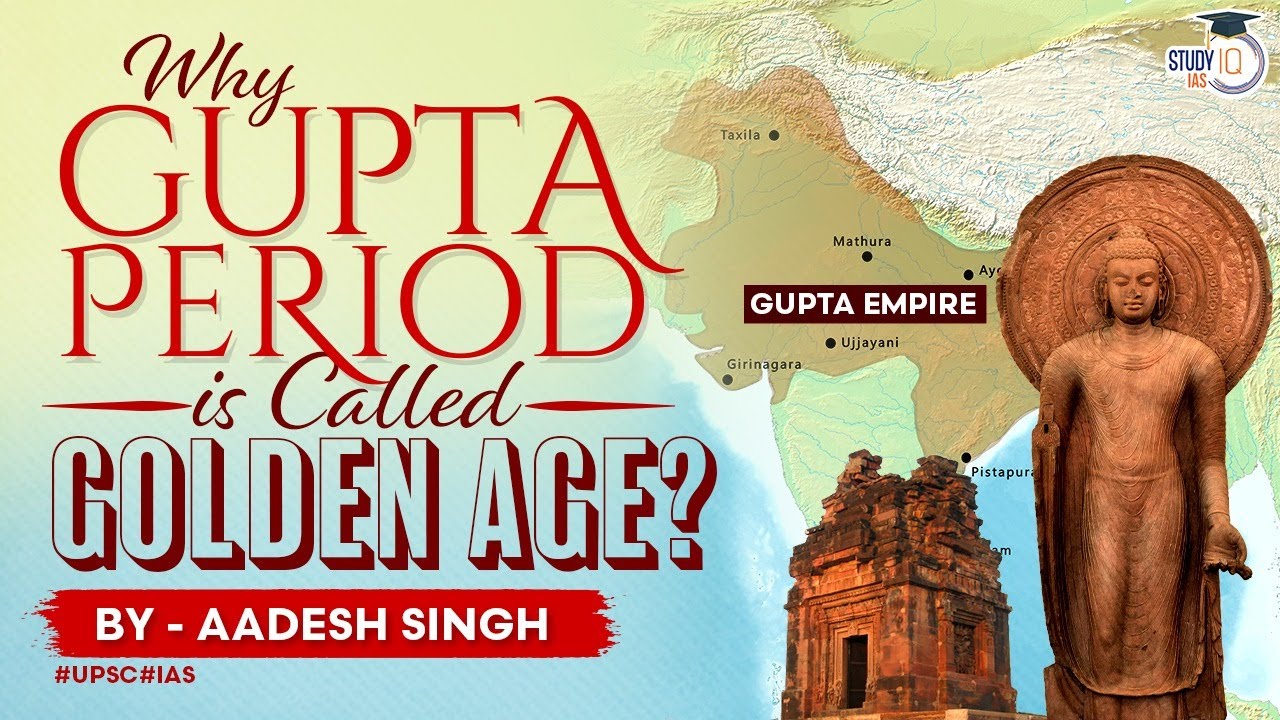
The Gupta Empire, which lasted from 320 to 550 CE, stands as a massive high point in Indian history. It is widely called India's Golden Age because of the incredible breakthroughs made in science and technology. During this era, brilliant thinkers completely changed how people looked at the world. They drove major progress in areas like mathematics, astronomy, metallurgy, and medicine. Thinkers like Aryabhata and Varahamihira came up with ideas that were centuries ahead of their time, laying down the groundwork for global scientific thought. For students getting ready for history and general knowledge examinations, picking up on these deeply rooted historical milestones is absolutely vital to building a strong foundation.
In this chapter, you will understand:
- The major scientific discoveries that made the Gupta period India's Golden Age.
- How Aryabhata and Varahamihira revolutionized global math and astronomy.
- The engineering behind rust-free iron structures and ancient Indian medical breakthroughs.
- How religious tolerance and cultural shifts shaped ancient Indian society.
Why this topic matters: Learning about the Gupta Empire shows us how ancient innovations directly shaped our modern systems of math, metallurgy, and medicine. It is a highly tested subject in competitive exams that highlights the rich scientific legacy of ancient India.
Core Idea: The Gupta period represents a bright peak of intellectual and technical growth. Scholars laid down foundational ideas like the concept of zero, advanced planetary mechanics, and rust-proof metallurgy. Alongside these scientific leaps, an atmosphere of deep religious tolerance allowed multiple spiritual philosophies to grow side by side.
Scientific and Technological Achievements of the Gupta Empire
The Gupta period marked a magnificent pinnacle of intellectual and technical prowess in ancient India, building up a massive library of knowledge that spread far across the ancient world. Even when confronting shifts in the economy, the empire gave thinkers the freedom to make truly groundbreaking strides that permanently changed global science.
This massive wave of ideas was especially visible in core areas like mathematics, advanced astronomy, medicine, and the highly specialized field of metallurgy.
- (i) Towering scholars like Aryabhata and Varahamihira led this intellectual push, updating how people viewed the physical world.
- (ii) The wide range of breakthroughs during this timeline firmly established its place as the definitive Golden Age of India.

Achievements of the Gupta Empire: Highlighting key progress in science, art, and religion.
Gupta Era Revolutions: Astronomy and Mathematics
Thinkers during this timeline brought forward bold concepts that were hundreds of years ahead of Western science. They figured out tricky aspects of celestial paths and forged the mathematical tools we use every single day.
Aryabhata’s Pivotal Contributions
Aryabhata stands out as a massive figure whose intellectual shadow stretches all the way to modern calculations. He offered a fresh way of looking at the cosmos, stating that the Earth rotates on its own axis and revolves around the Sun, which let him explain the true mechanics behind solar and lunar eclipses.
- (i) Foundational Texts: His brilliant book, the Aryabhatiya, acted as a cornerstone for math and planetary studies, and he backed it up with a deeper technical guide called the Arya Siddhanta.
- (ii) Numerical Innovations: He is widely celebrated for introducing the core concept of zero and building out the practical use of the decimal system.
- (iii) Precise Calculations:Aryabhata calculated a remarkably accurate value for Pi and figured out the exact length of a solar year with stunning accuracy.
- (iv) Advanced Disciplines: He did early, foundational work in the field of Trigonometry and designed physical tools for tracking stars, including the Chakra Yantra, the Gola Yantra, and several variations of shadow-measuring sticks.
Varahamihira’s Astronomical Synthesis
Another brilliant mind, Varahamihira, was celebrated as one of the nine jewels in the royal court of Chandragupta II. He did the vital work of blending traditional Indian observations with Greek astronomical texts, giving people a much wider view of outer space.
- (a) Key Works: He wrote the famous Romaka Siddhanta and the massive Panchasiddhantaka, which carefully explained five distinct historical star systems.
- (b) Systematic Astronomy: His organized writings offered a solid structure for studying space, making the empire a busy hub for advanced star tracking.
Technological and Medical Innovations
Beyond theoretical theories on paper, the Gupta period stood out in heavy industry and everyday technology. They developed rust-resistant iron, mastered delicate medical tasks, and built massive infrastructure projects.
Metallurgical Brilliance
The elite level of metallurgy in this era is perfectly shown by the famous Iron Pillar of Delhi, a staggering feat of structural engineering that still leaves modern scientists searching for answers.
- (i) The Rust-Free Wonder: Put together in the 4th century A.D., this twenty-three feet high iron pillar at Mehrauli in Delhi stands as a clear witness to advanced iron technology, remaining completely free of rust for over fifteen hundred years out in the open air.
- (ii) Artistic Technology: Master craftsmen were also highly skilled at bronze casting, turning out large Bronze images of Buddha that combined technical mastery with art.
- (iii) Refined Craftsmanship: They upgraded coin-minting techniques and forged delicate metal artworks, proving their incredible craftsmanship.
Revolutionary Medical Advancements
Medical workers built directly onto ancient healing methods, designing intricate operations and smart ways to stop diseases before they could spread.

Medical advancements during the Gupta era featured sophisticated surgical tools and treatments. - (a) Foundational Texts: The classic medical guides, the Sushruta Samhita and Charaka Samhita, served as standard handbooks. They walked doctors through complex surgical procedures, like early forms of plastic surgery, and listed a huge variety of specialized tools.
- (b) Preventive Care: Health practitioners focused heavily on preventive healthcare, trying early methods of vaccination and gathering natural cures into an organized pharmacopoeia.
Gupta Civil Engineering
Civil planners handled massive building projects, constructing beautiful shrines and crucial public utilities that gave the economy a major boost.
- Architectural Wonders: Their accurate blueprints produced majestic stone temples and protective forts, launching a style that echoes through Indian architecture to this day.
- Agricultural Boost: Smart improvements in water management led to grand irrigation systems that significantly boosted agricultural productivity, providing steady food security for communities across the empire.

Gupta Military System: Strategies and organization reflecting the technological and administrative capacities of the empire.
Religious Patronage and Tolerance
Even though the royal family supported their own specific beliefs, they kept the door wide open for other faiths. This open environment allowed multiple spiritual traditions to share ideas and grow organically.
The Rise of Bhagvatism
The royal family gave strong support to Bhagvatism, a dynamic spiritual movement centered on the worship of Vishnu and his earthly forms.
- (i) Core Principles: This path focused deeply on bhakti (warm devotion) and ahimsa (the principle of non-killing), moving away from the blood sacrifices of older Vedic rituals.
- (ii) Social Inclusivity: The movement was open and approachable, doing an excellent job of bringing the lower classes into active spiritual life.
- (iii) Theological Foundation: As explained in the Bhagavadgita, the primary text of this movement, Vishnu drops down to earth in human form through ten incarnations whenever society falls into deep trouble.
- (iv) Popularization: Authors put together the historical stories of the Puranas to share the life lessons of these avatars, while artists placed beautiful idols of gods inside the permanent temples built during the Gupta period.
Gupta Tolerance and the Flourishing of Buddhism
Because the empire protected freedom of worship, Buddhism continued to expand, a fact recorded clearly by foreign visitors.
- (a) Pilgrims' Accounts: The famous Chinese travelers Fa Hien and Hsuan Tsang, who spent time in India during the reigns of Chandragupta II and Harsha, wrote extensively about the healthy state of Buddhism.
- (b) Harsha's Patronage: Though King Harsha started out as a dedicated Shaiva follower, he later turned into a major champion of Buddhism, organizing a grand meeting at Kanauj to spread the teachings of Mahayanaism.
- (c) Educational Center: During this time, Nalanda university grew into a massive, world-famous center for Mahayana Buddhism, drawing in students from outside countries. It stayed well-funded by using the tax revenues collected from one hundred local villages, exactly as Hsuan Tsang described in his notes.
The Bhakti Movement’s South Indian Spread
The warm concept of bhakti swept into South India starting in the seventh century, driven forward by passionate Tamil poets.
- Alvar Saints: These poets traveled across regions, spreading deep devotion for Vishnu.
- Nayannar Saints: These dedicated teachers focused on inspiring people to worship Shiva.
The Rise of Tantrism
As tribal elements mixed into mainstream society—a shift helped by the practice of gifting land to brahmanas in places like Nepal, Assam, Bengal, Orissa, Central India, and the Deccan from the fifth century onward—the ideas of Tantrism began to form.
- (i) Synthesis of Beliefs: Traditional teachers blended regional customs and local deities into their practices, building out the detailed structure of Tantrism.
- (ii) Egalitarianism: A defining feature of Tantrism was that it completely ignored caste or gender bias, welcoming both women and Shudras into its rituals.
- (iii) Core Philosophy: Its core philosophy looked at the female as the absolute source of cosmic power and creative energy.
- (iv) Influence: These concepts had a major impact on Shaivism, Vaishnavism, Buddhism, and Jainism, which ultimately brought the worship of female deities to prominence across all major Indian religions.
Quick Revision Capsule
Use this convenient summary table to review the key achievements and cultural movements of the Gupta era:
| Field / Movement | Key Innovations & Texts | Historical Impact |
|---|---|---|
| Mathematics | Invention of zero, decimal system, and calculating Pi by Aryabhata | Laid down the mathematical rules used worldwide today |
| Astronomy | Earth's rotation on its axis; Varahamihira's Panchasiddhantaka | Proved that planetary bodies follow predictable physical paths |
| Metallurgy | Rust-free Mehrauli Iron Pillar; advanced bronze casting | Showed an elite control over metals that lasted for centuries |
| Medicine | Sushruta Samhita and Charaka Samhita reference guides | Advanced early plastic surgery and preventive vaccinations |
| Religious Philosophy | Rise of Bhagvatism, Tantrism, and Nalanda University | Brought inclusive worship practices and international students to India |
Summary
The Gupta Empire was far more than a simple line of rulers; it acted as a brilliant beacon of scientific and technological innovation. Its lasting work in mathematics (like zero and the decimal system by Aryabhata), advanced astronomy (seen in the works of Varahamihira), and complex metallurgy (the rust-free Iron Pillar) shaped both Indian civilization and the global history of science. At the same time, the mix of deep personal devotion (Bhagvatism) and new spiritual structures (Buddhism, Tantrism) offers crucial context for tracking India's cultural journey. This history proves that innovation can thrive even through changing economic times. For students aiming for top scores, mastering these concepts shows exactly how the legacy of Gupta advancements continues to support modern fields of study.
Quick Revision Points
Keep these central historical milestones in mind for your upcoming exam:
- (i) Aryabhata wrote the Aryabhatiya, introduced zero, calculated Pi, and proved the Earth turns on its own axis.
- (ii) Varahamihira compiled the Panchasiddhantaka, cleanly blending Greek and Indian star observations.
- (iii) The Mehrauli Iron Pillar stands as a 1500-year-old marvel of rust-free engineering.
- (iv) Nalanda University grew into a massive center for Mahayana Buddhism, funded entirely by 100 villages.
- Exam Tip: Examiners regularly ask about the specific contributions of Aryabhata versus Varahamihira, along with the physical traits of the Mehrauli Iron Pillar. Make sure you can link these names and structures directly to the Golden Age timeline.
Frequently Asked Questions (FAQ)
Q1: Why is the Gupta Empire called India's Golden Age?
A1: It earned this title because it saw a massive explosion of progress in science, technology, math, and art, led by exceptional scholars who set up foundations for modern global knowledge.Q2: What were Aryabhata's main math breakthroughs?
A2: Aryabhata introduced the use of zero and the decimal system, calculated a highly accurate value for Pi, and completed early, pioneering work in trigonometry.Q3: What makes Tantrism unique during this historical era?
A3: Tantrism was highly inclusive, completely rejecting caste and gender barriers. It allowed both women and Shudras into its rituals and viewed female energy as the ultimate source of power.