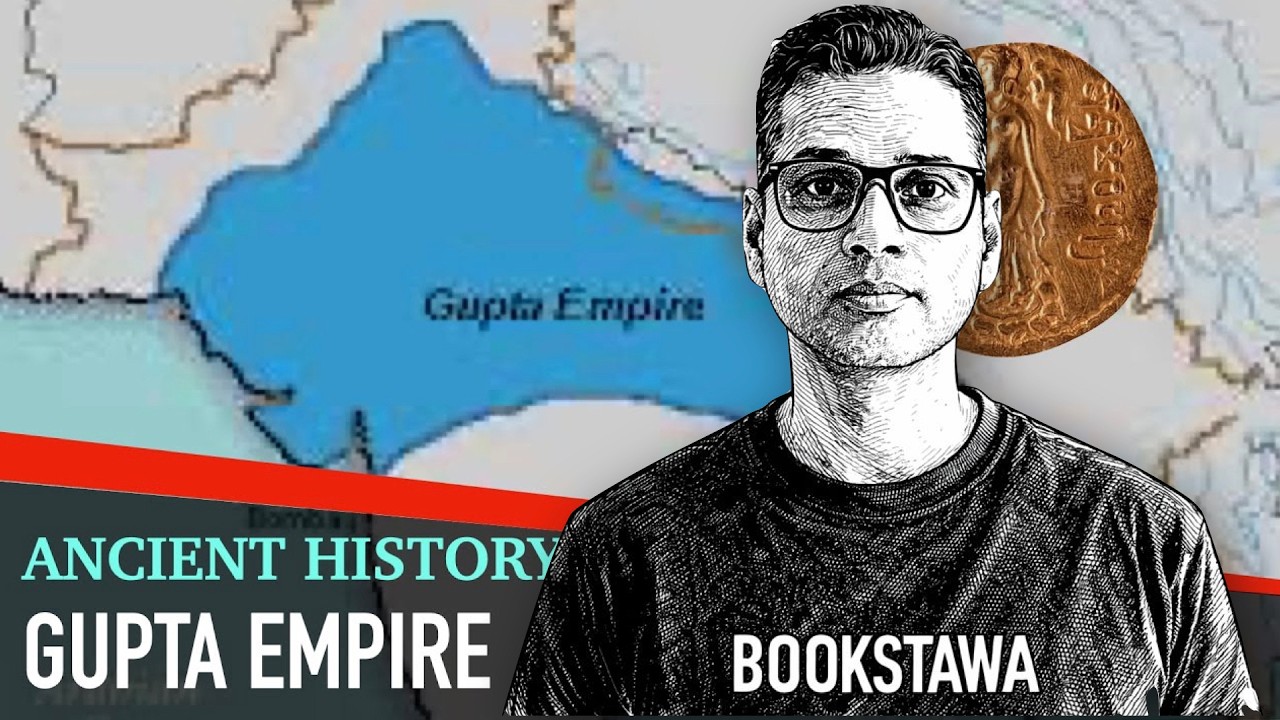
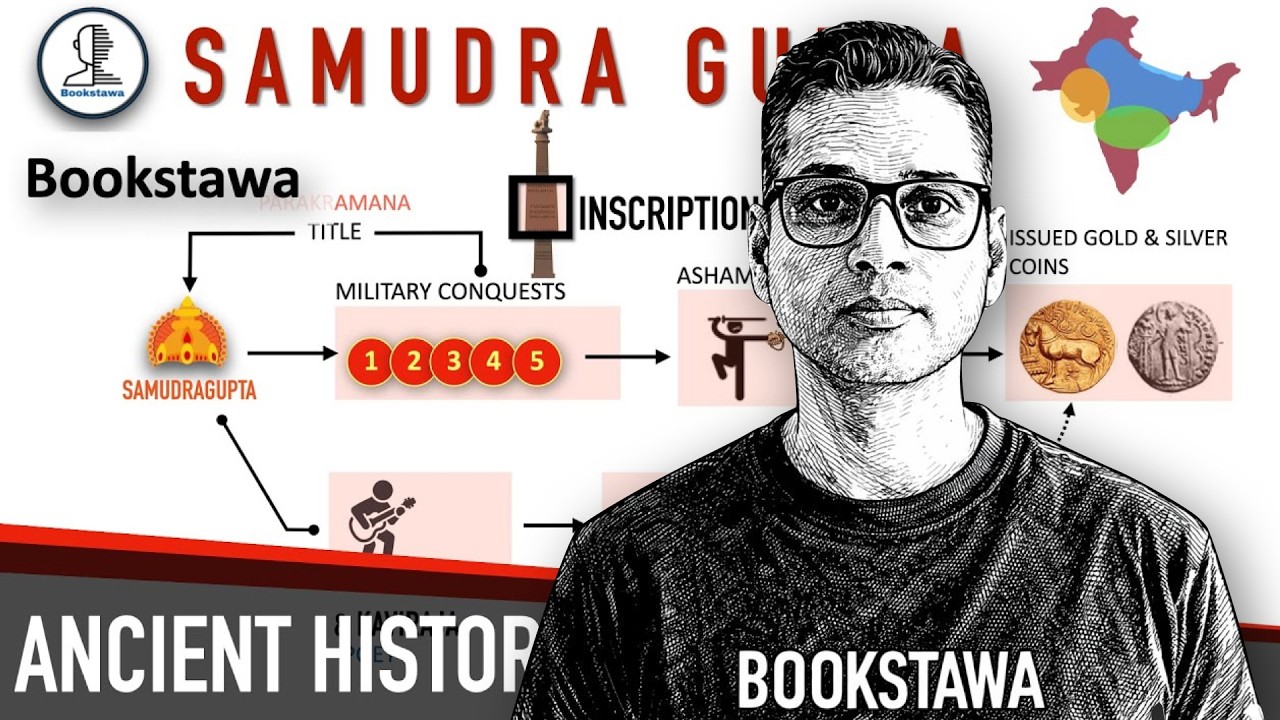
The historical reign of Samudragupta, spanning from AD 335 to 375, serves as a monumental turning point that defined the vast expansion of the Gupta Empire. Often described as a fearless leader who systematically unified fragmented territories, his actions reshaped the ancient political landscape. His extensive victories and far-reaching administrative reforms are not merely ancient stories; they provide vital textbook examples of early Indian geopolitics. For students and civil service aspirants, analyzing this specific period uncovers how a single centralized power could efficiently manage distant territories. The primary key to unlocking this era lies in the famous Allahabad Pillar Inscription, a unique historical document penned by the talented court poet Harisena, which blends artistic expression with factual imperial reporting.
In this chapter, you will understand:
- The historical value of the Prashasti engraved on the Allahabad Pillar.
- The structural division between direct annexation and indirect suzerainty.
- How the Naga Rulers, Forest Kingdoms, and southern territories were uniquely handled.
- The symbolic use of Ashvamedha coins and art patronage to solidify imperial authority.
Why this topic matters: This historical breakdown is highly essential for competitive examinations and essays, offering deep insights into administrative realism, diplomacy, and visual state propaganda in ancient India.
Core Idea:Samudragupta successfully transformed a regional domain into a massive subcontinental empire by matching absolute military destruction in the North with clever, flexible tribute-based relationships in the South, all while championing classical music, poetry, and Vedic rituals.
Samudragupta: The Gupta Emperor, Military Conquests, and the Allahabad Pillar Inscription (AD 335–375)
As the chosen successor to Chandragupta I, the young monarch took absolute control of the throne and instantly pursued a bold blueprint for regional dominance. He looked past his inherited borders, using coordinated military force to establish an uninterrupted imperial dominion that completely changed the dynamics of local governance.
The Voice of the Stone: Understanding the Prashasti
Our deep historical knowledge of his dynamic activities originates almost entirely from a lengthy, beautiful praise poem called the Prashasti. This comprehensive legal and biographical text was structured in elegant, pure Sanskrit by the court official Harisena, who permanently carved these detailed achievements directly into the stone of the Allahabad Pillar.
- The monumental inscription acts as the absolute primary and most authentic source detailing the geographic scope of the king's vast travel routes and battlefronts.
- Local traditions and text records celebrate him as a resilient warrior whose thirst for conquest and territorial expansion helped construct a massive, defensive shield around the heart of India.
- The surviving inscriptions clearly show a calculated, strategic differentiation in how he handled defeated kings, ensuring he never wasted imperial resources on unnecessary direct occupations.
Samudragupta’s Military Strategies and Classification of Conquered Regions
The vast reach of the imperial army covered thousands of miles, striking distinct geographical zones. To keep these areas organized, Harisena systematically grouped these dynamic territories into five unique categories based on how they submitted and their administrative relationship to the main throne.

- The diverse regional strategies protected the treasury from being depleted by endless military occupations.
The Policy of Annexation in the North (Aryavarta and Central India)
For the central homelands, particularly the highly lucrative and agriculturally rich Ganga-Yamuna doab, the crown chose a path of uncompromising severity. The imperial strategy centered on complete annihilation and absolute assimilation, liquidating local rule to put the land under direct bureaucratic command.
- Group I - The Naga Rulers: The dangerous rival factions situated within the inner ring were the nine Naga rulers of the Ganga-Yamuna doab, who were entirely broken in combat and had their ancestral lands absorbed into the empire.
- Group III - The Forest Kingdoms: Deep within the difficult terrain of the Vindhya region, the localized tribal states known as Atavirajyas were thoroughly subdued, bringing their leaders into a strict loop of servitude and compliance.
- Ganga-Yamuna Doab Strategy: This specific agricultural trade belt was controlled through a rigid, unyielding policy of annexation to prevent future internal rebellions near the capital.
The Strategic Approach of Suzerainty (Dakshinapatha and Frontiers)
Operating thousands of miles away from home base posed massive logistical dangers in the ancient world. Recognizing the clear difficulty of controlling distant territories, the emperor deployed a brilliant mix of overwhelming shock warfare followed by generous political restoration.
- This flexible policy kept remote trade routes completely open without locking up the royal army in endless local policing duties.
Exercising Influence over Border States and Foreign Powers
The sheer administrative gravity of the crown extended far past the lines of direct occupation, converting independent rulers into obedient, cooperative neighbors who paid regular taxes.

Contextual Image: Later Gupta Expansion under Chandragupta II (Samudragupta's Son) - Illustrating the Continuation of Strategic Alliances and Victory Over the Shakas - Group IV - Southern Kings: The powerful royal houses of the eastern Deccan, including the famous Pallavas of Kanchi near modern Chennai, were thoroughly beaten as the northern expedition swept down the eastern coast to defeat twelve kings.
- Reinstatement Strategy: In a masterstroke of political realism, instead of annexing the southern kingdoms, he wisely reinstated their defeated rulers, letting them run their lands as long as they accepted his suzerainty and sent regular tributes.
- Frontier and Republican States: The official record documents that five frontier kingdoms and nine republican states across Punjab and Western India actively chose to voluntarily submit to secure long-term protection.
- Group II - Border Kingdoms: Strategically placed outer zones like Nepal, Assam, and Bengal chose to pay regular taxes rather than risk facing an imperial invasion.
- Group V - Foreign Powers: The distant powerful Shakas and Kushanas of the northwest saw their autonomy heavily curtailed, forcing them to send formal embassies and acknowledge the crown's regional dominance.
Quick Revision Capsule: Imperial Mapping
Use this structured overview to quickly master the distinct regional approaches used by the state:
| Territorial Category | Key Regions & Rulers Included | Administrative Policy Applied |
|---|---|---|
| Group I & III (Core North) | Ganga-Yamuna Doab, Nine Naga Rulers, Atavirajyas (Forest States) | Complete annihilation and direct annexation into the empire. |
| Group IV (Deep South) | Eastern Deccan, Pallavas of Kanchi, Twelve Kings | Defeat followed by strategic reinstatement and tribute payment. |
| Group II (Frontiers) | Strategic border lands of Nepal, Assam, and Bengal | Voluntary submission, paying regular taxes to the central throne. |
| Group V (Northwest) | Powerful Shakas and Kushanas of the northwest frontiers | Diplomatic submission and clear recognition of supreme imperial power. |
| Republican Clans | Nine republican states of Punjab and Western India | Peaceful integration via voluntary compliance and tribute updates. |
Summary
Ultimately, the extensive historical timeline of Samudragupta provided the sturdy framework that allowed the glorious Gupta Golden Age to blossom. By executing a brilliant two-front policy—combining aggressive, permanent takeovers nearby in the North with highly flexible, independent suzerainty further down South—he created a sustainable template for running a giant empire. Beyond his military talents, his deep commitment to classical literature and the performing arts ensured that the empire grew culturally vibrant, setting standards for centuries to come.
Key Revision Checkpoints
Students must firmly memorize these foundational historical milestones:
- (i) The Allahabad Pillar Inscription was written by Harisena in classical pure Sanskrit.
- (ii) Aryavarta rulers faced direct elimination, while Southern rulers were allowed to keep their thrones in exchange for regular tributes.
- (iii) The traditional Ashvamedha Ceremony was revived to publicly legitimize the crown's absolute regional sovereignty.
- (iv) Special gold coins present a clear image of the sovereign playing the vina, confirming his personal identity as an accomplished musician.
- Exam Tip: Always make sure to highlight the contrast between how the Northern Naga rulers were treated versus the Southern Pallavas. Pointing out this strategic difference shows evaluators that you truly understand ancient administrative realism.
Frequently Asked Questions (FAQ)
Q1: Why didn't Samudragupta permanently annex the southern kingdoms?
A1: He understood that managing remote territories without advanced modern communication was highly unrealistic. Leaving local kings in power in exchange for regular taxes kept the region stable and profitable without draining his main army.Q2: What unique historical insights do his coins offer?
A2: His specialized Ashvamedha coins serve as clear physical proof of his military triumphs, while the artistic variants showing him with a vina reveal his genuine passion for music, culture, and high learning.Q3: Who was Harisena, and why is he important?
A3: Harisena was the prominent court poet and high-ranking state official who composed the detailed Prashasti on the Allahabad Pillar, giving historians their most valuable look into this era.