The Gupta Period spanning the 4th to 7th Centuries CE in ancient Indian history serves as a critical milestone for understanding the concepts of political unity, economic prosperity, and monumental cultural shifts. This era laid down the structural, artistic, and philosophical foundations of classical Indian civilization, making it highly essential content for students actively preparing for competitive historical examinations. Academic and historiographical debates surrounding this epoch focus closely on the validity of the "golden age" label and the eventual emergence of Indian Feudalism. By closely examining the social structures, administrative dynamics, and evolving religious conditions, learners gain a deep critical analysis of how these transformative centuries reshaped the social fabric of the Indian subcontinent for generations to follow.
In this chapter, you will understand:
- The conflicting Nationalist and Marxist interpretations of the Gupta Period.
- The mechanics of Indian Feudalism, land grants, and integrative state formation models.
- Social stratification, shifts in the varna/jati hierarchy, and the true status of women.
- The features of the Brahmanical Renaissance, the birth of Puranic Hinduism, and Tantric developments.
Why this topic matters: Mastering the history of the Gupta Empire provides vital context for historical examinations. It teaches students how to critically evaluate conflicting historical theories—such as central golden ages versus decentralized feudalism—while highlighting the real-world roots of modern Indian social and religious systems.
Core Idea: The period between the 4th and 7th centuries CE acted as a grand transitional watershed that thoroughly altered India's political, economic, and religious design. While the early empire fostered unified governance and classical artistic expressions, systemic land grants gradually distributed power away from the center. This administrative evolution catalyzed the rise of local landed intermediaries, a resurgence of orthodox social structures, and a massive popular synthesis known as Puranic Hinduism.
Critical Analysis of Historians' Interpretations on the Gupta Period (4th to 7th Century)
Historians offer highly varied and often conflicting interpretations of this pivotal era in ancient Indian history, which marked a major transitional phase for the region. The centuries between the fourth and seventh centuries CE are widely treated as a definitive turning point, fundamentally altering the political, economic, and cultural landscape of the entire subcontinent.
- The Nationalist School of Thought
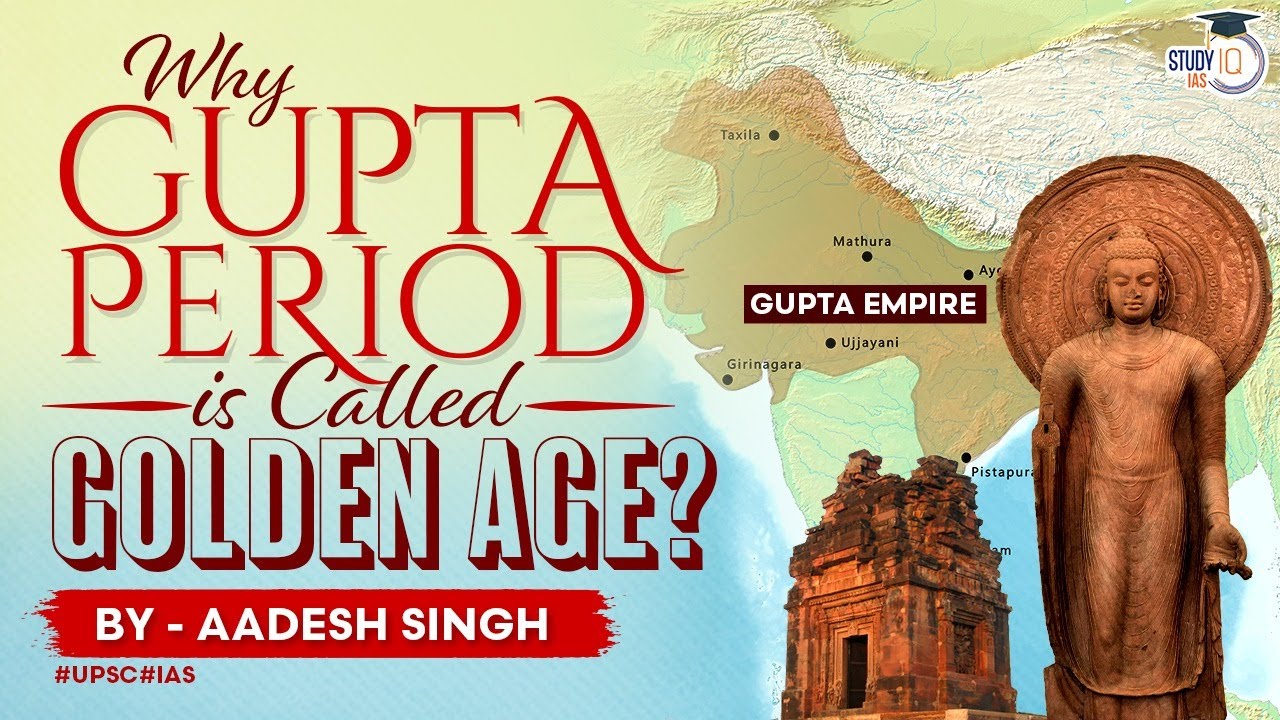
The Nationalist Interpretation, championed by legendary scholars like R.C. Mazumdar and H.C. Raychaudhuri, strongly highlighted the era's grand successes. These historians frequently labeled the Gupta period as an undisputed "golden age" of Indian history.
- (i) This specific perspective emphasized the unmatched achievements of Gupta India in securing imperial political unity and creating broad internal peace.
- (ii) It placed heavy focus on unparalleled economic prosperity alongside groundbreaking, timeless advances in art, stone architecture, and classic Sanskrit literature.
- (iii) Conversely, a group of prominent Marxist historians emerged during the post-independence era to provide a robust, structural critique of this idealistic narrative. They introduced the highly influential theory of Indian Feudalism, tracing its structural origins directly back to the onset of the Gupta period.
Alternative Historiography: The Debate on Indian Feudalism and Integrative State Formation
The Marxist critique firmly challenged older notions of an absolute, all-powerful central government by highlighting a deep socio-economic transformation centered around imperial land grants. Meanwhile, a different group of modern scholars offered a processual, integrative model to explain how regional states grew during the empire.
Marxist Critique: Decentralization through Land Grants and Feudalism
The core tenet of the Indian Feudalism theory posits that systemic land grants, which were regularly handed out to brahmanas and local temples, gradually weakened central authority. This process led to a profound, long-term decentralization of political power across the empire's vast territories.
- (i) This approach focuses directly on the economic shift away from state offices toward local, independent landed intermediaries, altering the balance of power.
- (ii) It characterizes the Gupta period as the critical starting line for deep socio-economic changes that ultimately birthed a brand-new agrarian order run by local lords.
- (iii) The theory highlights structural changes in revenue administration and points out the decreasing importance of long-distance trade and urban centers, linking these trends to feudal practices.
The Processualist or Integrative Model of State Formation in the Gupta Era
Scholars like the renowned B.D. Chattopadhyaya and Hermann Kulke offered a nuanced, alternative interpretation. They viewed imperial land grants not as a direct source of political fragmentation, but as a dynamic engine for socio-political integration within emerging regional states.
- (a) This processualist view argues that issuing land grants served to effectively legitimize royal authority across the wild, unconquered, or less-governed countryside.
- (b) It actively facilitated the smooth incorporation of smaller, isolated territorial units and local tribal chiefs into the main political framework of the expanding Gupta realm.
- (c) Rather than sparking an immediate political breakdown, this system built a layered, complex structure that allowed distinct regional polities to mature over time.
Social Conditions Under the Gupta Empire: Stratification, Women, and Cultural Life
A comprehensive understanding of Gupta society is traditionally derived from the highly structured legal and religious textbooks written during this era. However, modern research reveals that everyday ground realities often presented fascinating contradictions to these strict, idealized scriptural laws.

The Varna/Jati System: Brahmanical Supremacy and Shifts in Social Mobility
The historical Gupta period witnessed a massive, organized resurgence of the brahmanical reaction against heterodox ascetic faiths like Buddhism and Jainism. This shift caused a far more rigid emphasis on varna-based social stratification and firmly locked in the absolute supremacy of the brahmans.
- (i) The Gupta rulers, who were likely brahmans themselves or deeply devoted followers, heavily backed this hierarchical order, placing priestly classes at the absolute apex of society.
- (ii) The elite ksatriyas (the warrior caste) maintained incredible social prestige due to their direct control over political offices and military power, cooperating closely with the priests.
- (iii) The overall position of the traditional vaisyas (merchant traders and agriculturists) generally experienced a relative decline due to shifting trade patterns.
- (iv) Conversely, the lower sudras (laborers) saw a slight, marginal improvement in their basic living conditions, gaining minor scriptural allowances over time.
- (v) As centuries passed, the flexible, occupation-based jati system gained massive real-world importance, often completely overshadowing the traditional four-fold varna structure.
- (vi) Importantly, social mobility remained distinctly possible despite these strict rules; for example, members of the brahman caste frequently changed lanes into administrative officialdom, trade, or high architecture.
Position of Women in Gupta Society: The Gap Between Ideal and Reality
While women were highly idealized as symbols of beauty and grace in classic Sanskrit literature and fine terracotta art, their daily lived experience in Gupta society was largely defined by structural subordination, especially within the upper castes.
- (a) The legal texts or smrtis of this era, heavily based on the older Dharmasastra of Manu and writers like Yajnavalkya and Narada, strictly prescribed measures like early marriage and absolute celibacy for widows, viewing women as dependents.
- (b) Formal higher education was restricted to a remarkably tiny group of wealthy, upper-class women, and they were generally barred from active roles in public politics.
- (c) However, exceptional historical figures like Prabhavatigupta, the brilliant daughter of Emperor Chandragupta II, proved that royal women could wield ultimate power, successfully managing state affairs for two full decades.
- (d) True social freedom was also carved out by individuals who chose to step outside regular domestic paths, such as dedicated Buddhist nuns and the highly respected class of urban courtesans.
Gupta Era Cultural Practices: Dress, Ornaments, and Popular Amusements
The cultural life of the Gupta period was intensely vibrant, marked by sophisticated artistic fashions and a diverse range of popular leisure activities enjoyed across different levels of society.
- Dress and Ornaments: Everyday men commonly wore the classic dhoti paired with a loose upper cloth. The past historical influence of Central Asian Scythians introduced tailored items like coats, heavy overcoats, and trousers into elite Indian fashion circles. Women generally wore a long sari draped smoothly over a petticoat, sometimes paired with a snug bodice, and accessorized with popular jewelry like intricate earrings, heavy necklaces, and anklets.
- Amusements: High cultural entertainment was incredibly rich, regularly featuring elite theatrical performances, sophisticated music concerts, and complex dances that highlighted the era's high refinement.
- Popular Pastimes: Across both busy towns and quiet rural villages, regular citizens gravitated toward energetic pastimes like board gambling, athletic wrestling, physical athletics, and organized animal fighting.
Religious Life and Transformation: The Brahmanical Renaissance and Puranic Hinduism
The iconic Gupta period is historically celebrated as the primary era of the grand brahmanical renaissance. This massive movement fundamentally reshaped the long-term practice of Hinduism while steering the evolution of other major traditional faiths like Buddhism and Jainism.
The Birth of Neo-Hinduism: Synthesis of Sects and the Rise of the Trinity
Despite being deeply personal patrons of orthodox Brahmanism, the core Gupta kings maintained a calculated policy of broad religious tolerance. This open approach allowed for a profound, permanent synthesis of diverse spiritual traditions across the land.
Artistic remnants showcasing the synthesis of Vaishnavism, Saivism, and the emergence of the Trimurti concept. - (i) This historic epoch witnessed a massive integration of old Vedic styles with highly popular regional creeds, beautifully uniting Saivism, Vaishnavism, and the rapidly growing Shakti cult.
- (ii) This successful blend gave birth to Puranic Hinduism (frequently termed neo-Hinduism by modern researchers), which centered on personal, devotional worship (bhakti) and remains the defining framework of the faith today.
- (iii) The major theological concept of the divine Trinity or "Trayi" became firmly established, mapping out three core cosmic actions through the individual deities Brahma (the Creator), Vishnu (the Preserver), and Maheswar (Shiva, the Destroyer).
- (iv) This systemic evolution caused a steep decline in the popularity of the older Vedic Gods (like Indra and Agni), who were rapidly replaced in local temples by Puranic figures like Siva, Vishnu, Kartikeya, and Ganesha.
The Shakti Cult, Tantric Buddhism, and Flourishing Jainism
Alongside the grand restructuring of mainstream Hinduism, these centuries brought forth an increased focus on powerful female deities and major evolutionary changes within heterodox religious paths.
- (a) The popular Shakti cult experienced a significant rise, focusing deep worship on dynamic female forces like Kali, Durga, and Chamunda, who were viewed as the essential active energies or 'shaktis' of the primary male gods.
- (b) Elaborate idol worship inside permanent brick and stone temples turned into a widely accepted, standard expression of daily faith, changing the landscape of worship permanently.
- (c) A massive paradigm shift occurred within the Buddhist community through the dynamic emergence of Tantric Buddhism, which incorporated complex esoteric rituals, mystic chants, and magical diagrams into its core doctrines.
- (d) Concurrently, Jainism stuck tightly to its traditional ascetic roots and continued to steadily flourish, gathering powerful regional support from merchant communities in western and southern India.
Quick Revision Capsule
Review this structured overview mapping out the core themes, mechanisms, and developments of the Gupta transition:
| Historical Theme | Core Strategy & Mechanism | Target Objective & Impact |
|---|---|---|
| Historiographical Debate | Contrasting Nationalist "Golden Age" views with Marxist theories of decentralized developments. | Evaluates whether the empire represents peak centralization or the dawn of fragmented systems. |
| Indian Feudalism | The systematic distribution of royal land grants directly to temples and elite brahmanas. | Created local landed intermediaries, which weakened the absolute control of the central crown. |
| Social Stratification | Consolidation of the strict varna hierarchy alongside the rapid practical growth of occupational jatis. | Enforced high Brahmanical supremacy while offering minor occupational mobility in urban centers. |
| Neo-Hinduism | Blending elite Vedic structures with regional popular cults like Saivism and Vaishnavism. | Established Puranic Hinduism and the devotional worship of the divine Trinity. |
| Heterodox Evolution | The rise of esoteric, ritual-based modules within monastic setups. | Birthed Tantric Buddhism while traditional Jainism secured strong bases in the West and South. |
Summary
The historical Gupta period running from the 4th to 7th centuries CE stands firmly as a foundational pillar for any comprehensive study of ancient Indian history. It is an absolutely vital topic for students to master due to its intricate mixture of early political unity, shifting socio-economic hierarchies, and the powerful brahmanical renaissance. Evaluating the grand academic debates between the classic 'golden age' models of R.C. Mazumdar and the layered theory of Indian Feudalism builds the critical skills needed to decipher ancient economic records. Ultimately, the long-term consolidation of Puranic Hinduism, the birth of the Trinity, and the expanding network of occupational jati sub-castes left a permanent, unmistakable imprint on India's living cultural landscape.
Quick Revision Points for Students
Keep these essential parameters and core historical rules in mind for the exam:
- (i) The Nationalist school defines the era by its political synthesis, high economic wealth, and classical literature.
- (ii) The Marxist school highlights land grants as the institutional starting point for political decentralization.
- (iii) Elite women like Prabhavatigupta proved that high-born figures could occasionally exercise sovereign rule.
- (iv) Traditional Vedic gods faded into the background as Puranic deities like Shiva and Vishnu dominated temple worship.
- Exam Tip: When writing long-form essay answers on the Guptas, always avoid taking a one-sided view. Balance your arguments by cleanly presenting both the Nationalist "cultural golden age" achievements and the Marxist "feudal decentralization" economic data to maximize your score.
Frequently Asked Questions (FAQ)
Q1: Why do Nationalist historians refer to the Gupta Period as a "golden age"?
A1: Nationalist historians point directly to the re-establishment of political unity across Northern India, extensive economic prosperity, a major revival of Sanskrit literature, and remarkable breakthroughs in architecture and sculpture as justification for the term.Q2: How did the practice of issuing land grants alter the political layout of the empire?
A2: Land grants transferred administrative and revenue rights to temples and priests. According to the Marxist critique, this process created a powerful layer of local landed intermediaries, slowly decentralizing power away from the imperial center and initiating early Indian Feudalism.Q3: What major theological shift occurred within Hinduism during the Gupta Era?
A3: The era marked the birth of Neo-Hinduism or Puranic Hinduism. Older Vedic sacrificial gods were largely replaced by the worship of the dynamic Trinity (Brahma, Vishnu, and Shiva), accompanied by the rise of the Shakti cult and the widespread adoption of devotional idol worship.