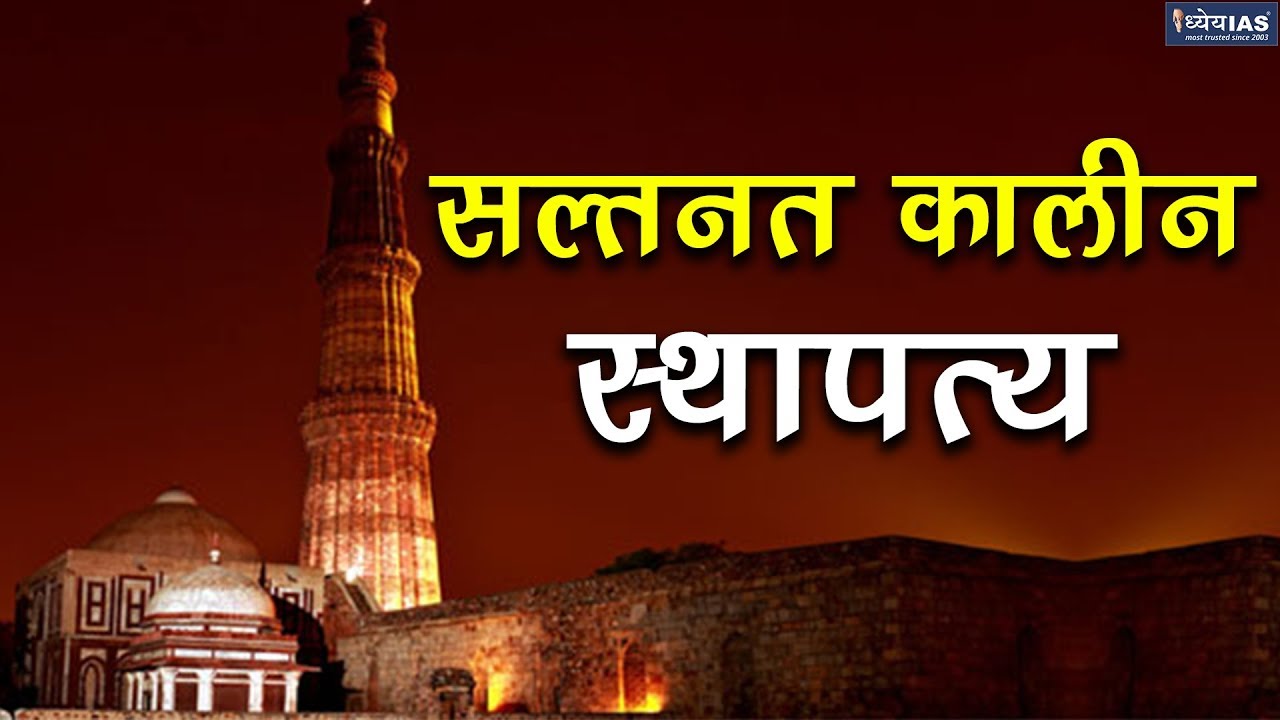
The Delhi Sultanate, spanning from the , was a turning point that changed India’s cultural and architectural history. During this period, interaction between incoming Turks and native Indians introduced Arabo-Persian traditions to the region. This mixture encouraged new ideas in art, architecture, literature, and science. Famous monuments like the tall Qutub Minar, the strong walls of Tughlaqabad, and the unique Lodi tombs show how these cultures came together. For students and exam aspirants, studying this era is vital to understanding medieval Indian history, cultural integration, and Indo-Islamic development.
🎯 In this chapter, you will understand:
- How the establishment of the Delhi Sultanate created a composite Indo-Islamic culture.
- Key architectural features like the true arch, dome, and new building materials.
- Distinct design styles under the Khalji, Tughlaq, and Lodi dynasties.
- The fusion of Persian and Indian styles in visual arts, literature, Sufism, and the Bhakti movement.
💡 Why this topic matters: This period laid the structural foundation for India's medieval heritage, creating artistic and architectural patterns that lasted for centuries.
🧠 Core Idea: The arrival of Central Asian and Persian traditions combined with native Indian skills, resulting in a rich, shared cultural identity across northern India.
1. Establishment of the Delhi Sultanate and Its Enduring Cultural & Architectural Influence ()
The rise of Turkish rulers in Northern India brought Central Asian and Persian customs together with native Indian traditions, starting a new chapter in regional history.
The creation of the Delhi Sultanate built the base for a new, blended Indo-Islamic culture that deeply affected local arts, building design, and daily society.
- (i) The arrival of Islam and the social structure of Arabo-Persian culture became part of the existing Indian social fabric.
- (ii) Scholars and builders made progress in fields such as science, literature, and navigation techniques.
- (iii) The mixing of art, new architecture, and literature gave rise to fresh forms of cultural expression.
1.1 Architectural Innovations and Structural Synthesis of the Delhi Sultanate
The Sultanate era introduced major construction advances, especially the true arch and the dome. These structures combined strong Persian mechanics with detailed Indian craftsmanship.

Early Mosques and Architectural Conversions: The Initial Phase
Early Sultanate construction was driven by immediate needs, often reusing materials from existing buildings to establish the first Indo-Islamic monuments.
- (i) Early builders converted or adapted existing Hindu and Jain temples into mosques, such as the Quwwat-ul-Islam Mosque in Delhi and Arhai Din ka Jhonpra in Ajmer.
- (ii) Decorations focused on abstract patterns, using calligraphic Quranic verses and detailed floral patterns instead of human or animal forms.
- (iii) Skilled indigenous Indian craftsmen worked under the direction of West Asian master architects, creating a balanced, hybrid style.
Structural and Material Innovations: Mastery of Arch and Dome
Builders used new engineering techniques and materials that redefined Indian building traditions.
- (a) The use of the true arch and dome drew inspiration from Byzantine and Sassanian architectural styles.
- (b) Builders expanded their choice of materials, using red red sandstone, contrasting yellow sandstone, and smooth marble for visual effect.
- (c) The tall, tapering Qutub Minar, completed under Sultan Iltutmish, stands as an early example of refined Indo-Islamic architecture.
2. Khalji and Tughlaq Architectural Achievements: Focus on Strength and Utility
The Khalji and Tughlaq dynasties brought new architectural approaches, moving from detailed decoration to large-scale, practical buildings.
2.1 Khalji Period Architecture: Grandeur and Symmetry
During the rule of Sultan Alauddin Khalji, builders focused on planned layout, symmetry, and richer decorative detail.
- (i) He built a fortified capital at Siri, using grand designs to display the strength of his realm.
- (ii) The balanced Alai Darwaza, serving as the southern gateway to the Qutub complex, showed clear symmetry and intricate stone carving.
- (iii) Sultan Alauddin Khalji planned a victory tower larger than the Qutub Minar, though this project remained unfinished.
2.2 Tughlaq Period Architecture: Fortification and Practical Economy
Unlike the Khaljis, early Tughlaq rulers favored strong, simple designs that saved costs and focused on defense.
- (a) They constructed Tughlaqabad, a massive fortified city built primarily for military security.
- (b) They introduced sloping walls known as batter walls, which gave extra strength and stability to large structures.
- (c) Later rulers like Firuz Shah Tughlaq built public works such as the Hauz Khas complex, using economical materials and simple lotus motifs.
3. Lodi Architecture: Transition and Regional Blending
The Lodi dynasty, the final ruling house of the Sultanate, blended established Indo-Islamic styles with regional ideas from Rajasthan and Gujarat.
3.1 Lodi Architectural Style: Synthesis and Octagonal Tombs
Lodi buildings represent a mature style that mixed Sultanate features with traditional Indian design details.
Figure 2: Typical Lodi-era tomb design featuring an octagonal layout and decorative kiosks. - (i) Lodi builders used both the arch system and the traditional Indian lintel (beam) technique in the same building.
- (ii) They added features from Indian architecture, including decorative balconies, small domed kiosks (chhatris), and overhanging eaves (chhajjas).
- (iii) They built royal tombs on an octagonal plan, as seen in the monuments at Lodi Garden, Delhi.
⚡ Quick Revision Capsule: Delhi Sultanate Architecture & Culture
The table below summarizes key dynasties, structural developments, and notable monuments of the Delhi Sultanate period.
| Dynasty / Period | Key Architectural & Structural Features | Notable Monuments & Examples |
|---|---|---|
| Early Sultanate () | Reuse of temple materials, introduction of calligraphy, abstract floral motifs, early true arch attempts. | Quwwat-ul-Islam Mosque, Arhai Din ka Jhonpra, Qutub Minar |
| Khalji Dynasty () | Symmetrical designs, true arch and dome mastery, rich red sandstone carvings. | Alai Darwaza, Fortified city of Siri |
| Tughlaq Dynasty () | Sloping batter walls, simple fortresses, focus on defense and public utility over decoration. | Tughlaqabad Fort, Hauz Khas complex |
| Lodi Dynasty () | Octagonal tomb plans, combining arch and beam (lintel), use of chhatris and chhajjas. | Tombs at Lodi Garden (Delhi) |
| Culture & Literature () | Rise of Indo-Persian literature, fusion of geometric arabesques with Indian lotus motifs, growth of Sufism and Bhakti. | Persian court poetry (ghazals, qasidas), devotional music |
4. Art, Literature, and Cultural Development: The Indo-Persian Fusion ()
From , Northern India experienced a period of cultural development as Turkish and Indian traditions merged in art, writing, and daily life.
4.1 Art and Literature: Synthesis of Cultures
Regular contact between Turkish rulers and local communities led to new artistic styles and written works.
Artistic Innovations: Geometry Meets Indigenous Motifs
- (i) Turkish artists introduced geometric patterns and floral arabesque designs into local visual arts.
- (ii) Builders balanced these designs with traditional Hindu motifs, such as the bell, the creeper (bel), the swastika, and the lotus flower.
- (iii) This combination formed a distinct Indo-Islamic decorative style.
Literary Developments: The Rise of Indo-Persian
- (a) The Persian language became the official language for government work and court poetry, including ghazals and qasidas.
- (b) Writers incorporated Indian stories, themes, and ideas into Persian compositions.
- (c) This work created a new body of Indo-Persian literature that connected both cultural traditions.
4.2 Social and Religious Changes: Cultural Adaptation
Interaction between new settlers and established communities gradually reshaped social habits and religious life.
Social Assimilation and Cultural Borrowing
- (i) Communities shared traditions in music, architecture, and writing, helping build closer social links.
- (ii) People in the northern plains adapted their daily habits and social customs over time.
- (iii) This exchange encouraged the development of a broad Indo-Islamic composite culture.
Religious Interactions: Harmony and Conflict
- (a) Religious life saw periods of peaceful sharing alongside times of disagreement.
- (b) Devotional movements like Sufism in Islam and the Bhakti movement in Hinduism connected with everyday people across social divides.
- (c) At the same time, persistent conflicts between different religious views showed the difficulty of complete socio-religious agreement.
📝 Summary
The Delhi Sultanate era () reshaped Indian architecture through arch and dome technology and built a lasting cultural link between Persian and Indian traditions. Landmarks like the Qutub Minar, Tughlaqabad Fort, and Lodi tombs highlight this architectural progress. At the same time, developments in science, art, literature, and devotional movements laid the groundwork for India's medieval composite culture.
🚀 Quick Revision Points
Essential facts to review before examinations:
- (i) The Sultanate introduced the true arch, dome, and mortar construction to India.
- (ii) Khalji architecture emphasized symmetry and scale (e.g., Alai Darwaza).
- (iii) Tughlaq architecture used sloping batter walls for strength and economic design.
- (iv) Lodi architecture introduced octagonal tombs and combined arches with Indian beams and chhatris.
- (v) Indo-Persian literature, Sufism, and the Bhakti movement deepened cultural synthesis between .
- 💡 Exam Tip: When answering questions on Sultanate architecture, organize your points chronologically by dynasty (Ilbari/Mamluk, Khalji, Tughlaq, Lodi) and highlight structural features like the true arch, batter walls, and octagonal tomb plans.
❓ Frequently Asked Questions (FAQ)
Q1: What are the main architectural features introduced during the Delhi Sultanate?
A1: The main features include the true arch, the dome, red sandstone and marble facades, and abstract calligraphic and geometric decorations.Q2: How did Tughlaq architecture differ from Khalji architecture?
A2: Khalji architecture focused on symmetry and detailed decoration, while Tughlaq architecture used simple, low-cost designs with sloping batter walls focused on military defense.Q3: What role did Sufism and the Bhakti movement play in Sultanate society?
A3: Both movements stressed personal devotion and equality, helping build cultural understanding between different religious communities in medieval India.