The eventful and changing rule of Sultan Muhammad bin Tughlaq () is a major turning point in medieval Indian history. People remember him for his deep intellectual interests, ambitious administrative trials, and farming rules. As a scholar-king, his meetings with thinkers and holy people of different religions, along with his brave but often failed reforms, show how hard it was to run a single central government during the Delhi Sultanate. Learning about his plans and battles is very useful for students preparing for history tests and competitive exams, as it shows what can go wrong when managing a large kingdom.
🎯 In this chapter, you will understand:
- The intellectual background and religious interactions of Sultan Muhammad bin Tughlaq.
- The main reasons behind major administrative moves, like moving the capital and making bronze money.
- The agricultural rules in the Doab region and how severe food shortages affected the people.
- Military actions against northern invaders and large plans to expand into Central Asia.
💡 Why this topic matters: It highlights the gap between advanced theoretical ideas and real-world executive work in medieval Indian governance.
🧠 Core Idea: Ambitious ideas need careful planning, local support, and practical execution to work well in statecraft.
👑 Muhammad bin Tughlaq’s Visionary Administrative Reforms and Policies (1325–1351 CE)
The Sultan was known as a scholar-king because of his wide learning and strong interest in religion and philosophy.
Sultan Muhammad bin Tughlaq had deep knowledge and enjoyed taking part in detailed debates about ideas. Because of his curiosity, he spoke with holy leaders from many different beliefs, going beyond usual royal habits.
- (i) He often met and talked with key thinkers, such as learned Muslim mystics, skilled Hindu yogis, and the well-known Jain saintJinaprabha Suri, showing great openness to different faiths and learning.
- (ii) His logical way of ruling and his willingness to ask questions about old rules brought strong disagreement from traditional ulama (religious scholars), who felt his open mind was too extreme.
- (iii) This tension between the Sultan's broad curiosity and the traditional religious group strongly shaped the political mood of his rule.
⚙️ Strategic and Controversial Administrative Experiments
Even with his strong mind, Muhammad bin Tughlaq is most famous for big administrative and money-related reforms. Many of these failed in the end due to poor planning and lack of public support.

The Massive Capital Transfer to Daulatabad: A Bid for Centralized Control
One of the Sultan's biggest and most harmful choices was moving his capital city to strengthen control over his huge kingdom.
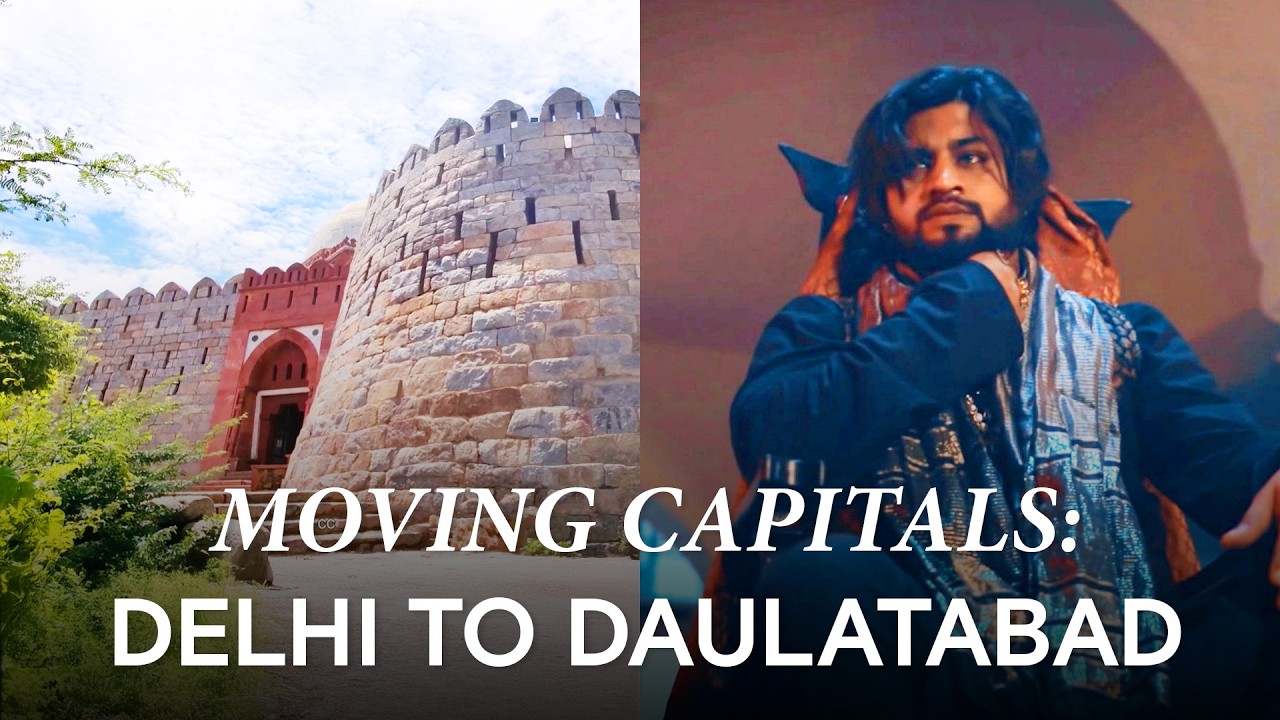
- (i) In , he ordered the capital to move from its long-time home in Delhi to Deogir in the south, which he quickly renamed Daulatabad (City of Wealth), showing his plan for a kingdom centered further south.
- (ii) The main goal was to gain better administrative control over newly added southern areas so the government could collect taxes and send troops quickly.
- (iii) However, forcing many people to walk very long distances caused huge suffering, hardship, and anger. In the end, the Sultan had to give up this costly plan and order everyone back to Delhi.
The Bold Introduction of Token Currency: The Economic Gamble
In a new attempt to help state finances, Muhammad bin Tughlaq issued coins made from cheaper metals.
- (a) The Sultan ordered the making of bronze coins and set their official value equal to silver tanka coins, mainly because of a local and global shortage of silver and gold.
- (b) Sadly, the state did not stop private individuals from making these coins. This led to widespread fake money made by regular people, which badly damaged the economy and ruined trust in the government.
- (c) Seeing the huge financial mess, the Sultan had to cancel the token money rule. The government spent vast amounts of gold and silver to buy back all the fake bronze coins.
🌾 Agrarian Policies and The Crisis of Agricultural Challenges
The Sultan introduced special farm policies to raise crop yields and increase government revenue. However, natural disasters and poor execution hurt his plans.
The Doab Region Measures: Over-Assessment and Famine Crisis
Focusing on the fertile region between the Ganga and Yamuna rivers, the Sultan tried to boost farming output, but the effort ended in disaster.
Farming and crop cultivation in the fertile Doab region. - (i) The government encouraged farmers to grow better crops like high-yield wheat and sugarcane to produce extra food and gather more taxes.
- (ii) At the same time, the Sultan raised taxes (kharaj) too high in the Doab area right when a terrible, long-lasting famine hit, placing a heavy burden on struggling farm families.
- (iii) The government later provided emergency help and farm loans (sondhar), but these came too late to stop widespread hunger, farmer protests, and people abandoning their fields.
👥 Nobility and Social Policies: Elevating the Common Man
Muhammad bin Tughlaq tried to change the old balance of power by giving government roles to skilled individuals outside the traditional noble groups.
Appointments from Non-Noble Backgrounds: A Push for Meritocracy
The Sultan upset established noble families by picking workers based on ability rather than family name.
- (i) Many capable individuals from modest families—who were usually kept out of top positions—were given high roles and leadership duties in government.
- (ii) While this policy aimed to build a loyal team of new leaders, it created strong anger among older Turkish and Afghan noble families who disliked these new officials.
⚔️ Military and Strategic Campaigns: Ambition and Logistical Failures
The Sultan worked hard to guard his borders while also planning large military moves beyond the lands of the Delhi Sultanate.
Defending Against Mongols and the Ill-Fated Khurasan Expedition
Threats from Mongol armies required constant attention, even as the Sultan planned new conquests in Central Asia.
- (i) The government successfully turned back recurring Mongol attacks along the northern borders, keeping the empire safe through military power and careful talks.
- (ii) However, Muhammad bin Tughlaq built a massive army to invade Khurasan and Afghanistan to take over busy trade routes in Central Asia.
- (iii) The planned attack was suddenly cancelled before main fights began due to supply problems, high costs, and hard routes, wasting huge state resources without any gain.
⚡ Quick Revision Capsule: Policies of Muhammad bin Tughlaq
A quick summary of key reforms, their main goals, and their final outcomes during the Sultan's rule.
| Policy / Initiative | Primary Objective | Final Outcome |
|---|---|---|
| Capital Shift to Daulatabad () | Control southern lands directly from a central base. | Failed due to hard travel conditions; people returned to Delhi. |
| Bronze Token Currency | Solve silver shortages with cheaper metal money. | Widespread fake coins; government bought them back with precious metals. |
| Tax Hike in Doab Region | Increase state income through better farm output. | Hit during a severe famine; led to farmer revolts and late farm loans (sondhar). |
| Merit-Based Appointments | Build a skilled, loyal administrative team. | Created anger and mistrust among established Turkish and Afghan nobles. |
| Khurasan Expedition | Control profitable trade routes across Central Asia. | Cancelled due to high costs and bad planning before big battles started. |
📝 Summary
The entire rule of Sultan Muhammad bin Tughlaq () shows a clear contrast between bold planning and poor execution. His forward-looking administrative trials, such as moving the capital and making token money, along with his farm rules and large army plans, reveal high ambition. However, bad timing, supply problems, and lack of support ruined many of these attempts. For students studying history, his reign serves as a clear lesson in medieval Indian politics, showing the balance needed between vision and everyday ruling responsibilities as noted in historical studies of the Delhi Sultanate.
🚀 Quick Revision Points
Essential facts to review before examinations:
- (i) The Sultan engaged in detailed talks with leaders like the Jain scholar Jinaprabha Suri.
- (ii) The move to Daulatabad in was aimed at controlling southern territories more effectively.
- (iii) Fake bronze coins ruined the token money plan, forcing a return to silver tanka currency.
- (iv) High taxes in the Doab during a famine led to farmer revolts, despite emergency loans (sondhar).
- 💡 Exam Tip: Focus on why reforms failed—such as supply issues, bad timing, and fake money—rather than just memorizing dates.
❓ Frequently Asked Questions (FAQ)
Q1: Why did Muhammad bin Tughlaq move his capital to Daulatabad?
A1: He wanted a central location to manage the newly added southern regions of his empire more effectively.Q2: What caused the failure of the token currency experiment?
A2: The government did not control coin production tightly, which led to widespread fake bronze coins made by private individuals.Q3: What were sondhar loans?
A3: They were emergency farm loans (sondhar) given by the state to help suffering farmers in the Doab region, though they came too late to prevent major hardship.