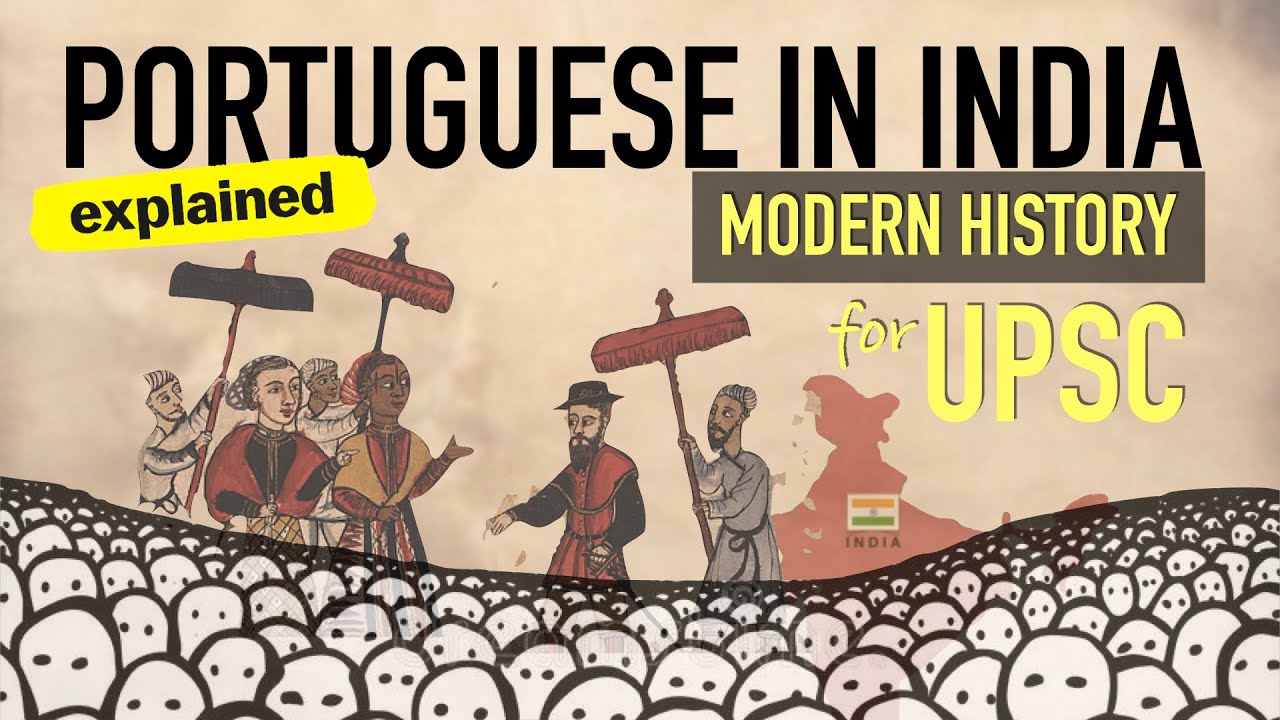
The Portuguese expansion in India marked the first wave of European colonial dominance across Asia. Driven by a search for profitable spice routes, a desire for religious conversions, and a goal for naval supremacy, Portuguese efforts changed India's trade, political landscape, and cultural tapestry. From the setup of the Estado da Índia in the early to their decline in the 17th century, the Portuguese left a lasting legacy that remains essential for students studying colonial history and European expansion.
🎯 In this chapter, you will understand:
- How the Portuguese built the Estado da Índia and gained control over maritime trade routes.
- The military strategies of leaders like Francisco de Almeida, Alfonso de Albuquerque, and Nuno da Cunha.
- The main internal and external reasons that caused Portuguese power in India to decline.
- The long-term cultural, agricultural, and technological contributions left behind in India.
💡 Why this topic matters: Portuguese expansion set the stage for modern maritime trade and marked the beginning of European colonialism in India.
🧠 Core Idea: Naval power, trade control, and religious expansion helped build an empire, but corruption and competition caused its downfall.
Impact, Decline, and Enduring Legacy of Portuguese Maritime Expansion in India (1500s–1600s)
The Portuguese were the first major European power to build strong political, economic, and religious bases in India. Their goal was driven by a push for trade dominance, global geopolitical influence, and the spread of Christianity. They broke the trade monopolies of Arab and Italian merchants, set up new administrative systems, and started India's early interactions with European powers.
- (i) The creation of the Estado da Índia provided a central administration for all Portuguese activities in the East.
- (ii) They gained naval supremacy through major sea battles, including the victory at the Battle of Diu in 1509.
- (iii) They introduced the cartaz system, a mandatory trade pass, to control and regulate shipping in the Indian Ocean.
The Estado da Índia Administration and Pivotal Portuguese Military Leadership
The Estado da Índia was more than a commercial venture; it was an attempt to build a large Christian maritime empire in Asia. Its growth depended on the strategic work of its viceroys and military commanders.

Francisco de Almeida: Pioneer of the Blue Water Policy (1505–1509)
Francisco de Almeida, the first Viceroy, introduced the Blue Water Policy (also known as the Cartage Policy). This strategy focused on securing control over sea lanes in the Indian Ocean rather than building large land fortifications.
- (i) Almeida built up and organized Portuguese fleets across the Indian Ocean.
- (ii) He won the Battle of Diu in 1509 against a combined enemy fleet, securing a major victory at sea.
- (iii) His actions made naval supremacy the core focus of early Portuguese strategy.
Alfonso de Albuquerque: The True Architect of the Portuguese Asian Empire (1509–1515)
Alfonso de Albuquerque expanded the Portuguese mission from naval dominance to capturing strategic coastal sites, turning the enterprise into a lasting empire.
- (a) He captured Goa in , turning it into the central political and military base for the Portuguese in India.
- (b) He took control of major maritime choke points, including the Persian Gulf and trade passages in Southeast Asia.
- (c) Albuquerque established firm trade route control by defeating local and Arab trade rivals.
Nuno de Cunha: Administrative Consolidation and Capital Shift to Goa (1529–1538)
Nuno da Cunha shifted focus from aggressive expansion to organizing administration and centralizing governance across the territory.
- (i) He officially moved the Portuguese capital from Cochin to Goa.
- (ii) He organized and expanded the maritime trade networks across the region.
- (iii) Cunha made Goa the primary administrative center for Portuguese operations in Asia.
The Cartaz System: Coercive Maritime Trade Passes
The Cartaz System was a pass system used to regulate sea trade. It required non-Portuguese merchant vessels to buy a permit to trade safely in the Indian Ocean.
- (i) Local and foreign traders had to purchase cartaz passes to protect their ships from capture.
- (ii) Vessels caught sailing without a pass were confiscated by Portuguese naval ships.
- (iii) Although this brought revenue to the Estado da Índia, it created strong resentment among Indian and regional merchant groups.
The Key Causes for the Decline of Portuguese Power in India
Despite early success, Portuguese influence in India declined rapidly during the due to internal administrative problems and pressure from other European nations.
Internal Political Instability and Foreign Entanglements
Administrative standards dropped over time, and political ties in Europe weakened Portugal's focus on its eastern colonies.
- (i) Weak Leadership: Later viceroys lacked the skill of early leaders, leading to corruption and administrative failure.
- (ii) Union with Spain: Joining the Spanish crown in drew Portugal into European conflicts and diverted resources away from the Indian Ocean.
Economic and Technological Stagnation and European Rivalry
Portuguese naval technology and military methods fell behind as newer European powers entered the region.
- (a) The Dutch and the British built modern, faster ships and developed better organized trading companies.
- (b) Portuguese naval technology stagnated after the , making it hard to compete with well-funded competitors.
Social, Cultural, and Religious Resistance from Indian Populace
Strict religious policies caused anger and opposition among local communities.
- (i) Forced Conversions and the actions of the Inquisition in Goa alienated local populations and turned local rulers against Portuguese administration.
Loss of Strategic Territories and Retreat to Enclaves
Losses of key bases reduced Portuguese presence to small coastal pockets.
- (i) The transfer of Bombay to England in 1661 as part of a royal dowry gave the British an important strategic port in western India.
- (ii) By the mid-, Portuguese holdings were limited to enclaves like Goa, Daman, and Diu, which they held until .
Enduring Legacy of Portuguese Rule in India: Culture, Religion, and Trade
Even though their political power faded, the Portuguese left visible influences on India's religion, culture, and trade practices.
Religious and Educational Legacy in Western India
The Portuguese introduced Roman Catholicism and Western educational structures along the western coast.
- (i) They established Christianity as a major regional faith, especially along coastal Goa, Kerala, and Mangalore.
- (ii) Missionaries like St. Francis Xavier and members of the Jesuit order established churches and missions.
- (iii) They built schools and colleges that used both European methods and local languages for teaching.
Cultural Contributions: The Printing Press and Literary Development
The introduction of printing technology helped change how information was distributed in India.
- (a) The Portuguese brought the first printing press to India in , printing books in local languages such as Kannada and Malayalam.
- (b) This technology helped improve local literacy and allowed religious and educational materials to spread faster.
Agricultural and Naval Contributions
Portuguese contact introduced new agricultural crops and changed ideas about naval defense.
- (i) They introduced crops from the Americas to India, including cashew, potato, chili, tomato, and tobacco.
- (ii) They demonstrated how naval power could control trade routes, a tactic later adopted by the Dutch and British East India companies.
⚡ Quick Revision Capsule: Portuguese Colonial Era
A quick summary of key Portuguese leaders, events, and their impact in India:
| Key Figure / Concept | Timeframe / Event | Main Contribution / Impact |
|---|---|---|
| Francisco de Almeida | Introduced the Blue Water Policy; won the Battle of Diu (1509). | |
| Alfonso de Albuquerque | Captured Goa in ; built bases across primary trade chokepoints. | |
| Nuno da Cunha | Shifted the Portuguese administrative capital from Cochin to Goa. | |
| Cartaz System | Forced non-Portuguese merchant vessels to buy trade passes. | |
| Cultural Legacy | Brought the printing press and introduced crops like chili, cashew, and tobacco. |
📝 Summary
The Portuguese expansion in India starting in the early marked the beginning of modern European involvement in Asia. Although their empire declined by the mid- due to political instability, economic issues, and competition from the Dutch and British, their cultural, agricultural, and technological contributions remained. For students, understanding this period explains how European sea power first established itself in Asia.
🚀 Lessons for Students
Essential facts to review before examinations:
- (i) The Portuguese were the first European power to arrive in India by sea () and the last to leave ().
- (ii) Almeida’s Blue Water Policy prioritized naval control over land conquest.
- (iii) Albuquerque captured Goa in from the Sultan of Bijapur, making it the administrative center of the Estado da Índia.
- (iv) The introduction of the printing press in helped print early works in local Indian languages.
- 💡 Exam Tip: Focus on comparing Almeida's naval strategy with Albuquerque's territorial expansion strategy, as this comparison frequently appears in history exams.
❓ Frequently Asked Questions (FAQ)
Q1: What was the main objective of the Portuguese Blue Water Policy?
A1: Formulated by Francisco de Almeida, its goal was to control Indian Ocean trade routes through naval strength rather than building costly land forts.Q2: When and how did the Portuguese lose control of Bombay?
A2: In , the Portuguese ceded the port of Bombay to King Charles II of England as part of the dowry for Catherine of Braganza.Q3: What major agricultural crops were brought to India by the Portuguese?
A3: They introduced crops from the Americas, including cashew, chili, potato, tobacco, and pineapple.